Alibaba

Search documents
Baidu Inc. (NASDAQ:BIDU) Maintains Positive Outlook from Citigroup
Financial Modeling Prep· 2025-10-14 01:00
Core Viewpoint - Baidu Inc. is experiencing positive sentiment in the market, driven by advancements in artificial intelligence and a favorable outlook from analysts, particularly Citigroup, which has raised its price target for the stock [2][4][6]. Company Overview - Baidu Inc. is a leading Chinese technology company known for its internet-related services and products, including a popular search engine, and is a major player in AI and autonomous driving technology [1]. Stock Performance - As of October 13, 2025, Baidu's stock price is $125.72, reflecting a 3.31% increase for the day, with a trading range between $123.42 and $128.20 [2][3][6]. - Over the past year, Baidu's stock has experienced significant volatility, with a high of $149.51 and a low of $74.71 [3]. Market Capitalization - Baidu's current market capitalization is approximately $42.74 billion, indicating its substantial presence in the tech sector [3]. Analyst Ratings - Citigroup has maintained a "Buy" rating for Baidu and raised its price target from $143 to $166, reflecting a positive outlook on the company's future performance [2][6]. Trading Activity - The trading volume for Baidu on the day is 4,970,440 shares, indicating active investor interest in the stock [5]. Industry Context - The positive sentiment towards Baidu is part of a broader trend among major Wall Street firms upgrading their outlook on several tech giants, driven largely by advancements in artificial intelligence [4].



Alibaba stock price is crashing: here's why it's safe to buy the dip
Invezz· 2025-10-13 06:16
Core Viewpoint - Alibaba's stock price has significantly declined, reaching its lowest level since September 24, primarily due to ongoing geopolitical fears [1] Company Summary - Alibaba's Hong Kong shares have dropped by 14.50% from their highest point this year [1]


The Art of the Deal… or the U-Turn? Trump’s Market Rollercoaster
Stock Market News· 2025-10-13 06:00
Core Insights - The financial markets experienced significant volatility following former President Trump's announcement of a 100% tariff on Chinese imports, which led to a sharp decline in major indices and a loss of nearly $800 billion in market value [2][3] - Trump's subsequent reassurances on social media led to a rapid recovery in U.S. stock futures, highlighting the unpredictable nature of market reactions to political statements [5][10] Market Reaction - Following the tariff announcement, the S&P 500 fell by 2.7%, the Dow Jones dropped 878 points (1.9%), and the NASDAQ Composite decreased by 3.6%, marking Wall Street's worst day since April [3] - Asian markets also reacted negatively, with Hong Kong's Hang Seng index falling 2.3%, and the Shanghai Composite down nearly 1% [3] Commodity and Crypto Impact - Gold prices surged to $4,016.68, marking an increase of 1.02% as investors sought safe-haven assets amid trade tensions [4] - The cryptocurrency market faced a massive sell-off, with an estimated $18 billion to $19 billion wiped out in a single day, and Bitcoin dropping 8.4% to $104,782 [8] Analyst Perspectives - Analysts expressed concerns over the unpredictability of Trump's tariff policies, with some suggesting that the U.S. economy could suffer more than China from these measures [6][7] - Goldman Sachs indicated that the tariff standoff might transition into a prolonged pause rather than an escalation, reflecting a cautious outlook on the situation [6] Conclusion - The recent events illustrate the "Trump effect" on financial markets, characterized by rapid shifts in sentiment driven by social media announcements, creating a challenging environment for investors [10]

China opens antitrust probe into Qualcomm
Youtube· 2025-10-10 17:04
Core Viewpoint - The ongoing trade tensions between the US and China are escalating, particularly affecting the semiconductor industry, with Qualcomm facing an antitrust investigation in China and potential repercussions for its business operations [2][5][11]. Company Impact - Qualcomm's stock has dropped nearly 5% following the announcement of an antitrust probe into its acquisition of Auto Talks, indicating investor concern over the implications of the trade war [2][11]. - The investigation suggests that Qualcomm may have violated anti-monopoly rules, which could jeopardize its business relationships with major Chinese brands like Xiaomi [3][5]. - Nvidia is also under pressure, having been accused of breaching antitrust laws in China, and facing restrictions on domestic firms purchasing its AI chips [4][5]. Industry Dynamics - The trade war is prompting China to accelerate its efforts to become self-sufficient in semiconductor technology, with local companies like Alibaba reportedly increasing their reliance on domestic chip production [5][7]. - The situation highlights the strategic importance of semiconductor technology in the broader context of US-China relations, with chipmakers becoming critical negotiating tools in the trade conflict [12][13]. - The potential for Nvidia to reopen its supply chain to China is seen as a key factor in its future performance, with upcoming earnings reports expected to reflect the impact of these trade tensions [11][12].


全球人工智能 - 上调人工智能基础设施预测-Global Artificial Intelligence Raising AI Infrastructure Forecasts
2025-10-09 02:00
Summary of Key Points from the Conference Call Industry Overview - The report focuses on the **Global Artificial Intelligence (AI)** industry, highlighting a period of accelerating growth in investment and implementation driven by technological improvements, enterprise adoption, and infrastructure expansion [1][8]. Core Insights and Arguments - **Investment Forecasts**: The 2026 estimated capital expenditure (Capex) for AI across hyperscalers has been raised from **$420 billion to $490 billion**, and the forecast through 2029 has increased from **$2.3 trillion to $2.8 trillion** [1][8]. - **Growth Comparison**: The projected **24% growth** in 2026 estimated investment exceeds current consensus expectations of **20%** [2][9]. - **Infrastructure Demand**: The demand for AI compute is expected to add an additional **55 GW** of global power capacity by **2030**, resulting in **$1.4 trillion** in incremental AI compute spending in the US [3]. - **Enterprise Adoption**: The acceleration in infrastructure investment is attributed to the demand for AI services from enterprises and AI labs outpacing supply, as reflected in backlog numbers from hyperscalers [4]. Additional Important Insights - **Financing Challenges**: Transitioning from cash flow-funded investments to debt-funded stages introduces incremental risks, as highlighted by OpenAI's Sam Altman regarding the scale of infrastructure needed [5]. - **Recent Developments**: A surge of announcements from major players like Oracle, OpenAI, Nvidia, and others indicates a significant increase in infrastructure scale and investment pacing to meet enterprise demand for AI services [3]. - **Backlog Indicators**: The backlog numbers from hyperscalers are expected to be a focal point in their upcoming third-quarter results, indicating strong demand for AI proof of concepts moving into production [4]. Conclusion - The AI industry is poised for substantial growth, with significant investments expected in infrastructure and services. The urgency for enterprise adoption is increasing, and while financing challenges exist, the overall outlook remains positive for key players in the sector.




中国工业科技 -因 AI 服务器出货强劲、云资本支出前景向好及 ESS 需求稳定,上调 4 只 AIDC_ESS 供应链股票目标价-China Industrial Tech_ Revise up TPs for 4 AIDC_ESS supply chain stocks on strong AI server shipment, cloud capex outlook, and solid ESS demand
2025-10-09 02:00
Summary of Key Points from the Conference Call Industry Overview - The report focuses on the **AIDC (Artificial Intelligence Data Center)** and **ESS (Energy Storage Systems)** supply chain in China, highlighting the impact of AI server demand and cloud capital expenditure on the industry. Core Insights and Arguments 1. **AI Server Demand Surge**: - Significant increase in global server market driven by AI training and inferencing servers, with shipments projected to rise by **21%** and **39%** for 2025E and 2026E respectively compared to previous estimates [4][4][4] - Envicool's strategic positioning with NVIDIA/Intel for liquid cooling components enhances its market capture potential [4][4][4] 2. **Cloud Capital Expenditure Growth**: - Alibaba plans to invest **Rmb380 billion** over three years, contributing to a robust domestic data center and cloud capex upcycle [4][4][4] - China's data center live capacity expected to reach **30GW** by 2025E, with internet, cloud, and AI accounting for approximately **70%** of demand [4][4][4] 3. **Domestic ESS Demand Recovery**: - Post-May 31, 2025, the domestic ESS demand has improved, with total tendered ESS capacity increasing by **38%** and **86%** year-over-year in August 2025 and the first eight months of 2025 respectively [5][5][5] - Battery exports also showed strong growth, with a **45%** year-over-year increase in August 2025 and **67%** in the first eight months of 2025, primarily driven by Europe and non-US regions [5][5][5] 4. **Target Price Revisions**: - Target prices for four AIDC/ESS supply chain stocks have been revised upward by **12-87%** based on the positive outlook for AI server shipments and cloud capex [6][6][6] 5. **Company-Specific Updates**: - **Kstar**: Revenue forecasts raised by **1% to 27%** for 2025E-30E, driven by cloud capex expansion and AI power demands, with a new target price of **Rmb46.2** [7][7][7] - **Envicool**: Net income forecasts increased by **9%** on average, with a new target price of **Rmb81.0**, reflecting strong demand for liquid cooling solutions [13][13][13] - **Kehua**: Target price raised by **12%** to **Rmb47.5**, reflecting strong domestic data center capacity expansion [17][17][17] - **Sungrow**: Target price set at **Rmb148.9**, with an **8%** upside potential, despite concerns over US market exposure [18][18][18] Additional Important Insights - The report emphasizes the critical need for advanced cooling solutions to manage the thermal loads of high-density AI servers [4][4][4] - The potential risks include uncertainties in ESS demand from the US market beyond 2026E due to regulatory changes [5][5][5] - The overall sentiment is bullish on the AIDC and ESS sectors, with expectations of sustained growth driven by technological advancements and increased capital expenditure in cloud infrastructure [4][4][4][5][5][5]



Alibaba stock is on a tear. Why China AI excitement is building.
MINT· 2025-10-02 13:30
Group 1 - Alibaba and other Chinese tech stocks experienced significant gains, with Alibaba's shares closing 3.5% higher, Baidu up 4.5%, and JD.com rising 3.1% amid an ongoing AI rally [1] - Alibaba's American depositary receipts (ADRs) increased by 2.8% ahead of the market opening, following a 2.3% rise the previous day, reflecting strong investor interest [1] - The company's stock has surged over 115% in 2025, while Hong Kong shares have risen 122% this year, indicating robust performance compared to other tech stocks [3] Group 2 - Alibaba's AI-driven mapping app, Amap, achieved a record of over 360 million daily active users during China's National Day holiday, showcasing the platform's growing popularity [2] - Anticipation is building around DeepSeek's latest AI model, which is reported to have improved training and reasoning capabilities while operating at a lower cost [2] Group 3 - The recent strength in Alibaba's stock is attributed to global investors seeking alternatives to the high valuations of the "Magnificent Seven" tech stocks [3] - Preliminary data indicates that China's residential home sales stabilized in September, raising hopes for a potential recovery from the ongoing property market crisis [3]
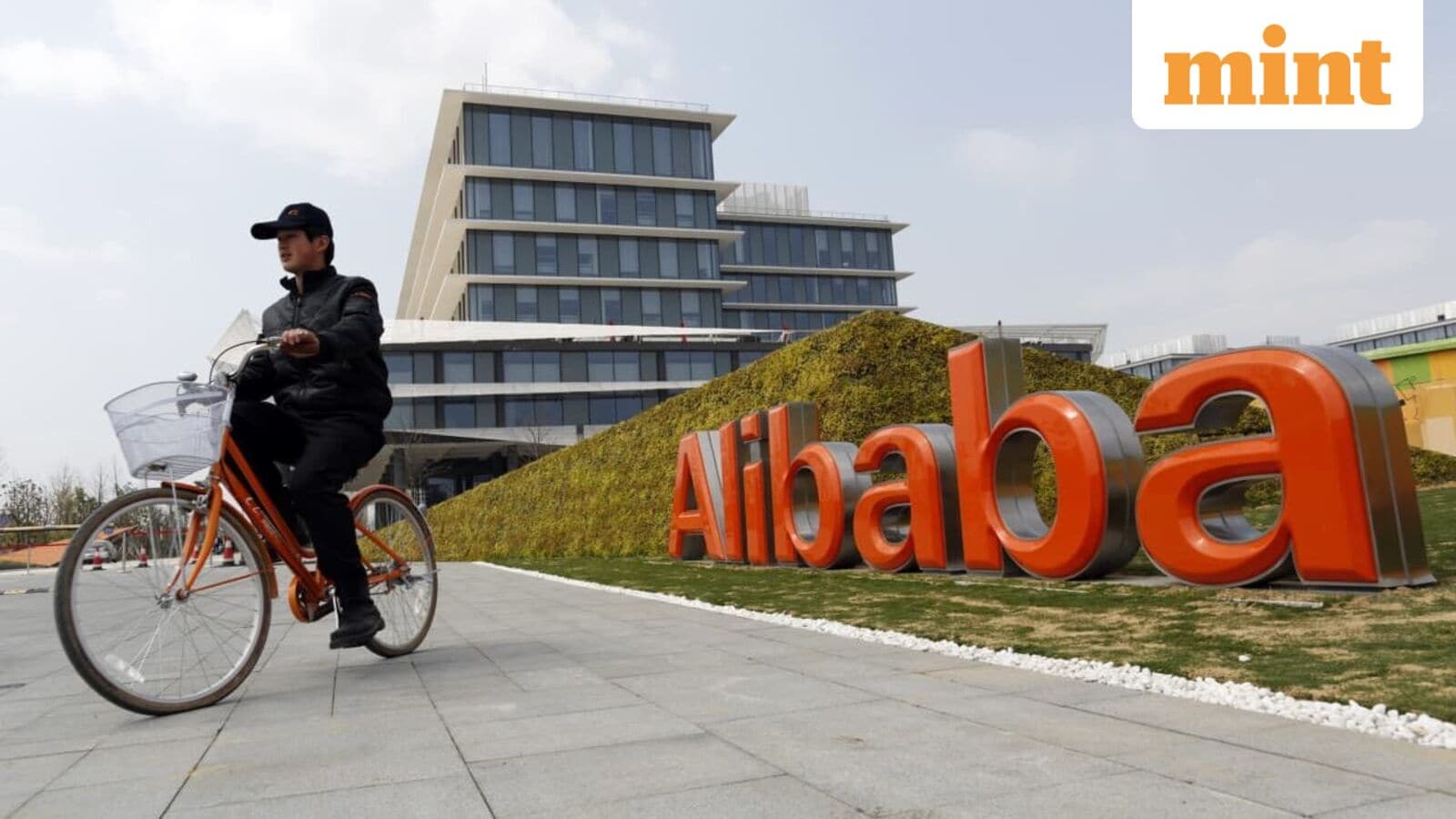
Alibaba Stock Is on a Tear. Why China AI Excitement Is Building.
Barrons· 2025-10-02 10:10
Core Insights - The tech conglomerate's American depositary receipts have increased by 116% in 2025 [1] Company Performance - The significant rise in the value of the American depositary receipts indicates strong market performance and investor confidence in the tech conglomerate [1]
US Government Shutdown Continues; Gaza Flotilla Intercepted | Horizons Middle East & Africa 10/2/25
Bloomberg Television· 2025-10-02 09:57
JENNIFER: THIS IS HORIZONS MIDDLE EAST & AFRICA. OUR TOP STORIES IS MORNING. ASIAN STOCKS GAIN FOLLOWING A GLOBAL RALLY AS TRADERS LOOK PACKS THE POLITICAL IMPASSE IN WASHINGTON.THE WHITE HOUSE PLANS TO DISMISS FEDERAL WORKERS SAYING LAYOFFS WOULD HAPPEN IMMINENTLY. PRESIDENT TRUMP SAID HE WILL PRESS CHINA TO RESTART SOYBEAN PURCHASES WHEN HE MEETS XI JINPING LATER THIS MONTH. AND BLOOMBERG HAS LEARNED HOW MOSS IS BEING PRESSED BY ARAB AND MUSLIM LEADERS TO ACCEPT TRUMP'S PLAN.WE ARE LIVE IN JERUSALEM WITH ...

OpenAI Becomes World's Most Valuable Startup, Topping Musk’s SpaceX | Daybreak Europe 10/2/2025
Bloomberg Television· 2025-10-02 07:30
市场趋势与行业动态 - 亚洲股市连续第四天上涨,科技股乐观情绪未减,韩国 Kospi 指数上涨超过 3%,创下新纪录[5] - 摩根大通将阿里巴巴目标股价上调 45%,看好其云计算业务和人工智能与电子商务的协同效应[6] - OpenAI 完成了一轮股票出售,估值达到创纪录的 5000 亿美元,成为全球最有价值的初创公司[50][52][53] - 市场对美国政府关门反应平淡,股市普遍上涨[3][16] 投资机会与潜在风险 - 投资者对日本央行本月加息的预期上升,日本国债期货抹去早前涨幅,10 年期国债拍卖需求疲软[7][8] - 伦敦证券交易所首席执行官表示,旗舰市场不出售,并呼吁英国修改养老基金政策,以更好地支持国内公司,建议默认养老金计划将 20-25% 的资金投资于英国资产[30][31] - 英国政府正在考虑免除新上市公司 2-3 年的股票交易印花税,以提振伦敦金融城[37] - 欧洲领导人正在推动一项计划,从被冻结的俄罗斯资产中向乌克兰贷款 1400 亿欧元[2][20] 公司财务表现 - Pai 集团为与雀巢的冰淇淋交易引入新资本,该交易对业务的估值为 150 亿欧元,包括债务,他们正在为该业务筹集 36 亿欧元的股权[9] - 德意志交易所正在考虑退出其在医疗设备部门 71% 的股份,可能会以股息的形式将股份分配给投资者[85][86] - 特斯拉股价在 9 月份上涨了 33%,投资者关注第三季度销售数据[86] 宏观经济 - 美国政府部分关闭,市场关注劳动力市场数据,ADP 数据显示就业市场疲软,强化了美联储降息的预期[4][18] - 70% 的 ADP 报告行业出现负面招聘[18] - 芝加哥联储主席 Austan Goolsbee 表示,政府关门导致缺乏官方经济数据,对政策制定者构成问题[58][59]