General Motors

Search documents
Gauzy, in Collaboration with Research Frontiers, Announces Its SPD Smart Glass in Serial Production for GM’s Cadillac CELESTIQ, Now Being Delivered to Customers
Globenewswire· 2025-07-14 12:00
Core Insights - The first customer delivery of General Motors' Cadillac CELESTIQ features the industry's largest multi-zone dimmable roof powered by SPD Smart Variable Tint Technology, marking a significant milestone for Gauzy Ltd. and Research Frontiers [1][4][5] Group 1: Product Features and Benefits - The CELESTIQ's roof includes the largest piece of dimmable smart glass in a production vehicle, segmented into four independently controlled zones, allowing customization of tint levels for each occupant [2][5] - The SPD technology can block up to 99.5% of visible light, 99% of harmful UV rays, and 95% of IR radiation, potentially reducing HVAC energy consumption by up to 40% compared to traditional glass [2][3] - Smart glass technology enhances passenger comfort and supports electric vehicle performance by reducing energy consumption from HVAC systems, which can account for up to 30% of an EV's energy use [3][4] Group 2: Market Position and Growth - Gauzy's collaboration with GM represents a significant advancement in the production of dynamic glass, enabling high-performance vehicle cabins that align with modern EV demands [4][5] - The global automotive smart glass market is projected to grow from $16 billion in 2024 to over $25 billion by 2028, driven by the rapid adoption of electric vehicles and the demand for intelligent in-cabin technologies [6]



What's the Best Driverless Vehicle Stock? (Hint: It's Not Tesla or Alphabet)
The Motley Fool· 2025-07-01 00:00
Core Viewpoint - Nvidia is identified as the best stock for investing in the driverless vehicle market, despite not being a pure play in autonomous vehicles, unlike competitors such as Alphabet's Waymo and Tesla [1][8]. Market Potential - The driverless vehicle market is expected to experience significant growth, with projections estimating it could reach $4.45 trillion by 2034, reflecting a compound annual growth rate (CAGR) of 36% over the next decade [4]. - Growth projections for the autonomous vehicle market are robust across various sources, with most estimates indicating CAGRs in the low to high 30% range [5]. Nvidia's Position - Nvidia provides a comprehensive AI-powered driverless technology platform, allowing companies to select specific technologies for their development programs [7]. - Nvidia is already profiting from the driverless vehicle space, with expectations for profits to increase as more companies utilize its technology [8]. - The company has a significant lead in the autonomous vehicle tech space, with every automaker developing autonomous technology reportedly using Nvidia's tech for AI training [13][14]. Partnerships and Collaborations - Major automakers, including Toyota, General Motors, Mercedes-Benz, and Volvo Cars, are known to use Nvidia's autonomous vehicle technology for both AI training and AI inferencing [17]. - Numerous Chinese electric vehicle makers, such as BYD and Nio, have partnered with Nvidia, enhancing their vehicle offerings with Nvidia's driverless technology [18]. Technology Offerings - Nvidia's technology includes a data center AI supercomputer for training self-driving AI models, a simulation platform for scenario modeling, and an in-vehicle AI supercomputer that processes data from vehicle sensors [9]. - The DRIVE AGX systems serve as the "brains" of vehicles, enabling advanced decision-making capabilities [9].



花旗:美国股票策略_ “良好净资产收益率(ROE)” 日益稀缺
花旗· 2025-06-18 00:54
Investment Rating - The report indicates a scarcity of stocks with improving Return on Equity (ROE), leading to a cautious investment outlook for the S&P 500, particularly in the context of macroeconomic concerns and trade issues [1][10]. Core Insights - The number of stocks classified under the "Good ROE" category has decreased significantly, with fewer than 90 stocks meeting the criteria in the latest rebalance, compared to over 100 in previous quarters [2][9]. - The Positive ROE Trend baskets have shown consistent outperformance against Negative ROE Trend baskets, even during market downturns, reinforcing the notion that growth stocks are becoming a defensive investment strategy [3][14]. - Despite the widening performance spreads, the Positive ROE Trend baskets maintain justifiable valuations, with attractive PEG ratios compared to indices [4][20]. Summary by Sections ROE Trends - The report highlights a decline in the number of stocks with expected ROE gains, with fewer than 90 stocks in the Large Cap basket, down from over 100 in prior assessments [2][10]. - In Small/Mid Cap, a 100-stock basket is still achievable, but fewer stocks exhibit "Good ROE" trends [9][12]. Performance Analysis - The Positive ROE Trend baskets have consistently outperformed Negative ROE Trend baskets, indicating a robust investment strategy amidst broader market fluctuations [3][11]. - The performance spread between Good and Bad ROE stocks has remained persistent, suggesting opportunities for both long-only and pair trading strategies [11][12]. Valuation Metrics - The Positive ROE Trend basket is characterized by higher P/E ratios but is supported by stronger EPS growth expectations, making it a reasonable investment despite higher valuations [4][20]. - The PEG ratios for the Positive ROE Trend basket are more attractive than those of comparable indices, indicating potential for growth [20][21]. Sector Exposure - The Positive ROE Trend basket is heavily weighted towards Industrials and Materials, while the Negative ROE Trend basket has more exposure to Consumer Discretionary and Health Care sectors [17][18]. - In the Small/Mid Cap category, the Positive ROE Trend basket shows a significant tilt towards Financials, Tech, and Industrials, with a notable growth style exposure [22][23]. Factor Correlations - The Positive versus Negative ROE Trend spread has shown mild positive correlations with various long/short factors, aligning closely with Growth and Size factors in the near term [5][26]. - The report emphasizes a unique approach to screening for improving quality metrics, differentiating it from traditional quality or growth frameworks [30][32].
Tesla Stock Crash: Time to Rotate and Buy Rivian Instead?
The Motley Fool· 2025-06-12 08:40
Group 1: Tesla's Market Position - Tesla's stock experienced a significant decline, losing approximately $150 billion in market capitalization in a single day, marking a 15% drop, and is down about 6% since the end of May [1] - Tesla's estimated market share of U.S. EV sales has decreased from 75% in early 2022 to under 45% in Q1 2025, with similar trends observed in Europe and China [4] - Tesla's market share losses have not benefited Rivian, as Rivian's share in the U.S. is only 2.9% in Q1 2025, down from a peak of 5% in Q3 2023, with legacy automakers like General Motors gaining ground [5] Group 2: Rivian's Market Strategy - Rivian is launching a more affordable SUV, the R2, priced around $45,000 before upgrades, with deliveries expected to start in 2026, aiming to capture a broader customer base [8] - Rivian's vehicle deliveries are projected to decline to 40,000 to 46,000 in 2025 from 51,000 in 2024, indicating a need for significant growth to achieve positive cash flow [9] - The R2's success is critical for Rivian, as the company is currently burning around $2 billion in free cash flow annually, despite a recent improvement in gross margin to 17% [12] Group 3: Financial Outlook for Rivian - Rivian has $8.5 billion in liquidity, with additional funding expected from a partnership with Volkswagen and a potential Department of Energy loan, providing a financial buffer for several years [13] - Despite a low market cap of $16.6 billion, Rivian's stock is considered a high-risk investment due to the potential for significant downside if the company fails to achieve positive free cash flow [14][15]


Trump's 25% auto tariffs are in effect. What investors need to know
CNBC· 2025-04-03 11:54
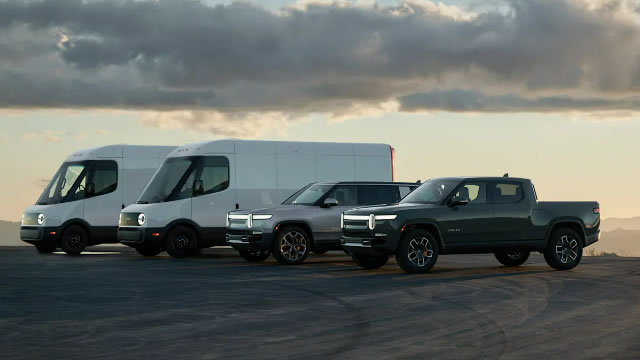
Core Viewpoint - The implementation of President Trump's 25% tariffs on imported vehicles is expected to significantly impact the automotive industry and investor sentiment, with potential long-term effects on earnings and market dynamics [1][2][3]. Industry Impact - The tariffs apply to vehicles not assembled in the U.S., affecting 46% of the approximately 16 million vehicles sold domestically in the previous year [2]. - Analysts express concerns that prolonged tariffs could lead to a recession in the automotive sector, with significant negative implications for company earnings [2][3]. - The tariffs are anticipated to increase vehicle prices, with estimates suggesting new vehicle prices could rise by as much as $10,000 if costs are fully passed on to consumers [20]. Company-Specific Effects - Automakers such as Volvo, Mazda, Volkswagen, and Hyundai are identified as most at risk, with over 60% of their U.S. sales being imported [11]. - General Motors (GM) is projected to face the highest exposure to tariffs, with estimates indicating a potential 79% drop in earnings before interest and taxes (EBIT) and an 81% decline in earnings per share (EPS) [13]. - Ford is expected to see a 16.5% hit to EBIT and a 23% decline in EPS due to the tariffs [14]. - Tesla, Rivian Automotive, and Lucid Group are positioned more favorably as their vehicles are assembled in the U.S., insulating them from the tariffs [15][16]. Market Dynamics - U.S. auto sales in the first quarter exceeded expectations as consumers rushed to purchase vehicles before the tariffs took effect [17]. - S&P Global Mobility forecasts that U.S. light-vehicle sales could decline to between 14.5 million and 15 million units annually if tariffs remain in place, down from approximately 16 million in 2024 [18]. - Entry-level vehicles, which typically have lower profit margins, are particularly vulnerable to price increases due to the tariffs [18][19]. Supply Chain Considerations - The concept of a fully U.S.-sourced vehicle is deemed unrealistic, as even domestically assembled vehicles rely on a global supply chain for parts [7][8]. - Automakers are awaiting clarity on potential tariffs for auto parts, which could further complicate their supply chain and financial outlook [6][10].

Why Rivian Stock Sold Off Today
The Motley Fool· 2025-03-28 17:09
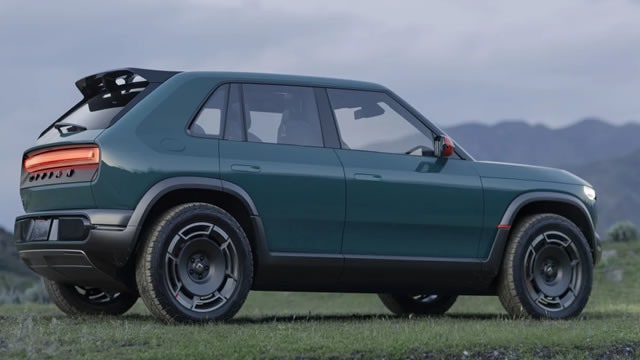
Core Viewpoint - Automotive stocks experienced mixed reactions following President Trump's announcement of new tariffs on imported vehicles and auto parts, with Rivian Automotive benefiting initially due to its domestic production strategy [1] Group 1: Impact of Tariffs on Rivian - The new 25% tariffs on imported vehicles are expected to enhance Rivian's competitiveness against larger rivals like General Motors (GM) and Ford, which offer lower-priced electric vehicles [3] - Rivian's upcoming R2 model, priced around $45,000, aims to compete more directly with GM's Equinox and Blazer EVs [3] - Rivian currently manufactures all its electric vehicles at its Illinois plant and plans to establish a second facility in Georgia, potentially giving it a cost advantage if competitors raise prices due to tariffs [4] Group 2: Market Reactions and Price Implications - Initial investor optimism led to a 7.6% increase in Rivian's stock, but it later fell by 5.7% as concerns about overall market dynamics emerged [1][2] - Estimates suggest that the new tariffs could increase the average cost of some new cars by $5,000 to $10,000, which could benefit Rivian if competitors raise their prices accordingly [5] - However, Trump has cautioned U.S. automakers against raising prices to offset the tariffs, which could hinder Rivian's sales growth and profitability [5][6]
Why Toyota Motor Stock Is Falling Today
The Motley Fool· 2025-03-27 18:46
Core Viewpoint - The automotive industry is facing challenges due to new U.S. tariffs, with Toyota Motor being significantly impacted, leading to a decline in its stock price by 4% as investors assess the situation [1][2]. Group 1: Tariff Impact - A 25% tariff on imported automobiles and parts is being imposed by the U.S., which directly affects Toyota, as automobiles constituted 28% of all Japanese exports to the U.S. in 2024 [2]. - The tariffs are expected to increase vehicle prices, potentially leading to reduced sales for Toyota [3]. Group 2: Competitive Landscape - Toyota is not alone in facing these challenges; competitors like General Motors and Ford, along with other foreign manufacturers, are also affected by the tariffs [4]. - Despite the current challenges, Toyota's reputation for efficiency may provide a long-term advantage in a volatile cost environment [4]. Group 3: Investment Perspective - The ongoing trade war and tariffs are likely to create market volatility, but for long-term investors, a decline in Toyota's stock could present a buying opportunity given its strong management [5].


Why GM stock is getting hit the hardest by Trump auto tariffs
CNBC· 2025-03-27 14:56
Core Viewpoint - General Motors (GM) is facing significant challenges due to new tariffs imposed by the U.S. government, particularly affecting its operations and stock performance compared to competitors like Ford and Stellantis [2][3][7] Group 1: Tariff Impact - President Trump announced a 25% tariff on all cars not made in the U.S., which significantly impacts GM due to its high exposure to imports from Mexico [3][4] - GM's stock fell over 6%, underperforming compared to Ford and Stellantis, which saw declines of about 3% and 2% respectively [2][4] Group 2: Import Exposure - Mexico accounted for 16.2% of vehicle imports into the U.S. in 2024, the largest share of any country, which poses a risk for GM as it relies heavily on Mexican production [4][5] - Approximately 52% of GM vehicles sold in the U.S. were assembled domestically, while 30% were assembled in Canada and Mexico, and 18% were imported from other countries [5][6] Group 3: Competitive Position - Analysts suggest that Tesla and Ford are better shielded from the tariff impacts due to their assembly locations, while GM has the highest exposure to Mexico [4][6] - GM's reliance on Mexico and South Korea for production of small crossovers like Equinox and Blazer raises concerns about its vulnerability to tariffs [5][6] Group 4: Market Performance - GM's stock has decreased by 12% year-to-date, with a notable drop in late January due to investor concerns regarding tariff impacts not being addressed in earnings reports [7]


GM, Stellantis shares fall after Trump's auto tariff announcement
CNBC· 2025-03-27 12:38
Group 1 - President Trump announced a 25% tariff on all cars not made in the United States, effective April 2, impacting the auto industry significantly [2][4] - General Motors stock fell approximately 6% in early trading, while Stellantis decreased by over 1%, while Tesla saw a slight increase and Ford's shares remained stable [2][3] - Deutsche Bank analysts indicated that Tesla and Ford are relatively insulated from the tariffs due to their vehicle assembly locations, whereas GM has the highest exposure to Mexico [3] Group 2 - The tariffs will apply to imported passenger vehicles, light trucks, and essential automobile parts such as engines and transmissions [4]

Trump says Tesla CEO Elon Musk didn't advise on auto tariffs despite DOGE role
CNBC· 2025-03-26 23:31
U.S. President Donald Trump speaks to the media in the Oval Office at the White House in Washington, D.C., U.S., March 26, 2025.After President Donald Trump said on Wednesday he would impose 25% tariffs on "all cars that are not made in the United States," he said his key advisor, Tesla CEO Elon Musk, had not weighed in on the matter, "because he may have a conflict."He added that Musk had never "asked me for a favor in business whatsoever."Musk serves as a senior advisor to Trump, having earlier contribute ...