
Prius

Search documents
Hybrids now account for 1 in 5 U.S. vehicle sales as market shifts
Yahoo Finance· 2026-03-25 15:27
Quick Read Toyota (TM) has electrified vehicles representing 46.9% of retail sales with forecasts for 4.7 million hybrids in fiscal 2026, while Ford (F) leads in hybrid pickups with the F-150 and Maverick but faces $4.81 billion in annual EV losses; General Motors (GM) absorbed $7.2 billion in EV realignment charges and cut capital expenditures despite a forward P/E of 6x. Hybrid market share surged to 19.7% in Q4 2025 from 11-12% year over year as consumers shift toward fuel efficiency amid oil prices ...

Toyota recalls 550K vehicles over seat-back locking issue
New York Post· 2026-03-12 04:44
Core Viewpoint - Toyota is recalling a total of 550,007 vehicles due to a seat-back locking issue that may increase the risk of injury during crashes at higher speeds [1][2][4] Group 1: Recall Details - The recall affects 420,771 Highlander and 129,236 Highlander Hybrid vehicles, all from model years 2021 through 2024 [1][4] - The issue involves second-row seat backs that may fail to lock into position during adjustment, potentially failing to restrain occupants properly [1] Group 2: Notification and Remediation - The National Highway Traffic Safety Administration (NHTSA) will notify all owners of the affected vehicles to return them to a Toyota dealer [2] - Dealers will replace the return springs in the recliner assemblies with improved ones at no cost to the owners [2] Group 3: Additional Recalls - In addition to the current recall, Toyota recalled approximately 141,000 Prius and Prius Prime vehicles last month due to a separate issue where rear doors can unexpectedly open while the car is in motion [4]

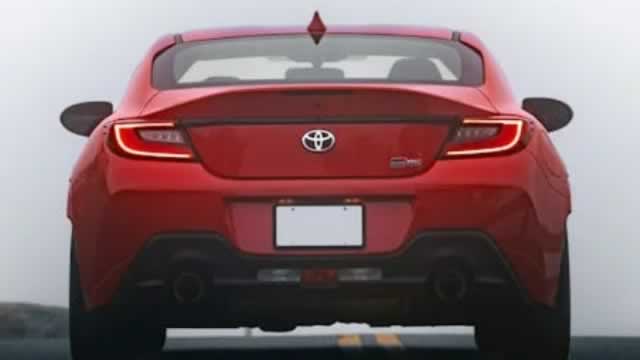
What tariffs? Toyota hits record sales in 2025, despite Trump's auto levies
CNBC· 2026-01-29 09:07
Core Insights - Toyota Motor has maintained its status as the world's top-selling automaker in 2025, achieving record sales of 10.5 million units, a 3.7% increase from the previous year, surpassing Volkswagen Group's 9 million units and Hyundai Motor Group's 7.27 million units [1] - The growth in sales was significantly driven by strong demand for hybrid vehicles in the U.S., particularly models like the Prius and RAV4 [1] Group 1 - Toyota's U.S. sales increased by 7.3% to 2.93 million units, despite the imposition of aggressive tariffs by the U.S. government [2] - The company successfully absorbed tariff-related costs instead of passing them onto consumers, focusing on local production and cost controls [2] - Toyota estimated that U.S. tariffs would cost it 1.45 trillion yen ($9.7 billion) in the fiscal year ending March 2026, yet raised its full-year operating profit forecast due to effective cost reductions and strong demand outside the U.S. [3]

This Underappreciated Stock Could Be Entering Its Next Growth Phase
Yahoo Finance· 2026-01-21 18:35
Core Viewpoint - The focus in the auto industry is heavily on electric vehicles (EVs), yet Toyota Motor is gaining attention for its unique strategy of investing in high-performance vehicles while only offering one pure EV in the American market [1][2]. Company Overview - Toyota Motor is recognized as the world's largest automaker, with a history of producing reliable vehicles, including the Corolla, which is the most produced car globally with over 50 million units sold since 1966 [4][8]. - The company is diversifying its offerings by developing exciting models like the GR GT, a supercar featuring a 4-liter twin-turbo V8 engine, which is part of its strategy to enhance brand appeal [5][6]. Financial Performance - Despite a general decline in vehicle sales in the U.S., Toyota's sales for Q2 of fiscal 2026 increased by nearly 3%, with North American sales growing by almost 15% [7]. - Revenue for the same period rose by 8.1%, totaling 12.38 trillion yen ($80.5 billion), while net income surged by 62%, increasing from 573.7 billion yen to 932 billion yen ($5.9 billion) [7].
Compact Body Styles, Hybrids, and Value-Driven Used Models Powered 2025 Automotive Demand, According to CarGurus
Globenewswire· 2025-12-11 14:00
Core Insights - The automotive market in 2025 was characterized by a heightened focus on affordability due to rising ownership costs, tariff concerns, and a shortage of late-model used vehicles, setting the stage for 2026 [1][2] Market Trends - In 2025, consumers actively pursued affordability, influencing shopping behavior and automotive supply trends, driven by concerns over tariff costs and the expiration of the EV tax credit [2] - Key areas of value for buyers included hybrids, smaller body styles, and budget-friendly older models, with the used market expected to continue catering to budget-conscious shoppers in 2026 [3] Vehicle Performance - Smaller sedans, compact crossovers, and efficient models were the fastest-selling used vehicles, with models like the Buick LeSabre and Chevrolet Cobalt selling in approximately 25 to 30 days compared to the average of 40 days for used vehicles [4] - Following the expiration of EV tax credits, new EV retail sales dropped by 66% in the two months after the deadline compared to the two months prior, while hybrid demand increased, with new inventory rising nearly 18% year-over-year and retail sales growing by 33% [4] Ownership Costs - Rising vehicle ownership costs, including insurance, loan payments, and maintenance, have pressured consumer budgets, with the total cost of ownership for used vehicles increasing by 36% and for new models by 29% compared to 2019 [5] - The fastest-selling new vehicles in 2025 included models like the Hyundai Palisade Hybrid and Toyota's Grand Highlander Hybrid, selling in under 20 days on average [5] Future Outlook - The pricing landscape for 2026 models is expected to play a significant role in average new car pricing trends, with higher MSRPs partially offset by softer pricing and incentives on remaining 2025 models [6] - The market is anticipated to see improved availability of late-model used vehicles as the chip shortage eases, providing more "like-new" options for consumers [6] - 2026 will offer insights into EV demand without the influence of tax credits, with affordability remaining a key driver for consumers as they cross-shop across various vehicle types [7]


Toyota Makes Joy the Mission This Holiday Season
Prnewswire· 2025-12-04 14:03
Core Message - Toyota is celebrating the holiday season with two new advertisements, "The Holiday Job" and "Running Late," which emphasize joy, giving, and the chaotic yet heartwarming moments of holiday celebrations [1][6][10]. Group 1: Advertisement Details - "The Holiday Job," created by Saatchi & Saatchi, humorously depicts the challenges of keeping holiday gifts a secret, likening it to a covert operation [4][8]. - "Running Late," developed by Conill, captures relatable moments of family members rushing to a Christmas Eve celebration, highlighting the humor and love inherent in holiday gatherings [9][10]. - Both advertisements aim to connect with audiences in both English and Spanish, reflecting Toyota's commitment to inclusivity [7][10]. Group 2: Community Engagement - Toyota is supporting Boys & Girls Clubs of America, having invested over $40 million over nearly two decades to help young people reach their full potential [10][12]. - A recent donation of $215,000 and a 2025 Tundra was made to Boys & Girls Clubs, presented on NBC's TODAY Show, to further their mission [11]. - The partnership aims to provide essential resources and support for youth facing challenges in education and mental health [12][19]. Group 3: Advertising Strategy - "The Holiday Job" premiered during NBC's "Christmas in Rockefeller Center" and will be aired across various platforms, including Hulu and Disney+, throughout December [14][16]. - "Running Late" will be featured on Hispanic networks and programming, including Telemundo and Univision, to reach a broader audience [15]. - The campaign includes digital messaging and social media outreach to enhance visibility and engagement during the holiday season [15].

Your Weekend Shortcut: One Stock to Buy, One to Sell Immediately
Investor Place· 2025-11-23 17:00
Core Insights - The article discusses the concept of distinguishing between "good" and "bad" stocks, emphasizing the potential for significant returns by focusing on attractive industries and companies [2][3][4]. Industry Analysis - The lithium industry is highlighted as a "sunrise" sector with growth potential, particularly due to its role in solar energy and AI data centers, while coal is described as a "sunset" industry facing declining demand [3]. - The automotive industry is undergoing a transformation, with electric vehicles (EVs) gaining traction and traditional manufacturers like Toyota facing challenges from competitors [18][21]. Company Analysis - Hyundai Motor Co. is identified as a deep-value firm with a forward earnings ratio of less than 7X, despite challenges such as U.S. tariffs and immigration issues at its Georgia plant [6][16]. - Hyundai's growth potential is attributed to its ownership of Boston Dynamics, which is advancing in robotics through AI and machine learning, and its strong position in the EV market with the Ioniq 5 [14][17]. - Toyota Motor Corp. is portrayed as a once-dominant player now facing increased competition and declining market share, with its historical premium valuation at risk of a selloff [21][27].

Toyota has recalled more than 1 million cars over faulty backup cameras. What to know if your vehicle is affected
Yahoo Finance· 2025-11-22 22:30
Core Points - Toyota is recalling over one million vehicles due to malfunctioning backup cameras, affecting models released between 2020 and 2023 [1][2] - The recall is a response to safety violations, as some cameras may freeze or blackout, posing risks while reversing [3] - Affected models include popular ones like the Camry, Highlander, and Prius, with notifications to drivers expected by late December 2025 [2] Group 1 - The recall is significant as it highlights a verified safety risk, with malfunctioning cameras potentially failing to alert drivers to obstacles [4][5] - Nearly 30 million vehicles in the U.S. were impacted by recalls in 2024, indicating a broader industry trend of safety concerns [5] - Manufacturers are responsible for the costs associated with the recall repairs, although the process may not always be straightforward [6][7] Group 2 - Automakers often announce recalls before having a complete solution, driven by federal reporting requirements [8]
X @Tesla Owners Silicon Valley
Tesla Owners Silicon Valley· 2025-11-22 15:59
Prius or Tesla? https://t.co/SZv2L60VBl ...

Toyota Motor North America Reports September, Third Quarter 2025 U.S. Sales Results
Prnewswire· 2025-10-01 17:00
Core Insights - Toyota Motor North America (TMNA) reported a significant increase in vehicle sales for September 2025, with total sales reaching 185,748 units, marking a 14.2% increase compared to September 2024 [1] - Electrified vehicle sales for September totaled 85,092 units, up 8.1% year-over-year, representing 45.8% of total sales volume [1][3] - For the third quarter of 2025, TMNA's total vehicle sales were 629,137 units, a 15.9% increase from the same period in 2024, with electrified vehicle sales reaching 282,794 units, up 10.5% [1][2] Sales Performance - TMNA's sales for September 2025 showed a daily selling rate (DSR) increase of 9.5% compared to the previous year [1] - The Toyota division's September sales were 158,959 vehicles, up 13.4% on a volume basis, while Lexus division sales reached 26,789 vehicles, up 19.4% [1][3] - For the third quarter, the Toyota division reported sales of 537,528 vehicles, up 16.4%, and Lexus division sales of 91,609 vehicles, up 13.1% [1][3] Electrified Vehicle Strategy - TMNA currently offers 30 electrified vehicle options across Toyota and Lexus brands, contributing to nearly 50% of total sales [2][3] - The sales of electrified vehicles for the third quarter represented 44.9% of total sales volume, indicating a steady growth trend [1][3] - The company maintains one of the lowest incentive levels among full-line manufacturers, which may contribute to its sales performance [3] Market Position and Future Outlook - Strong customer demand is noted across the entire lineup, with vehicles selling as quickly as they are produced [2] - The upcoming next-generation RAV4 is anticipated to further enhance sales, as the current model remains popular among customers [2] - The company is committed to advancing sustainable mobility through its electrified vehicle offerings and initiatives [4]