
NASA

Search documents
Voice AI startup Deepgram raises $130 million at $1.3 billion valuation
Yahoo Finance· 2026-01-13 13:31
Company Overview - Deepgram, a voice AI technology startup, raised $130 million at a valuation of $1.3 billion to expand internationally, roll out new models, and pursue acquisitions [1][2] - The funding round was led by AVP, with participation from new investors such as Alumni Ventures, Princeville Capital, and Citi Ventures, along with existing backers like Tiger Global, Madrona, and In-Q-Tel [2] Product and Market Expansion - Deepgram provides AI models and infrastructure for enterprises and developers to create custom AI voice agents capable of real-time, contextual conversations [2] - The company plans to use the funds to expand into new markets in Europe and the Asia-Pacific region, increase language support, and fund acquisitions and large compute purchases [3] - Currently, Deepgram supports over 50 languages and has acquired OfOne, a voice AI platform for drive-thrus, to enhance its offerings in the restaurant industry [4] Industry Trends - The demand for voice AI has surged, with many products integrating voice capabilities wherever there are text fields or buttons [3] - More than 1,300 organizations utilize Deepgram's voice AI functionality, which powers conversational customer-service platforms for clients like NASA and Amazon Web Services [5]
算法“点燃”新引擎 AI成航天推进技术的“助推器”
Huan Qiu Wang Zi Xun· 2025-12-29 01:27
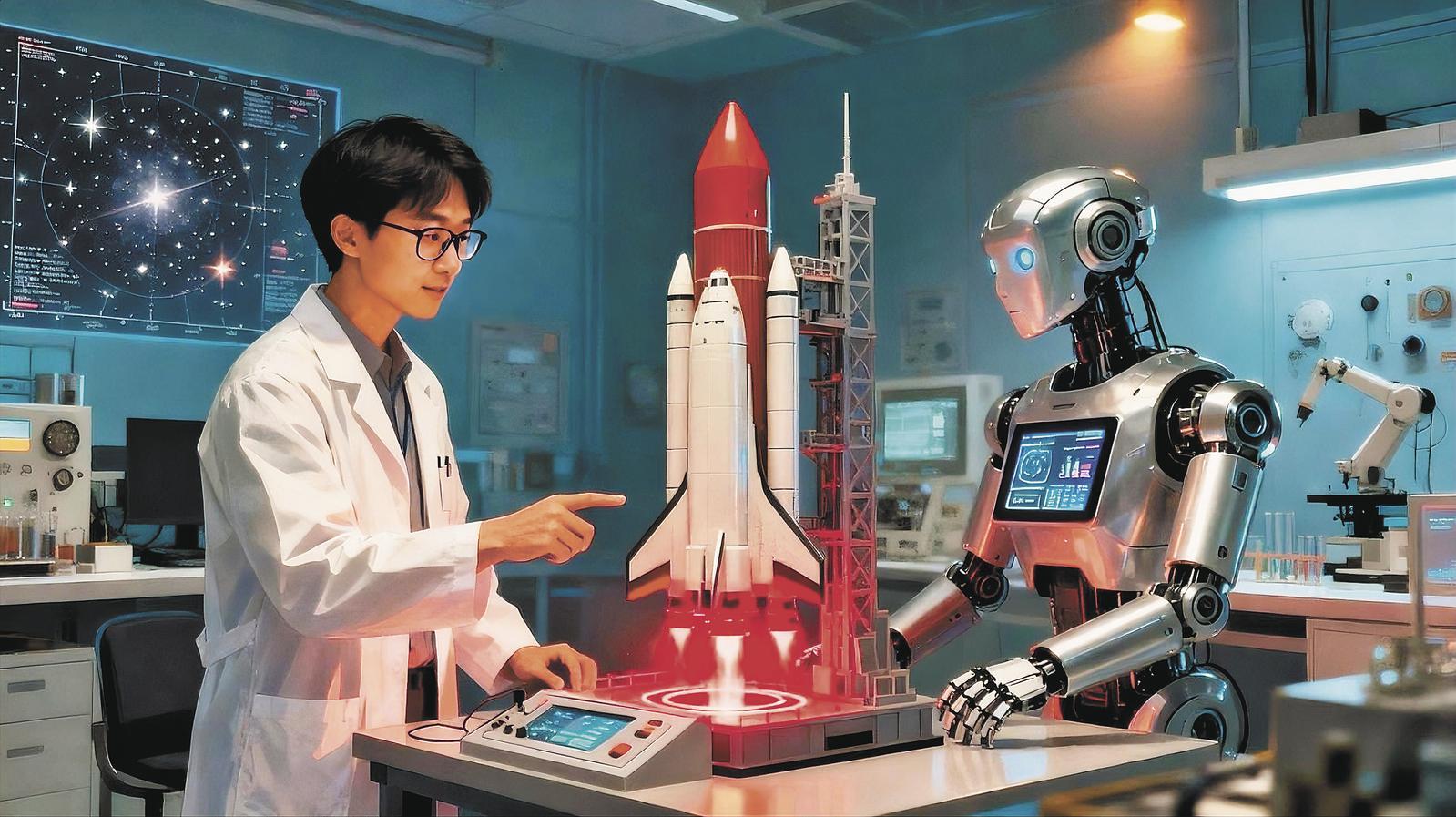
Core Viewpoint - The integration of artificial intelligence (AI) into space propulsion technology is revolutionizing the field, enabling more efficient and innovative propulsion systems for deep space exploration [1][3]. Group 1: AI in Propulsion Design - AI, particularly machine learning, is enhancing the design and real-time operation of propulsion systems by simulating human-like learning through trial and error [3]. - This approach allows machines to develop a form of "intuition," enabling them to conduct millions of simulations to identify optimal solutions for propulsion challenges [3]. - A notable application is in optimizing heat transfer for nuclear thermal propulsion systems, where AI can significantly improve efficiency compared to traditional methods [4][5]. Group 2: Nuclear Thermal Propulsion - Nuclear thermal propulsion is highlighted as a promising technology that utilizes nuclear reactions to generate heat, allowing spacecraft to travel long distances with minimal fuel consumption [4]. - AI is facilitating the design of more efficient nuclear thermal systems by enabling real-time adjustments based on data feedback, thus optimizing the system's performance [4][5]. - The use of advanced materials and complex geometries in engine design, supported by AI, is enhancing heat transfer efficiency and reducing overall system weight [5]. Group 3: Advancements in Nuclear Fusion - Nuclear fusion presents a significant potential for future propulsion systems, with AI accelerating its development from large ground-based facilities to compact space-ready devices [6]. - AI is being utilized to maintain stability in high-energy plasma within fusion reactors, which is crucial for achieving sustained fusion reactions [6]. - The optimization of magnetic field configurations through AI is paving the way for smaller, more efficient fusion devices that could serve as the foundation for future nuclear-powered spacecraft [6]. Group 4: Fuel Management in Space Missions - Once in space, AI transitions to managing fuel efficiency, which is critical for the success of complex missions that may require mid-course adjustments [7]. - AI can calculate the most fuel-efficient trajectories in real-time, adapting to changing mission parameters and ensuring optimal fuel usage [7]. - Continuous monitoring of spacecraft systems by AI allows for early detection of potential issues, enhancing mission safety and efficiency [7].

Plug Power (PLUG) Kicks Off NASA Liquid Hydrogen Contract, Signaling Entry Into Aerospace
Yahoo Finance· 2025-12-25 08:05
Group 1 - Plug Power Inc. has initiated its first liquid hydrogen supply contract with NASA, valued at approximately $2.8 million, which will last until November 30, 2030 [1][2] - The contract involves supplying up to 218,000 kilograms (about 480,000 pounds) of liquid hydrogen to NASA's Glenn Research Center and Armstrong Test Facility, highlighting Plug Power's capability to meet high-purity hydrogen requirements [2][3] - This partnership marks Plug Power's entry into the aerospace sector, which is projected to grow significantly, with the space industry expected to reach a valuation of $1 trillion in the coming years [2] Group 2 - Plug Power will utilize its dedicated cryogenic transport fleet and its expanding hydrogen production network, which currently has a production capacity of roughly 40 tons per day across facilities in Georgia, Tennessee, and Louisiana [3] - The distributed infrastructure of Plug Power ensures supply security and consistent uptime for NASA, alongside its existing industrial and mobility customers [3]

X @Tesla Owners Silicon Valley
Tesla Owners Silicon Valley· 2025-12-22 20:33
.@nasa called @elonmusk and told them that they had won the $1.5B contract.Elon’s response “I love you guys.”https://t.co/46TdqaZLLp ...
Treating the Universe to a Cup of Coffee, or Two | Jessica Gaskin | TEDxModena Women
TEDx Talks· 2025-12-22 17:08
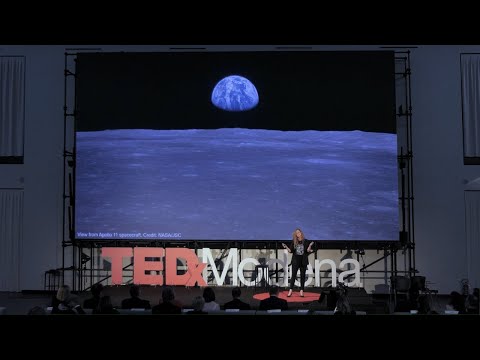
Space Exploration Significance - Space exploration provides answers to questions we didn't even know to ask, leading to world-changing discoveries [12] - Expanding our home to include space and other planets may be a solution to limited resources and growing population on Earth [15] - Solving hard problems related to space's extreme environments forces rethinking what's possible, driving innovation [16] - Exploration helps expand our sense of who we are, inspiring and enabling achievements beyond imagination [17][18] Current Space Exploration Status - There's a modern renaissance of space exploration with new discoveries almost every week [3] - A fleet of observatories in space, including Hubble and Web telescopes, provides unprecedented views of the universe [3][4] - The Nancy Grace Roman Telescope, launching next year, will have 100 times the field of view of Hubble and see light from over a billion galaxies [5] - Observatories like the Habitable World Observatory will study atmospheres of planets around other stars to search for signs of life [6] - Over 6,000 planets around other stars have already been discovered by telescopes like Kepler, TESS, and Web [6] - Humans have maintained a continuous presence in space on the ISS for 25 years, sending 700 people into space [7] Public Perception & Cost - The most common response to the question of space exploration's value is that we should take care of the Earth first [8] - Some perceive space exploration as only for the elite, not for the average person [9] - NASA's cost is 05% of the entire US budget, less than $100 per adult in the US [22]
股价大涨超37%!Intuitive Machines等受益美国全面加速太空军备:特朗普定调“太空优势”,35亿美元订单紧随其后
美股IPO· 2025-12-21 16:03
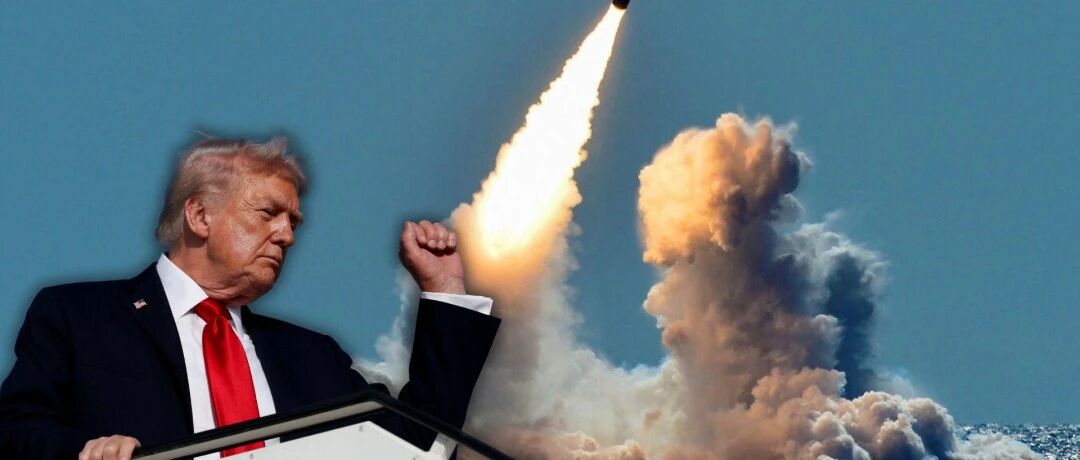
Core Viewpoint - The article discusses the recent executive order signed by President Trump aimed at enhancing the United States' space capabilities, emphasizing military integration with civilian space exploration and setting ambitious goals for lunar missions and satellite deployment [1][3][4]. Group 1: Executive Order and Military Integration - The executive order titled "Ensuring America's Space Advantage" prioritizes manned lunar missions by 2028, the establishment of a permanent lunar base by 2030, and the development of a space security strategy by the Pentagon and intelligence agencies [4][6]. - The Pentagon has announced a $3.5 billion contract for military satellites, indicating a rapid integration of civilian space exploration with military strategy [3][8]. Group 2: Lunar Mission Goals - The 2028 lunar landing goal is seen as highly challenging, similar to a previous directive from 2019, with delays in NASA's Space Launch System and SpaceX's Starship development impacting timelines [5][6]. - The Artemis program aims for the first lunar landing under this initiative, heavily relying on the progress of SpaceX's Starship [6]. Group 3: Satellite Deployment - The $3.5 billion satellite order includes contracts for 72 infrared satellites for missile warning and tracking, set to be launched by 2029 for near-continuous global coverage [4][8]. - The satellites are part of a phased deployment strategy, with the first batch of 154 operational satellites expected to achieve initial operational capability by 2027 [8]. Group 4: NASA Budget and Challenges - NASA faces budget cuts, with a potential reduction of about 25% from its usual $25 billion budget by 2026, which could jeopardize several prioritized space science programs [12]. - The new NASA administrator has indicated a desire to pursue both lunar and Mars missions, reflecting congressional pressure to focus on lunar initiatives [12][13].





美国全面加速太空军备:特朗普定调“太空优势”,35亿美元卫星订单紧随其后
Hua Er Jie Jian Wen· 2025-12-21 10:46
Core Points - The U.S. is initiating the largest militarization of space since the Cold War, with President Trump signing an executive order prioritizing manned lunar missions, establishing a lunar base, and developing space defense systems [1] - The executive order aims for a manned lunar landing by 2028 and a permanent lunar base by 2030, requiring the Pentagon and intelligence agencies to formulate a space security strategy [1][4] Group 1: Lunar Mission Goals - The 2028 lunar landing goal is seen as highly challenging, similar to a previous 2024 directive, with delays in NASA's Space Launch System and SpaceX's Starship affecting timelines [2] - The executive order reinforces NASA's existing goal of developing a long-term lunar base using nuclear energy, originally set during the Obama administration [2] - The Artemis program will mark NASA's first manned lunar mission under this new directive, heavily relying on the development progress of SpaceX's Starship [2] Group 2: Military Satellite Network - The U.S. Space Force's Space Development Agency announced a $3.5 billion satellite order, indicating an acceleration in military space deployment [3] - Four defense contractors will each receive contracts for 18 satellites, enhancing missile warning and tracking capabilities with near-continuous global coverage [3] - This satellite deployment is part of a strategy to launch new batches every two years, with the first batch of 154 satellites expected to achieve initial operational capability by 2027 [3] Group 3: Space Policy Coordination - The executive order restructures the national space policy coordination mechanism, placing it under the leadership of the President's Chief Science Advisor [4] - The National Space Council, previously uncertain in its future, will continue to exist under a new structure, with the President as its chair [4] - The order also calls for the Pentagon and intelligence agencies to develop a space security strategy and encourages private contractors to improve efficiency [4] Group 4: NASA Budget and Dual Goals - NASA is facing financial pressures, with a potential budget cut of about 25% from the usual $25 billion, threatening numerous prioritized space science programs [6] - The new NASA administrator supports targeting both lunar and Mars missions, reflecting Congressional pressure to focus on lunar initiatives [6] - Legislative focus has shifted back to lunar missions, despite previous discussions about prioritizing Mars exploration [6]


X @Elon Musk
Elon Musk· 2025-12-20 18:30
RT SpaceX (@SpaceX)We’re excited to train @NASA’s Crew-12 and look forward to Falcon 9 launching the crew aboard Dragon to the @Space_Station in February 2026! ...
X @SpaceX
SpaceX· 2025-12-20 17:53
We’re excited to train @NASA’s Crew-12 and look forward to Falcon 9 launching the crew aboard Dragon to the @Space_Station in February 2026!NASA (@NASA):Just announced: NASA’s @SpaceX Crew-12 mission assignments are in!Get to know the four crewmates who will journey to the @Space_Station for a long-duration science expedition. ...