太空军事化

Search documents
王强:警惕“星链”的国际垄断风险
Xin Lang Cai Jing· 2026-01-27 23:08
Core Viewpoint - Elon Musk's SpaceX has announced free access to its Starlink satellite internet service for Iranian users amid political turmoil, raising international concerns about the implications of commercial satellite constellations on global security and governance [1] Group 1: Impact of Starlink on Warfare - The Starlink system, initially designed for commercial satellite internet, has evolved into a quasi-military tool for the U.S., significantly influencing modern warfare dynamics, as evidenced by its rapid deployment to support Ukrainian forces during the Russia-Ukraine conflict [1] - The U.S. military has integrated Starlink with various operational units, enhancing its combat capabilities and creating a closed-loop information system for military operations [2] Group 2: Strategic Dependency and National Security - The reliance on Starlink technology by smaller nations creates a strategic dependency, posing risks to national sovereignty and security, as seen in past instances where the U.S. leveraged Starlink to exert pressure on countries like Ukraine [3] - The trend of countries, particularly in Europe and Japan, developing their own low-Earth orbit satellite constellations reflects a response to the vulnerabilities associated with dependency on foreign technology [3] Group 3: Challenges of Space Resource Management - Starlink's rapid expansion, with over 10,000 satellites in orbit, has led to monopolistic control over near-Earth orbital resources, increasing the risk of satellite collisions and space debris [4] - The lack of regulatory frameworks allows entities like Starlink to operate with impunity, potentially leading to a new arms race in outer space, as existing international laws struggle to address these emerging challenges [4] Group 4: Call for International Cooperation - There is a pressing need for the international community to establish binding guidelines for space activities to prevent militarization and ensure that space technology serves humanity's welfare [5] - Developing countries are encouraged to pursue autonomous technological paths and strengthen collaboration to build a secure space community [5]
太空概念股盘初上扬 BlackSky Technology(BKSY.US)大涨近20%
Zhi Tong Cai Jing· 2025-12-22 15:29
Core Viewpoint - The U.S. space concept stocks experienced a significant rise, driven by developments in military space initiatives and advancements in satellite technology [1] Company Summaries - BlackSky Technology (BKSY.US) saw a nearly 20% increase in stock price after activating its third-generation satellite for commercial use 21 days post-launch, enhancing access to 35 cm high-resolution imagery and automated AI analysis through its Spectra platform [1] - Redwire (RDW.US) and Rocket Lab (RKLB.US) also reported stock increases of over 7% and nearly 7%, respectively, indicating a positive market sentiment towards space-related companies [1] - AST SpaceMobile (ASTS.US) experienced a stock rise of nearly 6%, reflecting investor interest in the broader space sector [1] Industry Developments - The U.S. is advancing the largest military space deployment since the Cold War, with President Trump signing an executive order prioritizing manned lunar missions, lunar base establishment, and space weapon defense [1] - The Pentagon has issued military satellite contracts worth $3.5 billion, highlighting the rapid integration of civilian space exploration with military strategy [1]

股价大涨超37%!Intuitive Machines等受益美国全面加速太空军备:特朗普定调“太空优势”,35亿美元订单紧随其后
美股IPO· 2025-12-21 16:03
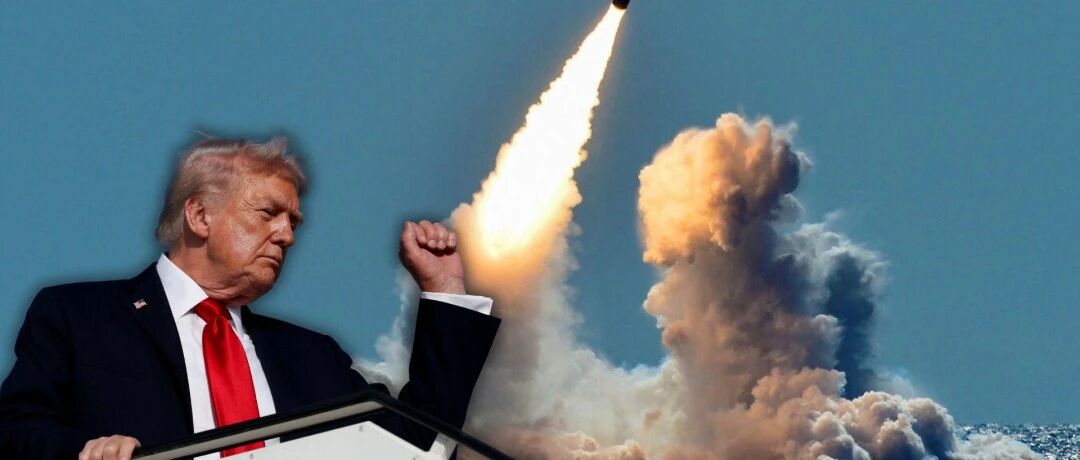
Core Viewpoint - The article discusses the recent executive order signed by President Trump aimed at enhancing the United States' space capabilities, emphasizing military integration with civilian space exploration and setting ambitious goals for lunar missions and satellite deployment [1][3][4]. Group 1: Executive Order and Military Integration - The executive order titled "Ensuring America's Space Advantage" prioritizes manned lunar missions by 2028, the establishment of a permanent lunar base by 2030, and the development of a space security strategy by the Pentagon and intelligence agencies [4][6]. - The Pentagon has announced a $3.5 billion contract for military satellites, indicating a rapid integration of civilian space exploration with military strategy [3][8]. Group 2: Lunar Mission Goals - The 2028 lunar landing goal is seen as highly challenging, similar to a previous directive from 2019, with delays in NASA's Space Launch System and SpaceX's Starship development impacting timelines [5][6]. - The Artemis program aims for the first lunar landing under this initiative, heavily relying on the progress of SpaceX's Starship [6]. Group 3: Satellite Deployment - The $3.5 billion satellite order includes contracts for 72 infrared satellites for missile warning and tracking, set to be launched by 2029 for near-continuous global coverage [4][8]. - The satellites are part of a phased deployment strategy, with the first batch of 154 operational satellites expected to achieve initial operational capability by 2027 [8]. Group 4: NASA Budget and Challenges - NASA faces budget cuts, with a potential reduction of about 25% from its usual $25 billion budget by 2026, which could jeopardize several prioritized space science programs [12]. - The new NASA administrator has indicated a desire to pursue both lunar and Mars missions, reflecting congressional pressure to focus on lunar initiatives [12][13].





美国全面加速太空军备:特朗普定调“太空优势”,35亿美元卫星订单紧随其后
Hua Er Jie Jian Wen· 2025-12-21 10:46
Core Points - The U.S. is initiating the largest militarization of space since the Cold War, with President Trump signing an executive order prioritizing manned lunar missions, establishing a lunar base, and developing space defense systems [1] - The executive order aims for a manned lunar landing by 2028 and a permanent lunar base by 2030, requiring the Pentagon and intelligence agencies to formulate a space security strategy [1][4] Group 1: Lunar Mission Goals - The 2028 lunar landing goal is seen as highly challenging, similar to a previous 2024 directive, with delays in NASA's Space Launch System and SpaceX's Starship affecting timelines [2] - The executive order reinforces NASA's existing goal of developing a long-term lunar base using nuclear energy, originally set during the Obama administration [2] - The Artemis program will mark NASA's first manned lunar mission under this new directive, heavily relying on the development progress of SpaceX's Starship [2] Group 2: Military Satellite Network - The U.S. Space Force's Space Development Agency announced a $3.5 billion satellite order, indicating an acceleration in military space deployment [3] - Four defense contractors will each receive contracts for 18 satellites, enhancing missile warning and tracking capabilities with near-continuous global coverage [3] - This satellite deployment is part of a strategy to launch new batches every two years, with the first batch of 154 satellites expected to achieve initial operational capability by 2027 [3] Group 3: Space Policy Coordination - The executive order restructures the national space policy coordination mechanism, placing it under the leadership of the President's Chief Science Advisor [4] - The National Space Council, previously uncertain in its future, will continue to exist under a new structure, with the President as its chair [4] - The order also calls for the Pentagon and intelligence agencies to develop a space security strategy and encourages private contractors to improve efficiency [4] Group 4: NASA Budget and Dual Goals - NASA is facing financial pressures, with a potential budget cut of about 25% from the usual $25 billion, threatening numerous prioritized space science programs [6] - The new NASA administrator supports targeting both lunar and Mars missions, reflecting Congressional pressure to focus on lunar initiatives [6] - Legislative focus has shifted back to lunar missions, despite previous discussions about prioritizing Mars exploration [6]


日本欲打造本国版星链意欲何为?
Feng Huang Wang Cai Jing· 2025-12-06 12:23
Core Viewpoint - Japan is demonstrating a strong intention to enhance its capabilities in space, particularly in military applications, as indicated by the planned investment in a low Earth orbit satellite constellation project, akin to a Japanese version of "Starlink" [1] Group 1: Military Implications - The low Earth orbit satellite project is perceived as having a significant military aspect, potentially serving as Japan's "shield" rather than merely a communication tool like "Starlink" [1] - The project is part of Japan's broader military modernization efforts, with a budget allocation of 283.3 billion yen, which constitutes 3.25% of its defense spending for the fiscal year 2025 [1] Group 2: Technical Advantages - Low Earth orbit satellites, typically positioned below 2,000 kilometers, allow for the deployment of a large number of satellites, enhancing resilience against attacks [1] - The system's robustness means that even if several satellites are destroyed, the overall performance remains largely unaffected, providing a strong countermeasure capability in conflict scenarios [1]
警惕!日本企图打造“宇宙作战集团”
Huan Qiu Shi Bao· 2025-12-04 22:51
Core Viewpoint - Japan is increasingly pursuing military expansion under the guise of "self-defense," with a focus on developing its space military capabilities, including the establishment of a dedicated space operations unit within its Air Self-Defense Force [1][2][3]. Group 1: Military Expansion Plans - Japan's government is actively promoting military expansion, with plans to reorganize the Air Self-Defense Force into an "Aerospace Self-Defense Force" by 2026, and to upgrade its space operations unit to a "Space Operations Group" by 2026 [1][2]. - The revised National Security Strategy emphasizes strengthening space security, indicating Japan's commitment to enhancing its military capabilities in space [1][2]. Group 2: Development of Space Operations - Japan has established two space operations teams within the Air Self-Defense Force, each consisting of approximately 20 personnel, focusing on research and monitoring foreign satellites [2]. - The "Space Operations Group," formed in 2022, has an initial strength of about 70 personnel and is tasked with tracking foreign satellites and developing space situational awareness systems [2][3]. Group 3: U.S. Support and Collaboration - The establishment of a U.S. Space Force command in Japan aims to enhance cooperation in space monitoring and information sharing, particularly in response to increasing Chinese space activities [3]. - Japan's military development in space is supported by intelligence-sharing mechanisms with the U.S., which will continue to play a crucial role in Japan's military capabilities [4]. Group 4: Future Military Capabilities - Japan aims to improve its satellite capabilities, including the development of a satellite constellation for enhanced monitoring and tracking of hypersonic glide weapons and space debris [3]. - The integration of space capabilities with existing air defense and reconnaissance systems is a priority for Japan's military strategy [3].
日本新动作曝光!拟打造“宇宙作战集团”
中国基金报· 2025-12-04 04:59
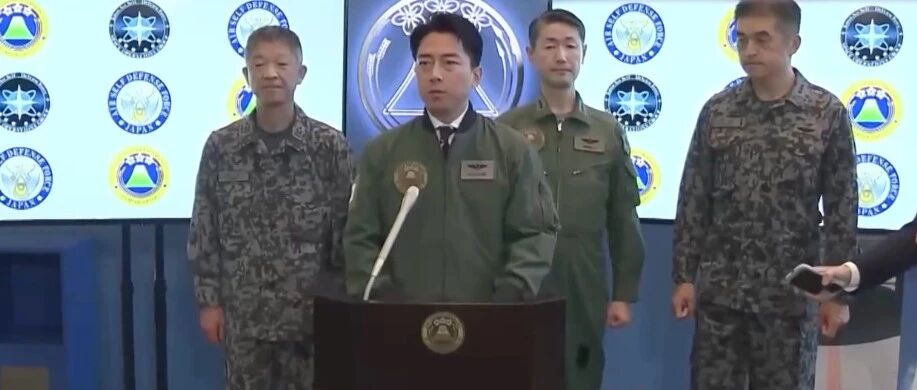
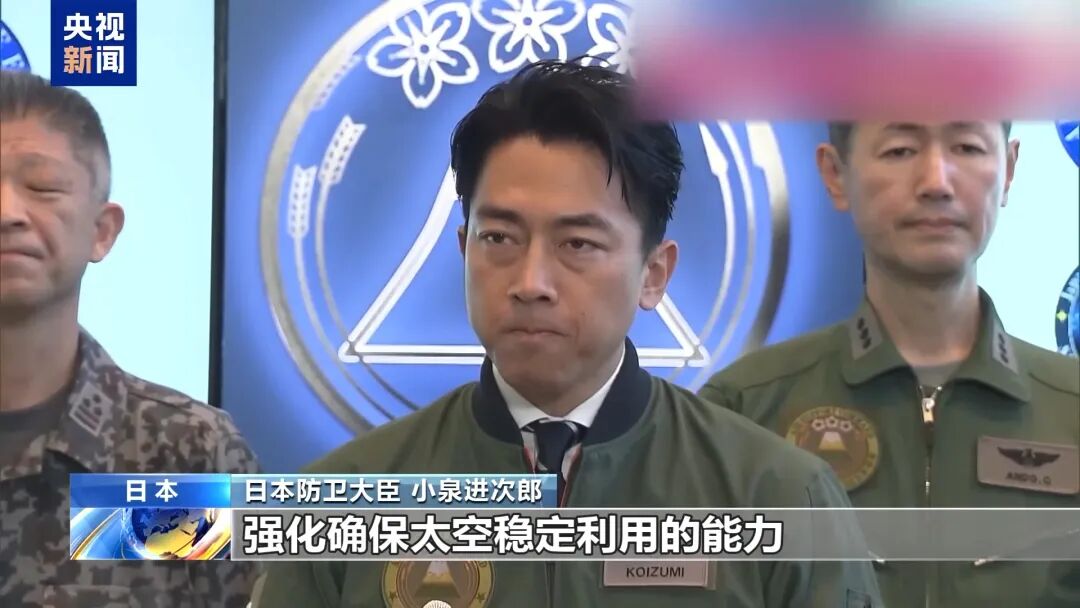
Core Viewpoint - Japan is actively pursuing the militarization of space, with plans to establish a "Space Operations Group" as part of its defense strategy, reflecting a shift towards more aggressive military capabilities under the guise of "self-defense" [1][3]. Group 1: Space Military Development - Japan's Defense Minister, Koizumi Shinjiro, emphasized the importance of space for both military and civilian purposes, indicating a strong commitment to enhancing space capabilities [1]. - The Japanese government plans to reorganize the Air Self-Defense Force into an "Aerospace Self-Defense Force" by 2026, with the "Space Operations Group" expected to be upgraded by 2025 [1]. - Japan is developing "bodyguard satellites" to strengthen its space defense capabilities and is investing in a "low-orbit satellite constellation" project, akin to the Starlink initiative [1]. Group 2: Strategic Military Considerations - Japan aims to build a comprehensive space reconnaissance system using optical infrared imaging satellites and radar reconnaissance satellites to monitor foreign military targets, thereby supporting offensive operations [2]. - The restructured Aerospace Self-Defense Force will conduct joint exercises and training with the U.S. Space Force, extending the U.S.-Japan military alliance into space [3]. - There is a potential for Japan to develop orbital combat platforms similar to the U.S. military's X-37B unmanned spaceplane, indicating a significant shift towards space warfare capabilities [3]. Group 3: Regional Military Deployment - Japan is enhancing its military presence in the southwestern region, particularly in Okinawa, with plans to upgrade the Ground Self-Defense Force's 15th Brigade to a division by 2027, focusing on island defense operations [5]. - The deployment of advanced missile systems, such as the Type 03 medium-range surface-to-air missile and extended-range variants of the Type 12 anti-ship missile, is aimed at providing fire support and protection for Japan's Ground Self-Defense Forces [5][6]. - The establishment of the "Okinawa Defense Group" is seen as a preparation for potential large-scale island operations, reflecting Japan's offensive military posture [5].
推进太空军事化 日本拟打造“宇宙作战集团”
Yang Shi Xin Wen· 2025-12-04 02:42
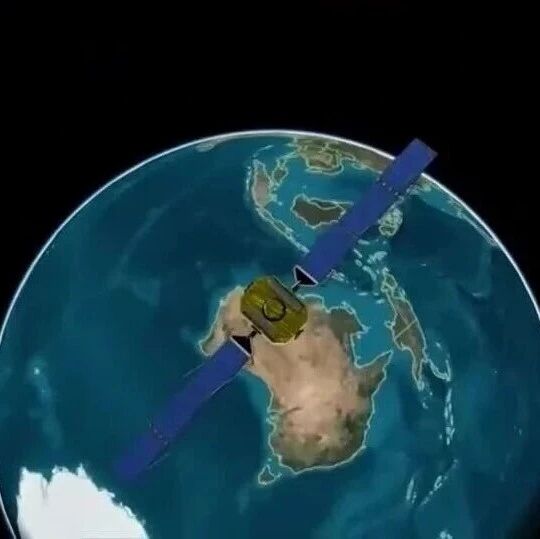
Group 1 - Japan plans to invest heavily in a low Earth orbit satellite constellation project, referred to as the Japanese version of "Starlink" [1] - The Japanese government is increasingly focused on military expansion under the banner of "self-defense," with plans to establish a dedicated "Aerospace Self-Defense Force" by 2026 [1][2] - The Japanese Defense Minister emphasized the importance of space as a critical area for both military and civilian purposes, indicating a strong intent to enhance space capabilities [1][2] Group 2 - Japan aims to develop a comprehensive space reconnaissance system using optical and radar satellites to monitor foreign military targets and support offensive operations [2] - The country plans to utilize military communication and navigation satellites to support its Self-Defense Forces' deployments in the Indian and Pacific Oceans [2] - New early warning satellites will be launched to strengthen Japan's overall missile defense capabilities, reducing the effectiveness of other nations' ballistic missile capabilities [2] Group 3 - Japan is enhancing its military presence in the southwestern region, particularly in Okinawa, with plans to deploy advanced missile systems [3] - The Ground Self-Defense Force's 15th Brigade stationed in Okinawa is set to expand into a division by 2027, indicating preparations for potential large-scale island operations [3] - The deployment of advanced missile systems in the southwestern islands is aimed at providing support and firepower for Japan's Ground Self-Defense Forces, reflecting an offensive military posture [3]
日本新动作曝光!拟打造“宇宙作战集团”
Xin Lang Cai Jing· 2025-12-04 02:17
Core Viewpoint - The Japanese government, under Prime Minister Suga Yoshihide, is aggressively pursuing military expansion under the guise of "self-defense," with a strong focus on enhancing capabilities in space and the southwestern region of Japan [1][10]. Group 1: Military Expansion Plans - Japan's Defense Minister, Koizumi Shinjiro, emphasized the importance of space as a critical area for both military and civilian purposes during his visit to the Air Self-Defense Force base [1][11]. - The Japanese government plans to reorganize the Air Self-Defense Force into an "Aerospace Self-Defense Force" by the fiscal year 2026, with the specialized space unit "Space Operations Group" expected to be upgraded to a "Space Operations Corps" by 2025 and further to a "Space Operations Group" in 2026 [1][10]. Group 2: Space Defense Initiatives - Japan has proposed the development of "guardian satellites" to enhance its space defense capabilities and plans to invest heavily in a project referred to as Japan's version of the "Starlink" program, aimed at creating a low Earth orbit satellite constellation [5][10]. - The Defense Minister noted the increasing importance of space and the active development of technologies to disrupt or incapacitate foreign satellites, indicating a commitment to strengthening Japan's capabilities in ensuring space stability [3][11]. Group 3: Southwestern Military Deployment - Japan is intensifying its military presence in the southwestern region, with recent inspections by the Defense Minister in Okinawa, focusing on the deployment of the Ground Self-Defense Force on Ishigaki Island and Yonaguni Island [6][10]. - The main command center for operations in the southwestern region, Okinawa Island, is home to the 15th Brigade of the Ground Self-Defense Force, which is set to expand and be upgraded to a nearly 4,000-strong 15th Division by 2027, forming a "Okinawa Defense Group" primarily for island defense operations [8][13].
日本拟打造“宇宙作战集团”
第一财经· 2025-12-04 01:25
Core Viewpoint - Japan's government is increasingly pursuing military expansion under the guise of "self-defense," with significant developments in space military capabilities and regional military deployments [1][3]. Group 1: Space Military Expansion - Japan plans to restructure its Air Self-Defense Force into an "Aerospace Self-Defense Force" by the fiscal year 2026, with a dedicated space combat unit expected to be upgraded to a "Space Operations Group" by 2026 [1][3]. - The Japanese Defense Minister emphasized the importance of space for both military and civilian purposes, indicating a strong commitment to enhancing space capabilities [3]. - Japan is developing "bodyguard satellites" for space defense and plans to invest heavily in a "low-orbit satellite constellation" project, akin to the U.S. Starlink program [3][6]. Group 2: Military Deployment in Southwestern Japan - Japan is reinforcing its military presence in the southwestern region, particularly in Okinawa, with plans to deploy advanced missile systems [7][10]. - The Ground Self-Defense Force's 15th Brigade stationed in Okinawa is set to expand into a 15th Division by 2027, with a focus on island defense operations [10][12]. - The deployment of advanced missile systems, such as the Type 03 medium-range air defense missile and the Type 12 anti-ship missile, indicates a shift towards offensive military capabilities rather than purely defensive measures [12].