Novartis

Search documents
2026年全球与中国FAK抑制剂行业产业链、市场规模、竞争格局及发展趋势研判:中国首个选择性FAK抑制剂预计将于2026年获批,市场将迎来爆发增长 [图]
Chan Ye Xin Xi Wang· 2025-12-25 01:33
Core Insights - The first selective FAK inhibitor received FDA approval in May 2025 for treating KRAS-mutant recurrent low-grade serous ovarian cancer (LGSOC) [4] - The global market for selective FAK inhibitors is projected to grow from approximately $6.1 million in 2025 to $5,561.5 million over the next decade [4][6] - China's first selective FAK inhibitor is expected to be approved in 2026, with a market size of about $3.2 million, representing 7.48% of the global market [6] - By 2029, the Chinese market for selective FAK inhibitors is anticipated to reach $254.9 million, accounting for 58.06% of the global market [6] FAK Inhibitor Industry Definition and Classification - FAK (Focal Adhesion Kinase) is a non-receptor tyrosine kinase involved in multiple signaling pathways related to tumor cell invasion, migration, proliferation, and survival [2][3] - FAK inhibitors, also known as focal adhesion kinase inhibitors, disrupt FAK's phosphorylation, affecting downstream signaling events [2][3] - FAK inhibitors can be classified based on binding sites (kinase domain inhibitors, FERM domain inhibitors, FAT domain inhibitors, and PROTACs) and binding methods (small molecule ATP-competitive inhibitors, allosteric inhibitors, and dual-target inhibitors) [2] FAK Inhibitor Industry Development Status - The selective FAK inhibitor market is experiencing significant growth, driven by the increasing global cancer treatment market [4][6] - The industry is characterized by a limited number of approved products, with only one selective FAK inhibitor approved globally as of September 2025 [9] FAK Inhibitor Industry Competitive Landscape - Major companies in the selective FAK inhibitor space include GSK, Pfizer, Amplia Therapeutics, and Novartis, with domestic companies like HaiChuang and YingShi Biotechnology also making significant advancements [9][10] - The competitive landscape is evolving, with numerous candidates in clinical and preclinical stages, indicating a robust pipeline for future developments [9] FAK Inhibitor Industry Development Trends - The FAK inhibitor market is expected to expand rapidly, particularly in China, where the first product approval is anticipated in 2026 [12] - The ability of FAK inhibitors to reshape the tumor microenvironment positions them as a promising new option in cancer treatment, driving further research and investment in this area [12]


Amgen Strikes Drug Pricing Deal With Trump: What Investors Should Know
ZACKS· 2025-12-24 16:36
Core Insights - Amgen (AMGN) has signed a significant agreement with the Trump administration to reduce drug prices in the U.S. [1] Group 1: Drug Pricing and Discounts - The agreement addresses major concerns in the pharmaceutical industry regarding drug pricing and tariffs, aligning Amgen's drug prices with those in other developed countries [2] - Amgen's direct-to-consumer (DTC) program, AmgenNow, offers substantial discounts, starting with its cholesterol-lowering drug Repatha at $239 per month, which is nearly a 60% discount from its U.S. list price [3] - The DTC program will also include migraine drug Aimovig and Humira biosimilar Amjevita, priced at $299 per month, reflecting discounts of 60% and 80% respectively [3] Group 2: Financial Terms and Investments - While specific financial terms of the agreement were not disclosed, it is expected to include a three-year exemption from import tariffs on pharmaceutical ingredients, contingent on increasing domestic manufacturing capacity [4] - Amgen plans to invest an additional $2.5 billion in U.S. production and research, which includes a $600 million science and innovation center in California, a $900 million manufacturing expansion in Ohio, and a $1 billion facility in North Carolina [4] Group 3: Industry Collaboration - Amgen is part of a broader trend, with eight other large-cap drugmakers, including Bristol Myers, GSK, and Merck, also entering similar agreements with the administration [5] - Some companies have committed to donating active pharmaceutical ingredients (API) to a government stockpile to enhance supply chain resilience during emergencies [6] - The Trump administration has now reached agreements with 14 out of 17 large drug manufacturers called to lower prices, improving investor sentiment towards the pharmaceutical sector [7] Group 4: Valuation and Performance - Amgen's shares have outperformed the industry year to date, trading at a price/earnings (P/E) ratio of 15.34, which is below the industry average of 17.48 [8][11] - EPS estimates for 2025 and 2026 have increased over the past 60 days, indicating positive market expectations [12]

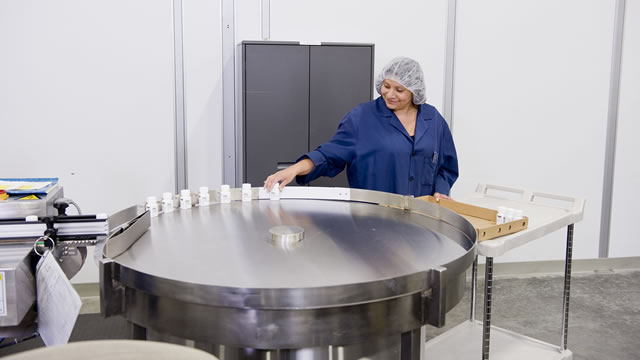
Drug Sector on a High as 9 Drugmakers Strike Drug Pricing Deals
ZACKS· 2025-12-22 14:31
Core Insights - The Trump administration has signed drug-pricing agreements with several large-cap drugmakers to lower drug prices in the U.S. [1] - The agreements require drugmakers to reduce prescription drug prices to match those in comparable developed countries, supporting the Most Favored Nation (MFN) pricing proposal [2] - Drugmakers will receive a three-year exemption from import tariffs on pharmaceutical ingredients in exchange for expanding domestic manufacturing operations [3] - Some companies will donate active pharmaceutical ingredients (APIs) to a government stockpile to ensure supply chain resilience during emergencies [4] - The Trump administration has now reached deals with 14 out of 17 targeted drug manufacturers, with three companies still in discussions [5] Industry Impact - The agreements address major concerns regarding drug pricing and tariffs, improving investor outlook for the pharmaceutical sector [6] - The deals are seen as a turning point that could alleviate regulatory and pricing pressures on the industry [7] - The latest agreements involve nine major drugmakers, joining others like Pfizer and AstraZeneca who signed similar deals earlier [8]



2 Top Stocks to Buy and Hold for the Long Term
The Motley Fool· 2025-12-22 07:30
Group 1: Novartis - Novartis is a strong long-term investment candidate due to its innovative pipeline and diversified product offerings, with 10 products generating over $1 billion in sales each as of September 30 [4][5] - The company has shown resilience against patent cliffs, with a revenue increase of 8% year-over-year to $13.9 billion and earnings per share of $2.25, which is 9% higher than the previous year [6][7] - Novartis has a solid dividend history, increasing payouts for 28 consecutive years, currently offering a forward yield of 3%, significantly higher than the S&P 500 average of 1.2% [10] Group 2: Shopify - Shopify has experienced a 50% stock increase this year, driven by strong financial results and a vision to build a sustainable 100-year company [11] - The platform is a leader in the e-commerce market, providing customizable templates and a range of services that facilitate efficient business operations for merchants [12] - Shopify's market share grew from 10% at the end of 2023 to 12% by the end of 2024, benefiting from high switching costs for merchants [14] - The company has improved its profitability, achieving net income in three out of the last four quarters, positioning itself well for continued dominance in the e-commerce sector [15]



The Trump Market: A Rollercoaster of Tweets, Tariffs, and Unexpected Fusion
Stock Market News· 2025-12-21 18:00
Group 1: Market Volatility and Reactions - The year 2025 has been marked by significant market volatility, heavily influenced by presidential announcements, particularly from Donald Trump, leading to rapid fluctuations in market values [1] - Following the announcement of a 10% universal tariff on all US imports, the S&P 500 dropped over 10%, erasing approximately $5 trillion from global markets [5] - A subsequent 90-day pause on new reciprocal tariffs resulted in a market rebound, with the S&P 500 surging 9.52% [5][6] Group 2: Trump Media & Technology Group (DJT) - Trump Media & Technology Group (DJT) saw its stock surge 13.03% after announcing a merger with TAE Technologies, a nuclear fusion company, indicating a pivot from social media to energy [3] - DJT stock closed at $16.80 before the merger announcement, marking a significant rise, and trading volume reached 99.5 million shares, 1,265% above its three-month average [3] - Despite the recent surge, DJT stock remains down 58% over the past year, highlighting ongoing volatility [3] Group 3: Pharmaceutical Industry Developments - Trump announced new drug pricing deals with nine major pharmaceutical companies, including Merck and Pfizer, aimed at lowering Medicaid drug prices [7] - Merck committed to approximately 70% discounts on diabetes treatments, while Pfizer agreed to significant price cuts and a $70 billion investment in U.S. research [8] - These deals included a three-year exemption from Section 232 tariffs for the pharmaceutical companies, creating a win-win scenario for both the industry and consumers [8] Group 4: Nvidia and Geopolitical Dynamics - The U.S. government approved the export of Nvidia's H200 chips to select Chinese customers, with a 25% revenue cut going to the government, reflecting complex geopolitical dynamics [9][10] - Nvidia's stock saw a positive reaction, closing at $176.29 and rising to $183.40 following the announcement, despite ongoing investor caution regarding China exposure [10] Group 5: Economic Overview - Despite stock market gains of 13% to 20% year-to-date, public sentiment regarding the economy remains low, with 70% of Americans describing it as "poor" [11] - Trump's approval rating on economic performance has dropped to between 31-39%, indicating a disconnect between market performance and public perception [11] - The Federal Open Market Committee has been cutting interest rates to stimulate the economy, reflecting concerns about rising prices and unemployment [12]


The Trump Market Medley: Tariffs, Dividends, and the Pharma Paradox
Stock Market News· 2025-12-20 18:00
Group 1: Drug Pricing Agreements - President Trump announced "historic" drug pricing agreements with nine major pharmaceutical companies, including Amgen, Bristol Myers Squibb, and Merck, aimed at reducing prices for Medicaid and direct-to-consumer sales through TrumpRx.gov [2][3] - The agreements are intended to align U.S. drug costs with the lowest prices paid by other developed nations, a concept known as "most-favored-nation" pricing [2] Group 2: Market Reactions to Drug Pricing - Despite the price cuts, pharmaceutical stocks saw gains, with GSK rising 1%, Merck gaining 1%, and Gilead Sciences surging approximately 3% [3] - The rally in stock prices is attributed to tariff exemptions secured by these companies in exchange for their pricing agreements, which alleviated potential tariff burdens [3][4] Group 3: Tariff Impacts - The U.S. effective tariff rate increased from 2.4% to 16.8%, the highest since 1935, contradicting claims that tariffs would reduce costs [5] - Market reactions to tariff announcements have been volatile, with significant drops in major indices following threats of tariff increases, such as a 2.7% decline in the S&P 500 on October 11, 2025 [6][8] Group 4: Economic Analysis of Tariffs - Analysts from Goldman Sachs warned that increased tariffs could significantly impact growth, estimating a reduction of nearly 0.7 percentage points from China's growth in 2025 [8] - The Tax Foundation labeled Trump's tariffs as the "largest tax hike since 1993," estimating an average increase of $1,100 per U.S. household in 2025 [8] Group 5: Warrior Dividend Announcement - President Trump announced a "$1,776 'warrior dividend'" for U.S. military personnel, funded by tariffs, totaling an estimated $2.6 billion [9][10] - Reports clarified that these payments were not new funds from tariffs but repurposed from existing military housing supplements, indicating a rebranding of existing funds rather than a new financial initiative [10][11] Group 6: Overall Economic Environment - The unpredictable nature of Trump's economic policies has led to erratic market behavior, with investors needing to navigate through rhetoric and actual economic impacts [12] - The combination of drug pricing agreements, tariff threats, and the warrior dividend illustrates the complex interplay of policy and market reactions in the current economic landscape [12]
Trump’s Market Maelstrom: Deals, Fusion, and the Perpetual Tariff Tango
Stock Market News· 2025-12-20 06:00
Group 1: Drug Price Cuts and Pharmaceutical Stocks - President Trump announced significant drug price cuts in collaboration with nine major pharmaceutical companies, aiming to align U.S. drug costs with those in other developed nations [2] - Despite the announcement of price cuts, shares of involved drugmakers like GSK, Merck, Amgen, Novartis, Sanofi, and Roche rose by approximately 1% to 3%, as the deals removed the immediate threat of punitive tariffs for three years [3] - Analysts noted that the deals serve more as a public relations strategy rather than a substantial change in company economics, with Medicaid already benefiting from significant discounts [4] Group 2: Market Reactions to Health Insurers - Major health insurers such as Cigna, CVS Health, Elevance Health, and UnitedHealth Group experienced an initial dip of about 1% following Trump's comments but quickly recovered, indicating a market accustomed to Trump's policy announcements [5] Group 3: Merger of Trump Media & Technology Group and TAE Technologies - Trump Media & Technology Group announced a merger with TAE Technologies, valuing the combined entity at $6 billion, which led to a 42% surge in DJT shares, closing at $14.86 [7] - The merger has drawn mixed reactions, with some analysts viewing it as a significant move towards creating a public nuclear fusion company, while others criticized it as a questionable venture [9] Group 4: Tariff Threats and Market Volatility - Throughout 2025, Trump's threats and impositions of tariffs, particularly against China, have caused significant market volatility, including a $5 trillion market wipeout following an April tariff announcement [11] - The S&P 500 and Nasdaq Composite experienced substantial declines during tariff threats, but the market has shown resilience, often recovering to new highs [12] Group 5: Overall Market Environment - As 2025 concludes, the financial markets continue to be influenced by Trump's unpredictable policies, creating a landscape where traditional analysis is often overshadowed by political developments [13]
3 Cancer Stocks to Buy Amid Rapid Advances in Cancer Treatment
ZACKS· 2025-12-18 16:40
Industry Overview - The global oncology market is evolving significantly due to rising cancer incidence and rapid scientific advancements, with the American Cancer Society estimating approximately 2.04 million new cancer diagnoses and over 618,000 cancer-related deaths in the U.S. by 2025 [2] - Aging populations and lifestyle-related risk factors are contributing to higher cancer prevalence, leading to sustained growth in healthcare spending on oncology [2] Innovation in Cancer Care - Breakthroughs in immunotherapies, targeted treatments, and personalized vaccines are expanding therapeutic options beyond conventional chemotherapy and radiation [3] - Immune-based strategies, including checkpoint inhibitors and CAR-T therapies, are harnessing the body's immune system to target tumors, while targeted therapies focus on specific genetic alterations [3] - Emerging technologies like genomic sequencing, AI, and machine learning are enhancing biomarker discovery and supporting earlier diagnosis, improving survival rates and quality of life across several cancer types [4] Pharmaceutical Investment - Major pharmaceutical companies, including Novartis, AstraZeneca, Johnson & Johnson (J&J), Pfizer, AbbVie, Merck, Bristol Myers Squibb, and Eli Lilly, are investing aggressively in oncology portfolios with new therapies such as antibody-drug conjugates and bispecific antibodies [5] - Smaller biotech firms are also crucial in driving innovation through partnerships, licensing agreements, and acquisitions [5] Market Dynamics - Oncology is considered one of the most durable and attractive segments within the global healthcare sector for long-term investors, supported by ongoing innovation and favorable reimbursement dynamics [6] Company Focus: Johnson & Johnson - J&J's oncology segment currently accounts for approximately 27% of its total revenues, with oncology sales rising 20.6% to $18.52 billion in the first nine months, driven by key products like Darzalex and Erleada [9] - J&J's oncology pipeline has gained momentum with promising developments in colorectal and head and neck cancers, and the company expects its oncology sales to reach $50 billion by the end of the decade [10][12] - J&J is also enhancing its oncology pipeline through M&A, including a recent agreement to acquire Halda Therapeutics [11] Company Focus: ImmunityBio - ImmunityBio's lead drug, Anktiva, was approved for treating BCG-unresponsive non-muscle invasive bladder cancer, generating $74.7 million in sales with a 467% increase in volume [13] - The drug is under review in the EU, and ImmunityBio is evaluating Anktiva for expanded use in other cancer indications [15] Company Focus: Foghorn Therapeutics - Foghorn Therapeutics is developing precision therapies targeting genetically driven vulnerabilities, with a collaboration with Lilly to co-develop its selective SMARCA2 oncology program [17] - Foghorn's lead candidate, FHD-909, is advancing in a phase I study for SMARCA4-mutated cancers, with initial data expected in 2026 [17][18]




Lunai Bioworks (NASDAQ: LNAI) Featured in International Business Times as AI Partnership Talks Advance
Prnewswire· 2025-12-18 14:00
AI-powered drug discovery and biodefense company engages pharma on CNS programs amid rising deal activity SACRAMENTO, Calif., Dec. 18, 2025 /PRNewswire/ -- Lunai Bioworks Inc. (NASDAQ: LNAI), an AI-driven pharmaceutical discovery company, was featured in International Business Times in a year-end analysis highlighting the company's strategic positioning, active partnership discussions, and favorable market dynamics as 2025 draws to a close. International Business Times also examined several company-specific ...

REGENXBIO to Present at the 44th Annual J.P. Morgan Healthcare Conference
Prnewswire· 2025-12-18 12:05
Core Viewpoint - REGENXBIO Inc. will present at the 44th Annual J.P. Morgan Healthcare Conference, highlighting its advancements in gene therapy and its late-stage pipeline of treatments for rare and retinal diseases [1][2]. Company Overview - REGENXBIO is a biotechnology company founded in 2009, focused on gene therapy with a pioneering role in AAV gene therapy [3]. - The company is advancing a late-stage pipeline that includes treatments for Duchenne (RGX-202), MPS II (clemidsogene lanparvovec, RGX-121), and MPS I (RGX-111), in partnership with Nippon Shinyaku [3]. - Additionally, REGENXBIO is collaborating with AbbVie on surabgene lomparvovec (ABBV-RGX-314) for wet AMD and diabetic retinopathy [3]. - Thousands of patients have been treated using REGENXBIO's AAV platform, including those receiving Novartis' ZOLGENSMA® [3]. - The investigational gene therapies from REGENXBIO have the potential to significantly impact healthcare delivery for millions [3].