Samsung

Search documents
iPhone曾经的心脏,现在更以Pixel形态出击
3 6 Ke· 2025-08-28 07:02
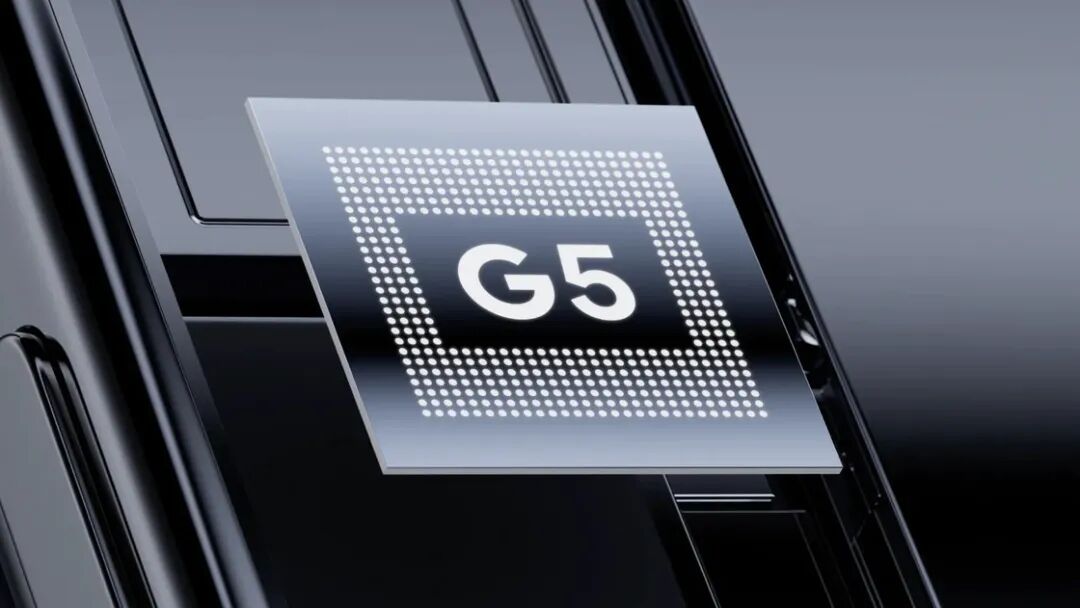
Group 1 - Google recently launched the Pixel 10 series, featuring the new Tensor G5 chip manufactured by TSMC [1] - The Tensor G5 chip marks a significant advancement as it moves away from the Exynos architecture, enhancing Google's in-house development capabilities [3] - The GPU of the Tensor G5 utilizes Imagination's PowerVR architecture, which has a storied history in the graphics technology sector [5] Group 2 - Imagination Technologies, originally founded as VideoLogic, transitioned to focus on 3D graphics acceleration in the early 1990s, leading to the development of the PowerVR architecture [6][7] - The PowerVR architecture introduced Tile-Based Deferred Rendering (TBDR), which significantly improved rendering efficiency and reduced power consumption [9][13] - Imagination's business model evolved from hardware sales to IP licensing, allowing it to partner with semiconductor manufacturers like NEC and STMicroelectronics [14][19] Group 3 - The collaboration with Sega for the Dreamcast console solidified PowerVR's reputation in the gaming industry, leading to substantial sales and market presence [18] - However, the decline of the Dreamcast due to competition from Sony's PlayStation 2 exposed Imagination's vulnerability due to over-reliance on a single client [20][22] - Imagination shifted its focus to the mobile sector, recognizing the growing importance of 3D acceleration in mobile devices, which aligned well with PowerVR's low-power design [23][25] Group 4 - The partnership with Apple began with the first iPhone, where PowerVR GPUs were integrated into Apple's A-series chips, leading to significant revenue growth for Imagination [26][28] - This relationship, however, created a dependency that became problematic when Apple announced plans to develop its own GPU architecture, leading to a dramatic drop in Imagination's stock price [31][33] - Following the loss of Apple as a major client, Imagination was acquired by Canyon Bridge, prompting a strategic shift towards diversification and new market opportunities [34][37] Group 5 - Imagination has since focused on four strategic pillars: automotive electronics, data centers, mobile device GPUs, and edge AI computing [37] - The recent partnership with Google for the Tensor G5 indicates a potential resurgence for PowerVR in the mobile GPU market, although challenges remain regarding compatibility and performance [50][54] - The future of PowerVR remains uncertain, but the renewed collaboration with Google could provide a pathway for revitalization within the Android ecosystem [56]


全球半导体:《芯片法案 3》,中国资本支出持续增长,尽管面临挑战,迁移仍在推进Global Semis_ CHIPS Act 3_ China capex continues to grow; migration ongoing despite challenges
2025-08-28 02:12
Summary of Semiconductor Industry Conference Call Industry Overview - The conference call focuses on the **semiconductor industry in China**, particularly in the context of the **CHIPS Act** and its implications for capital expenditures (capex) and technology development [1][4][5]. Key Points Capital Expenditures (Capex) - China's semiconductor capex is projected to increase to **US$43 billion to US$46 billion** for the period **2025-2030**, up from previous estimates of **US$40 billion to US$44 billion** [4][16]. - A strong investment of **US$41 billion** was recorded in **2024**, representing a **19% year-over-year increase** [4][16]. - The investment focus is expected to shift towards **memory** and **advanced node technologies**, with local suppliers anticipated to contribute **26%** of wafer fabrication equipment procurement in **2025**, increasing to **36%** by **2030** [4][16]. Demand and Supply Chain Migration - The semiconductor supply chain in China is undergoing significant migration, with expansions in **CIS**, **automotive chips**, and **AI chips** [5]. - Local foundries and OSATs are enhancing their manufacturing technologies, driven by structural technology innovations and better services [5]. Lithography Demand - An estimated **2,261 additional lithography systems** will be required by **2035** to meet the projected chip demand in China, necessitating an investment of approximately **US$110 billion** [6][39]. - The breakdown of required lithography systems includes **212 EUVs**, **843 immersion DUVs**, and **2,564 dry DUV/UV systems** [39]. Market Dynamics - The semiconductor market in China is expected to see a **5% to 1%** growth in capex from **2025 to 2030**, driven primarily by foundries and memory players, which will account for about **80%** of the capex [16][22]. - Chinese semiconductor manufacturers are projected to capture **17%** of the semiconductor demand value in **2024**, increasing to **37%** by **2030** [33]. Equipment Market - The Wafer Fabrication Equipment (WFE) market in China is expected to reach **US$41 billion** by **2026**, with local suppliers increasing their market share from **17%** in **2024** to **36%** by **2027** [28][32]. - The growth in WFE revenues is attributed to the increasing semiconductor spending, with China expected to account for **37% to 38%** of global WFE spending in **2025-2027** [28]. Implications for Global Suppliers - US suppliers are expected to maintain a strong market share in China's WFE spending, despite facing challenges from local manufacturers and export controls [45]. - Japanese SPE manufacturers may see a gradual decline in their market share in China, although they will still benefit from the high capex environment [49]. Additional Insights - The semiconductor industry in China is characterized by a robust local ecosystem supported by ongoing technology development and a large home market [1][4]. - The demand for lithography systems is critical for meeting future chip production needs, highlighting the importance of investment in R&D and local manufacturing capabilities [6][39]. This summary encapsulates the key insights and projections regarding the semiconductor industry in China, emphasizing the growth in capital expenditures, the demand for advanced technologies, and the evolving dynamics of the supply chain.




Cadence Design Systems (CDNS) 2025 Conference Transcript
2025-08-27 20:32
Summary of Cadence Design Systems (CDNS) Conference Call Company Overview - **Company**: Cadence Design Systems (CDNS) - **Event**: 2025 Conference Call - **Date**: August 27, 2025 Key Industry Insights - **EDA Landscape**: The current Electronic Design Automation (EDA) landscape is characterized by significant opportunities driven by advancements in AI and chip design technologies [2][4] - **AI Super Cycle**: The AI super cycle is a major focus, with customers pushing the boundaries in chip design, including 3D IC and advanced packaging [4][5] - **Customer Base**: Cadence has strong partnerships with leading companies such as NVIDIA, Intel, Samsung, and TSMC, which enhances its market position [5][6] Financial Performance - **Backlog**: Cadence finished the previous year with a record backlog of $6.8 billion, which decreased to $6.4 billion by mid-year. However, strong booking activity is expected to lead to a new record backlog by year-end [26][28] - **Revenue Model**: Approximately 80% of Cadence's revenue is ratable, primarily from subscription-based models, which allows for gradual revenue recognition as customer adoption increases [8][10] Product Development and Innovation - **cadence.ai Portfolio**: The cadence.ai portfolio is expanding, with significant adoption beyond the top five customers. The introduction of products like Cerberus AI Studio is expected to enhance productivity and reduce time to market by 5x to 10x [14][6] - **Integration of AI**: The integration of AI tools is leading to increased productivity and faster time to market for customers, which in turn is expected to result in earlier revenue recognition for Cadence [10][12] Competitive Landscape - **ANSYS Merger Impact**: The recent merger of ANSYS is viewed as neutral to positive for Cadence, as it may lead to increased competition but also provides opportunities for customers to explore alternatives [20][22] - **Market Position**: Cadence maintains a strong competitive position against Synopsys, with both companies benefiting from healthy competition that drives innovation [21][22] Customer Dynamics - **Intel Relationship**: There is potential for increased business with Intel, especially under new leadership. Cadence is well-positioned to support Intel's needs with silicon-ready IP and tools for advanced nodes [40][42] - **China Market**: The Chinese market is expected to remain volatile, but Cadence's revenue is based on consumption rather than geographical location, which mitigates risks associated with regional fluctuations [44][46] M&A Strategy - **Acquisition Philosophy**: Cadence prefers to develop internally rather than pursue large acquisitions. The company focuses on small, strategic tuck-in acquisitions that align with its long-term growth strategy [56][66] - **Talent Retention**: Cadence emphasizes retaining AI talent by providing opportunities to work on innovative projects, which is crucial given the competitive landscape for skilled professionals [59][60] Conclusion - Cadence Design Systems is well-positioned in the EDA market, leveraging its strong customer relationships and innovative product offerings to capitalize on the AI super cycle. The company is focused on sustainable growth through strategic partnerships, a diversified product portfolio, and a commitment to internal development over opportunistic acquisitions.

ARM vs. APP: Which AI-Exposed Tech Stock is a Better Buy Right Now?
ZACKS· 2025-08-27 18:46
Core Insights - AppLovin Corporation (APP) and Arm Holdings plc (ARM) are both leveraging artificial intelligence (AI) to enhance their business models, with AppLovin focusing on AI-driven advertising and Arm providing chip architectures for AI hardware performance [1][2] Group 1: AppLovin Corporation (APP) - AppLovin has established itself as a leader in mobile advertising with its AI engine, Axon 2, which has significantly improved ad performance, leading to a quadrupling of advertising spend on its platform [3][4] - The company reported a 77% year-over-year revenue increase in Q2 2025, with adjusted EBITDA rising 99% and net income soaring 156%, indicating strong operational efficiency and market demand [6] - AppLovin's forward P/E ratio is 39.36X, which is more attractive compared to ARM's 73.32X, suggesting a favorable valuation given its stronger earnings growth outlook [9][18] - The Zacks Consensus Estimate predicts a 17% year-over-year sales increase and a remarkable 98% surge in earnings for the current year, highlighting the company's operational leverage [12][15] Group 2: Arm Holdings plc (ARM) - ARM is becoming a key player in AI and IoT, with major tech companies relying on its energy-efficient chip architecture for AI-driven innovations [7][8] - Despite its growth potential, ARM faces risks due to its significant exposure to the Chinese market, where the adoption of RISC-V technology could challenge its position [9][11] - ARM is expected to report an 18% sales growth and a modest 3% increase in EPS, indicating a steadier growth trajectory as it invests in AI-enabled chip innovation [15] Group 3: Comparative Analysis - While both companies are positioned to benefit from AI advancements, AppLovin's ability to convert innovation into profitability more efficiently sets it apart [19] - AppLovin's valuation appears more grounded relative to its earnings potential, offering a favorable risk-reward profile compared to ARM's premium pricing and external risks [18][19] - AppLovin currently holds a Zacks Rank 1 (Strong Buy), while ARM has a Zacks Rank 3 (Hold), indicating a stronger investment outlook for AppLovin [20]



Are you bored with your phone? #Vergecast
The Verge· 2025-08-27 15:01
Market Trends & Consumer Behavior - Boredom with phones is driving consumers to seek alternatives like foldables or phones with unique designs [1] - Foldable phones offer a different user experience, potentially reducing screen time or providing a tablet-like experience [2] Product & Technology - Foldable phones are considered the best option for a significantly different phone experience [2] - "Nothing" phone brand offers a unique design as an alternative to traditional phones [1][2] Regional Differences - High-end Android phones from Chinese OEMs (Xiaomi, Honor, Oppo, Vivo) feature advanced camera technology and designs not found in US iPhones [3] - US market (Samsung, Google, Apple) favors more modest camera designs and impressive camera performance [3]

InterDigital (IDCC) FY Conference Transcript
2025-08-27 13:57
Summary of InterDigital (IDCC) FY Conference Call - August 27, 2025 Company Overview - InterDigital is a technology and research company established in 1972, focusing on advanced wireless technologies, video compression, and AI [4][5] - The company has a strong leadership team, including CEO Liren Chen, who joined from Qualcomm [8][9] Core Business Model - InterDigital operates on a dual track model: - **Technology Track**: Research and development of fundamental technologies, contributing to global standards like 5G and video codecs [10][11] - **Business Track**: Monetization through licensing agreements with major companies [13][30] - The company holds a significant patent portfolio of 34,000 assets, up from 19,000 prior to the Technicolor acquisition [27][28] Industry Position and Achievements - InterDigital is recognized as a leader in the development of standards, holding chair positions in over 100 different standards bodies, including 3GPP for cellular technology [22][24] - The company has been listed among the top 100 most innovative companies globally for four consecutive years [25] - In 2023, InterDigital ranked 24th among the top patent filers in Europe [26] Financial Performance - Revenue has been growing at a compound annual growth rate (CAGR) of approximately 25% since 2020, with adjusted EBITDA margins around 60% [33][51] - The company signed over 40 licensing agreements since 2021, including renewals with Apple and Samsung, which are under long-term licenses [29][30] - Annualized recurring revenue (ARR) has increased significantly, reaching approximately $555 million, with goals of $1 billion by 2030 [40][41] Future Growth Strategy - InterDigital aims to achieve $1 billion in ARR by 2030, with specific targets in various segments: - **Smartphones**: Targeting $500 million in ARR by 2027 [40] - **Consumer Electronics and IoT**: Aiming for $200 million by 2030 [41] - **Streaming and Cloud Services**: Targeting over $300 million, currently at zero [41] - The company plans to maintain a strong balance sheet with close to $1 billion in cash, allowing for continued investment in R&D and potential acquisitions [47][48] Key Technologies and Market Trends - Video technology is crucial, accounting for 80-90% of mobile data traffic, and is essential for the streaming ecosystem [16][19] - The shift from 4G to 5G in the automotive sector is expected to drive growth, particularly for connected and autonomous vehicles [44] Conclusion - InterDigital is positioned as a leader in technology innovation and patent licensing, with a robust growth strategy focused on expanding its market presence and enhancing its technology offerings [51]

全球科技-人工智能供应链 2025 年下半年生产;安卓 AI 手机;AI 工厂分析更新-Global Technology -Correction AI Supply Chain H20 Production; Android AI Phone; AI Factory Analysis Updates
2025-08-27 01:12
Summary of Key Points from the Conference Call Industry Overview - The conference call primarily discusses the **AI semiconductor industry**, focusing on **NVIDIA** and its supply chain dynamics, particularly regarding the **H20 chip** and its implications for the broader market. Core Insights and Arguments 1. **NVIDIA's H20 Chip Production**: - NVIDIA is expected to halt H20 chip production due to China's restrictions on purchases, despite receiving US government approval to resume sales. The CEO emphasized that the H20 chip does not have security backdoor access [2][12] - The forecast for H20 GPU modules has been cut, and server assembly for H20 HGX servers has been halted [2] 2. **Demand for Alternative Chips**: - There is emerging interest from Chinese customers in NVIDIA's B40 chip, which uses GDDR7 instead of HBM, with a forecast of 2 million units demand this year and 5 million next year [2] 3. **AI Factory Token Output Analysis**: - The potential annual profits of a 100MW AI Factory at a price of $0.2 per million tokens have been refined, incorporating new trends in AI inference and adjustments in networking bandwidth assumptions [3] - At a price of $0.3 per million tokens, most chips running Llama 4 400B with MoE can generate profit, including AMD's older generation chip MI300 [3] 4. **AI Inference Demand Growth**: - Monthly token output processed by major cloud service providers (CSPs) indicates strong growth in AI inference demand, with China's token consumption reaching 30 trillion daily by June 2025, a 300x increase from early 2024 [14] - Google processed over 980 trillion tokens in July 2025, doubling from May 2025 [14] 5. **NVIDIA's Market Position**: - NVIDIA's GB200 NVL72 pod continues to show performance dominance in AI inference, driven by its computing power and robust software ecosystem [48] - The company is expected to be conservative regarding supply and China-related variables, with significant revenue potential from China still uncertain [12] 6. **Profitability Estimates for AI Factories**: - A 100MW AI factory could generate approximately $1.28 billion in annual revenue and $722 million in profit at $0.2 per million tokens, with profit margins around 52% [51] - At $0.3 per million tokens, the annual revenue could rise to $1.91 billion with profits of $1.36 billion, yielding a profit margin of approximately 68% [51] Other Important Insights - **Technological Developments**: - The Tensor G5 chip used in Google's Pixel 10 is manufactured using TSMC's 3nm process, indicating advancements in smartphone technology [4][19] - Google introduced several AI features in its new Pixel 10 lineup, which may influence the smartphone market in China and trigger a replacement cycle in 2026 [19] - **Market Sentiment**: - There is a shift towards more optimistic sentiment regarding AI semiconductors, with some analysts projecting October revenue for the sector at $52.5 billion, with potential upside [11] - **Challenges and Limitations**: - The research acknowledges limitations in estimating real-world performance versus theoretical models, emphasizing the dynamic nature of AI inference workloads and the complexities involved in quantifying various performance metrics [58] This summary encapsulates the key points discussed in the conference call, highlighting the current state and future outlook of the AI semiconductor industry, particularly focusing on NVIDIA and its competitive landscape.

Apple's iPhone 17 Invites Are Out: Here's What Could Come On Sept. 9
CNET· 2025-08-26 16:51
Core Insights - Apple is set to hold its annual fall iPhone launch event on September 9 at 10 a.m. PT, where it is expected to unveil the iPhone 17 lineup, Apple Watch Series 11, and AirPods Pro 3 [1][2] Product Launch Expectations - The iPhone 17 lineup may include a slimmer version called the iPhone 17 Air, featuring a lightweight design similar to Samsung's Galaxy S25 Edge. The Pro model is anticipated to have a scratch-resistant antireflective display and an 8x telephoto lens, while the Pro Max could include a larger battery. The baseline iPhone 17 may also offer a higher refresh rate [3] - All new iPhones might incorporate an Apple-developed 5G modem known as the C1 chip, which was first introduced with the iPhone 16E, along with in-house Wi-Fi chips [3] Software Updates - The event is expected to provide insights into the public rollout of iOS 26, which features a Liquid Glass interface for a more transparent look, a redesigned Camera app, and new functionalities in Messages, including the ability to create polls in group chats and improved spam detection [4] AI Developments - There may be limited discussion regarding the updated version of Siri, which has faced delays and may not be released until next year or later. However, Apple could highlight other updates related to Apple Intelligence and features for its new devices [5]

Samsung has finally launched a TV featuring the company’s new Micro RGB backlight technology.
The Verge· 2025-08-26 16:40
Product Features - Samsung's 115-inch MicroRGB 4K TV is designed as the next evolution for miniLED TVs [1] - MicroRGB uses individually addressable red, green, and blue LEDs smaller than 100 microns for more accurate color and contrast control [1] - The TV supports a 144 hertz variable refresh rate [2] - The TV has an anti-glare coating [2] Cost and Specifications - The TV costs $30,000 [1][3] - The TV weighs 198 lb [3] - The TV has four HDMI ports [3]

CECO Environmental (CECO) FY Conference Transcript
2025-08-26 16:02
CECO Environmental FY Conference Summary Company Overview - **Company Name**: CECO Environmental - **Stock Symbol**: CECO - **Headquarters**: Dallas, Texas - **Market Capitalization**: Approximately $1.7 billion - **Stock Performance**: Trading in the mid-$47 range, up from $6 per share 40 years ago [1][4] Industry Focus - **Core Business**: Environmental industrial services focused on protecting people, the environment, and industrial equipment - **Key Verticals**: - **Energy Transition**: Addressing power needs driven by data centers, IoT, and electrification - **Industrial Water**: Water reuse in industrial facilities and oil and gas extraction - **Industrial Air**: Removing volatile air compounds from manufacturing facilities [3][5][18] Strategic Growth Components - **Market Strength**: Strong underlying markets in energy, water, and air sectors [4][16] - **M&A Activity**: Acquired 12 companies in the last three years, with ongoing plans for further acquisitions [6][30] - **Geographical Expansion**: Approximately 50% of bookings are now international, compared to being primarily U.S.-focused in 2021 [7][12] Financial Performance and Guidance - **Pipeline**: Current pipeline valued at $5.5 billion, indicating significant future sales opportunities [14][15] - **Order Growth**: Projected to book $900 million to $1 billion in orders for the year, a substantial increase from previous years [24][26] - **Revenue Guidance**: Raised revenue guidance to $750 million for 2025, reflecting a 35% growth [24][26] - **EBITDA**: Expected to maintain between $90 million and $100 million, representing a 50% increase [24][26] - **Cash Flow**: Anticipated to be significantly higher than the previous year, recovering from a slow start in Q1 [25][26] Market Dynamics - **Demand Environment**: Strong demand in energy and water infrastructure projects, particularly internationally [27][28] - **Order Milestones**: Achieved the largest order in company history at $75 million [29] Portfolio Transformation - **Acquisition Strategy**: Focused on managing debt while exploring new acquisition opportunities [30] - **Cost Synergies**: Recent acquisitions, such as Profire Energy, are performing well and contributing to cost efficiencies [31] Operational Insights - **Revenue Types**: - Long-cycle revenue (30% of total) involves highly engineered projects lasting 9-18 months - Short-cycle revenue involves quicker, more standard projects with higher margins [20][21] - **Margin Improvement**: EBITDA margins improved from mid to high single digits to double digits since 2022 [35][36] Risk Management - **Project Financing**: Utilizes down payments and letters of credit to manage cash flow for large projects [41][42] - **Price Locking**: Prices are locked with customers and fabricators to mitigate supply chain inflation risks [47][48] Conclusion - CECO Environmental is positioned for continued growth in its core verticals of energy, water, and air, with a strong pipeline and strategic focus on M&A and geographical expansion. The company has demonstrated consistent financial performance and is well-prepared to navigate market dynamics and operational challenges [32][33]