
Goldman Sachs

Search documents
Eli Lilly Rallies Over 14%, Notches Best Day Since June 2000 On Oral Weight-Loss Drug Results: Analysts React
Benzinga· 2025-04-17 20:43
Core Viewpoint - Eli Lilly & Co. has experienced a significant stock surge following positive trial results for orforglipron, a potential leader in the weight-loss drug market, which is expected to grow substantially by 2030 [1][6]. Group 1: Trial Results - The Phase 3 trial of orforglipron met its primary endpoints, showing promising results in weight loss, blood sugar control, and safety [2][8]. - In the ACHIEVE-1 trial, patients on the highest dose of 36mg experienced an average weight reduction of 7.9% over 40 weeks, equating to approximately 16 pounds, significantly outperforming the placebo-adjusted rate of 6.3% [3][4]. - More than 65% of participants at the highest dose achieved an A1C level at or below 6.5%, indicating effective diabetes control [5]. Group 2: Market Potential - The weight-loss drug market is projected to expand from $28 billion today to $95 billion by 2030, positioning Eli Lilly to potentially dominate this space [6]. - Goldman Sachs forecasts risk-adjusted peak sales for orforglipron to reach $23.5 billion by 2035, surpassing the market consensus of $16.8 billion [7]. Group 3: Competitive Advantage - Orforglipron is being compared to Novo Nordisk's Rybelsus, with analysts noting its superior weight loss results and easier manufacturing and delivery method, which could enhance its appeal in emerging markets [4][9]. - Bank of America highlights orforglipron's small molecule structure as a key differentiator, potentially making it a more accessible treatment option compared to injectable alternatives [8][10]. Group 4: Analyst Ratings - Goldman Sachs has reiterated a Buy rating with a price target of $888, while Bank of America has set a higher price objective of $1,000, citing Eli Lilly's strong growth metrics and favorable PEG ratio compared to peers [6][11].


Why Walmart Stock Slumped by 3% on Wednesday
The Motley Fool· 2025-04-16 21:10
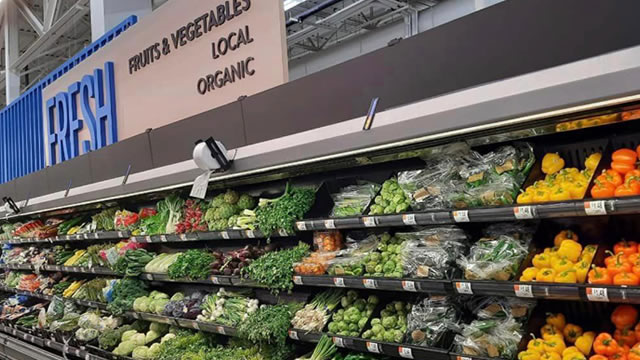
Core Viewpoint - Walmart's stock experienced a nearly 3% decline due to negative sentiment in the retail sector following a downgrade of Target by Goldman Sachs, reflecting broader market caution [1][2]. Group 1: Market Reaction - Walmart's share price drop was influenced by a bearish research note on Target, a major competitor in the retail space [1]. - The decline in Walmart's stock was slightly steeper than the S&P 500's 2.2% dip, indicating a general lack of enthusiasm among investors for retail stocks [1]. Group 2: Sector Analysis - Goldman Sachs downgraded Target from a buy to a neutral rating, citing concerns over its reliance on discretionary products, which make up 53% of its 2024 product lineup [2][3]. - The downgrade of Target has caused investors to shy away from the retail sector, despite Walmart and other competitors being more focused on staple products [4]. Group 3: Economic Concerns - The retail industry is facing potential headwinds, particularly from tariffs affecting foreign manufacturers, which could lead to increased prices and reduced consumer spending if tariffs remain in place [5].

Why Are US-Listed Chinese Stocks Falling On Wednesday?
Benzinga· 2025-04-16 13:15
Group 1: Market Impact - U.S.-listed Chinese companies such as Alibaba, PDD Holdings, Baidu, NIO, Li Auto, and XPeng are experiencing a decline in stock prices due to new tariffs imposed by the Trump administration, which can reach as high as 245% on certain imports [1] - The trade war has led to a selloff of heavily foreign-owned Chinese tech stocks, with e-commerce firms being the most affected by the increased tariffs on small parcels [6] Group 2: Economic Growth and Forecasts - China's GDP grew by 5.4% in the first quarter, surpassing the analyst estimate of 5.2%, driven by consumer subsidies and strong export shipments [2] - Economists from major international banks, including UBS and Goldman Sachs, have reduced their forecasts for China's 2025 growth to approximately 4% or lower, indicating a potential struggle to meet the growth target of around 5% [4] Group 3: Tariff Dynamics - The tariff war began with a 20% tariff imposed by Trump, escalating to 104% and then to 125% in response to China's retaliatory actions, which included raising its tariffs by 84% [5][6] - The tariffs are expected to lead companies to increase product prices to maintain margins, which could negatively impact demand for lower-priced offerings from Chinese companies [5]



Goldman Sachs Cuts Outlook For These Hotel And Lodging Stocks As Potential Recession Looms
Benzinga· 2025-04-14 19:38
Core Viewpoint - The outlook for U.S. Lodging C-Corps and Timeshares has been downgraded due to weaker consumer demand, geopolitical uncertainty, and negative impacts from U.S. airlines, leading to a reduction in 2025 RevPAR forecasts by approximately 125 basis points [1] Group 1: Market Conditions - A 45% probability of a U.S. recession is assumed, although not fully factored in, with a focus on asset-light companies that have global exposure and less reliance on U.S. resorts [2] - The preference is for stocks with more global diversity, lower U.S. resort exposure, asset-light business models, and stronger prospects for non-RevPAR and ancillary revenues in a choppier macro environment [3] Group 2: Historical Context - Historical data indicates that lodging revenue growth is cyclical, with significant downturns during previous recessions, where business demand impacts leisure travel first, and premium chains experience larger RevPAR declines than economy chains [4] - Hotel C-Corps have transitioned to asset-light, fee-based business models over the past decade, which have shown resilience during downturns, as franchise revenues tend to perform better than owned/leased or timeshare revenues [4] Group 3: Company-Specific Updates - Choice Hotels International Inc (CHH) was upgraded from Sell to Buy, with a price forecast lowered from $141 to $138, due to its defensive position driven by franchise revenue structure and strong balance sheet [6] - CHH is less affected by current macroeconomic challenges compared to other U.S. lodging companies, with improving trends in consumer purchase intent and performance among lower-income segments [7] - Hyatt Hotels Corporation (H) was downgraded from Neutral to Sell, with a price forecast lowered from $150 to $110, due to higher macro sensitivity and significant exposure to China [8] - Hilton Worldwide Holdings (HLT) and Marriott International Inc (MAR) were downgraded from Buy to Neutral, with price forecasts lowered from $296 to $235 and from $313 to $245, respectively, due to macro volatility and consumer pressures impacting macro-sensitive segments [9][10] - Both HLT and MAR have strong business models but face high valuations compared to historical cycles, with consensus estimates for IMF and non-RevPAR fees considered too optimistic [11]




Goldman Sachs cashes in on stock market turmoil as bank posts $4.7B profit
New York Post· 2025-04-14 12:16
Financial Performance - Goldman Sachs reported net profits of $4.7 billion and revenues of $15.06 billion for the first quarter of 2025 [1] - The trading division generated revenues of $4.2 billion, reflecting a 27% increase from the same period last year [2] - Analysts had forecasted revenues of $14.8 billion, indicating that Goldman Sachs exceeded expectations [3] Market Context - The bank's strong performance occurred amidst stock market turmoil due to President Trump's tariff plans, which initially caused stock markets to decline [4] - The share price of Goldman Sachs closed at $494.44, with a notable increase of over 30% in the past year [4][8] Executive Compensation - CEO David Solomon received $39 million in compensation last year, while COO John Waldron was offered an $80 million five-year 'golden handcuffs' bonus to remain with the firm [7][8] - The bonuses are seen as a strategy to retain key executives amid speculation about Waldron's potential move to Apollo Global Management [7][8]


Goldman Sachs Smashes Q1 Estimates on Record $4.19B Equity Trading Revenue
FX Empire· 2025-04-14 11:44
Português Deutsch FX Empire Logo English check-icon Italiano Español العربية Français Important DisclaimersThe content provided on the website includes general news and publications, our personal analysis and opinions, and contents provided by third parties, which are intended for educational and research purposes only. It does not constitute, and should not be read as, any recommendation or advice to take any action whatsoever, including to make any investment or buy any product. When making any financial ...

Goldman Sachs(GS) - 2025 Q1 - Quarterly Results
2025-04-14 11:32
Financial Performance - Goldman Sachs reported net revenues of $15.06 billion for Q1 2025, a 6% increase year-over-year and a 9% increase quarter-over-quarter[11]. - Net earnings for Q1 2025 were $4.74 billion, with diluted earnings per share (EPS) of $14.12, compared to $11.58 in Q1 2024[7]. - Total net revenues for Q1 2025 were $15,062 million, a 9% increase from $13,869 million in Q4 2024 and a 6% increase from $14,213 million in Q1 2024[40]. - Net earnings applicable to common shareholders rose to $4,583 million, reflecting a 17% increase from $3,923 million in Q4 2024 and Q1 2024[40]. Revenue Breakdown - Global Banking & Markets generated net revenues of $10.71 billion, up 10% from Q1 2024 and 26% from Q4 2024[13]. - Investment banking revenues decreased to $1,916 million, down 7% from $2,056 million in Q4 2024 and down 8% from $2,085 million in Q1 2024[40]. - FICC intermediation revenues surged to $3,390 million, a 94% increase from $1,750 million in Q4 2024 and a 2% increase from $3,471 million in Q1 2024[40]. - The Americas contributed $9,866 million to total net revenues, representing 66% of the total, consistent with the previous quarter[39]. Expenses and Capital Management - Operating expenses for Q1 2025 were $9.13 billion, a 5% increase from Q1 2024 and a 10% increase from Q4 2024[26]. - Compensation and benefits expenses increased to $4,876 million, a 30% rise from $3,759 million in Q4 2024[40]. - Goldman Sachs returned $5.34 billion of capital to common shareholders in Q1 2025, including $4.36 billion in share repurchases[31]. - The effective income tax rate for Q1 2025 was 16.1%, down from 22.4% for the full year of 2024[31]. Assets and Supervision - Total assets increased to $1,766 billion as of March 31, 2025, compared to $1,676 billion as of December 31, 2024[41]. - Assets under supervision in Asset & Wealth Management increased by $36 billion to a record $3.17 trillion during the quarter[11]. - Total assets under supervision (AUS) increased to $3,173 billion as of March 31, 2025, up from $3,137 billion at December 31, 2024, and $2,848 billion a year ago, representing a year-over-year growth of 11.4%[44]. - The beginning balance of total AUS was $3,137 billion, reflecting a growth from $3,103 billion at the end of the previous quarter[44]. Market Performance and Inflows - Long-term AUS net inflows for the first quarter of 2025 were $29 billion, compared to $22 billion in the previous quarter and $24 billion in the same quarter last year[44]. - Fixed income saw the highest net inflows of $14 billion in Q1 2025, up from $7 billion in Q4 2024 and down from $23 billion in Q1 2024[44]. - The company reported a net market appreciation of $12 billion in Q1 2025, contrasting with a depreciation of $58 billion in the previous quarter[44]. - Alternative investments saw a net inflow of $4 billion in Q1 2025, down from $11 billion in Q4 2024, while equity investments had a net inflow of $11 billion, up from $4 billion in the previous quarter[44]. Capital Ratios and Equity - The common equity tier 1 capital ratio was 14.8% as of March 31, 2025, down from 15.0% as of December 31, 2024[42]. - The total shareholders' equity was reported at $123,354 million, with tangible common shareholders' equity at $101,969 million after accounting for preferred stock and intangible assets[46]. Workforce and Risk Management - The headcount as of March 31, 2025, was 46,600, a 5% increase from 44,400 in Q1 2024[40]. - Average Daily VaR for Q1 2025 was $91 million, a decrease from $96 million in Q4 2024[43]. - Provision for credit losses was $287 million for Q1 2025, down from $318 million in Q1 2024[24].
Top Wall Street Forecasters Revamp Goldman Sachs Price Expectations Ahead Of Q1 Earnings
Benzinga· 2025-04-14 06:32
Goldman Sachs Group, Inc. GS will release earnings results for the first quarter, before the opening bell on Monday, April 14. Photo via Shutterstock Read This Next: Analysts expect the bank to report quarterly earnings at $12.35 per share, up from $11.58 per share in the year-ago period. Goldman Sachs projects to report quarterly revenue at $14.81 billion, compared to $14.21 billion a year earlier, according to data from Benzinga Pro. Goldman Sachs shares gained 1% to close at $494.44 on Friday. Benzinga r ...

Goldman Sachs Hits The Brakes: Auto Tariffs & Slumping Demand May Shake Up Ford, Tesla, Rivian, Lear & Visteon
Benzinga· 2025-04-10 17:59
Core Viewpoint - Goldman Sachs analyst Mark Delaney has revised down U.S. auto sales and global production forecasts due to tariff issues and declining consumer demand [1] Auto Sales and Production Forecasts - U.S. auto sales are projected to reach 15.40 million units in 2025 and 15.25 million in 2026, down from previous estimates of 16.25 million and 16.35 million respectively [4] - The proposed tariffs are expected to increase the cost of importing and manufacturing vehicles in the U.S. by a low- to mid-single-digit thousand-dollar level on average [2] Impact on Vehicle Pricing - New vehicle net prices in the U.S. are anticipated to rise by approximately $2,000 to $4,000 over the next 6–12 months due to tariff impacts [3] Company-Specific Ratings and Forecasts - Ford Motor Company: Downgraded from Buy to Neutral with a price forecast of $9, reflecting a tougher cyclical environment and rising tariff-related costs [4][5] - General Motors Company: Maintained a Buy rating with a price forecast of $63, despite a tougher cyclical outlook and increased competition [5][6] - Tesla, Inc.: Neutral rating with a price forecast of $260, acknowledging headwinds from weaker auto demand and tariff-related costs [6][7] - Rivian Automotive, Inc.: Neutral rating with a price forecast of $12, facing risks from reduced U.S. EV policy support [7] Supplier Impact - Tier 1 suppliers like Lear Corporation and Visteon Corporation are downgraded from Buy to Neutral due to high tariff exposure limiting their ability to offset lower industry volumes [8] - Visteon and Lear stocks are facing significant declines, with Visteon shares down 10.5% and Lear shares down 8.89% [9]






GOAL Kickstart_ Performance dissection and safe assets in the correction
2025-03-31 02:41
Summary of Key Points from the Conference Call Industry Overview - The report discusses the current state of the global economy, focusing on macroeconomic indicators and market performance across various asset classes, particularly equities, bonds, and commodities [2][3][4]. Core Insights and Arguments 1. **Economic Indicators**: - The Euro area-wide flash composite PMI is reported at 50.4, indicating mixed data across countries and sectors [2][3]. - US growth forecasts have been revised down to 1.7% for Q4/Q4 due to tariff-induced uncertainty affecting sentiment and growth [3][4]. 2. **Market Performance**: - US equities showed signs of relief, supported by expectations of limited tariff announcements [2]. - Asian equities and commodities performed well, while the US Dollar rebounded after a recent correction [2]. 3. **Central Bank Policies**: - Central banks, including the Fed, BoJ, and BoE, have slowed their pace of easing, maintaining steady rates, except for the Swiss National Bank, which cut rates by 25 basis points [2][3]. 4. **Investment Recommendations**: - A balanced portfolio is recommended, with overweight positions in equities and bonds, neutral in commodities and cash, and underweight in credit [5]. - Selective cross-asset option overlays are suggested, such as put spreads on oil as a hedge against lower global growth [5]. 5. **Volatility and Risk Management**: - Implied volatility has increased, particularly for equities, prompting a focus on diversification across and within asset classes [5]. - Strategies like selling risk-reversals on EUR/CHF are highlighted to hedge against European growth downside risks [5]. 6. **Safe Haven Assets**: - Diversifying safe havens beyond the US Dollar is advised, with JPY/AUD showing greater sensitivity to global growth expectations compared to Dollar crosses [5]. Additional Important Content - The report emphasizes the negative correlation between G4 yields and economic surprises across regions, with the exception of Germany, where expectations of increased fiscal spending have driven yields upward [4][16]. - The performance of credit indices has outperformed equities during sell-offs due to their lower beta to risk-off episodes [4]. - The report includes various exhibits that illustrate the performance of different asset classes, risk appetite indicators, and valuation metrics [8][24][29][64]. This summary encapsulates the key points from the conference call, providing insights into the current economic landscape, market performance, and investment strategies recommended by Goldman Sachs.