
Credo Technology Group Holding Ltd

Search documents
Steven Cress Reviews His Top 10 Stocks For 2025
Seeking Alpha· 2025-12-16 22:20
Core Insights - The top 10 stock picks for 2025 yielded a return of 45.6%, significantly outperforming the S&P 500's return of 17.6% [34] - The market has experienced volatility due to various factors, including trade disputes and shifts in investor sentiment towards safe havens like gold and silver [8][15] - The performance of stocks is heavily influenced by market sentiment, with a notable shift back to fundamentals following a truce in U.S.-China trade relations [37] Market Overview - The U.S. Dollar Index has decreased by approximately 9.5% year-to-date, indicating a shift away from the U.S. dollar [9] - Technology sector stocks have seen a year-to-date increase of 27%, while consumer staples and healthcare sectors have shown mixed performance [12] - The S&P 500 experienced a maximum pullback of 15% earlier in the year, which historically presents a buying opportunity for long-term investors [19] Stock Performance - The top 10 stocks included companies like Celestica and Credo, which have shown substantial growth, with Celestica up 240% since January 9 [54] - OppFi, initially performing well, faced challenges due to market sentiment but has recently returned to a Buy rating [56] - Stride has been downgraded to a Sell due to poor momentum and analyst revisions, reflecting a significant decline in performance [91] Economic Indicators - The Federal Reserve has cut interest rates three times in the latter half of the year, indicating concerns about the labor market [23] - Major brokerage firms have reduced recession odds following a truce in trade disputes, which has positively impacted market sentiment [24] - Inflation remains a concern, complicating the Fed's decision-making regarding interest rates [25] Future Outlook - The upcoming webinar on January 6 will present the top stock picks for 2026, with expectations of continued focus on companies with strong fundamentals [98] - Analysts are optimistic about the growth potential of companies like Credo, which has a projected earnings growth rate of 78% over the next three to five years [51] - The market remains top-heavy, with 35% of the total market cap attributed to the Magnificent 7 stocks, raising questions about valuation sustainability [30]







IWO Offers Broader Diversification but Slower Growth Than VOOG
The Motley Fool· 2025-12-16 20:55
Core Viewpoint - The Vanguard S&P 500 Growth ETF (VOOG) and iShares Russell 2000 Growth ETF (IWO) present distinct investment profiles, with VOOG focusing on large-cap growth stocks and IWO on small-cap growth companies, impacting their cost, volatility, and diversification characteristics [1][2]. Cost and Size Comparison - VOOG has a lower expense ratio of 0.07% compared to IWO's 0.24%, making it more cost-effective for long-term investors [3][4]. - As of December 11, 2025, VOOG reported a 1-year return of 22.3% while IWO had a return of 13.5% [3]. - VOOG has an Assets Under Management (AUM) of $21.7 billion, significantly higher than IWO's $13.6 billion [3]. Performance and Risk Metrics - Over the past five years, VOOG experienced a maximum drawdown of -32.74%, while IWO faced a larger drawdown of -42.02% [5]. - An investment of $1,000 in VOOG would have grown to $1,973 over five years, compared to $1,190 for IWO [5]. Portfolio Composition - IWO holds 1,086 small-cap companies with significant sector weights in healthcare (25%), industrials (22%), and technology (21%), ensuring broad diversification [6]. - VOOG is heavily concentrated in large-cap growth stocks, with technology comprising 41% of its portfolio, featuring top holdings like Nvidia, Microsoft, and Apple [7]. Investment Implications - VOOG is suitable for investors seeking lower-risk growth through established large-cap companies, primarily in the technology sector [9][11]. - IWO appeals to those looking for higher growth potential from smaller companies, despite a higher risk profile and expense ratio [10][11].

MRVL Strengthens AI Connectivity Stack: More Upside Ahead?
ZACKS· 2025-12-16 16:31
Core Insights - Marvell Technology (MRVL) is positioning itself as a significant player in connectivity hardware solutions for AI infrastructure and data centers through its Golden Cable initiative, aimed at enhancing the Active Electrical Cable (AEC) ecosystem for quicker AI infrastructure deployment by cloud and hyperscaler customers [1][10] Group 1: Product and Technology Developments - AECs are essential for high-density, short-reach connections within and between racks, supporting next-generation 1.6T connectivity for ultra-fast networks. The Golden Cable initiative will allow MRVL's partners to validate cable architectures and receive support for integration and interoperability [2] - The company is benefiting from the adoption of scale-up switches that connect AI accelerators, which require multi-terabit bandwidth and ultra-low latency, supporting both open standard Ethernet and UALink fabrics [3] - Volume shipments of MRVL's next-generation 200G per lane 1.6T PAM DSPs are contributing positively to the company's performance, alongside the adoption of its Alaska PCIe 6 retimer product line by leading AI and data center infrastructure companies [4] Group 2: Financial Performance - In Q3 of fiscal 2026, MRVL's data center revenues reached $1.52 billion, marking a 37.8% year-over-year increase and a 1.8% sequential rise, driven by strong demand for electro-optic interconnect products and next-generation switch offerings. Carrier infrastructure revenues surged 98% year-over-year and 29% sequentially to $167.8 million [5][10] Group 3: Competitive Landscape - Marvell Technology competes with Broadcom (AVGO) and Credo Technology (CRDO) in the connectivity market. Credo has a diverse portfolio and is experiencing strong growth in its AEC business, while Broadcom maintains a strong position in carrier Ethernet and telecom optical interconnects [6][7] Group 4: Valuation and Market Performance - MRVL shares have increased by 20.4% over the past six months, compared to a 36.8% growth in the Zacks Electronics - Semiconductors industry [8] - The company trades at a forward price-to-sales ratio of 7.35X, slightly below the industry's average of 7.46X. The Zacks Consensus Estimate for MRVL's fiscal 2026 and 2027 earnings indicates year-over-year growth of 81% and 26%, respectively, with upward revisions in estimates over the past 60 days [11]



Which Growth Stock ETF is Better: Vanguard's VONG or iShares' IWO?
The Motley Fool· 2025-12-16 00:37
Core Viewpoint - The comparison between Vanguard Russell 1000 Growth ETF (VONG) and iShares Russell 2000 Growth ETF (IWO) highlights their differing focuses on large-cap and small-cap stocks, respectively, which leads to variations in cost, risk, and sector exposure [1][2]. Cost and Size - VONG has an expense ratio of 0.07% and assets under management (AUM) of $44.6 billion, while IWO has a higher expense ratio of 0.24% and AUM of $13.2 billion [3]. - The one-year return for VONG is 14.4%, compared to IWO's 10.6%, and VONG has a dividend yield of 0.5%, slightly lower than IWO's 0.7% [3][4]. Performance and Risk Comparison - Over the past five years, VONG experienced a maximum drawdown of -32.71%, while IWO faced a larger drawdown of -42.01% [5]. - An investment of $1,000 in VONG would have grown to $2,064 over five years, whereas the same investment in IWO would have grown to $1,235 [5]. Sector Exposure - IWO targets over 1,000 small-cap growth stocks, with significant allocations in technology (25%), healthcare (22%), and industrials (21%), reflecting a diversified approach [6]. - VONG is heavily concentrated in large-cap technology, with over 50% of its assets in this sector, including major holdings in Nvidia, Apple, and Microsoft [7]. Historical Performance - Since 2010, VONG has delivered total returns exceeding 1,000%, while IWO's returns are at 408%, with the S&P 500 rising nearly 700% in the same period [8]. - VONG's concentration in a few large-cap stocks, referred to as the "Magnificent Seven," accounts for 59% of its assets, raising concerns about its performance if these stocks underperform [9]. Valuation Metrics - IWO has a price-to-earnings (P/E) ratio of 24, which is significantly lower than VONG's P/E ratio of 39, indicating more reasonable valuations for small-cap stocks [10].

Top Stock Picks for Week of December 15, 2025
Zacks Investment Research· 2025-12-15 20:25
[Music] Stocks our strategists feel are poised to deliver positive returns are featured now in their top stock picks of the week. Welcome back to this week's top stock picks for the week of December 15th. My top pick is Crito Technology Group.Credo makes active electrical cables. So if you see the acronym AEC and they're often purple. We're going to get a a look at that as as this uh their homepage rolls by here.Um, and Jensen uses these for Nvidia uh, rack scale architectures. They're copper. Jensen still ...


Top 10 Quant Stocks 2025 Review: Steve Cress on 45% Returns, AI Winners & GARP Strategy
Seeking Alpha· 2025-12-15 15:06
Core Insights - The discussion focuses on the performance of the Top 10 stocks for 2025, highlighting the effectiveness of a quantitative (Quant) investment strategy that combines fundamental analysis with algorithmic processing to identify strong investment opportunities. Group 1: Quantitative Investment Strategy - The Quant system utilizes mathematical algorithms to identify investment opportunities, reflecting the work of traditional fundamental analysts while covering a broader range of stocks [10][12]. - The GARP (Growth At a Reasonable Price) strategy is emphasized, focusing on companies that exhibit strong value, profitability, growth, momentum, and analyst EPS revisions [10][11]. - The Quant system has shown significant performance, with a five-year return of 228% compared to Wall Street Strong Buys at 32% and the S&P 500 at 65% [14]. Group 2: Market Recap and Sentiment Analysis - The year 2025 has been characterized by volatility, with the CNN Fear & Greed Index showing sharp movements between extreme greed and fear, influenced by trade policy changes, labor data, and economic uncertainties [16][18]. - Key catalysts affecting market sentiment include U.S.-China trade disputes, conflicting labor data, a credit downgrade, and concerns over tech valuations and the AI bubble [17][18]. - The market has seen a rotation towards safe-haven assets like gold and consumer staples during periods of fear, while technology and cryptocurrency sectors have experienced risk-on sentiment [20][21]. Group 3: Performance of Top Stocks - The Top 10 stocks for 2025 have collectively outperformed the S&P 500, with an average return of 45.68% since January 9, compared to the S&P's 17.6% [43]. - Notable performers include Credo Technology, up 116%, and Celestica, up 240%, both benefiting from strong demand in AI-related sectors [55][60]. - The performance of stocks can fluctuate significantly due to market sentiment, with strong fundamentals often overlooked during periods of fear, leading to substantial upside potential when sentiment shifts back to fundamentals [44][46]. Group 4: Economic Indicators and Future Outlook - Economic data has been mixed, with the Federal Reserve cutting rates three times in the latter half of the year due to labor market concerns and inflation remaining sticky [31][32]. - Major brokerage firms have reduced recession odds following a truce in trade disputes, indicating a potential stabilization in market conditions [32]. - The upcoming Top 10 stocks for 2026 will be announced on January 6, with expectations that the market may present buying opportunities during any pullbacks [30].


需求远超供应!法巴银行:半导体业集体看多2026,电力与ASIC风险被高估
智通财经网· 2025-12-15 01:13
Core Viewpoint - The semiconductor industry remains optimistic about supply and demand dynamics leading into 2026, with demand expected to significantly outpace supply [1][2] Group 1: Industry Outlook - Numerous semiconductor companies, including AMD and NVIDIA, express a positive outlook for market performance and capacity ramp-up through 2026, despite concerns regarding power supply and ASIC competition [1] - The recent Silicon Valley bus tour organized by BNP Paribas involved meetings with executives from major companies such as Intel, Applied Materials, and Seagate Technology, highlighting a collective confidence in future demand [1] Group 2: Power Supply Concerns - Power supply is identified as a major bottleneck in the artificial intelligence arms race, with AMD and NVIDIA acknowledging tightening electricity availability across the U.S. [2] - Both companies believe that the U.S. government is taking steps to alleviate power constraints, viewing the issue as a short-term challenge rather than a long-term barrier [2] Group 3: ASIC Competition - The introduction of custom chips, particularly Google's Tensor Processing Units (TPUs), has raised concerns about ASIC competition in the market [2] - Analysts note that TPUs are optimized for specific cloud service providers and workloads, suggesting that their market share growth should not be extrapolated to other vendors outside of current TPU adopters [2]


Oracle, Marvell, And Oklo Are Among Top 10 Large Cap Losers Last Week (Dec. 8-Dec. 12): Are the Others in Your Portfolio? - Alnylam Pharmaceuticals (NASDAQ:ALNY), AeroVironment (NASDAQ:AVAV), Bloom En
Benzinga· 2025-12-14 13:44
Core Insights - Several large-cap stocks experienced significant declines last week, indicating a broader market weakness affecting various sectors [1][2][3][4][5][6] Technology Sector - Credo Technology Group Holding Ltd saw a drop of 20.09% due to weakness in the technology sector, influenced by Broadcom's cautious outlook and Oracle's delayed data center projects for OpenAI [2] - Oracle Corporation's shares fell 14.31% after reporting Q2 sales below estimates, leading to multiple analysts lowering their price targets [5] - Marvell Technology, Inc. decreased by 6.37% amid reports of Microsoft potentially switching to Broadcom for custom AI chip designs [4] Energy and Nuclear Sector - Bloom Energy Corporation's shares slumped 20.68%, reflecting overall market weakness affecting electrical equipment companies [1] - Oklo Inc. decreased by 16.73%, with uranium and nuclear-linked stocks facing pressure from Oracle's delayed data centers [3] Mixed Earnings and Guidance - AeroVironment, Inc. decreased by 15% after reporting mixed earnings and guidance, although Goldman Sachs maintained a Buy rating while lowering the price forecast from $486 to $429 [4] - Alnylam Pharmaceuticals, Inc. saw a decline of 11.06% this week, contributing to the overall negative sentiment in the market [4] Other Notable Declines - Vertiv Holdings, LLC decreased by 13.55% following a downgrade from Wolfe Research [3] - CoreWeave, Inc. fell by 5.52%, caught in the broader tech sell-off triggered by Oracle's mixed fiscal second-quarter earnings [5] - Nebius Group N.V. experienced a decline of 9.61% this week, reflecting the overall market trend [6]



VUG vs. IWO: Is Large-Cap Growth or Small-Cap Diversification a Better Choice for Investors?
The Motley Fool· 2025-12-14 12:15
Core Insights - The Vanguard Growth ETF (VUG) and iShares Russell 2000 Growth ETF (IWO) represent two distinct strategies in targeting U.S. growth stocks, with VUG focusing on large-cap companies and IWO on small-cap firms [1][2] Cost & Size Comparison - VUG has a significantly lower expense ratio of 0.04% compared to IWO's 0.24%, which can benefit cost-conscious investors over time [3] - As of December 14, 2025, VUG has a one-year return of 14.52%, outperforming IWO's 9.83% [3] - VUG's assets under management (AUM) stand at $357.4 billion, while IWO has an AUM of $13.2 billion [3] Performance & Risk Metrics - Over the past five years, IWO experienced a maximum drawdown of -42.02%, while VUG had a lower drawdown of -35.61% [4] - An investment of $1,000 in VUG would have grown to $1,984 over five years, compared to $1,212 for IWO [4] Portfolio Composition - VUG allocates over 50% of its portfolio to technology stocks, with top holdings including Nvidia, Apple, and Microsoft, indicating a concentration risk [5] - IWO has a more balanced sector allocation across technology, healthcare, and industrials, with its top holdings representing less than 2% of assets, thus reducing company-specific risk [6] Investment Implications - VUG's focus on large-cap industry leaders may result in less risk but also greater volatility due to its concentration in a few stocks [7][10] - IWO's broader diversification across over 1,000 small-cap stocks may lead to higher volatility but offers potential for explosive growth if any of its holdings perform exceptionally well [8][9]
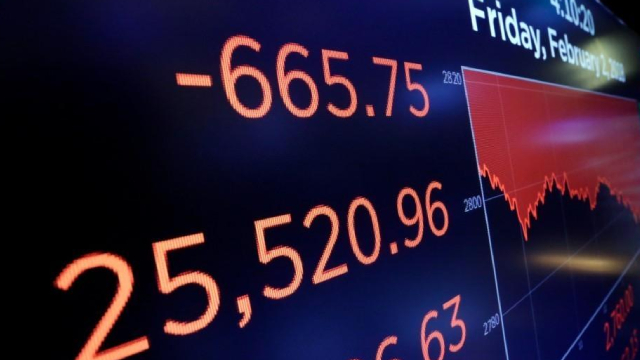
Magnificent Seven Stocks: Nvidia Sells Off; Tesla Reverses Lower
Investors· 2025-12-12 16:08
Core Insights - The "Magnificent Seven" stocks, including Apple, Microsoft, Alphabet, Amazon, Nvidia, Meta Platforms, and Tesla, have shown solid gains in 2024, positively influencing market performance as they head into December 2025 [1]. Group 1: Market Performance - The Nasdaq index is leading the market, driven by the strong performance of the Magnificent Seven stocks [1]. - These megacap stocks have a disproportionate influence on overall market capitalization due to their large market sizes [1]. Group 2: Company Developments - Amazon is intensifying its efforts to capture a larger share of the grocery delivery market [2]. - Nvidia has made a significant $2 billion investment in chip design firm Synopsys, which has positively impacted Synopsys' stock performance [4].