Snowflake Inc.

Search documents
小摩加入力挺美股软件股行列:AI冲击担忧被夸大 历史性下跌过后有望反弹
智通财经网· 2026-02-10 13:47
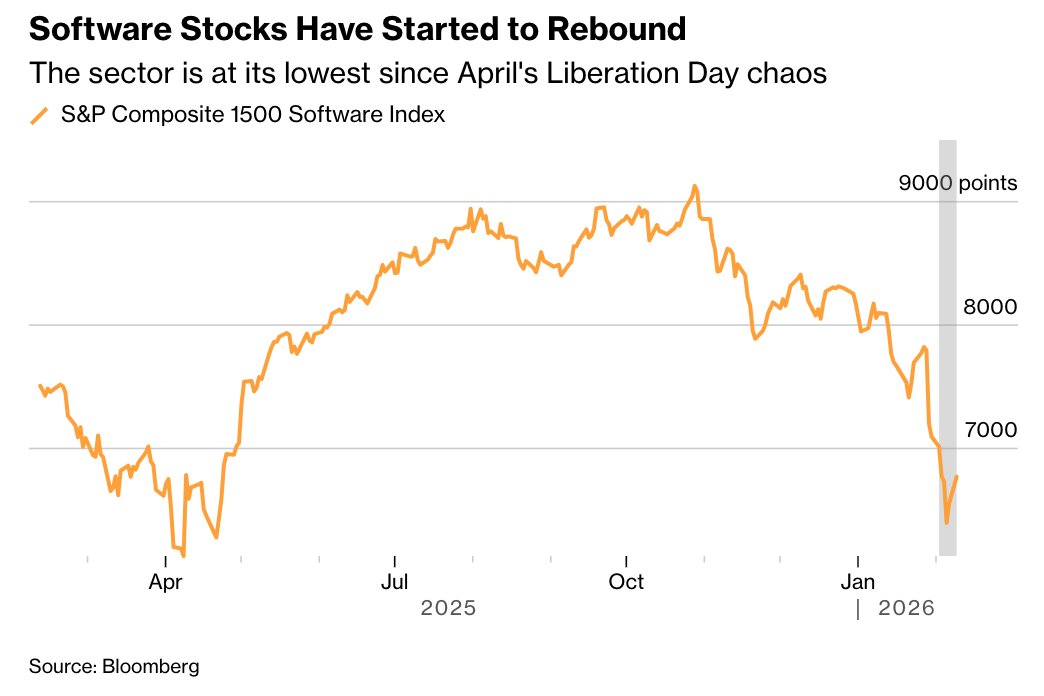
Core Viewpoint - Software stocks are expected to rebound from historic lows as the market has overly pessimistic expectations regarding AI's short-term disruption of the software industry, according to JPMorgan strategists [1][5]. Group 1: Market Sentiment and Stock Performance - The software sector has fallen to its lowest level since the market turmoil in April last year [4]. - Concerns over new AI tools potentially disrupting traditional Software as a Service (SaaS) business models have led to sustained pressure on U.S. software stocks [1][5]. - The recent sell-off did not differentiate between companies with AI partnerships or proprietary data assets, affecting nearly all related software companies equally [1]. Group 2: Company Resilience and Long-term Outlook - Companies like Microsoft and CrowdStrike are highlighted as resilient players in the AI space, likely to benefit from AI-enhanced workflow efficiencies [5]. - The high switching costs and long-term contracts in enterprise software provide a buffer against short-term disruptions [5]. - The long-term fate of traditional software companies in the face of AI remains uncertain, but current market pessimism appears to be an overreaction [5]. Group 3: Analyst Perspectives - Analysts from Morgan Stanley believe that U.S. tech stocks still have room for further gains, and the decline in software stocks has created an attractive entry point [5]. - Wedbush analysts argue that the market's reaction to AI risks is excessive, suggesting that the current sell-off implies an extreme assumption of widespread AI disruption, which is not feasible [6]. - The caution of enterprise clients regarding AI migration is emphasized, as many are reluctant to expose core data to immature new platforms [6]. Group 4: AI Integration and Market Dynamics - The narrative that AI will replace entire enterprise software stacks is overly simplistic; the value density of enterprise software lies in proprietary data and compliance structures [8][9]. - AI is more likely to integrate as embedded tools within existing software platforms rather than completely replacing them [6][9]. - The current sell-off reflects a market response to the question of how much profit pools in SaaS will be redistributed due to AI [10]. Group 5: Future Indicators and Investment Strategy - The rebound in software stocks may depend on two hard indicators: the speed of real deployment and payment expansion by enterprises, and the elasticity of SaaS companies' AI-related product revenues [10]. - Companies with strong data assets and solid fundamentals, such as Microsoft, MongoDB, Snowflake, Palantir, and SAP, are likely to experience a robust rebound post-panic [10].



人工智能即软件-Software Gut Check – AI IS Software
2026-02-10 03:24
Summary of the Conference Call on Software Industry and AI Impact Industry Overview - The conference call focused on the Software industry in North America, particularly the impact of Generative AI (GenAI) on enterprise software capabilities and market dynamics [1][6]. Key Insights 1. **Impact of GenAI on Software**: - GenAI is expanding the capabilities of enterprise software, creating both opportunities and risks for investors [1][8]. - The potential for GenAI to automate a significant portion of unstructured data work (over 80% of organizational data) could add approximately $400 billion to the Enterprise Software Total Addressable Market (TAM) by 2028 [3][8]. 2. **Market Valuation Trends**: - There has been a ~33% pullback in software multiples since October 2025, with current averages around 4.4X EV/Sales, similar to levels seen during previous periods of uncertainty (2014-2016) [8][39]. - The software industry is currently trading at multiples that are 40% below the trailing 5-year average, indicating potential undervaluation [63][68]. 3. **CIO Insights**: - In a recent CIO survey, AI/ML spending is expected to grow to 9.2% of overall public cloud spending within three years, reflecting strong interest in AI capabilities [12][32]. - CIOs have consistently ranked AI/ML as a top priority for IT budgets over the past nine quarters [10][12]. 4. **Competitive Landscape**: - Concerns exist regarding competition from DIY solutions, startups, and model providers, which may erode the market share of incumbent software vendors [17][20]. - However, incumbent vendors are expected to leverage their existing capabilities and customer relationships to adapt and thrive in the evolving landscape [21][24]. 5. **Business Model and Margin Risks**: - The shift towards automation may necessitate changes in pricing models, as traditional seat-based pricing could become less effective [22][24]. - Rising competition and increased infrastructure costs associated with GenAI could pressure margins for software vendors [24][25]. Notable Companies and Investment Opportunities - **Microsoft (MSFT)**: Positioned as a leader in the GenAI space, with a strong adoption rate of its AI tools among CIOs [55]. - **Intuit (INTU)**: Expected to continue its growth trajectory with strong product cycles and margin expansion [55]. - **Salesforce (CRM)**: Benefiting from significant growth in AI-related annual recurring revenue (ARR) [55]. - **ServiceNow (NOW)**: Anticipated to see improvements in free cash flow and margin expansion [55]. - **Atlassian (TEAM)**: Despite perceived risks, it is viewed as undervalued with strong growth potential [56]. - **Snowflake (SNOW)**: Expected to benefit from ongoing data modernization trends [58]. - **Palo Alto Networks (PANW)**: Positioned well in the cybersecurity space, benefiting from increased demand due to GenAI [60]. Conclusion - The software industry is at a pivotal moment, with GenAI presenting both challenges and opportunities. While current market valuations suggest potential for recovery, the ability of incumbents to adapt and innovate will be crucial in determining future success [1][8][39].


Dan Ives: Software will be the heart and lungs of the AI revolution
CNBC Television· 2026-02-09 22:03
Dan Ives is here, star analyst of Wedbush. Um, I mentioned at the top of the program that you moved a couple of really beaten down names into your your AI20, that being Salesforce and and Service Now. Um, what do you make of what Jensen said amidst all of this skepticism about that space.>> I think the hearts and lungs of the AI revolution will be in software. Now, look, right now it's data center buildout, GPUs. I mean, you're still in the early days of this what what's going to be a 10-year buildout, but ...


Dan Ives: Software will be the heart and lungs of the AI revolution
Youtube· 2026-02-09 22:03
Core Viewpoint - The software sector is expected to play a crucial role in the AI revolution, despite current skepticism surrounding certain companies like Salesforce and ServiceNow [2][4]. Company Analysis - Salesforce's current price-to-earnings (PE) ratio is approximately 15, while ServiceNow's forward PE is nearly 25, indicating a significant discrepancy in valuation [5][8]. - There is potential for 20-30% incremental revenue growth for both Salesforce and ServiceNow, which is not currently reflected in their valuations [6][8]. - Salesforce is viewed as particularly dislocated in terms of its market opportunity, suggesting it may be undervalued compared to its potential [8]. Market Sentiment - The sentiment around software companies is mixed, with some being perceived as structurally broken while others, like Salesforce and ServiceNow, are expected to recover as AI use cases develop [3][7]. - Conversations with numerous CTOs and IT managers indicate a strong belief in the ongoing relevance and potential of Salesforce and ServiceNow, despite current market pressures [9][10]. Competitive Landscape - Microsoft is seen as integral to the success of the AI revolution due to its deep integration in enterprise solutions, particularly through Azure [11]. - Concerns have been raised about Microsoft's capital expenditure and its ability to keep pace with competitors like Google and Amazon, which may impact its free cash flow in the near term [12][13].

Snowflake Stock and 2 More Software Plays to Buy on a ‘Too Harsh’ Software Drop
Barrons· 2026-02-09 19:06
Core Viewpoint - The recent decline in software sector stock prices is viewed as overly harsh, presenting attractive buying opportunities for specific companies such as Snowflake, Microsoft, and Intuit according to a Jefferies analyst [1]. Group 1: Market Analysis - The software sector has experienced a significant drop in stock prices, which is seen as an overreaction by the market [1]. - Jefferies identifies several catalysts that could lead to a rebound in software stock prices, indicating potential for recovery in the sector [1]. Group 2: Investment Opportunities - Snowflake, Microsoft, and Intuit are highlighted as key investment opportunities amidst the current market conditions [1]. - The analysis suggests that these companies are well-positioned to benefit from the anticipated rebound in the software sector [1].
Databricks完成50亿美元融资轮,估值达1340亿美元
Xin Lang Cai Jing· 2026-02-09 15:36
Core Insights - Databricks has completed a $5 billion equity financing at a valuation of $134 billion, along with an additional $2 billion in debt financing [2][6] - The company reported an annualized revenue of $5.4 billion for the January quarter, representing a 65% year-over-year growth, and achieved positive free cash flow over the past year [2][6] - Databricks is preparing for an IPO when the timing is right, with 2026 expected to be a significant year for tech IPOs [2][6] Company Performance - Databricks' AI-related products have reached an annualized revenue of $1.4 billion, contributing to the company's overall growth [2][6] - The company has accelerated its expansion, with a previous growth forecast of 50% as of June last year [2][6] Market Context - The recent financing round attracted significant interest from investors, including Goldman Sachs, Morgan Stanley, and Qatar Investment Authority [3][7] - Databricks' valuation now exceeds that of its competitor Snowflake, which reported $1.21 billion in revenue for the October quarter and has a market cap of approximately $58 billion [3][7] - The software sector has experienced a downturn, with Oracle and Snowflake shares dropping about 13% recently due to market concerns [3][7] Competitive Landscape - Databricks is expanding its market presence with the launch of the Lakebase database, positioning itself against traditional giants like Oracle and SAP [3][7] - There are concerns about new competitive pressures from AI tools like Anthropic's Claude Cowork AI, which may impact publicly traded software companies [3][7]

Databricks raises $5 billion in latest funding, defying software selloff
Yahoo Finance· 2026-02-09 15:13
By Jaspreet Singh, Pritam Biswas and Krystal Hu Feb 9 (Reuters) - Databricks said on Monday it has completed a fundraising of about $5 billion at a $134 billion valuation, as the data analytics software company bolsters its balance sheet to invest in artificial intelligence products focusing on enterprise customers. One of the most valuable privately held companies, Databricks also announced about $2 billion in new debt capacity, as its annualized revenue run-rate rose 65% to $5.4 billion in the fou ...
Stop Worrying About the Software Armageddon and Buy These 5 Stocks Now
Yahoo Finance· 2026-02-09 12:30
Core Viewpoint - The software sector is currently experiencing a significant selloff, which analysts believe is overblown and not reflective of the actual market conditions. Companies like Palantir, Microsoft, CrowdStrike, Snowflake, and Salesforce are highlighted as potential investment opportunities despite the prevailing negative sentiment [3][4][30]. Group 1: Palantir (PLTR) - Palantir is recognized as a leading software company specializing in data integration and AI-driven decision platforms, with a market cap of $332.6 billion and a stock price increase of 20% over the past year [5][6]. - For Q4 2025, Palantir reported revenues of $1.4 billion, reflecting a 70.5% annual growth rate, and earnings per share (EPS) of $0.25, up 78.6% from the previous year [6]. - Analysts have rated PLTR stock as a "Moderate Buy" with a mean target price of $198.28, indicating an upside potential of about 52.5% from current levels [8]. Group 2: Microsoft (MSFT) - Microsoft, valued at $3.1 trillion, is a major player in the software industry, although its stock has decreased by 5% over the past year [10]. - For the quarter ended December 31, 2025, Microsoft reported revenues of $81.3 billion, a 16.7% increase year-over-year, with cloud business revenues rising by 26% to $51.5 billion [12]. - Analysts have assigned a "Strong Buy" rating to MSFT stock, with a mean target price of $602.57, suggesting an upside potential of roughly 53% [14]. Group 3: CrowdStrike (CRWD) - CrowdStrike is a leading cybersecurity technology company with a market cap of $104.7 billion, although its shares are down 10% over the past year [16]. - The company reported Q3 revenues of $1.23 billion, up 22% year-over-year, and EPS of $0.96, which exceeded the consensus estimate [17]. - Analysts have rated CRWD stock as a "Moderate Buy," with a mean target price of $559.21, indicating an upside potential of about 48% [19]. Group 4: Snowflake (SNOW) - Snowflake operates a cloud-based data platform and has a market cap of $56.6 billion, with its stock down 13% over the past year [21]. - In Q3 2025, Snowflake reported revenues of $1.21 billion, reflecting a 28.5% annual growth, and EPS of $0.35, up 75% from the previous year [22]. - Analysts have given SNOW stock a "Strong Buy" rating, with a mean target price of $277.07, suggesting an upside potential of about 77% [24]. Group 5: Salesforce (CRM) - Salesforce, a pioneer in cloud-based CRM software, has a market cap of $418.6 billion and has seen its stock decline by 43% over the past year [26]. - For the third quarter of fiscal year 2026, Salesforce reported revenues of $10.3 billion, a 9% increase year-over-year, and EPS of $3.25, surpassing estimates [27]. - Analysts have assigned a "Strong Buy" rating to CRM stock, with a mean target price of $329.27, indicating an upside potential of about 73% [29].
摩根士丹利建议买入这9只被AI冲击的折价软件股
美股IPO· 2026-02-09 12:27
Core Viewpoint - The report highlights that high uncertainty has significantly impacted software valuation multiples, which have declined by approximately 33% since October 2025 [2] Group 1: Software Valuation - The average software valuation multiple has returned to around 4.4 times enterprise value/sales, reflecting levels seen during previous periods of high uncertainty in the public cloud sector [3] - Investors are underestimating the ability of existing vendors to benefit from AI adoption [3] Group 2: Investment Opportunities - The report suggests that pessimistic views on generative AI have led to a lack of trust in the ability of existing software vendors to participate in this innovation cycle [4] - Morgan Stanley identifies Microsoft, ServiceNow, Salesforce, Atlassian, Snowflake, Cloudflare, Shopify, and Palo Alto Networks as attractive investment opportunities due to their strong product cycles, improved financial metrics, and discounted valuations [4] - Microsoft is noted as a key player in significant innovation cycles, while the valuation of ServiceNow is described as "very attractive" [4] - Salesforce's AI-related annual recurring revenue has increased by 114% year-over-year [4] - Shopify is viewed as highly capable of capturing a larger share of the expanding online commerce market [4] Group 3: Long-term Opportunities - Generative AI represents a significant long-term opportunity, with an estimated potential to add approximately $400 billion to the broader enterprise software total addressable market by 2028 [5] - The key issue is not whether software will ultimately monetize in this innovation cycle, but rather which companies will participate [6]


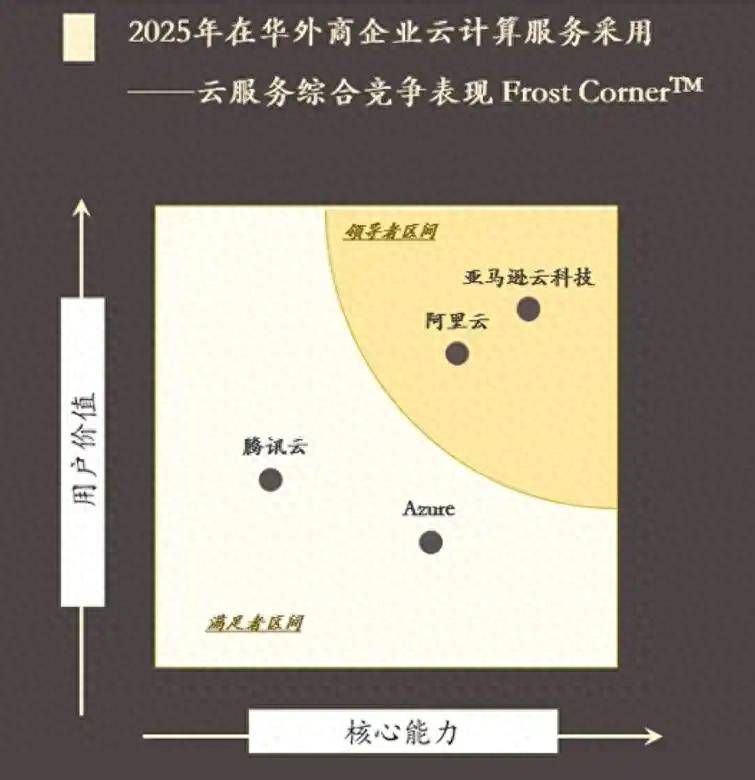
2025外资入华云图:超80%企业驶入“多云”深水区
Sou Hu Cai Jing· 2026-02-09 10:45
沙利文《报告》也显示,高技术产业外资投入占比逐年上升,汽车制造、生命科学、消费零售等领域成为 外资布局重点。由于外资投入均为高技术行业,不仅仅包含营销等业务,往往还涉及研发中心、高端制造 工程等落地,这极大刺激了外企对于数字化转型的进程和拥抱云计算的趋势。 随着中国市场持续对外开放,在华外企对于中国市场的投资热度稳步提升。在华外企业务在深度融入中国 市场的同时,其数字化转型的进程也在提速,尤其是对于云计算拥抱成为大势所趋。如今,云计算已不再 仅是技术支持工具,而是演变为跨国企业在中国市场扎根、生长与进化的核心战略设施。 近日,弗若斯特沙利文(Frost & Sullivan)联合头豹研究院发布最新的《2025年在华外商企业云计算服务采 用研究报告》(以下简称《报告》)。《报告》显示,截至2024年年底,外商在华设立企业总量达68万家 以上,超过80%的在华外企选择多供应商云服务方案,"本土云+国际云"协同部署占比超60%,行业化用云 特征日益凸显。 这标志着外企用户在中国云计算市场中扮演着重要角色。而像亚马逊云科技这样的全球云巨头在中国市场 的深度布局,有望通过全球一致性体验和全栈赋能,为外企数字化转型和上云 ...