Volvo

Search documents
This Is Nvidia's Next Trillion-Dollar Opportunity, According to Jensen Huang -- and It's Something You Might be Overlooking
The Motley Fool· 2025-06-24 08:49
Core Insights - Nvidia generated over $44 billion in revenue in Q1 of fiscal 2026, with $39.1 billion from its data center business, highlighting its dominance in the GPU market for AI developers [1] - CEO Jensen Huang predicts AI data center spending will exceed $1 trillion annually by 2028 and sees autonomous vehicles as another trillion-dollar opportunity [2][7] - The automotive segment, currently contributing only 1.3% of total revenue, is expected to grow significantly, with forecasts suggesting it could reach $5 billion in fiscal 2026, a 194% increase from $1.7 billion in fiscal 2025 [9][10] Industry Trends - The development of autonomous vehicles requires advanced AI software and hardware, with only a few companies successfully navigating this complex landscape [4] - Major players like Waymo and Tesla are leading the charge in autonomous ride-hailing, while many traditional car manufacturers lack the necessary expertise and resources [5] - Nvidia's Drive platform, which includes the powerful Thor chip, is gaining traction among top automotive brands, indicating a shift towards Nvidia's solutions in the self-driving market [6] Future Projections - Nvidia's automotive revenue could triple, but it will still represent a small fraction of overall revenue, with the data center segment remaining the primary driver of growth [9][13] - The company is also seeing increased investment from car manufacturers in its DGX data center systems and the Cosmos multimodal foundation model, which enhances self-driving AI capabilities [11][12] - Nvidia stock is currently trading at a P/E ratio of 46.4, which is a 23% discount to its 10-year average, suggesting potential for growth as the autonomous driving market develops [14][16]



Caterpillar vs. Volvo: Which Heavy Equipment Stock is the Better Buy Now?
ZACKS· 2025-06-13 16:45
Core Insights - Caterpillar Inc. and Volvo are leading companies in the heavy machinery and construction equipment industry, focusing on electrification and autonomous technologies to drive future growth [1][2]. Caterpillar Overview - Caterpillar has a market capitalization of $171 billion and is the world's leading manufacturer of construction and mining equipment, operating through three segments: Construction Industries, Resource Industries, and Energy & Transportation [2][3]. - The company has experienced six consecutive quarters of volume declines, with revenues dropping 3.4% in fiscal 2024 and 9.8% in Q1 2025, primarily due to weak demand in the Resource and Construction Industries [4][5]. - Despite challenges, Caterpillar is expected to benefit from the U.S. Infrastructure Investment and Jobs Act, which will drive demand for mining equipment and autonomous fleet solutions [7][8]. Volvo Overview - Volvo, with a market capitalization of $16.2 billion, manufactures trucks, buses, and construction equipment, with its subsidiary Volvo Construction Equipment producing a wide range of machinery [2][9]. - Volvo CE's net sales decreased by 16% in fiscal 2024 and 8% in Q1 2025, impacted by high interest rates and low confidence in Europe and North America [11][12]. - The company is focusing on innovation, launching over 80 new models in 2024, including electric machines, to position itself for long-term growth [13][14]. Financial Performance and Estimates - The Zacks Consensus Estimate for Caterpillar's 2025 earnings is $18.70 per share, reflecting a year-over-year decline of 14.6%, while the estimate for 2026 indicates a rise of 12.8% [16]. - For Volvo, the fiscal 2025 earnings estimate is $2.24 per share, down 4.3% year-over-year, with a projected growth of 13.7% in 2026 [17]. - Year-to-date, Caterpillar's stock has dipped 0.5%, while Volvo's stock has gained 16.3%, outperforming the Industrial Products Sector and the S&P 500 [19]. Valuation and Performance Metrics - Caterpillar is trading at a forward 12-month earnings multiple of 18.26, while Volvo is at 11.8, both below the sector average [20]. - Caterpillar's return on equity stands at 53.77%, significantly higher than Volvo's 24.36%, indicating more efficient use of shareholder funds [21]. Investment Considerations - Both companies face near-term challenges but are well-positioned for long-term growth driven by global infrastructure needs [25]. - Caterpillar, despite a higher valuation, is considered a more favorable option for investors seeking exposure to construction equipment, holding a Zacks Rank 3 (Hold), while Volvo has a Zacks Rank 4 (Sell) [26].


X @The Motley Fool
The Motley Fool· 2025-06-06 12:26
RT Jon Erlichman (@JonErlichman)Stock performance over 15 years:Tesla: +18,800%BYD: +548%Tata Motors: +370%Subaru: +345%Toyota: +314%Volvo: +215%Kia: +177%BMW: +100%Honda: +49%Hyundai: +42%Mercedes-Benz: +41%Renault: +40%GM: +39%Volkswagen: +30%Porsche: +26%Ford: -11%Mazda: -27%Nissan: -45% ...

NVIDIA Bullish on Auto Chip Business as Next Driver: Can It Deliver?
ZACKS· 2025-06-05 12:21
Core Insights - NVIDIA Corp. has identified the automotive industry, particularly self-driving and new energy vehicles, as a significant growth opportunity for its generative AI-enabled GPUs [1][2] Automotive Revenue Growth - In the first quarter of fiscal 2026, NVIDIA's automotive revenues increased by 72% year over year, reaching $567 million [2][9] - The company anticipates automotive segment revenue to exceed $5 billion in fiscal 2026, with CEO Jensen Huang expressing optimism about the potential for this business to evolve into a multitrillion-dollar opportunity [2][9] AI Infrastructure and Partnerships - NVIDIA has introduced new AI infrastructure aimed at enhancing advanced driver-assistance systems, autonomous vehicles, and robotics [3] - The company has commenced production of its "full-stack" solutions for Mercedes Benz, integrating its DRIVE AGX Orin AI chips with DriveOS software for next-generation vehicles [3][4] - Other automotive manufacturers, including Volvo and BYD, are also utilizing NVIDIA's chips, and the company's AI-enabled factory robots are being deployed to optimize assembly lines for General Motors and Hyundai [4][9] Competitive Landscape - Alphabet Inc.'s Waymo is rapidly expanding its self-driving vehicle services, currently providing around 250,000 rides per week and exploring new city expansions [5] - Intel Corp. has launched its second-generation AI-powered software for automotive systems on chip (SOC), which aims to enhance performance and efficiency in connected vehicles [6] Stock Performance and Valuation - Year to date, NVIDIA's shares have risen by 5.7%, outperforming the S&P 500's 0.8% increase [7] - The company trades at a forward price-to-earnings ratio of 32.40X, closely aligned with the industry average of 32.80X [10] - Recent earnings estimate revisions have shown positive trends for NVIDIA, with improvements noted for the upcoming quarters and fiscal years [11]
Best Buy Says Tariffs May Lower Profits And Sales—Joining These Companies Warning Of Tariff Impacts
Forbes· 2025-05-29 13:18
Company Impact - Best Buy lowered full-year forecasts for profits and sales for fiscal year 2026 due to expected tariff impacts [1][2] - Abercrombie & Fitch cut its profit outlook for 2025, citing a 30% tariff on imports from China and a 10% tariff on other imports, estimating a $50 million hit to profits [2] - Macy's reduced its full-year earnings per share outlook, attributing it to tariffs and moderation in consumer discretionary spending [3] - Target expects sales decline throughout 2025, previously projecting 1% growth, due to weaker spending amid tariff uncertainty [3] - Diageo warned of a likely $150 million hit to annual profits in 2025, planning to offset half of this impact through unspecified actions [4] - Walmart's CEO indicated that higher tariffs would lead to higher prices, as the company cannot absorb all the pressure from narrow retail margins [5] - Ford expects tariffs to reduce earnings before interest and taxes by about $1.5 billion in 2025, suspending its full-year guidance [8] - General Motors lowered its earnings forecast for 2025 to between $10 billion and $12.5 billion, down from $13.7 billion to $15.7 billion, due to tariff impacts [11] Industry Trends - Companies across various sectors, including automotive, retail, and consumer goods, are withdrawing or lowering financial guidance due to tariff-related uncertainties [6][12] - The overall sentiment in the market reflects heightened caution, with many companies citing macroeconomic volatility and evolving trade policies as significant concerns [10][14] - The impact of tariffs is leading to increased operational costs and reduced consumer spending, affecting sales forecasts across multiple industries [9][15] - Airlines, including JetBlue and American Airlines, are pulling their full-year guidance due to macroeconomic uncertainty exacerbated by tariffs [12][16] - The uncertainty surrounding tariffs is causing companies like Snap and Logitech to decline issuing future guidance, reflecting a broader trend of caution in financial forecasting [13][16]



Abercrombie & Fitch Says Tariffs Will Cut Profits By $50 Million—Joining These Companies Warning Of Tariff Impacts
Forbes· 2025-05-28 15:10
Summary of Key Points Core Viewpoint - Numerous companies are lowering their profit forecasts for 2025 due to the impact of tariffs and economic uncertainty, indicating a broader trend of caution across various industries. Group 1: Retail Sector - Abercrombie & Fitch lowered its full-year profit forecast for 2025, citing a $50 million hit from tariffs, including a 30% tariff on imports from China and a 10% tariff on other imports [1][2] - Macy's also reduced its earnings per share outlook for the year, attributing it to tariffs, moderation in consumer spending, and increased competition [3] - Target expects sales to decline throughout 2025, previously projecting a 1% growth, due to weaker spending linked to tariff uncertainties [3] Group 2: Consumer Goods and Food & Beverage - Diageo warned of a $150 million hit to annual profits in 2025 but plans to offset half of this impact through unspecified actions [4] - PepsiCo lowered its earnings forecast for 2025, facing higher supply chain costs due to tariffs and a volatile consumer environment [15] - Kraft Heinz also lowered its outlook, citing a volatile operating environment influenced by tariffs and inflation [13] Group 3: Automotive Industry - Ford expects tariffs to reduce its earnings before interest and taxes by about $1.5 billion in 2025 and has suspended its full-year guidance [8] - General Motors lowered its earnings forecast to between $10 billion and $12.5 billion, down from $13.7 billion to $15.7 billion, due to the impact of tariffs [12] - Toyota estimated a $1.25 billion profit loss in April and March due to U.S. tariffs, forecasting a nearly 21% dip in operating income through 2025 [5] Group 4: Technology and Electronics - AMD anticipates a $1.5 billion revenue loss in 2025 due to restrictions on chip shipments to China [7] - Apple expects a $900 million hit to its bottom line in the second quarter due to tariffs, complicating future predictions [10] - Logitech withdrew its outlook for the 2026 fiscal year due to ongoing tariff uncertainties [17] Group 5: Airlines and Transportation - JetBlue and Alaska Airlines both pulled their full-year guidance for 2025 due to macroeconomic uncertainty [13][17] - Delta Airlines withdrew its full-year guidance, citing broad macro uncertainty [18] - United Airlines issued a second guidance featuring significantly lower earnings for 2025, reflecting the unpredictable economic environment [17] Group 6: Miscellaneous - Steve Madden withdrew its financial guidance for 2025, facing heightened uncertainty from new tariffs [6] - Rivian lowered its targets for vehicle deliveries and capital spending for 2025 due to significant uncertainty in the global economic landscape [6] - Snap declined to issue guidance for its second quarter, citing uncertainty in macroeconomic conditions affecting advertising demand [14]





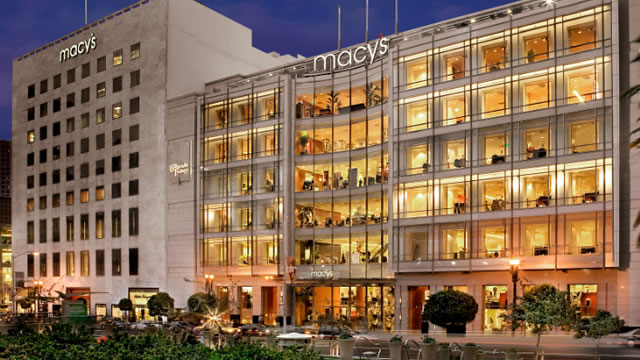
Macy's Says Tariffs May Lower Profits This Year—Joining These Companies Warning Of Tariff Impacts
Forbes· 2025-05-28 14:05
Company Impact - Macy's lowered its full-year profit forecast for 2025 due to higher tariffs affecting its business [1] - Target expects sales to decline throughout 2025, previously projecting a 1% growth, citing weaker spending amid tariff uncertainty [2] - Diageo anticipates a $150 million hit to annual profits in 2025 but plans to offset half of this impact through unspecified actions [3] - Walmart warned that higher tariffs will lead to increased prices, unable to absorb all the pressure due to narrow retail margins [4] - Ford expects tariffs to reduce its earnings before interest and taxes by about $1.5 billion in 2025 and has suspended its full-year guidance [7] - General Motors lowered its earnings forecast for 2025 to between $10 billion and $12.5 billion, down from $13.7 billion to $15.7 billion, adjusting to the new trade policy environment [10] - Kraft Heinz lowered its full-year outlook due to a volatile operating environment influenced by tariffs and inflation [11] - PepsiCo lowered its earnings forecast for 2025, facing higher supply chain costs due to tariffs and a subdued consumer backdrop [13] Industry Trends - Companies across various sectors are withdrawing or adjusting their financial guidance for 2025 due to macroeconomic uncertainty driven by tariffs [5][8][12] - The automotive industry, including Toyota and Ford, is particularly affected, with significant expected declines in operating income and earnings [4][10] - The retail sector is experiencing heightened competition and promotional landscapes, leading to cautious outlooks from companies like Macy's and Target [2][1] - Airlines are also pulling their full-year guidance, citing economic uncertainty and volatility, with JetBlue and Alaska Airlines among those affected [11][15] - The overall sentiment in the market reflects a cautious approach as companies navigate the unpredictable tariff environment and its implications on profitability [9][16]
Kaltura Sweeps Eventex 2025 with Five Golds, Redefining the Future of AI-Powered Events
Globenewswire· 2025-05-27 12:00
Core Insights - Kaltura has won five gold awards at the 2025 Eventex Awards, achieving recognition in every category it entered, highlighting its leadership in AI-driven digital events [1][2] - This marks the third consecutive year that Kaltura Events has received top honors, showcasing its continuous innovation in personalized and impactful digital engagement [2][5] Company Achievements - Kaltura Events is recognized for its all-in-one AI-powered platform that facilitates the creation, hosting, management, and promotion of webinars and virtual events [2][3] - The platform's real-time AI assistant and sentiment analysis features provide actionable insights to enhance attendee engagement [2][3] Key Innovations - The introduction of Kaltura Genie, an AI-powered agent, enhances event engagement by delivering hyper-personalized experiences and responding to attendee inquiries during hybrid events [3][4] - The AI-powered Content Lab identifies key moments from recorded events, generating highlight reels, chaptered summaries, and interactive video quizzes to maximize content ROI [4] Industry Context - The 15th edition of the Eventex Awards received a record 1239 entries from over 50 countries, indicating the growing creativity and innovation within the events industry [5][6] - Major brands such as Volvo, L'Oreal, and Netflix were among the winning entries, reflecting the competitive landscape of event technology [6]


瑞典最具价值和最强大品牌50强的2025年度报告(英)2025
品牌价值· 2025-05-26 06:40
Investment Rating - The report does not explicitly provide an investment rating for the industry or companies involved Core Insights - The aggregate brand values of the top Swedish brands fell by 6% from SEK1.249 trillion to SEK1.170 trillion, although the value in USD increased by 3% due to currency depreciation [20][21] - IKEA remains the most valuable Swedish brand despite a 22% decline in brand value to SEK135.9 billion, indicating challenging market conditions even for established leaders [22][34] - The gambling sector, particularly Evolution Gaming, saw significant growth, with Evolution's brand value nearly doubling to SEK11.2 billion, reflecting a robust positioning in a specialized market [23][40] Summary by Sections Country Overview - The Swedish brand landscape is undergoing a transition, with traditional manufacturing and retail brands facing pressure while technology-driven service sectors thrive [24] - The depreciation of the Swedish krona has reduced domestic purchasing power but created opportunities for export-focused brands [24] Valuation Analysis - The top ten most valuable Swedish brands showed mixed performances, with IKEA and Volvo experiencing substantial declines in brand value, while H&M, Spotify, and Swedbank demonstrated growth [28][30][32] - Swedbank's brand value increased by 41% to SEK51.2 billion, marking a significant rise in its ranking [31] Most Valuable Brands - IKEA's brand value fell by 22% to SEK135.9 billion, while Volvo's decreased by 11% to SEK116.0 billion [29] - H&M's brand value increased by 3% to SEK97.3 billion, and Spotify's rose by 11% to SEK86.9 billion [30] Fastest Growing Brand Value - Evolution Gaming's brand value surged by 75% to SEK11.2 billion, highlighting its strong market position in the online gambling sector [40][41] Brand Strength Analysis - The Brand Strength Index (BSI) scores for Swedish brands range from 81.3 to 93.2, with ICA achieving the highest score of 93.2 [48][49] - SAAB's brand value increased by 45% to SEK13.8 billion, driven by NATO-related defense demand [56][57] Brand Value Ranking - The report lists the top ten most valuable Swedish brands for 2025, with IKEA, Volvo, H&M, Spotify, and Nordea leading the rankings [33]
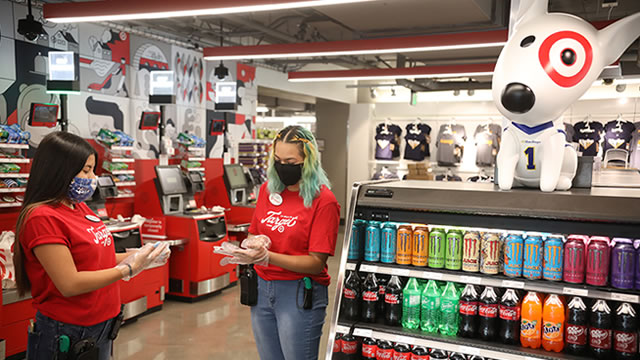
Target Says Sales Will Decline Amid Tariffs—Joining These Companies Warning Of Tariff Impacts
Forbes· 2025-05-21 14:05
Target on Wednesday lowered its full-year forecast for sales in 2025, as executives said consumers have spent less amid unpredictability surrounding tariffs, the latest company to flag concerns and cut projections, citing uncertainty over U.S. tariffs.Target will likely have sales decline throughout 2025, the retailer said after previously projecting a 1% growth, as CEO Brian Cornell and CCO Rick Gomez reportedly blamed weaker spending amid uncertainty about tariffs and backlash to the company’s phasing out ...