华恒生物

Search documents
华恒生物:实现微生物厌氧发酵规模化生产L-缬氨酸产品,多个生产基地项目稳步推进
Cai Jing Wang· 2025-10-15 03:13
Core Insights - The company has achieved a technological breakthrough in anaerobic fermentation, leading to a 50% reduction in the production cost of L-Alanine [1] - The company has successfully implemented large-scale production of L-Valine through anaerobic fermentation, marking an international first [1] - Despite revenue growth in the first half of 2025, the company's net profit attributable to shareholders has declined year-on-year due to increased operational costs and market price drops for L-Valine [1] Group 1 - The company has constructed a microbial cell factory for the anaerobic fermentation of L-Valine using renewable glucose as a raw material [1] - The company is actively addressing market demand and competition, resulting in a sustained increase in core product sales volume [1] - The company has reported ongoing projects, including the production of succinic acid and 1,3-propanediol at various bases [2] Group 2 - The company emphasizes the green and cost advantages of its bio-based 1,3-propanediol production and is pushing for its application in PTT fibers [2] - The company is increasing investment in the industrialization of bio-based new material monomers, collaborating with Donghua University to establish a joint laboratory [2] - The company is leading the formation of a bio-based polyester textile industry alliance to promote the marketization of 1,3-propanediol in various fields [2]

免费领取!《2025中国合成生物制造产业发展白皮书》
synbio新材料· 2025-10-15 02:32
Core Viewpoint - The article emphasizes the rising importance of biomanufacturing as a strategic and innovative field that disrupts traditional production methods, presenting it as a new growth point for optimizing industrial structure and transforming economic models. The release of the "2025 China Synthetic Biomanufacturing Industry Development White Paper" highlights the current state, trends, and challenges of the biomanufacturing industry in China [1]. Group 1: Current State and Trends - The white paper outlines the development status and trends of biomanufacturing, analyzing the global landscape and key platform facilities [5]. - It compares the biomanufacturing sectors of China and the United States, identifying competitive advantages and areas for improvement [5]. - Future development trends in biomanufacturing are discussed, indicating a shift towards more integrated and sustainable practices [5]. Group 2: Policy Landscape - The report reviews major policies affecting biomanufacturing both domestically and internationally, providing insights into regulatory frameworks that shape the industry [5]. - It highlights the importance of supportive policies in fostering innovation and growth within the biomanufacturing sector [5]. Group 3: Industry Map and Applications - A comprehensive map of the Chinese biomanufacturing industry is presented, detailing key players and their roles [5]. - The report identifies critical application areas for biomanufacturing, including pharmaceuticals, food, personal care, agriculture, chemicals, materials, and energy [5]. Group 4: Key Enterprises - The white paper lists the top 10 chain enterprises in China's biomanufacturing industry, showcasing leaders in the field [6]. - It also details the strategic directions of 15 publicly listed companies involved in synthetic biology, summarizing their development strategies [6]. Group 5: Investment and Challenges - An analysis of the investment landscape in synthetic biology from 2024 to mid-2025 is included, providing insights into funding trends and opportunities [6]. - The report discusses challenges faced by the biomanufacturing industry in China, along with targeted policy recommendations to address these issues [6].

华恒生物冲刺“A+H”两地上市:国际化布局加速、业绩波动面临挑战
Cai Jing Wang· 2025-10-14 09:38
Core Viewpoint - Anhui Huaheng Biotechnology Co., Ltd. has submitted an application for listing on the Hong Kong Stock Exchange, marking a significant step in its internationalization strategy [1][3] Company Overview - Established in 2005, the company focuses on the research, large-scale production, and commercialization of bio-based products using synthetic biology technology [1] - It is recognized as one of the most comprehensive companies globally in commercializing bio-based products through synthetic biology [1] - The company is the first globally to industrialize a series of amino acids, including L-Alanine and L-Valine, through anaerobic fermentation [1] - As of mid-2025, the company's main bio-based products include amino acids, vitamins, and other bio-based materials, with stable long-term partnerships established with over 768 clients across 85 countries [1] Financial Performance - Revenue figures for the company from 2022 to the first half of 2025 are as follows: RMB 1.419 billion, RMB 1.938 billion, RMB 2.178 billion, and RMB 1.489 billion respectively [2] - Profit figures for the same period are: RMB 319 million, RMB 447 million, RMB 185 million, and RMB 109 million respectively [2] - The company experienced significant revenue growth, but profits saw a sharp decline after peaking in 2023, attributed to increased production and decreased market prices for its valine products [2] - The gross margin has also decreased significantly from 40.4% in 2023 to 23.5% in the first half of 2025, reflecting increased competition and pricing pressure in the industry [2] Market Position and Stock Performance - The company's stock price has fluctuated since its listing on the Shanghai Stock Exchange in April 2021, reaching a market capitalization of over RMB 22 billion at its peak [2] - However, after May 2024, the stock price declined sharply, and as of October 14, 2025, the stock closed at RMB 34.01 per share, with a market capitalization of approximately RMB 8.5 billion, indicating a significant reduction from its peak [2] Strategic Implications - The IPO in Hong Kong is seen as a crucial step for the company's global expansion, with potential funding to support this strategy [3] - The ability to reverse the declining profit trend remains to be tested in the market [3]
申万宏源证券晨会报告-20251014
Shenwan Hongyuan Securities· 2025-10-14 00:47
| 指数 | 收盘 | | 涨跌(%) | | | --- | --- | --- | --- | --- | | 名称 | (点) | 1 日 | 5 日 | 1 月 | | 上证指数 | 3890 | -0.19 | 0.49 | 0.17 | | 深证综指 | 2487 | -0.74 | 1 | -1.28 | | 风格指数 (%) | 昨日 | 近 1 个月 | 近 6 个月 | | --- | --- | --- | --- | | 大盘指数 | -0.62 | 0.97 | 22.62 | | 中盘指数 | -0.18 | 4.35 | 33.72 | | 小盘指数 | -0.31 | 1.4 | 27.94 | | 涨幅居前 行业(%) | 昨日 | 近 1 个月 | 近 6 个月 | | --- | --- | --- | --- | | 贵金属 | 6.57 | 15.39 | 48.47 | | 金属新材料 | 6.54 | 9.95 | 58.28 | | 小金属Ⅱ | 6.09 | 6.71 | 83.58 | | 能源金属 | 5.11 | 23.83 | 94.13 | | 地面 ...
加好友,免费领取!《2025中国合成生物制造产业发展白皮书》
synbio新材料· 2025-10-13 03:48
Core Viewpoint - The article emphasizes the rising importance of biomanufacturing as a strategic and innovative field that disrupts traditional production methods, presenting it as a new growth point for optimizing industrial structure and transforming economic models. The release of the "2025 China Synthetic Biomanufacturing Industry Development White Paper" highlights the current state, trends, and challenges of the biomanufacturing industry in China [1]. Group 1: Current State and Trends - The white paper outlines the development status and trends of biomanufacturing, analyzing the global landscape and key platform facilities [5]. - It compares the biomanufacturing sectors of China and the United States, identifying competitive advantages and areas for improvement [5]. - Future development trends in biomanufacturing are discussed, indicating a shift towards more integrated and sustainable practices [5]. Group 2: Policy Landscape - The report reviews major policies affecting biomanufacturing both domestically and internationally, providing insights into regulatory frameworks that shape the industry [5]. - It highlights the importance of supportive policies in fostering innovation and growth within the biomanufacturing sector [5]. Group 3: Industry Map and Applications - A comprehensive map of the Chinese biomanufacturing industry is presented, detailing key players and their roles [5]. - The report identifies critical application areas for biomanufacturing, including pharmaceuticals, food, personal care, agriculture, chemicals, materials, and energy [5]. Group 4: Key Enterprises - The white paper lists the top 10 leading enterprises in China's biomanufacturing industry, showcasing their contributions and market positions [6]. - It also details the strategic directions of 15 publicly listed companies in the field of synthetic biology, summarizing their development strategies [6]. Group 5: Investment and Challenges - The report examines the investment landscape in synthetic biology from 2024 to mid-2025, providing data on funding trends and investor interest [6]. - It discusses the challenges faced by the biomanufacturing industry in China, including technological barriers and market competition, and offers targeted policy recommendations to address these issues [6].
钛白粉近期二次提价,四季度制冷剂长协价大幅上涨
Shenwan Hongyuan Securities· 2025-10-12 14:04
Investment Rating - The report maintains an "Optimistic" rating for the chemical industry [6][11]. Core Insights - The report highlights a significant increase in titanium dioxide prices, with domestic prices rising by 300 CNY/ton and international prices by 40 USD/ton, marking the second price hike since August [6][12]. - The macroeconomic outlook for the chemical sector indicates stable demand for crude oil, with global GDP growth projected at 2.8%, while geopolitical tensions are expected to ease, keeping oil prices low [6][7]. - The report emphasizes the potential recovery in profitability for titanium dioxide due to improved overseas real estate conditions and seasonal demand [6][12]. Industry Dynamics - Crude Oil: Non-OPEC production is expected to rise, with OPEC+ anticipated to increase output, leading to significant supply growth. Global crude oil demand is stabilizing despite some slowdown due to tariffs [6][7]. - Coal: Prices are expected to stabilize at a low level, with easing pressure on downstream sectors [6]. - Natural Gas: The U.S. is likely to accelerate natural gas export facility construction, potentially lowering import costs [6]. Price Trends - The report notes that as of October 10, Brent crude oil prices decreased by 3.5% to 62.09 USD/barrel, while WTI prices fell by 4.2% to 58.17 USD/barrel [11]. - The PPI for all industrial products in August showed a year-on-year decline of 2.9%, with a narrowing decline compared to July, indicating improved supply-demand dynamics [9]. Sector Recommendations - The report suggests focusing on four key areas for investment: 1. Textile and Apparel Chain: Demand remains high, with supply-side production peaks passed, indicating a favorable supply-demand balance [6]. 2. Agricultural Chain: Continuous growth in planting areas supports stable fertilizer demand [6]. 3. Export Chain: Overseas inventory levels are at historical lows, with a strengthening expectation for demand in real estate [6]. 4. "Anti-Internal Competition" Policies: These policies are expected to accelerate the elimination of outdated production capacity [6]. Key Companies to Watch - The report recommends monitoring companies such as Juhua Co., Sanmei Co., Yonghe Co., Dongyangguang, Dongyue Group, and Haohua Technology in the titanium dioxide sector [6].
全球丙氨酸龙头华恒生物赴港上市,“绿色野心”与三大隐忧
Sou Hu Cai Jing· 2025-10-12 09:49
Core Viewpoint - Anhui Huaheng Biotechnology Co., Ltd. (Huaheng Bio) has submitted an application for listing on the Hong Kong Stock Exchange, marking a significant step in its global strategy as a leader in synthetic biology [1][9] Company Overview - Huaheng Bio claims to be a global pioneer in synthetic biology, holding market shares of 43.3% in L-alanine and 26.9% in L-valine, leading the industry [3] - Revenue is projected to grow from 1.419 billion yuan in 2022 to 2.178 billion yuan in 2024, with a remarkable 46.54% increase in the first half of 2025, reaching 1.489 billion yuan [3] Financial Performance - Despite revenue growth, Huaheng Bio's profitability is under pressure, with gross margin dropping from 40.4% in 2023 to 24.8% in 2024, nearly halving [4] - In the first half of 2025, net profit fell by 23.26% to 115 million yuan, with gross margin further declining to 23.5% [4] - The company attributes these declines to a significant drop in average selling prices of amino acids and vitamins, highlighting the risk of a relatively narrow product structure [4] Industry Context - The synthetic biology sector has promising prospects, with the global bio-based product market expected to grow from $42.1 billion in 2024 to $109.1 billion by 2035, at a compound annual growth rate of 6.4% [5] - Government support for the bio-manufacturing industry in China, driven by carbon neutrality goals, provides a strong backing for the sector [5] Challenges Faced - Huaheng Bio acknowledges several risks in its prospectus, including changes in international trade policies, fluctuations in raw material prices, production technology iterations, and intellectual property protection [5] - The imposition of a 53.9% temporary anti-dumping duty by the EU and uncertainties regarding U.S. tariffs on Chinese goods cast a shadow over the company's overseas operations [5][6] Expansion and Financial Health - Huaheng Bio has rapidly expanded, operating four production bases across three provinces in China and continuing to increase capacity in Inner Mongolia [7] - The company's debt ratio was high, with asset-liability ratios of 68.3% in 2023 and 60.4% in 2024, and a net current liability of 626 million yuan at the end of 2023 [7] - The funds raised from the Hong Kong listing are intended for global expansion, technology research and development, capacity upgrades, and working capital, reflecting the company's need for financial resources [7] Common Dilemmas in the Industry - Huaheng Bio's situation mirrors the common challenges faced by Chinese synthetic biology companies: technological leadership but unproven commercialization capabilities, rapid expansion but unstable profitability, and a solid domestic market but challenges in internationalization [8] - The company has established partnerships with several research institutions, including the Chinese Academy of Sciences, emphasizing its commitment to research and development [8] Future Outlook - The decision to list in Hong Kong is driven by the market's international advantages and the need for funding to support global expansion [9] - While Huaheng Bio possesses a first-mover advantage and technological accumulation in synthetic biology, uncertainties in commercialization paths and challenges related to product concentration, profitability fluctuations, and complex international trade environments remain [9] - The company must balance technological investment with commercial returns and navigate the changing international market landscape to achieve its goal of transitioning from a "China leader" to a "global leader" [9]
免费领取!《2025中国合成生物制造产业发展白皮书》
synbio新材料· 2025-10-11 09:35
Core Viewpoint - The article emphasizes the rising importance of biomanufacturing as a strategic and innovative field, which is seen as a new growth point that can drive industrial structure optimization and economic transformation. The release of the "2025 China Synthetic Biomanufacturing Industry Development White Paper" highlights the current state, trends, and challenges of the biomanufacturing industry in China [1]. Group 1: Current State and Trends - The white paper provides an overview of the global biomanufacturing industry, including its development status and trends [5]. - It compares the biomanufacturing sectors of China and the United States, highlighting competitive dynamics [5]. - Future development trends in biomanufacturing are discussed, indicating potential growth areas [5]. Group 2: Policy Landscape - The report outlines major policies affecting biomanufacturing both domestically and internationally for the years 2024-2025 [5]. - It details foreign biomanufacturing industry policies and their implications for the sector [5]. - Domestic policies related to biomanufacturing are also analyzed, providing insights into regulatory frameworks [5]. Group 3: Industry Map and Applications - The white paper presents a comprehensive map of the Chinese biomanufacturing industry, identifying key players and their roles [5]. - It analyzes the biomanufacturing industry chain and key application areas, including pharmaceuticals, food, personal care, agriculture, chemicals, materials, and energy [5][6]. - Specific applications of biomanufacturing in various sectors are highlighted, showcasing its versatility and potential impact [5]. Group 4: Key Enterprises and Investment Landscape - The report identifies ten leading enterprises in the Chinese biomanufacturing industry, providing insights into their operations and market positions [6]. - It summarizes the strategic directions of 15 listed companies in synthetic biology, indicating their focus areas and growth strategies [6]. - The investment landscape for synthetic biology in China is examined, detailing funding trends and opportunities from 2024 to mid-2025 [6]. Group 5: Challenges and Recommendations - The white paper discusses the challenges faced by the biomanufacturing industry in China, including technological, regulatory, and market-related issues [6]. - It offers targeted policy recommendations to address these challenges, aiming to support the sustainable development of the biomanufacturing sector [6].



多家药企冲刺“A+H”
Bei Jing Shang Bao· 2025-10-09 16:14
Core Viewpoint - The recent surge in pharmaceutical companies applying for listings on the Hong Kong Stock Exchange (HKEX) reflects a trend towards "A+H" dual-platform listings, which enhances financing channels and supports the domestic innovation of drugs and high-end medical devices [1][2][5][8]. Group 1: Listing Trends - Approximately 25 pharmaceutical companies have submitted listing applications to HKEX in September alone, with many already listed on A-shares, indicating a clear trend towards "A+H" dual-platform strategies [2][5]. - Notable companies such as Huaheng Biological and Baile Tianheng have recently applied for H-share listings, aiming to deepen their global strategic layout and enhance international financing capabilities [2][4]. Group 2: Industry Impact - The influx of companies seeking to list in Hong Kong is expected to accelerate industry consolidation, concentrating resources among financially robust listed companies and strengthening their market positions [4][8]. - Capital influx from these listings is anticipated to promote rapid development of innovative drugs and technologies, allowing companies to invest more in high-risk R&D projects, thereby improving overall industry innovation efficiency [4][8]. Group 3: Market Conditions - The favorable conditions for pharmaceutical companies include the advantages of the HKEX listing system, particularly the 18A listing rules introduced in 2018, which provide a pathway for unprofitable biotech companies to go public [5][8]. - The increasing demand for healthcare driven by population aging and accelerated regulatory approvals from domestic drug authorities create a conducive environment for pharmaceutical growth [5][8]. Group 4: Financial Performance - Many companies applying for listings are currently unprofitable, such as Maike Aote and its subsidiary Lanacheng, which reported significant losses during their respective financial periods [7][8]. - Financial data indicates that Maike Aote's R&D expenditures for 2023-2025 are projected to be approximately 87.01 million, 107 million, and 40.43 million yuan, with corresponding losses of about 195 million, 157 million, and 49.9 million yuan [7].
医药企业掀赴港上市潮,多家A股公司冲刺“A+H”
Bei Jing Shang Bao· 2025-10-09 12:41
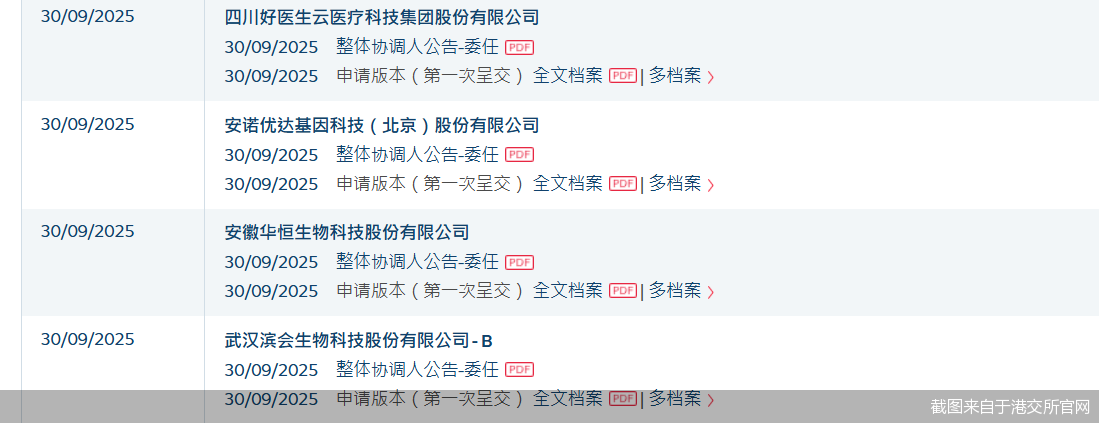
Core Viewpoint - A new wave of pharmaceutical companies is applying for listings on the Hong Kong Stock Exchange (HKEX), with 11 companies submitting applications in a two-day period, indicating a significant uptick in market activity [1][3]. Group 1: Listing Activity - Approximately 25 pharmaceutical companies have submitted listing applications to HKEX since September, with a notable concentration of 11 applications on September 29-30 [3]. - Companies such as Sichuan Good Doctor Cloud Medical Technology Group and Annoroad Gene Technology are among those applying, with some indicating they are unprofitable biotech firms under the HKEX Chapter 18A rules [1][3]. - The trend of "A+H" dual listings is emerging, with several companies already listed on A-shares also seeking to list on HKEX, enhancing their financing capabilities [5][6]. Group 2: Market Drivers - The HKEX's 18A listing rules, introduced in 2018, have created a pathway for unprofitable biotech companies to go public, while the "Tech Company Fast Track" launched in 2025 further streamlines the listing process for tech firms [4]. - Increased demand for healthcare services due to population aging and accelerated regulatory approvals from domestic drug monitoring agencies are contributing to a favorable environment for pharmaceutical companies [4]. Group 3: Financial Performance - Many of the companies applying for listings are currently unprofitable, with significant losses reported. For instance, Meikang Aote and its subsidiary Blue Nancheng reported losses of approximately 195 million yuan and 112 million yuan, respectively, in recent financial periods [9][10]. - The trend of unprofitable companies seeking listings under the 18A rules highlights the role of HKEX as an "innovation incubator" for the biotech sector [10]. Group 4: Future Implications - The rise of "A+H" listings is expected to reshape the competitive landscape of the domestic biotech industry, potentially accelerating industry consolidation and enhancing the market position of well-capitalized firms [7]. - Increased capital influx is anticipated to boost the development of innovative drugs and technologies, thereby improving overall industry innovation efficiency [7].