Vanguard

Search documents
BlackRock & Vanguard’s Secret Crypto Holdings EXPOSED!
Coin Bureau· 2025-08-28 15:01
Crypto treasury companies have taken the market by storm, and that's because they've been raising tens of billions of dollars to buy as much crypto as possible as fast as possible. At some point though, you start to wonder where all of this money is coming from and who's buying the stocks of these companies. Well, today we look at the largest crypto treasury companies, reveal how much they've raised, where that money came from, and who their largest shareholders are.My name is Nick. Stay tuned. Before we be ...


全球半导体:《芯片法案 3》,中国资本支出持续增长,尽管面临挑战,迁移仍在推进Global Semis_ CHIPS Act 3_ China capex continues to grow; migration ongoing despite challenges
2025-08-28 02:12
Summary of Semiconductor Industry Conference Call Industry Overview - The conference call focuses on the **semiconductor industry in China**, particularly in the context of the **CHIPS Act** and its implications for capital expenditures (capex) and technology development [1][4][5]. Key Points Capital Expenditures (Capex) - China's semiconductor capex is projected to increase to **US$43 billion to US$46 billion** for the period **2025-2030**, up from previous estimates of **US$40 billion to US$44 billion** [4][16]. - A strong investment of **US$41 billion** was recorded in **2024**, representing a **19% year-over-year increase** [4][16]. - The investment focus is expected to shift towards **memory** and **advanced node technologies**, with local suppliers anticipated to contribute **26%** of wafer fabrication equipment procurement in **2025**, increasing to **36%** by **2030** [4][16]. Demand and Supply Chain Migration - The semiconductor supply chain in China is undergoing significant migration, with expansions in **CIS**, **automotive chips**, and **AI chips** [5]. - Local foundries and OSATs are enhancing their manufacturing technologies, driven by structural technology innovations and better services [5]. Lithography Demand - An estimated **2,261 additional lithography systems** will be required by **2035** to meet the projected chip demand in China, necessitating an investment of approximately **US$110 billion** [6][39]. - The breakdown of required lithography systems includes **212 EUVs**, **843 immersion DUVs**, and **2,564 dry DUV/UV systems** [39]. Market Dynamics - The semiconductor market in China is expected to see a **5% to 1%** growth in capex from **2025 to 2030**, driven primarily by foundries and memory players, which will account for about **80%** of the capex [16][22]. - Chinese semiconductor manufacturers are projected to capture **17%** of the semiconductor demand value in **2024**, increasing to **37%** by **2030** [33]. Equipment Market - The Wafer Fabrication Equipment (WFE) market in China is expected to reach **US$41 billion** by **2026**, with local suppliers increasing their market share from **17%** in **2024** to **36%** by **2027** [28][32]. - The growth in WFE revenues is attributed to the increasing semiconductor spending, with China expected to account for **37% to 38%** of global WFE spending in **2025-2027** [28]. Implications for Global Suppliers - US suppliers are expected to maintain a strong market share in China's WFE spending, despite facing challenges from local manufacturers and export controls [45]. - Japanese SPE manufacturers may see a gradual decline in their market share in China, although they will still benefit from the high capex environment [49]. Additional Insights - The semiconductor industry in China is characterized by a robust local ecosystem supported by ongoing technology development and a large home market [1][4]. - The demand for lithography systems is critical for meeting future chip production needs, highlighting the importance of investment in R&D and local manufacturing capabilities [6][39]. This summary encapsulates the key insights and projections regarding the semiconductor industry in China, emphasizing the growth in capital expenditures, the demand for advanced technologies, and the evolving dynamics of the supply chain.




ETFs to Ride the Small-Cap Comeback Wave
ZACKS· 2025-08-27 17:56
Group 1: Market Outlook for Small-Cap Stocks - The likelihood of a Fed interest rate cut is increasing, which positions small-cap stocks for a potential comeback as investors rotate into sectors beyond technology [1][6] - The Russell 2000 Index has surged approximately 3.1% since last Friday and is up nearly 8.9% in August, prompting strategists to revise their outlook on small-cap stocks [2] - Analysts and economists are upgrading their views on small-cap stocks, with some moving from less attractive to neutral [3] Group 2: Performance Expectations - The Russell 2000 is expected to outperform large-cap stocks in the near term, with forecasts indicating that small-cap and low-quality stocks may extend gains due to lower rates relieving balance sheet pressures [4] - Small-cap stocks are believed to be well-positioned for gains, supported by a sector rotation away from large tech companies [5] Group 3: Interest Rate Impact - Expectations for a September interest rate cut have risen to 87.2%, up from 75% prior to Powell's speech, with even higher probabilities for cuts in October (93.8%) and December (98.8%) [6][7] - Small-cap stocks, which are heavily dependent on external borrowings, could significantly benefit from lower interest rates, allowing for increased capital availability and cheaper refinancing of existing debt [8] Group 4: Economic Sentiment - Small-cap companies, being more domestically tied, are poised to outperform as the economy improves, with several financial institutions upgrading their S&P 500 forecasts based on resilient earnings and a supportive macro backdrop [9] - The economy is expected to rebound from the current slowdown, with anticipated rate cuts and other fiscal measures potentially accelerating growth to 3% next year [10] Group 5: Investment Options - Investors can consider various ETFs for increased exposure to small-cap stocks, including iShares Core S&P Small-Cap ETF (IJR), iShares Russell 2000 ETF (IWM), Vanguard Small Cap ETF (VB), Schwab U.S. Small-Cap ETF (SCHA), and SPDR Portfolio S&P 600 Small Cap ETF (SPSM) [11] - IWM is noted for its liquidity, while SPSM has the lowest annual fees at 0.03%, making it suitable for long-term investing; IJR has the largest asset base at $85.35 billion, and VB has outperformed others with gains of 1.85% over the past month and 5.06% over the past year [12]

Time to Jump Into S&P 500 ETFs?
ZACKS· 2025-08-27 17:51
Market Performance - The S&P 500 has gained approximately 9.93% year to date, but this does not fully reflect the broader market's performance in 2025, which has been characterized by volatility [1] - In August, the index advanced by 3.2%, despite notable swings throughout the month [2] Earnings and Economic Outlook - Resilient earnings, a supportive macro backdrop, and signals from Fed Chair Powell regarding potential rate cuts starting in September contribute to an optimistic outlook for the U.S. economy [2] - Jefferies raised its year-end target for the S&P 500 index to 6,600 from 5,600, citing strong second-quarter corporate earnings and projecting a 10% rise in S&P 500 EPS this year [3] - As of last Friday, 80% of the 474 S&P 500 companies that reported second-quarter earnings exceeded analysts' expectations, surpassing the prior four-quarter average of 76.4% and the historical average of 67% [4] Forecast Revisions - UBS Global Wealth Management raised its year-end S&P 500 target to 6,600 from 6,200, marking its second upgrade in two months, driven by confidence in robust corporate earnings and easing trade tensions [5] - Citigroup also increased its year-end S&P 500 target to 6,600 from 6,300, with projections for the index to reach 6,900 by mid-next year [6] - Fundstrat strategist Tom Lee raised his S&P 500 year-end forecast to 6,600, contingent on a dovish Fed and a recovery in the Institute for Supply Management manufacturing index [7] Interest Rate Expectations - Fed Chair Jerome Powell indicated that an interest rate cut could be considered at the next meeting, with markets anticipating an 88.2% likelihood of a rate cut in September, up from 75% prior to Powell's speech [8] Investment Opportunities - Investors are encouraged to explore ETFs tracking the S&P 500 to capitalize on the optimistic outlook for U.S. markets, while maintaining a long-term perspective [9] - Recommended ETFs include Vanguard S&P 500 ETF (VOO), SPDR S&P 500 ETF Trust (SPY), iShares Core S&P 500 ETF (IVV), and SPDR Portfolio S&P 500 ETF (SPLG) [10] - VOO has the largest asset base at $735.54 billion, followed by IVV at $661.68 billion and SPY at $654.64 billion [11] - SPLG is noted as the cheapest option, suitable for long-term investing, while SPY is highlighted for its liquidity, making it ideal for active trading strategies [12] Equal-Weighted ETFs - Equal-weighted funds provide broad market exposure with lower risk, offering sector-level diversification by assigning equal weight to each stock [13] - The S&P 500 Equal Weight Index has gained 7.78% over the past year and 2.28% month to date, outperforming the broader S&P 500 index [14] - Recommended equal-weighted ETFs include Invesco S&P 500 Equal Weight ETF (RSP), ALPS Equal Sector Weight ETF (EQL), and Invesco S&P 100 Equal Weight ETF (EQWL) [14]

Bracing for Nvidia, when size matters
Fox Business· 2025-08-27 16:01
Group 1 - Nvidia is the world's most valuable company with a market capitalization exceeding $4.4 trillion, accounting for 3.6% of global GDP, and larger than the combined stock market capitalizations of Britain, France, and Germany [7][8]. - The company is heavily represented in approximately 673 different exchange-traded funds (ETFs), with significant holdings in funds like VanEck Semiconductor, Strive U.S. Semiconductor ETF, and Grizzle Growth ETF [2][3]. - Nvidia's stock has increased by 35% this year, and a significant post-earnings move could lead to active trading in many ETFs [1]. Group 2 - Nvidia is expected to report earnings per share of $1, reflecting a 47% increase from the previous year, while revenue is projected to rise by 52% to $45.8 billion [10]. - Major ETFs that include Nvidia as a top holding include Invesco's QQQ at 10%, SPDR S&P 500 ETF, and Vanguard's S&P 500 ETF, both at 8% [6].

Tariff inflation pressures will mount over the coming months, says Vanguard's Joe Davis
CNBC Television· 2025-08-26 18:51
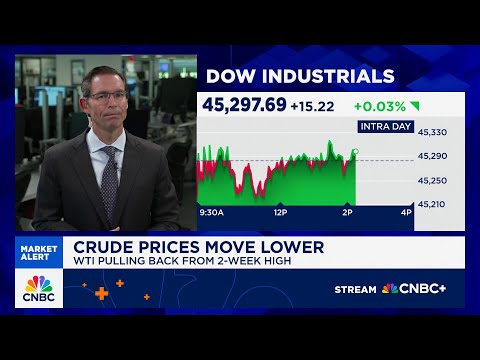
Market Trends & Fed Influence - The market is influenced by the Federal Reserve's independence, which impacts interest rates and financial markets [3] - Debates about whether the Federal Reserve is dovish or hawkish are ongoing and impact portfolio managers' decisions [5] - Bond market indicators, including the yield curve, inflation expectations, and currency markets, are key factors in shaping the market outlook [5] Investment Strategy & Asset Allocation - Vanguard believes US exceptionalism has a time stamp, suggesting diversification outside the US is prudent, regardless of AI outlook [7] - Fixed income market is more compelling than it has been in 15-20 years, offering opportunities for active risk-taking [9] - Bonds are back, offering higher coupons and diversification benefits, making them attractive even for those skittish on the equity market [10] - Intermediate exposure is recommended as a starting point for Treasury investments, cautioning against short duration strategies [13] Bond Market Opportunities - Many bonds have outperformed the US equity market over the past 25 years [8] - The fixed income market presents compelling opportunities for returns and diversification [11] - Consider the re-entry point when the Federal Reserve eases, as it's a challenging aspect of tactical investing [14]
X @Bloomberg
Bloomberg· 2025-08-26 12:55
Strategic Direction - Vanguard hired an outsider to lead its private markets strategy [1] - This signals CEO Salim Ramji's intention to increase Vanguard's presence in the private markets asset class [1]
Is Nuveen ESG Mid-Cap Value ETF (NUMV) a Strong ETF Right Now?
ZACKS· 2025-08-26 11:21
Core Insights - The Nuveen ESG Mid-Cap Value ETF (NUMV) offers broad exposure to the mid-cap value segment of the market and debuted on December 13, 2016 [1] - NUMV is managed by Nuveen and aims to match the performance of the TIAA ESG USA Mid-Cap Value Index [5] - The ETF has accumulated over $396.66 million in assets, making it an average-sized fund in its category [5] Fund Characteristics - NUMV has an annual operating expense ratio of 0.31%, which is competitive within its peer group [6] - The fund's 12-month trailing dividend yield is 1.65% [6] - The largest sector allocation is to Industrials at 18.4%, followed by Financials and Real Estate [7] Holdings and Performance - United Rentals Inc. (URI) is the largest individual holding at 2.42% of total assets, with the top 10 holdings comprising 20.07% of total assets [8] - Year-to-date, NUMV has gained approximately 9.53%, and it is up about 8.32% over the last 12 months as of August 26, 2025 [10] - The ETF has a beta of 0.99 and a standard deviation of 17.37% over the trailing three-year period, indicating effective diversification [10] Alternatives - Other ETFs in the mid-cap value space include Vanguard ESG U.S. Stock ETF (ESGV) and iShares ESG Aware MSCI USA ETF (ESGU), which have significantly larger assets of $11.1 billion and $14.22 billion respectively [12] - ESGV has a lower expense ratio of 0.09%, while ESGU has an expense ratio of 0.15% [12]

Should Goldman Sachs MarketBeta Russell 1000 Value Equity ETF (GVUS) Be on Your Investing Radar?
ZACKS· 2025-08-26 11:21
Core Viewpoint - The Goldman Sachs MarketBeta Russell 1000 Value Equity ETF (GVUS) is a newly launched passively managed ETF aimed at providing broad exposure to the Large Cap Value segment of the US equity market, with assets exceeding $360.01 million [1]. Group 1: ETF Overview - GVUS was launched on November 28, 2023, and is sponsored by Goldman Sachs Funds [1]. - The ETF has an annual operating expense of 0.12%, making it one of the least expensive options in its category [4]. - It has a 12-month trailing dividend yield of 1.91% [4]. Group 2: Market Characteristics - Large cap companies typically have a market capitalization above $10 billion and are considered stable with lower risk compared to mid and small cap companies [2]. - Value stocks generally exhibit lower price-to-earnings and price-to-book ratios, but they have historically outperformed growth stocks in most markets over the long term [3]. Group 3: Sector Exposure and Holdings - The ETF has a significant allocation to the Financials sector, comprising about 22.6% of the portfolio, followed by Industrials and Healthcare [5]. - Berkshire Hathaway Inc (BRK/B) is the largest individual holding at approximately 3.14% of total assets, with Jpmorgan Chase & Co (JPM) and Amazon.com Inc (AMZN) also among the top holdings [6]. Group 4: Performance Metrics - GVUS aims to match the performance of the Russell 1000 Value 40 Act Daily Capped Index, which measures large and mid-capitalization value stocks [7]. - The ETF has gained about 9.35% year-to-date and approximately 9.87% over the past year, with a trading range between $42.82 and $51.80 in the last 52 weeks [7]. - It has a beta of 0.84 and a standard deviation of 13.86% over the trailing three-year period, indicating effective diversification of company-specific risk with around 869 holdings [8]. Group 5: Alternatives and Market Position - GVUS holds a Zacks ETF Rank of 3 (Hold), suggesting it is a viable option for investors seeking exposure to the Large Cap Value segment [9]. - Other comparable ETFs include the Schwab U.S. Dividend Equity ETF (SCHD) and the Vanguard Value ETF (VTV), which have significantly larger asset bases of $72.08 billion and $143.10 billion, respectively [10].


If You'd Invested $1,000 in Vanguard Real Estate ETF (VNQ) 5 Years Ago, Here's How Much You'd Have Today
The Motley Fool· 2025-08-26 09:48
Core Insights - The real estate sector has significantly underperformed compared to the S&P 500 over the past decade, with a $1,000 investment in the Vanguard Real Estate ETF (VNQ) growing to approximately $1,770, while the same investment in the Vanguard S&P 500 ETF (VOO) would have grown to $3,900 [1][2] Performance Comparison - The S&P 500 has experienced an impressive bull run, achieving annualized total returns of about 14.6% over the last ten years, making it challenging for the real estate sector to keep pace [4] - The real estate sector's performance is notably affected by interest rates, as it is one of the most rate-sensitive sectors in the market [5] Interest Rate Sensitivity - The Federal Reserve has implemented two extended periods of rate increases over the past decade, with the benchmark federal funds rate now over 400 basis points higher than it was ten years ago [5] - Real estate investment trusts (REITs) typically outperform in falling or zero-rate environments but struggle when interest rates are high or rising [5][6] Economic Implications - Rising interest rates increase borrowing costs for REITs, which often rely heavily on debt for growth, similar to how individuals use mortgages to purchase homes [6] - Higher rates can negatively impact commercial real estate property values, which generally have an inverse relationship with risk-free interest rates, leading to potential declines in the value of properties owned by REITs [6][7]