
Ant Group

Search documents
China Market Risk
HumbleDollar· 2026-01-17 06:00
Core Viewpoint - The relationship between the U.S. and China has deteriorated, creating significant concerns for investors due to rising tensions and domestic policies in China that negatively impact investment markets [1][2][5]. Group 1: U.S.-China Relations - Trade between the U.S. and China has increased significantly over the past 25 years, but tensions have also escalated, particularly regarding intellectual property theft, costing the U.S. economy at least $200 billion annually [2]. - Tariffs and restrictions have been imposed by both the Trump and Biden administrations, leading to retaliatory actions from China, including restrictions on rare earth exports critical for technology manufacturing [3]. Group 2: Domestic Policies in China - President Xi Jinping's policies have adversely affected major publicly-traded companies, exemplified by the punishment of Ant Group and Alibaba, resulting in significant fines and loss of control for their founders [6][7][8]. - The Chinese government has targeted other technology companies, leading to a loss of approximately $1 trillion in wealth from the stock market due to arbitrary fines and sanctions [8]. Group 3: Economic Challenges - China's economic model, heavily reliant on government direction, has led to an oversupply of housing, with estimates of up to 90 million vacant homes, contributing to bankruptcies among property developers [12]. - The autocratic approach of the Communist Party is seen as detrimental to innovation and economic growth, as highlighted by economist James Robinson's predictions [11]. Group 4: Investment Recommendations - Given the risks associated with investing in China, alternatives such as the Freedom 100 Emerging Markets ETF (FRDM) are recommended, which has outperformed traditional emerging markets indexes by delivering over 15% annual returns since its inception in 2019 [13]. - A new emerging markets ETF from Vanguard, VEXC, specifically excludes China and is considered a promising investment option [14].



BIS-中国住房财富效应
2025-12-31 16:02
Summary of Key Points from the Conference Call on Housing Wealth Effects in China Industry Overview - The report focuses on the housing market in China, particularly the relationship between house prices and household consumption in different city tiers [8][11][55]. Core Findings - **Housing Wealth Effects**: A 10% increase in house prices in Tier 1 and Tier 2 cities leads to a 1.6% increase in consumption. This effect is not observed in Tier 3 and Tier 4 cities [8][41]. - **Demographic Variations**: Older households exhibit stronger housing wealth effects compared to younger households. In Tier 1 and Tier 2 cities, younger individuals do not show significant wealth effects, while in Tier 3 and Tier 4 cities, rising house prices crowd out consumption among younger households [15][56]. - **Economic Contribution**: Tier 1 and Tier 2 cities account for over 37% of China's retail consumption, highlighting the importance of the housing market in these regions [13][14]. Additional Insights - **Debt Concerns**: Between 2015 and 2021, house prices and household debt in China rose by 49% and 23%, raising concerns about potential debt-deflation spirals [11]. - **Consumption Patterns**: The study utilized Alipay transaction data from 200,000 households, indicating that housing constitutes a significant portion of household assets, with nearly 70% of urban household assets tied to real estate [12][13]. - **Market Dynamics**: The oversupply of housing in Tier 3 and Tier 4 cities leads to weaker wealth effects, as these areas experience lower liquidity and demand [20][55]. Methodology - The analysis leverages a unique dataset of Alipay transactions from January 2017 to March 2023, allowing for a detailed examination of consumption patterns across different demographics and city tiers [12][22]. Implications for Policy - The findings suggest that public policies on real estate should be tailored to address the specific issues faced by different city tiers. Sustaining house prices in lower-tier cities may not spur consumption unless it addresses oversupply [57]. Conclusion - The study concludes that while housing wealth effects are significant in Tier 1 and Tier 2 cities, they are largely absent in Tier 3 and Tier 4 cities due to various economic factors, including oversupply and demographic trends [55][56].
Trip.com tests stablecoin payments overseas, offering USDT and USDC for prepaid bookings
Yahoo Finance· 2025-12-29 09:30
Core Insights - Trip.com has begun allowing overseas users to pay for prepaid hotel and flight bookings using stablecoins USDT and USDC, indicating a growing acceptance of these dollar-pegged tokens [1][5] - This development occurs despite the Chinese government's strict stance on cryptocurrency activities [2][5] Group 1: Company Actions - The stablecoin payment option was enabled on October 9, and is available to users in specific regions when booking through Trip.com's international platform [1] - A Foresight reporter successfully booked a hotel and flight using USDT in Vietnam, noting that these bookings were cheaper than those on Trip.com's mainland China app [3] Group 2: Market Context - The People's Bank of China stated that stablecoins do not meet the mainland's anti-money-laundering requirements, which may limit their use in certain markets [4] - Trip.com does not offer stablecoin payments to users in mainland China and some other regions, with the availability of the option determined by the user's IP address [5] - In August, over US$10 billion worth of stablecoins were used for payments, more than double the US$4.3 billion from the previous year, with business-to-business transfers making up most of this total [6] Group 3: Industry Trends - Several Chinese tech firms, including Ant Group and JD.com, are exploring stablecoin initiatives in Hong Kong, which is establishing a licensing regime for stablecoin issuers to become a digital asset hub [7]

The Year in Ethereum 2025: Institutions Embrace ETH as the 'Ivory Tower' Crumbles
Yahoo Finance· 2025-12-23 14:01
Core Insights - Ethereum has made significant progress in gaining acceptance among centralized institutions in 2025, a year marked by major regulatory changes in the crypto industry [2][3] - The network's builders have historically focused on technical achievements and decentralization, but this year has seen a shift towards broader economic and political engagement [1][2] Group 1: Institutional Adoption - Centralized institutions are urgently expanding their businesses onto blockchain networks, with a notable preference for Ethereum's multi-layer network model [5][6] - Major financial players, including Fidelity and SWIFT, have chosen Ethereum for their tokenization projects, indicating a strong institutional validation of the network [6][7] - The trend of adopting Ethereum has occurred organically, driven by its perceived suitability for business rather than through aggressive marketing efforts [5][6] Group 2: Global Reach - Financial institutions from various regions, including Upbit in South Korea, Ant Group in China, and Amundi in Europe, have engaged in tokenization projects using Ethereum [7] - The success of Ethereum in institutional settings is exemplified by the establishment of layer-2 networks, such as Base, which have gained traction in Wall Street circles [6][7]
36Kr Hosts a Standout WISE 2025 Business Kings Conference, Showcasing Technology Innovation, Long-Term Value Creation and Business Leadership
Globenewswire· 2025-12-17 10:00
Core Insights - 36Kr Holdings Inc. successfully hosted the WISE 2025 Business Kings Conference, which redefined traditional business conference formats and attracted significant media attention with over 500 million views [1][2][11] Event Overview - The WISE 2025 conference took place on November 27-28, 2025, in Beijing's 798 Art District, featuring a unique seven-act agenda inspired by short plays [1][3] - The event gathered business leaders and innovators from various sectors, including intelligent hardware, artificial intelligence, life sciences, retail, and investment [1][2] Key Highlights - The conference featured a mass-participation AI short play titled "Forging the Dawn," showcasing AI's advancements in creative generation [3] - A live demonstration of Unitree Technology's G1 humanoid robot set a tone of technological innovation for the event [3] Thematic Acts - **Act 1: New Beginnings 2025 and 2035** - Executives shared entrepreneurial journeys and launched Houmo.AI's M50 chip [4] - **Act 2: Challengers and the Tech Wave** - Discussions on technological disruption and the evolution of AI for Science [5] - **Act 3: Embodied Artificial Intelligence** - In-depth discussions on defining embodied AI and its applications [5] - **Act 4: Brand Building** - Introduction of the "Three Constants" brand-building theory and the "Future Super Chinese Brands List" [6] - **Act 5: Tech-empowered Innovation in Consumer Goods** - Showcasing how AI is reshaping the marketing value chain [7] - **Act 6: Global Expansion and Synergy** - AI applications in global expansion scenarios discussed by industry leaders [9] - **Act 7: Outlook on the New Tech Era** - Insights on generational consumption drivers and the computing power revolution [9] Recognition and Support Initiatives - 36Kr unveiled the WISE 2025 Business Kings Annual Honors Lists, recognizing notable figures in China's capital markets [10] - The company launched the IPO Acceleration Camp in partnership with Zhong Lun Law Firm, providing a structured support framework for enterprises [10] Future Commitment - 36Kr aims to deepen its engagement in the industrial ecosystem, focusing on long-term commitment, tech-driven advancement, and innovation [11] - The company plans to support entrepreneurs and help investors identify long-term value opportunities through various initiatives [11]

Mandarin Oriental shareholders approve go-private offer
Yahoo Finance· 2025-12-12 09:19
Core Points - Jardine Matheson's plan to acquire the remaining 11.96% stake in Mandarin Oriental has been approved by a majority of independent shareholders [1] - The total value of the go-private deal is $4.2 billion, which was first announced in October alongside a $925 million sale of property to Alibaba Group and Ant Group [2] - The acquisition is expected to be finalized by February 28, 2026, pending legal and regulatory approvals, with an offer price of $3.35 per share [3] Company Overview - Mandarin Oriental currently operates 43 hotels, 12 residences, and 26 homes across 26 countries [4] - The company has recently announced a layoff of 430 employees related to the redevelopment of its Miami property [4] - There is a commitment to expand its presence in North America, particularly in the United States [4]
Hong Kong’s Stablecoin Momentum Takes a Hit as China’s Anti-Crypto Hammer Falls Again
Yahoo Finance· 2025-12-01 11:32
Core Insights - Hong Kong's new stablecoin regime was intended to promote a regulated crypto environment, but ongoing restrictions from Beijing undermine this initiative [1][2][4] Group 1: Regulatory Environment - The People's Bank of China (PBOC) has reaffirmed its stance that stablecoins are illegal under China's crypto ban, which negatively impacts Hong Kong's stablecoin narrative [2][4][7] - Despite Hong Kong's different regulatory framework, businesses like JD.com and Ant Group have sought approval for yuan-backed stablecoins, indicating potential interest in accessing the mainland market [3][8] Group 2: Market Reaction - Following the PBOC's announcement, Hong Kong crypto stocks experienced significant declines, with Yunfeng Financial Group dropping over 11% and OSL Group falling by more than 5% [5][7] - Other crypto-adjacent stocks, including Guotai Junan International and Bright Smart Securities, also faced losses, reflecting market concerns over regulatory pressures [5] Group 3: Market Dynamics - Despite the ban, China remains a hub for Bitcoin mining, and retail interest in digital assets continues, indicating a persistent demand for crypto despite regulatory challenges [6][8] - The existence of underground trading and VPN-routed trading flows highlights a shadow crypto economy that complicates Hong Kong's efforts to establish a regulated market [8]
X @Bloomberg
Bloomberg· 2025-11-25 11:22
Financial Performance - Ant's quarterly profit grew 10% [1] Technology & Innovation - The company bolstered its artificial intelligence capacity [1]
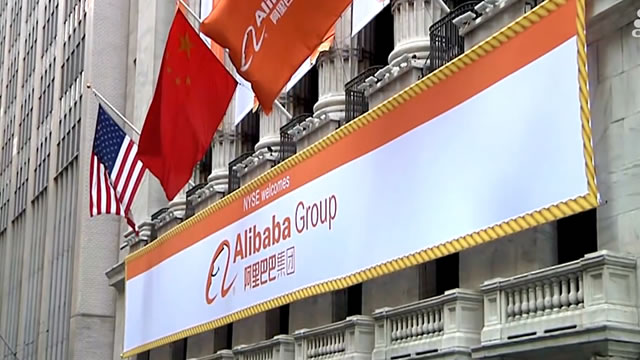
How Alibaba overcame Beijing's crackdown to become an AI giant
CNBC· 2025-11-24 13:18
Core Viewpoint - The article discusses the significant transformation and resilience of Alibaba following the abrupt cancellation of its IPO in 2020, highlighting the company's strategic shift towards artificial intelligence and its recovery from regulatory pressures [3][4][9]. Company Overview - Alibaba, founded in 1999, has evolved from a business-to-business online marketplace to a major player in various sectors including e-commerce, cloud computing, and artificial intelligence [6][7]. - The company is known for its annual Singles Day shopping event, which has expanded from a single day of discounts to a multi-week event, showcasing its vast scale and influence [7][8]. Regulatory Challenges - Following the IPO cancellation, Alibaba faced over $400 billion in value loss and a tightening regulatory environment from the Chinese government, which included a nearly $3 billion antitrust fine in 2021 [4][10]. - The company underwent significant restructuring but struggled to regain its previous momentum amid a challenging domestic market [12][13]. Leadership Changes - Daniel Zhang, who succeeded Jack Ma, announced his unexpected resignation in 2023, leading to the appointment of Eddie Wu as CEO and Joe Tsai as President, who refocused the company on its core e-commerce business while investing in AI [13][14]. AI Development - Since 2016, Alibaba has prioritized artificial intelligence, accelerating its efforts during the COVID-19 pandemic, and was quick to launch its own AI offerings following the emergence of OpenAI's ChatGPT in late 2022 [15][18]. - The company has adopted an open-source approach to AI, making its models popular among developers globally [17]. Strategic Vision - CEO Wu emphasized a return to a startup mindset with a focus on "user first" and "AI-driven" strategies, positioning Alibaba as a key player in the competitive AI landscape between U.S. and Chinese companies [18][19].
Ant International, UBS Team Up for Blockchain Payments Across Borders
Yahoo Finance· 2025-11-17 12:20
Core Insights - Ant International has partnered with UBS to modernize its treasury and payments infrastructure, focusing on blockchain-powered settlement, tokenized deposits, and real-time fund movement [1][2]. Group 1: Partnership Details - The collaboration includes integrating UBS Digital Cash, a blockchain-based payment platform, into Ant's global treasury operations to enhance cross-border liquidity and security [2][3]. - Ant will combine UBS Digital Cash with its Whale platform, a proprietary blockchain-based treasury management system, to facilitate constant multi-currency fund movement across global entities [3]. Group 2: Tokenized Deposits - A significant aspect of the partnership is the joint research and development of tokenized deposits, which are digital representations of traditional bank deposits that can be transferred instantly via blockchain [4]. - Successful implementation of this model is expected to enhance transparency, settlement speed, and auditability for complex transactions [4]. Group 3: Regulatory Environment and Adoption - Hong Kong's Project Ensemble, a regulatory sandbox for tokenized transactions, has enabled real-value settlements between banks and fintech firms, with Ant participating in the pilot [5]. - HSBC recently completed a transfer of HK$3.8 million ($488,820) in tokenized deposits for Ant, indicating accelerating institutional adoption [5]. Group 4: Digital Asset Strategy - The partnership aligns with Ant International's exploration of regulated digital asset infrastructure, including evaluating stablecoin licensing in various jurisdictions [6]. - Ant emphasizes that while it does not plan to engage in speculative crypto activities, it sees significant potential in stablecoins to enhance modern payment infrastructure [6][7].
