
CFM International

Search documents
Airlines face $11 billion supply chain hit in 2025, IATA says
Yahoo Finance· 2025-10-13 10:12
Core Insights - Global airlines are projected to incur over $11 billion in additional costs due to supply chain disruptions in 2023, highlighting significant challenges in the $250 billion aerospace industry [1][2] - The International Air Transport Association (IATA) has quantified the impact of a five-year supply chain crisis, which has resulted in increased fares and flight cancellations [2][4] - IATA's Director General, Willie Walsh, expressed surprise at the findings and suggested a potential revisit of anti-competitive practices by suppliers [2][6] Cost Breakdown - The largest cost impact is attributed to $4.2 billion in extra fuel expenses as airlines continue to operate older aircraft [4] - Additional maintenance costs are estimated at $3.1 billion, while leasing engines to replace those in maintenance queues adds another $2.6 billion [4] - Airlines are projected to spend $1.4 billion on holding more spare parts to mitigate delays [4] Supply Chain Challenges - The aerospace industry is facing setbacks including labor, material, and parts shortages, along with delays at repair shops, particularly for engines [5] - There is increasing competition for capacity with the defense industry as military spending rises, indicating that supply chain issues will persist throughout the decade [5] Market Competition - Walsh raised concerns about the influence of suppliers on parts pricing and called for increased competition in the aftermarket, which has seen significant consolidation [6] - IATA has previously advocated for greater competition in maintenance and improved access to independent parts [6] - Although no new challenges are currently planned against suppliers, the possibility remains open for future evaluations [7]
Aviation experts say Boeing should be dreaming up its next clean-sheet jet — even if it's a decade away
Business Insider· 2025-10-13 09:07
Core Viewpoint - Boeing has not developed a new commercial airplane since the 787 Dreamliner in 2004 and is now considering a clean-sheet design to replace the aging 737, which has undergone four generations of modifications since 1967 [1][3][5]. Group 1: Current Developments - Boeing's 737 narrowbody aircraft is crucial for short and mid-range flights, capable of carrying up to 220 passengers depending on the model [2]. - At a recent conference, Boeing leadership downplayed the imminent launch of a new aircraft design, indicating that while they are exploring new technologies, they are not close to launching a new airplane [3][4]. - Analysts suggest that Boeing's long-term competitiveness relies on developing a new narrowbody aircraft and securing a next-generation engine [3][5]. Group 2: Leadership and Strategy - Boeing's CEO Kelly Ortberg, who took over in August 2024, is seen as a catalyst for positive changes within the company, focusing on quality and operational improvements [6][11]. - Analysts have upgraded Boeing's rating to "buy," citing improvements in operational performance and a renewed focus on quality under Ortberg's leadership [11]. Group 3: Production and Certification Challenges - Boeing faces immediate challenges, including the certification of three unfinished aircraft models and the need to rebuild investor confidence through enhanced production and cash flow [4][19]. - The company has a backlog of over 6,000 jets to deliver, and it is currently focused on certifying its 777X and Max models [21]. Group 4: Future Aircraft Development - A new Boeing aircraft is unlikely to be operational for at least a decade, with industry experts suggesting that a new design announcement could occur within the next three years [5][6]. - The development of a new engine is critical for any new aircraft, with Rolls-Royce pitching a new powerplant to Boeing, which may signal a shift from its long-standing partnership with CFM International [16][17]. - The introduction of new engine technologies is essential to achieve the expected 15-20% fuel efficiency improvements for next-generation single-aisle aircraft [18]. Group 5: Competitive Landscape - Boeing's competitors, including Airbus and emerging startups like Natilus, are also eyeing the narrowbody market, which is projected to see significant demand in the coming decades [14][15].


美股异动|波音股价下挫4.14%逆风而行挑战重重
Xin Lang Cai Jing· 2025-10-09 22:49
Core Insights - Boeing's stock price dropped by 4.14% on October 9, despite securing a contract worth over $173 million from the U.S. Air Force for eight MH-139A "Grey Wolf" helicopters and related services, indicating market concerns about Boeing's future commercial partnerships [1][2] - Airbus has surpassed Boeing in cumulative deliveries of the A320 series aircraft compared to the Boeing 737 series, highlighting intensified competition in the narrow-body aircraft market [1] - Turkish Airlines has warned of potential order losses for Boeing if negotiations with engine supplier CFM International do not yield favorable terms, suggesting increasing bargaining power for airlines in the global aviation market [1] Industry Challenges - Boeing faces pressure from technological innovation and future development, with its digital transformation platform encountering challenges in data security and global adaptation, which may impact its competitiveness in the high-tech aviation market [2] - Investors should monitor Boeing's competitive position in the global market and its investment strategies in new technologies and products, as short-term market confidence appears to be lacking [2] - Despite current market challenges, Boeing's long-term potential as a manufacturing giant remains, with ongoing defense contract revenues and potential strategic adjustments offering opportunities for long-term investors [2]
Korean Air is giving Boeing a $36 billion boost
Business Insider· 2025-08-26 03:30
Core Viewpoint - Korean Air has made a significant commitment to Boeing with a $36.2 billion purchase order for 103 aircraft, marking the airline's largest order and Boeing's largest widebody order from an Asian carrier [1][2]. Group 1: Purchase Details - The order includes 20 Boeing 777-9s, 25 Boeing 787-10s, 50 Boeing 737-10s, and eight Boeing 777-8F freighters, with deliveries expected by the end of 2030 [1]. - In addition to the aircraft order, Korean Air signed a $690 million deal for 19 spare engines and a $13 billion, 20-year engine maintenance service contract with GE Aerospace [8]. Group 2: Strategic Implications - The massive order is intended to support Korean Air's expansion to more destinations in the US, Latin America, and South America [3]. - This investment is seen as crucial for the future competitiveness of the merged airline with Asiana Airlines, which Korean Air acquired last year [10]. Group 3: Economic Impact - Boeing's press release indicated that the order would support an estimated 135,000 jobs across the US [2]. - Boeing reported a sales increase of 35% in the second quarter of 2025 compared to the same period in 2024, highlighting a potential turnaround in business performance [9].
Feds issue urgent warning over risk of Boeing 737 Max engines leaking smoke into cabin, cockpit
New York Post· 2025-06-19 16:31
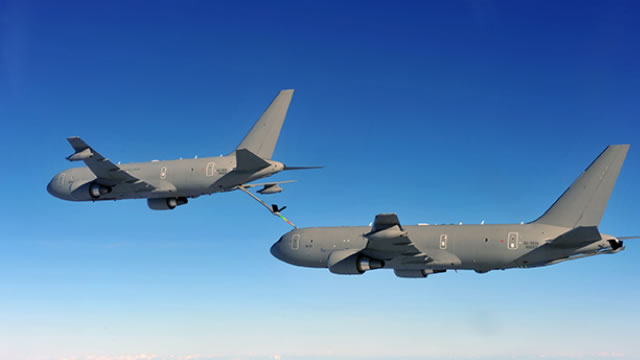
Group 1 - Federal regulators issued an urgent warning regarding the risk of Boeing 737 MAX engines malfunctioning, which could allow smoke to enter the airplane cabin or cockpit, posing a significant danger to pilots [1] - The warning was prompted by two incidents involving Southwest Airlines flights where CFM International LEAP-1B engines malfunctioned after bird strikes, resulting in smoke entering the cabins [2] - The NTSB reported that in December 2023, a Boeing 737-8 experienced "acrid white smoke" shortly after takeoff, severely impairing the captain's visibility, and another incident in March 2023 also involved smoke entering the passenger cabin [3] Group 2 - The NTSB recommended modifications to the engines used on Boeing 737 MAX planes and Airbus A32 jets, urging the FAA to assess whether LEAP-1A and LEAP-1C engines could face similar issues [4] - The NTSB expressed concerns that flight crews may be unaware of the smoke hazard and lack knowledge on how to respond, urging the FAA to require operators like Boeing to inform crews about the risks [4] - Boeing has revised its flight manuals to guide pilots on preventing smoke from entering the cockpit or cabin, and is collaborating with CFM International on a software design update in response to the NTSB's recommendations [6]
特朗普关税大棒挥向欧盟时 哪些行业风雨飘摇?
智通财经网· 2025-05-26 13:35
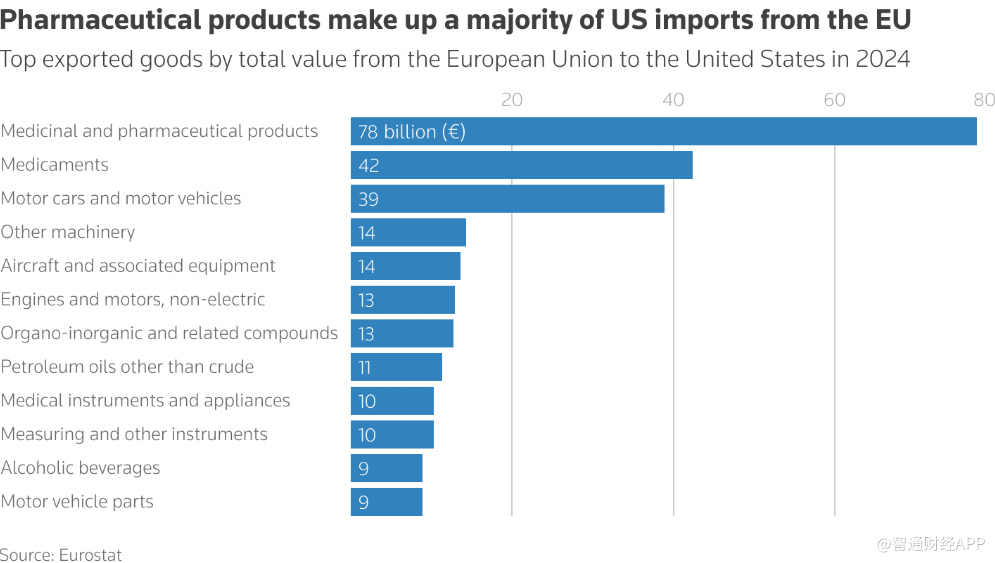
Core Viewpoint - President Donald Trump has abandoned the threat of imposing a 50% tariff on EU imports, allowing more time for negotiations between Washington and the 27 EU countries [1] Group 1: EU Exports to the US - In 2024, the US is the largest export partner for the EU, accounting for 20.6% of EU exports [1] - The top three countries exporting from the EU to the US are Germany (€161 billion, approximately $182.6 billion), Ireland (€72 billion), and Italy (€65 billion) [3] - The main products exported from the EU to the US include pharmaceuticals (€120 billion), automobiles (€40 billion), and aircraft and related equipment [3][4] Group 2: Pharmaceuticals - In 2024, the EU exported approximately €120 billion worth of pharmaceutical products to the US [3] - Major pharmaceutical companies in the EU include Novo Nordisk, Bayer, Roche, and Novartis [3] Group 3: Automobiles - The EU exports about 750,000 cars to the US annually, valued at approximately €40 billion, representing 14% of the EU's total automotive production [4] - Major car manufacturers affected by US trade policies include Mercedes-Benz, Stellantis, and Volvo [4] - Volkswagen is significantly impacted by tariffs due to its high-end Audi brand not being produced in the US, but plans to announce production of some best-selling models in the US [4] Group 4: Aircraft and Equipment - Airbus is the second-largest exporter in France, with about 12% of its aircraft sold to the US, some of which are assembled locally [5] - CFM International, a major supplier for Airbus and Boeing, is co-owned by Safran and GE Aviation [5] Group 5: Alcohol and Beverages - In 2024, the EU exported approximately €9 billion worth of alcoholic beverages to the US, with European spirits valued at €2.9 billion [9] - Major European beverage producers include Heineken, Diageo, and Carlsberg [9] Group 6: Cosmetics - The EU exported cosmetics, perfumes, and personal care products worth approximately $10.47 billion to the US in 2024 [10] - French company L'Oréal exports about €2.5 billion worth of cosmetics to the US annually [11] Group 7: Luxury Goods - About one-quarter of products from major luxury goods groups are aimed at US consumers, with smaller brands having varying market shares [12] - The French luxury goods industry is the largest globally, employing over 600,000 people [13] - The luxury goods sector is significantly affected by US tariffs, as companies have limited ability to shift production to the US [14]
Willis Lease(WLFC) - 2025 Q1 - Earnings Call Transcript
2025-05-06 15:02
Financial Data and Key Metrics Changes - For Q1 2025, total revenue was $157.7 million, a 33% increase from the same quarter in 2024, with pretax income of $25.3 million [11][12] - Average utilization for the quarter was 79.9%, ending at over 86%, indicating effective revenue generation from off-lease engine purchases [3][12] - The total owned portfolio size increased to $2.82 billion as of March 31, 2025 [12] - Maintenance reserve revenues rose to $54.9 million, up 25% from the prior year [12][14] - Net income attributable to common shareholders was $15.5 million, with diluted earnings per share at $2.21 [20] Business Line Data and Key Metrics Changes - Core lease rent revenue for the quarter was $67.7 million, with interest revenue at $3.9 million [11][12] - Fair parts and equipment sales surged by 455% to $18.2 million, driven by demand for surplus materials [15] - Maintenance service revenue was $5.6 million, showing slight growth from the previous year [16] Market Data and Key Metrics Changes - The company noted robust demand for its products and services both domestically and internationally, despite macroeconomic uncertainties [9] - The average lease rate factor across the portfolio remained stable at 1.0% [12] Company Strategy and Development Direction - The company is focused on expanding its core leasing business and enhancing maintenance capabilities to support airlines [4][5] - Notable transactions included purchasing 30 additional LEAP engines and a new constant thrust deal with Air India Express [5][6] - A joint venture to build an engine test facility in Florida was announced to address industry testing capacity shortages [8] Management's Comments on Operating Environment and Future Outlook - Management expressed confidence in the business model and ability to create value despite macroeconomic challenges [4][9] - The company is prepared to adapt to potential changes in the operating environment due to tariffs and market volatility [9][10] Other Important Information - The company declared its fourth consecutive quarterly dividend of $0.25 per share, reflecting strong cash flow characteristics [23] - Total debt obligations increased from $1.7 billion to $2.2 billion, with leverage decreasing to 3.31 times [19][23] Q&A Session Summary Question: Impact of tariffs on operations - Management indicated minimal impact from tariffs on both import parts and leasing revenue, with most parts sourced internally [25][26] Question: Market values and lease rates under potential tariff escalation - Management speculated that asset inflation could occur, with older assets potentially appreciating due to increased costs of new engines [28][30] Question: Spare parts market dynamics - The company noted a strong demand for used serviceable materials, with a strategic approach to either repair or part out unserviceable engines [37][39] Question: Clarification on maintenance reserve liabilities - Management confirmed that the increase in maintenance reserve liabilities reflects probable lease extensions and will be recognized as revenue once engines are returned [52][55] Question: Utilization rate and lease mix - The utilization rate improved significantly, with a consistent mix of long-term and short-term leases maintained around 50% [59][60]

XEOS inaugurates CFM LEAP maintenance in Poland
Prnewswire· 2025-03-24 11:30
Core Insights - GE Aerospace inaugurated the XEOS facility in Poland, a joint venture with Lufthansa Technik, focusing on the maintenance, repair, and overhaul of CFM LEAP engines [1][2] - The facility aims to enhance MRO capabilities for LEAP engines, which are used in popular aircraft like Airbus A320neo and Boeing 737 MAX [1][2] Company Developments - XEOS is currently performing LEAP-1B shop visits and supporting LEAP-1A module work, with plans to expand its testing capabilities [2] - The facility spans 35,000 square meters and includes advanced features such as an engine prep hall, assembly and disassembly areas, and a training center [4] - The workforce at XEOS is expected to grow from 250 employees as capacity is built, with a focus on training and developing local talent [5] Strategic Partnerships - LOT Polish Airlines has selected Lufthansa Technik for the maintenance of its CFM LEAP-1B engines, with the first engine inducted at the XEOS facility [3] - The partnership with local universities and suppliers is part of GE Aerospace's commitment to developing a skilled aerospace workforce in Poland [2] Industry Impact - The establishment of XEOS is seen as a significant boost for the aerospace sector in Poland, providing local servicing capabilities for LEAP engines [4] - GE Aerospace has a long-standing relationship with LOT Polish Airlines, having powered their fleet with various engine types for over 25 years [5][6]
