
Cargill

Search documents
Alex Pretti killing: Minnesota CEOs, including UnitedHealth, Target, call for 'immediate deescalation'
CNBC· 2026-01-25 19:21
Core Viewpoint - Major Minnesota business leaders are calling for immediate de-escalation of tensions following the fatal shooting of U.S. citizen Alex Pretti by federal immigration agents in Minneapolis [1][2]. Group 1: Business Leaders' Response - Over 60 CEOs from Minnesota-based companies signed a letter urging collaboration among state, local, and federal officials to find real solutions to the ongoing turmoil [2]. - Signatories include prominent figures such as incoming Target CEO Michael Fiddelke, 3M CEO William Brown, Cargill CEO Brian Sikes, and UnitedHealth Group CEO Stephen Hemsley [2]. Group 2: Community Impact - The letter emphasizes the need for peace and cooperation to enable families, businesses, and communities in Minnesota to resume their efforts towards a prosperous future [3]. - The tragic incident has led to widespread disruption and loss of life, highlighting the urgent need for effective solutions [2][3]. Group 3: Federal Law Enforcement Actions - The Trump administration has increased federal law enforcement presence in Minneapolis to enforce immigration policies and investigate allegations of welfare fraud in the state [4].



中国强化食品和饮料行业产销现状及未来前景预测报告2025-2031年
Sou Hu Cai Jing· 2025-12-12 14:24
Group 1 - The report provides a comprehensive analysis of the current state and future prospects of the fortified food and beverage industry in China, projecting trends from 2018 to 2031 [1][4] - It categorizes fortified food and beverages into various product types and sales channels, highlighting growth trends across these categories [3][4] - The report includes detailed revenue and sales volume data for the fortified food and beverage market in China, along with growth rates for the years 2018 to 2031 [4][7] Group 2 - Major manufacturers in the Chinese fortified food and beverage market are analyzed, including their sales volumes, revenues, and market shares from 2018 to 2025 [4][8] - The report ranks the top manufacturers by revenue for 2025 and provides insights into their pricing strategies and market positions [4][8] - It discusses the competitive landscape of the industry, including market concentration and the distribution of major players across different tiers [4][8] Group 3 - The report examines the sales trends of fortified food and beverages through various channels, including online and offline sales, and forecasts future growth [7][8] - It analyzes the market size and sales volume of different product types, providing insights into market shares and future projections [6][7] - The pricing trends for fortified food and beverages in China are also discussed, with forecasts extending to 2031 [6][11] Group 4 - The industry development environment is analyzed, focusing on trends, barriers to entry, driving factors, and constraints affecting the fortified food and beverage sector [7][8] - A SWOT analysis of Chinese companies in the fortified food and beverage industry is included, providing insights into their strengths, weaknesses, opportunities, and threats [7][11] - The report outlines the regulatory environment and key policies impacting the industry, highlighting the role of government oversight [7][11]

La transparence radicale comme antidote au chaos alimentaire | Xavier Bengoa | TEDxGeneva
TEDx Talks· 2025-12-11 17:39
[applaudissements] avril 2023, je suis au Guatemala avec mes enfants et ma femme enceinte. Chaud, un regeton qui vibre à fond dans la voiture. On roule sur une piste en direction de la mer des Caraïbes.Autour forêt tropicale, quelques plantations de bananes et de café. Quand soudain je vois des bras qui s'agitent au devant, je vois des hommes qui tirent un câble au travers de la route. Je plante les freins dans un nuage de poussière.Les hommes s'approchent, sont des paysans. Peste la vitre, il me demande de ...

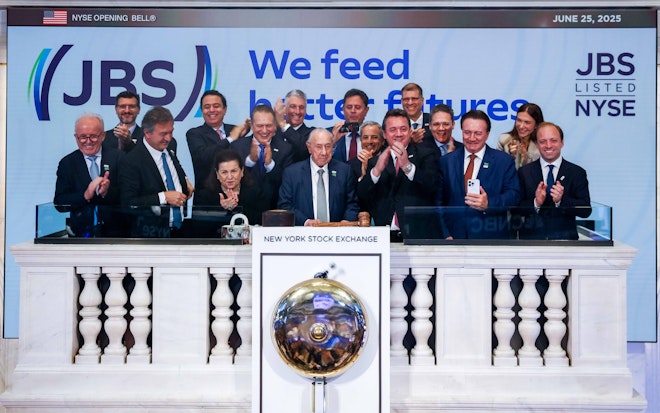
JBS (NYSE:JBS) Stock Analysis: A Deep Dive into Growth and Investment Potential
Financial Modeling Prep· 2025-12-11 02:00
Core Viewpoint - JBS is a leading global food company with significant growth potential and strong investor confidence, despite recent short-term stock fluctuations [1][2][3][4][5] Group 1: Company Overview - JBS is primarily engaged in the production and processing of beef, chicken, and pork, making it one of the largest meat processing companies globally [1] - The company competes with major players in the industry, including Tyson Foods and Cargill [1] Group 2: Stock Performance - Over the past month, JBS's stock price has increased by approximately 5.85%, indicating strong investor confidence [2][5] - In the last 10 days, there has been a slight decline of about 4.79%, which may present a strategic entry point for investors [2] Group 3: Growth Potential - JBS has a projected stock price increase of 37.35%, making it an attractive option for growth-seeking investors [3][5] - Analysts have set a target price of $19.25 for JBS, suggesting significant room for appreciation from current levels [4] Group 4: Financial Health - JBS has a Piotroski Score of 8, indicating robust fundamentals in profitability, leverage, liquidity, and operating efficiency [3][5] - The recent local minimum in stock price may signal a potential reversal or stabilization, enhancing its investment appeal [4]
Uzbekneftegaz, Cargill sign deal to boost Uzbekistan energy security
Yahoo Finance· 2025-12-08 09:36
Core Insights - Uzbekistan's state-owned oil and gas company Uzbekneftegaz has entered into a long-term cooperation agreement with US-based Cargill to enhance the country's energy security [1] - The agreement includes attracting long-term financing of up to $3 billion, with potential to increase to $5 billion [1][2] Financing and Development Goals - The financing aims to improve Uzbekistan's energy security, resource sustainability, and support sustainable development initiatives [2] - Funds will be directed towards projects that enhance the reliability, efficiency, and sustainability of energy, water management, and ecological systems in Uzbekistan [2] - The deal addresses rising energy consumption, climate change impacts, and the need for industrial modernization in the country [2] Strategic Coordination and Investment Mobilization - UNG Overseas will coordinate strategic activities with global partners, while Cargill will provide practical solutions leveraging its expertise in structured financing [3] - The partnership is expected to facilitate the mobilization of international investment in Uzbekistan's priority sectors [3] Recent Developments in the Energy Sector - UNG Overseas connects Uzbekistan's energy sector with global markets, focusing on trading, investment, and partnerships in oil, gas, and petrochemicals [4] - In October, Uzbekistan announced new energy sector agreements with US companies valued over $4 billion, including deals with Air Products to support greener energy transitions [4] - Air Products is advancing the construction of a petrochemical complex in Bukhara and has signed a $1 billion deal for a natural gas-to-syngas processing unit in Uzbekistan [5]
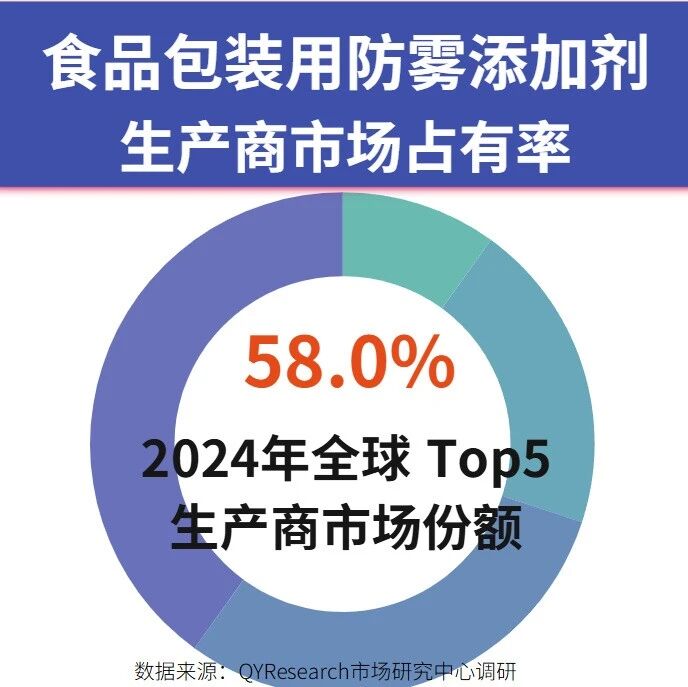
【市场聚焦】全球食品包装防雾添加剂市场格局明朗,前五大厂商市占率近六成
QYResearch· 2025-12-05 01:53
Core Viewpoint - The article discusses the significance and growth potential of anti-fog additives used in food packaging, highlighting their role in enhancing product visibility and consumer experience while addressing market trends and industry dynamics [2][5][8]. Industry Overview - Anti-fog additives are functional agents that prevent fog formation on plastic food packaging materials, ensuring clear visibility and maintaining shelf appeal [2]. - The global production of food packaging anti-fog additives is projected to reach 900,000 tons in 2024, with an average price of $360 per ton and a gross margin of 15%-30% [5]. Industry Chain - The industry chain consists of three segments: upstream (raw material supply), midstream (additive production), and downstream (film and sheet production) [4]. - Upstream involves suppliers of petrochemical and fatty chemical raw materials, while midstream focuses on the formulation and processing of anti-fog additives [4]. - Downstream includes film manufacturers who incorporate anti-fog agents into packaging for various food products, driven by consumer demands for "fog-free, high transparency, and recyclable" solutions [4]. Market Drivers and Opportunities - The increasing demand for fresh refrigerated foods and visually appealing packaging is a key driver for the anti-fog additive market [8]. - The expansion of modern retail, cold chain logistics, and e-commerce for fresh produce creates opportunities for anti-fog solutions in packaging [10]. Market Trends - The anti-fog additive market is expected to grow at a compound annual growth rate (CAGR) of 3.75%, reaching a market size of $430 million by 2031 [5]. - The primary application area for these additives is food packaging films, particularly for fresh produce, meat, dairy, and ready-to-eat foods [11]. - Glycerol esters remain the dominant chemical in the food packaging sector due to their cost-effectiveness and safety [11].
Cargill Chair and CEO Brian Sikes joins Deere & Company's Board of Directors
Prnewswire· 2025-12-04 13:00
Core Insights - Deere & Company has appointed Brian Sikes, the board chair and CEO of Cargill, to its board of directors, enhancing its leadership with expertise in global food and agriculture [1][2] - Sikes brings extensive experience from Cargill, where he has held various leadership roles since 1991, and he became CEO in 2023, overseeing operations in over 70 countries [2][3] - With Sikes' appointment, Deere's board now consists of 11 members, with 10 being independent, non-employee directors [3] Company Overview - Deere & Company is a global leader in agricultural, construction, and forestry equipment, focusing on productivity and sustainability [4] - The company offers technology-enabled products, such as the John Deere Autonomous 8R Tractor and See & Spray™, to address the increasing global demand for food, shelter, and infrastructure [4]


C3.ai(AI) - 2026 Q2 - Earnings Call Transcript
2025-12-03 23:00
Financial Data and Key Metrics Changes - Total revenue for Q2 was $75.1 million, a quarter-over-quarter increase of 7% [19] - Subscription revenue was $70.2 million, a quarter-over-quarter increase of 16.5%, representing 93% of total revenue [19] - Non-GAAP gross profit was $40.9 million, with a non-GAAP gross margin of 54% [21] - Non-GAAP operating loss for the quarter was $42.2 million, and non-GAAP net loss was $34.8 million, equating to $0.25 per share [21] - Free cash flow for the quarter was negative $46.9 million, with $675 million in cash and equivalents at quarter-end [22] Business Line Data and Key Metrics Changes - Bookings increased by 49% sequentially to $86 million, with significant traction in federal business [5][20] - Total bookings across federal, defense, and aerospace increased by 89% year over year, accounting for 45% of total bookings [6] - Professional services revenue was $4.9 million, representing 7% of total revenue [20] Market Data and Key Metrics Changes - The federal market is identified as a large growth vector, with agencies moving towards commercial off-the-shelf solutions [6] - The company signed new agreements with various federal agencies, including the U.S. Department of Health and Human Services and the U.S. Department of Defense [6][7] Company Strategy and Development Direction - The company aims to return to rapid growth and a path towards free cash flow positive and non-GAAP profitability [14] - Focus on driving sales execution and doubling down on products and industries where the company has demonstrable leadership [15] - The product roadmap includes innovations like C3.ai Agentic Process Automation, which expands the scope of what customers can accomplish [12] Management's Comments on Operating Environment and Future Outlook - Management acknowledges challenges from a government shutdown but remains optimistic about the demand for enterprise AI [5][30] - The management team is focused on delivering economic value quickly to convert opportunities into agreements [27][36] - The company is benefiting from trends such as the push for AI adoption and the reindustrialization of the maritime industrial base [34] Other Important Information - The company has established a detailed financial model and operational objectives to facilitate growth [17][18] - The partner ecosystem is crucial, with 89% of bookings in Q2 closed through partnerships [10] Q&A Session Summary Question: Explanation for the decline in business performance - Management attributed the decline to poor sales execution and acknowledged that demand for enterprise AI is accelerating [26] Question: Clarification on revenue from demo licenses - The revenue of $21.9 million was from demo licenses [31] Question: Outlook for professional services revenue mix - Long-term expectations for professional services mix remain between 10%-20% of revenue [32] Question: Future outlook for federal business - The federal business is expected to be a durable growth engine, driven by government trends towards commercial solutions and AI adoption [33] Question: Initiatives for better growth and accountability - Management emphasized the importance of rigorous evaluation and delivery of value to drive growth [36]

Hafnia Limited(HAFN) - 2025 Q3 - Earnings Call Transcript
2025-12-02 11:02
Financial Data and Key Metrics Changes - In Q3, Hafnia reported TCE income of $247 million, with adjusted EBITDA of $150.5 million, leading to a net profit of $91.5 million or $18 per share [13][14] - The company has maintained a dividend payout ratio of 80% of net profit, resulting in a dividend payment of $73.2 million or $14.7 per share for the quarter [14][9] - The average age of the owned fleet is 9.6 years, with a total of 126 vessels [5][6] Business Line Data and Key Metrics Changes - Hafnia operates in the product tanker and chemical markets, with a diversified fleet including 117 owned vessels and nine long-term time-chartered vessels [5][6] - The company has seen a strong market in Q3, contrary to typical seasonal trends, due to increased ton miles and tighter supply from sanctioned vessels [13] Market Data and Key Metrics Changes - The company has booked 71% of its bookings for Q4 as of mid-November, indicating an improvement in rates, with bookings around $26,040-$25,600 [20] - The market dynamics have shifted, with a significant reduction in fleet addition expected in 2025, leading to a tighter tonnage situation [35][36] Company Strategy and Development Direction - Hafnia is focused on strategic growth through acquisitions, joint ventures, and fleet modernization, including a recent acquisition of Chemical Tankers, Inc. and a joint venture with Cargill for bunkering services [10][11][7] - The company aims to maintain a low-cost operation while ensuring strong shareholder distributions, with a clear dividend policy linked to the strength of its balance sheet [7][9] Management's Comments on Operating Environment and Future Outlook - Management noted that the geopolitical environment, including the reopening of the Red Sea and the impact of Russian oil sanctions, presents both challenges and opportunities for the company [26][30] - The outlook for the winter market appears strong, driven by refinery closures in Europe and increased demand from the U.S. [37][38] Other Important Information - Hafnia has sold four older MR vessels as part of its fleet modernization strategy, with three recognized in Q4 [14] - The company is actively monitoring the situation in Venezuela, which has seen a recovery in export volumes [33] Q&A Session Summary Question: What is the status of the TORM share purchase? - Management confirmed that the transaction is pending the appointment of a new independent board chair for TORM, which is the last outstanding condition [16][19] Question: How does the company view the impact of the Red Sea reopening? - Management believes that while there may be initial negative sentiment, the actual trading dynamics suggest a return to a relatively normal market without significant impact [28][29] Question: Why has the order book fallen in Q3? - Management indicated that the decline in the order book is not due to increased scrapping but rather a shift in market dynamics with many vessels moving into dirty trades [39][40] Question: What is the company's strategy regarding fleet renewal? - The company is focusing on extending the life of existing vessels rather than ordering new builds at high prices, while remaining open to opportunities for fleet purchases or M&A [41][42]

Hafnia Limited(HAFN) - 2025 Q3 - Earnings Call Transcript
2025-12-02 11:02
Financial Data and Key Metrics Changes - In Q3, the company reported a TCE income of $247 million, with an adjusted EBITDA of $150.5 million, leading to a net profit of $91.5 million or $18 per share [15][16] - The company has a dividend payout ratio of 80% of net profit, resulting in a distribution of $73.2 million or $14.7 per share for this quarter [16][24] - The company sold four older MR vessels, with three recognized in Q4 and one in the current quarter [21] Business Line Data and Key Metrics Changes - The company operates a fleet of 126 vessels, including 117 owned and nine long-term time chartered vessels, with a focus on product and chemical tankers [6][7] - The company has eight commercial pools managing over 200 ships globally, enhancing operational scale and efficiency [7] Market Data and Key Metrics Changes - The company has booked 71% of its bookings for Q4 as of mid-November, indicating an improvement in rates, with current bookings around $26,040-$25,600 [29] - The company experienced 230 extra dry docking days in Q3 due to a significant number of ships requiring maintenance, which is expected to taper off in the current quarter [30] Company Strategy and Development Direction - The company is focused on strategic growth through acquisitions, joint ventures, and fleet modernization, including a recent agreement to purchase 14.1 million shares of TORM [10][22] - The company aims to maintain a low-cost operation with a strong focus on shareholder distributions, linking its balance sheet strength to its dividend policy [8][9] Management's Comments on Operating Environment and Future Outlook - Management noted that Q3 is typically a weaker quarter for product tankers, but this year saw a strong market due to increased ton miles and tighter supply from sanctioned vessels [15] - The management expressed optimism about the winter market, citing a tight tonnage situation and refinery closures in Europe leading to increased demand for their services [49][50] Other Important Information - The company is actively monitoring geopolitical developments, including the situation in the Red Sea and the impact of Russian oil transportation dynamics on the market [39][43] - The company is cautious about the potential return of Venezuelan oil exports and its implications for the market [45] Q&A Session Summary Question: What is the status of the TORM share purchase? - The company is awaiting the appointment of a new independent board chair at TORM to finalize the transaction [22][28] Question: How does the company view the impact of the Red Sea reopening? - Management believes the reopening may not significantly impact the market, as the dynamics of traffic and supply have already adjusted [40][41] Question: Why has the order book fallen in Q3? - The decline in the order book is attributed to a shift of vessels into dirty trades rather than an increase in scrapping [51] Question: What is the company's strategy regarding fleet renewal? - The company is focusing on extending the life of existing vessels rather than ordering new builds at high prices, while remaining open to opportunities for fleet purchases or M&A [54][55]