
Exscientia

Search documents
英矽智能闯进决赛圈
虎嗅APP· 2025-06-23 14:38
Core Viewpoint - The article discusses the significant progress of AI-driven drug Rentosertib, which has shown promising results in clinical trials for idiopathic pulmonary fibrosis, marking a potential breakthrough in AI drug development [3][4][5]. Group 1: Clinical Trial Results - The 2a phase clinical trial of Rentosertib demonstrated a mean increase in forced vital capacity (FVC) of 98.4 milliliters for patients, while the control group experienced a decrease of 20.3 milliliters, indicating a substantial improvement in lung function [6][8]. - The trial involved 71 patients across 22 research centers in China, with various treatment regimens, confirming the drug's potential to reverse disease progression [7][8]. - Rentosertib is the first AI drug to achieve conceptual validation, with plans to advance to phase 3 clinical trials in China [4][5]. Group 2: Drug Development Process - The discovery of Rentosertib involved AI-driven data mining and analysis, identifying TNIK as a novel target, which is linked to various diseases beyond pulmonary fibrosis [12][14]. - The company utilized its AI platform, PadnaOmics, to generate a list of 20 potential drug targets, with TNIK being prioritized based on novelty and druggability [13]. - The AI-generated candidate, Rentosertib, is positioned to be the first clinical TNIK inhibitor if approved [12][13]. Group 3: Industry Context and Challenges - The AI drug development sector faces challenges, including funding constraints and the high failure rate of new drug approvals, with current success rates around 7.5% [16][22]. - Despite the promising results of Rentosertib, the company must navigate the complexities of clinical trials and regulatory approvals, particularly in the U.S. market, where competition is fierce [21][22]. - The company has raised approximately $123 million in its latest funding round, which will support further development and innovation in its drug pipeline [20][21].


AI制药,十年浮沉
3 6 Ke· 2025-06-17 11:43
Core Insights - The article discusses the evolution of AI in drug discovery, highlighting the initial excitement and subsequent challenges faced by companies in this sector over the past decade [2][10][88] - It emphasizes the shift from unrealistic expectations to a more pragmatic approach in AI drug development, as companies learn to navigate the complexities of the pharmaceutical industry [10][60][88] Group 1: AI Drug Discovery Breakthroughs - In 2016, a Chinese startup, XtalPi, achieved a remarkable 100% accuracy in predicting drug crystal forms, leading to a partnership with Pfizer [4][5] - The AI drug discovery sector has seen over 100 startups emerge in China since 2014, aiming to address the "double ten dilemma" of long development times and high costs [4][5][9] - AI has the potential to significantly reduce drug development timelines and costs, with aspirations to create drugs within a single day [8][9] Group 2: Investment and Market Dynamics - The AI drug discovery market attracted substantial investment, with XtalPi raising $318.8 million in a Series C round, setting a record for AI drug development funding [30][33] - The market saw a surge in interest during the COVID-19 pandemic, leading to the emergence of AI drug companies on public markets [28][29] - However, the sector faced challenges as many AI companies struggled to deliver successful clinical results, leading to layoffs and mergers [9][60] Group 3: Industry Challenges and Realignment - The initial hype around AI in drug discovery has led to a reality check, with many companies now focusing on practical applications rather than lofty promises [10][60] - The industry is witnessing a consolidation phase, with smaller players struggling to survive amid a funding downturn [62][70] - Companies are increasingly recognizing the importance of collaboration with traditional pharmaceutical firms to validate AI-driven drug development [78][79] Group 4: Future Outlook - The article suggests that AI drug discovery is entering a new phase, with advancements in generative AI expected to enhance drug design capabilities [80][81] - The focus is shifting towards AI's role in clinical trials, which represents a significant portion of drug development costs [83] - As the industry matures, companies are expected to adopt a more grounded approach, emphasizing results and practical solutions over speculative narratives [88]
中美在竞争第一款真正的AI创新药
Hu Xiu· 2025-06-17 08:09
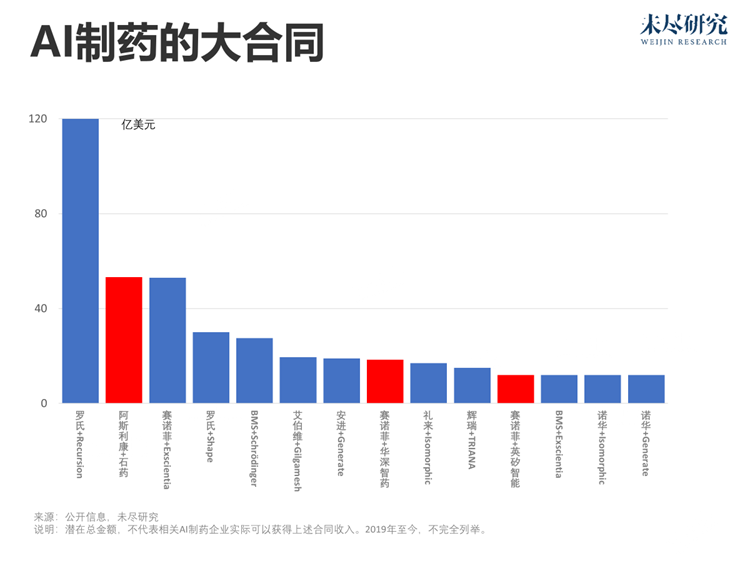
Core Viewpoint - The article highlights the growing significance of AI in drug development, particularly in China, where major pharmaceutical companies are increasingly investing in AI-driven drug discovery, potentially leading to the first truly AI-innovated drug. Group 1: Investment and Collaboration - The collaboration between CSPC Pharmaceutical Group and AstraZeneca marks a significant investment in AI drug development, with an upfront payment of $110 million and potential milestone payments exceeding $5.2 billion [1][2] - This contract represents the largest single deal in China's AI drug development sector, surpassing previous contracts from companies like Insilico Medicine and Huasheng Zhiyuan [2] - The total transaction amount committed by U.S. pharmaceutical giants to Chinese innovative drugs has approached $30 billion, indicating a strong belief in the potential of Chinese innovation [5] Group 2: Competitive Landscape - The emergence of AI-driven drug development in China is challenging the U.S. dominance, with Chinese companies showing significant progress in clinical trials and drug pipelines [5] - Chinese pharmaceutical firms are leveraging a large pool of engineers and clinical demand, providing them with a competitive edge in terms of cost and speed compared to their U.S. counterparts [5] - The AI drug discovery process is currently crowded, but many teams lack the capability to connect with wet lab experiments and high-quality clinical data [7] Group 3: Future Prospects and Challenges - Despite the advancements, no AI-driven drug has yet received clinical approval, with predictions suggesting that the first such drug may not be approved until 2030 [9] - The next phase of competition will focus on AI-driven clinical trials, where patient recruitment and data analysis will be crucial [9] - Regulatory attitudes in the U.S. are becoming more favorable towards AI in drug development, with the FDA exploring the integration of AI in various stages of drug research and approval [10]
RXRX vs. SDGR: Which AI-Powered Drug Discovery Stock Has More Upside?
ZACKS· 2025-05-27 15:01
Core Insights - Recursion Pharmaceuticals (RXRX) and Schrodinger (SDGR) are leading the integration of artificial intelligence in drug discovery, aiming to transform the biotech sector by improving efficiency and reducing costs [1][2][3] Company Overview Recursion Pharmaceuticals (RXRX) - RXRX utilizes its AI-driven platform, Recursion OS, in collaboration with NVIDIA to enhance drug discovery processes [5] - The company has faced setbacks, including the discontinuation of its lead candidate REC-994 and REC-2282 due to unfavorable efficacy results [6][8] - RXRX is focusing on developing candidates like REC-4881 for familial adenomatous polyposis, which has shown a preliminary median 43% reduction in polyp burden [8] - The company ended Q1 2025 with a cash balance of $509 million, expected to sustain operations into mid-2027 [9] - RXRX has collaboration agreements with major pharmaceutical companies, generating $15 million in collaboration revenues in Q1 2025, a slight increase from the previous year [10] Schrodinger (SDGR) - SDGR employs a physics-based computational platform for drug discovery, with its lead candidate SGR-1505 currently in a phase I study for B-cell malignancies [11][13] - The candidate has received FDA's Orphan Drug designation for mantle cell lymphoma [14] - SDGR's second candidate, SGR-2921, is being evaluated for acute myeloid leukemia, with initial results expected in the second half of 2025 [15] - The company generated $59.6 million in total revenues in Q1 2025, a 63% year-over-year increase [17] Financial Performance - RXRX's stock has declined 39.6% year-to-date, while SDGR's stock has increased by 10.9% [25] - RXRX trades at 1.78 times its book value, significantly lower than SDGR's 4.2 times, making RXRX more attractive from a valuation perspective [26][27] - The Zacks Consensus Estimate for RXRX's 2025 revenues implies a 22% year-over-year improvement, while SDGR's estimate suggests a 21% improvement but a widening loss per share [18][21] Market Position and Competitive Landscape - Both companies face competition from other biotech firms and tech-driven drug discovery companies, which may challenge their market differentiation [31] - Despite the competitive landscape, both RXRX and SDGR have the potential to revolutionize drug discovery by delivering cost-effective therapies [32] - RXRX is viewed as a better investment opportunity due to its innovative pipeline, collaboration agreements, and favorable valuation compared to SDGR [34]



英国教授创业,存活率无与伦比
虎嗅APP· 2025-05-25 03:14
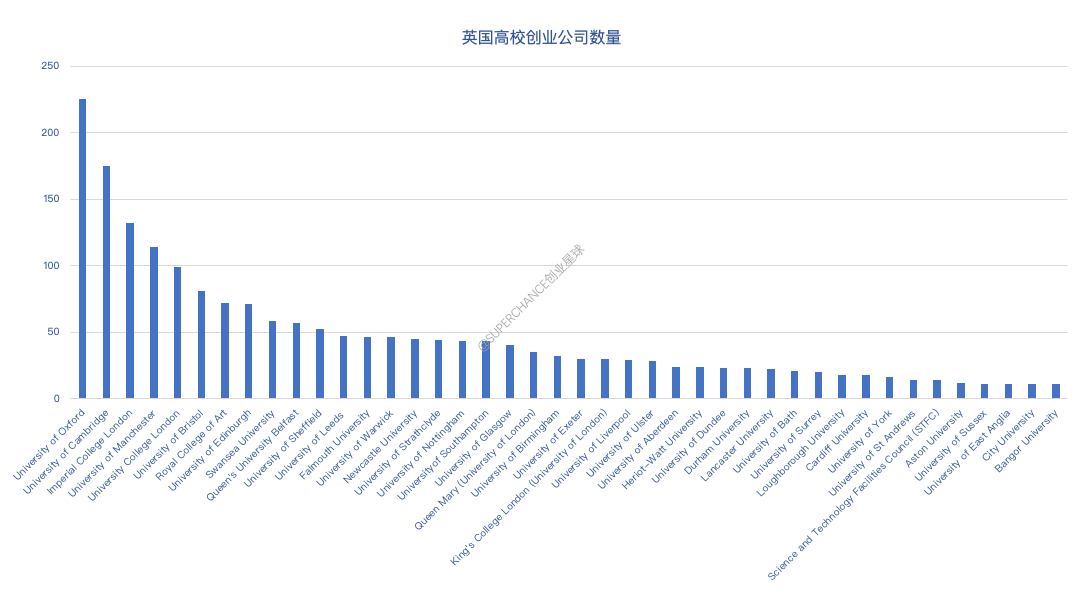
Core Viewpoint - The article highlights the significant role of UK universities in fostering entrepreneurship through the establishment of spinout companies, with a focus on various metrics such as company formation, funding events, and success rates, indicating a thriving ecosystem for innovation and commercialization of research [3][79]. Group 1: Company Formation - A total of 2064 spinout companies have been established by professors in UK universities, with 1337 still operational, resulting in an overall survival rate of nearly 65% [3]. - Among 42 universities, 1967 new companies were formed, with a median of 31 and an average of 47 companies per university [5]. - The top universities for new company formation include Oxford (225), Cambridge (175), Imperial College (132), and Manchester (114) [7]. Group 2: Funding - From 2015 to 2024, 3788 funding events were completed by these universities, with 6 universities exceeding 100 funding events, accounting for 40% of the total [10][11]. - The total funding amount reached £17 billion, with 4 universities raising over £1 billion and 9 universities accounting for 70% of the total funding [14][16]. - The average funding amount per event was approximately £4.5 million, with UCL leading at £9.4 million per event [19]. Group 3: Funding Success Rates - Seven universities achieved a funding success rate exceeding 50%, with Oxford at 79% and Strathclyde at 75% [20][21]. - Among 1337 active companies, 736 are in the seed stage (55%), 402 in venture capital (30%), and 125 in growth stages [23]. Group 4: QS World University Rankings - The 2025 QS World University Rankings for the 42 universities show a median rank of 108 and an average rank of 206, with 16 universities in the top 100 [32]. - There is a positive correlation between university rankings and the number of new companies formed, funding events, and funding amounts [34][36][38]. Group 5: Technology Transfer Centers - Technology transfer centers are crucial for commercializing research, with universities having an average of 72 dedicated staff members in high-performing institutions [42]. - More staff correlates with higher funding events and amounts, although no clear relationship exists between staff numbers and funding success rates [45][52]. Group 6: Incubation and Acceleration - Incubators provide an environment for applying knowledge practically, with notable examples including Imperial College's White City Incubator and Oxford's Startup Incubator [58][59]. - These programs offer tailored support and resources to help startups refine their concepts and scale operations [60][61]. Group 7: Funding Support - Adequate funding is vital for early-stage startups, with Oxford providing nearly 50 types of funding and raising £5 billion [65]. - UKRI has provided over £814 million in funding to university spinouts from 2015 to 2024, enhancing the entrepreneurial landscape [70]. Group 8: Ecosystem Development - Successful commercialization of technology requires a broad network of resources, with universities like Imperial College and Oxford fostering extensive entrepreneurial communities [75][76]. - Collaborative efforts between universities and external organizations enhance the support available to startups, contributing to high survival rates and funding success [78].

英国教授创业,存活率无与伦比
Hu Xiu· 2025-05-24 01:36
Core Insights - The report "Spotlight on Spinouts 2025" reveals that UK universities have established a total of 2064 spinout companies, with a survival rate of approximately 65% [1] Group 1: New Company Formation - A total of 1967 new companies were formed across 42 UK universities, representing about 95% of the total [2] - Four universities have established over 100 new companies, while seven have more than 50 [4] - The top universities by new company formation are: Oxford (225), Cambridge (175), Imperial College (132), and Manchester (114) [5][6] Group 2: Financing - Spinout companies from the 42 universities completed 3788 financing events from 2015 to 2024 [7] - Six universities had over 100 financing events, accounting for 40% of total events [8] - Oxford led with 577 financing events, followed by Cambridge (390) and Bristol (177) [9][10] - The total financing amount reached £17 billion, with four universities exceeding £1 billion in financing [12][15] - Oxford's financing amount was £4.69 billion, Cambridge's was £2.38 billion, and UCL's was £1.63 billion [16] - The average financing amount per event was nearly £4.5 million [19] Group 3: Financing Success Rate - Seven universities had a financing success rate exceeding 50% [21] - Oxford had the highest success rate at 79%, followed by University of Strathclyde (75%) and Cambridge (over 72%) [22][23] Group 4: Financing Rounds and Exits - Among the 1337 active companies, 736 are in the seed stage (55%), 402 in venture capital (30%), and 125 in growth stage [25] - A total of 201 companies achieved successful exits, with 26 IPOs and 175 mergers and acquisitions [27][28] - The top three companies by market capitalization post-IPO are Oxford Nanopore Technologies (£3.3 billion), Exscientia (£2.3 billion), and Darktrace (£1.7 billion) [29] Group 5: QS World University Rankings - The median QS World University ranking for the 42 universities is 108, with an average of 206 [35] - Sixteen universities are in the top 100, with Imperial College (2nd), Oxford (3rd), and Cambridge (5th) leading [36] Group 6: Technology Transfer Centers - Technology transfer centers are crucial for commercializing research, with an average of 72 dedicated staff in universities with over 100 financing events [48] - Cambridge has 150 staff, Oxford has 99, and UCL has 80 [49] Group 7: Incubation and Acceleration - Incubators provide essential environments for applying knowledge practically [64] - Notable programs include Imperial's White City Incubator, Oxford's Startup Incubator, and Cambridge's Deeptech Labs [65][66][67] Group 8: Funding Support - Adequate funding is vital for early-stage startups [68] - Oxford offers nearly 50 types of funding, while Cambridge provides 13 types [69][70] - UKRI has provided over £814 million in funding to university spinouts from 2015 to 2024 [74] Group 9: Ecosystem Development - Successful commercialization requires broad resource mobilization [86] - Universities like Imperial and Oxford have established extensive networks to support startups [87][88] Group 10: Conclusion - The UK aims to enhance its R&D intensity to 2.4% of GDP by 2027, with significant investments planned to support innovation and entrepreneurship [90][91] - Encouraging university professors to engage in entrepreneurship is a key initiative to achieve these goals [92]

2025年中国AIforScience行业概览:创新驱动:AI如何助力科学创新的无限可能
Tou Bao Yan Jiu Yuan· 2025-04-29 13:25
Investment Rating - The report does not explicitly provide an investment rating for the AI for Science industry. Core Insights - The AI for Science industry is defined as the application of artificial intelligence technologies to accelerate scientific research and discovery, leveraging data-driven methods to uncover patterns in vast datasets [9][10]. - The evolution of scientific paradigms has transitioned from empirical observation to AI-assisted research, marking a significant advancement in scientific methodologies [23][25]. - The development of AI for Science is ongoing, with expectations for deeper integration of AI technologies into scientific research, enhancing the discovery of new knowledge [27][29]. Summary by Sections Industry Overview - AI for Science combines data-driven and model-driven approaches to enhance scientific research efficiency and accuracy, enabling exploration of complex systems without extensive theoretical backgrounds [9][16]. - The paradigm shift in scientific research reflects a gradual evolution, with each stage building on previous technological advancements [23][25]. Technical Analysis - Core technologies in AI for Science include high-performance computing infrastructure, data management systems, scientific computing software, pre-trained models, and high-throughput experimentation, all of which facilitate accelerated scientific research [31][34]. - High-performance computing is crucial for processing large datasets and training complex machine learning models, significantly improving research efficiency [36][37]. - High-throughput experimentation integrates automation to rapidly execute complex experimental designs, generating substantial data for machine learning model training [41][43]. Industry Development Practices - AI for Science is a cross-disciplinary field that applies AI technologies to traditional scientific domains such as physics, chemistry, biology, and medicine, showcasing its potential to drive research and technological innovation [45][49]. - In the life sciences, AI accelerates drug discovery, optimizes genomic research, and enhances personalized medicine through data analysis [50][52]. - The application of AI in earth sciences improves data analysis and predictive modeling, aiding in understanding complex earth system issues [58]. - AI for Science in materials chemistry enhances the understanding and performance of materials through accurate data analysis and predictive modeling [61].