
Google DeepMind

Search documents
China's tech shock threatens the U.S. AI monopoly and is 'just getting started'
CNBC· 2026-02-16 12:30
Core Insights - China's rapid advancements in AI are challenging U.S. dominance, with analysts predicting a significant tech shock is underway [1][2] - The emergence of a "China tech sphere" could attract developing economies due to lower costs compared to U.S. and European alternatives [7][8] Industry Developments - China has launched a national AI fund worth 60.06 billion yuan ($8.69 billion) and an initiative called "AI+" to integrate AI across various sectors [4] - The country is leveraging its supply chain and low production costs to enhance its tech capabilities, particularly in AI and electric vehicles [3][6] Competitive Landscape - Huawei is narrowing the gap with U.S. chipmakers like Nvidia by utilizing homegrown chips and cheaper energy sources for AI model training [6] - U.S. hyperscalers, including Amazon and Microsoft, are projected to spend up to $700 billion on AI this year, raising concerns about the return on investment [10][12] Market Implications - The choice for developing economies may lean towards affordable Chinese technology, potentially leading to a global shift towards a Chinese tech ecosystem in the next 5 to 10 years [8][9] - There is growing nervousness regarding U.S. tech exceptionalism, especially following significant market cap losses in the U.S. software sector [11][12]



From OpenAI to Google, India hosts global AI summit
Reuters· 2026-02-16 08:23
Core Insights - India is hosting the first AI summit in the developing world, aiming to attract more investment in the AI sector and amplify the voices of developing nations in global AI governance [1][1][1] - Major global AI companies, including Google, Microsoft, and Amazon, have committed a total of $68 billion in AI and cloud infrastructure investments in India by 2030 [1][1][1] - The summit is expected to attract over 250,000 delegates and features prominent speakers such as Sundar Pichai, Sam Altman, and Mukesh Ambani [1][1][1] Investment and Economic Impact - India's strategy focuses on "application-led innovation" rather than developing frontier-scale AI models, with significant domestic adoption already evident [1][1] - The country has become OpenAI's largest user market, with over 72 million daily ChatGPT users projected by late 2025 [1][1] - The rapid adoption of AI technologies poses potential threats to jobs in India's $283 billion IT sector, with predictions of a 50% revenue hit for call centers by 2030 [1][1] Event Logistics and Public Response - The summit is being held at Bharat Mandapam, a $300 million convention complex, with over 300 exhibitors participating [1][1] - The influx of international delegates has led to a significant increase in hotel prices in Delhi, with luxury suites seeing prices rise from approximately $2,200 to over $33,000 per night [1][1] - India's Supreme Court has allowed advocates to appear via video conferencing during the summit week due to anticipated traffic congestion [1][1]

Huang and Pichai among tech CEOs heading to India for major AI summit in a key market
CNBC· 2026-02-15 23:15
Core Insights - The AI Impact Summit in India is attracting major technology executives, highlighting India's potential as a critical growth market for AI development [2][4] - India's government is actively promoting the country as a tech superpower, with significant investments in semiconductor projects and incentives for multinational companies to manufacture locally [5][6] Group 1: Market Potential - The summit is seen as a validation of India's market potential, with tech leaders recognizing the importance of establishing a presence in the country [4] - India is viewed as a lucrative market with a young, tech-savvy consumer base and a large pool of talent essential for AI development [3][8] Group 2: Investment and Infrastructure - Major infrastructure investments in AI data centers are anticipated, driven by increasing demand for computing power [7] - Venture capital is flowing into Indian startups, and the stock exchanges are experiencing a rise in initial public offerings, indicating a robust investment climate [6] Group 3: Talent and Leadership - India is emerging as a hub for AI talent, with a significant number of Global Capability Centers (GCCs) focusing on AI and related fields [10] - The creation of senior leadership roles, such as "chief AI officer," is becoming more common in India, reflecting the growing importance of AI expertise [11]
X @TechCrunch
TechCrunch· 2026-02-13 22:10
$935M for humanoid robots?@EquityPod digs into Apptronik's massive raise, Google DeepMind partnership, and why investors can't quit physical AI: https://t.co/4iobdXKwok https://t.co/XmraXzzYmC ...
X @Demis Hassabis
Demis Hassabis· 2026-02-12 21:08
RT ARC Prize (@arcprize)Gemini 3 Deep Think (2/26) Semi Private Eval- ARC-AGI-1: 96.0%, $7.17/task- ARC-AGI-2: 84.6% $13.62/taskNew ARC-AGI SOTA model from @GoogleDeepMind https://t.co/mN8PFAWk4A ...
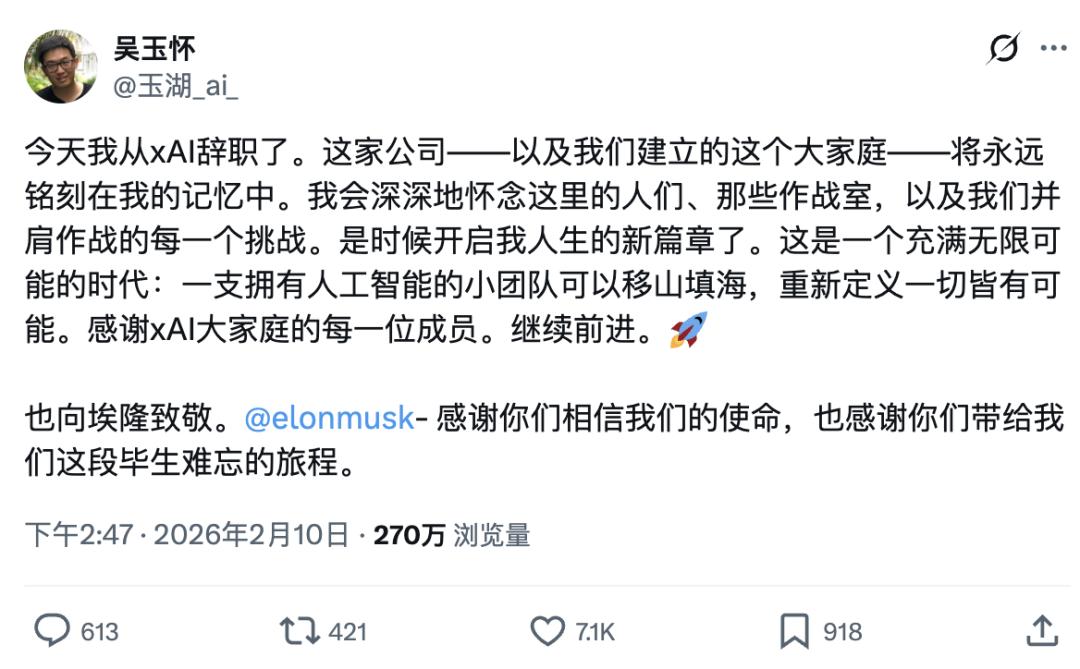
xAI 关键人物跑路,马斯克 AI 野心遭重创
投中网· 2026-02-12 06:31
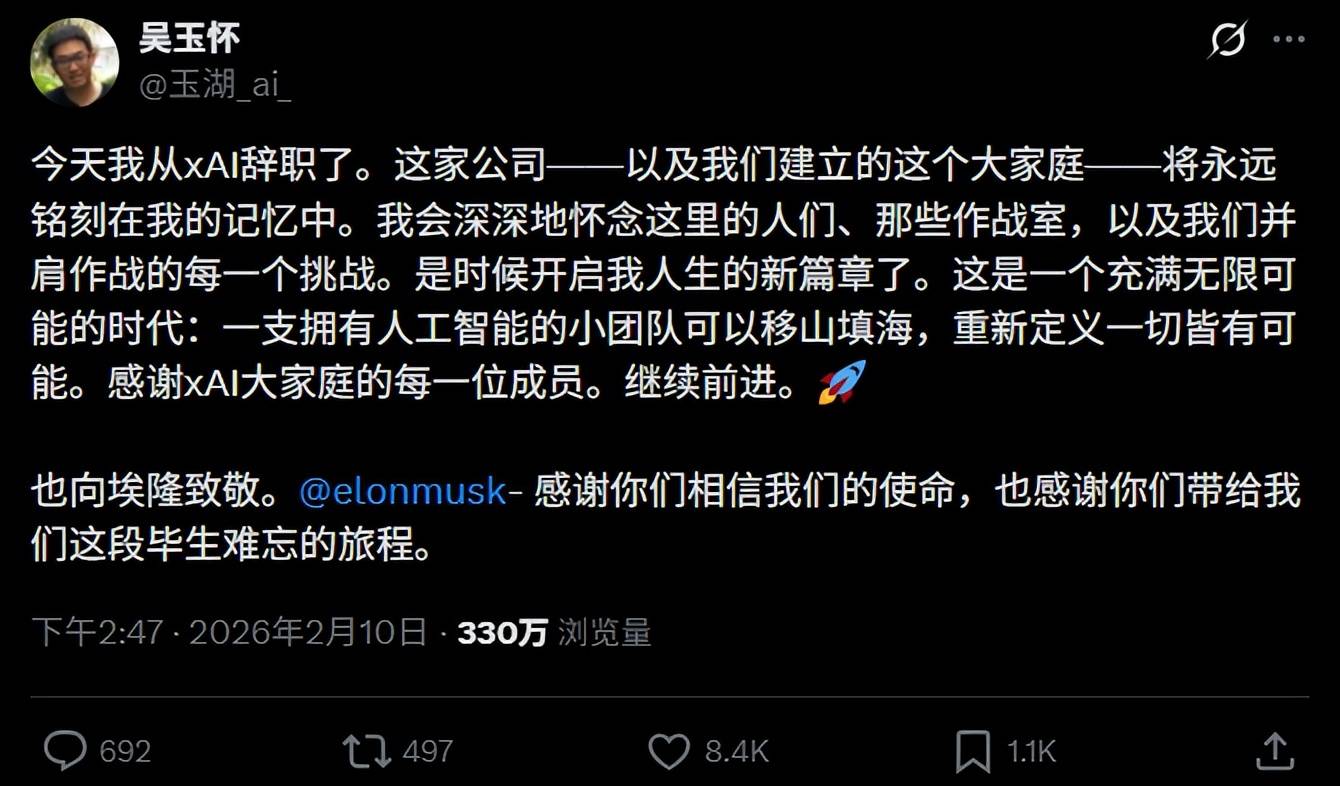
Core Viewpoint - The article discusses the recent departures of key personnel from xAI, highlighting the potential impact on the company's future in the competitive AI landscape, particularly in the area of AI reasoning capabilities. Group 1: Key Departures - Tony Wu, a co-founder of xAI and responsible for AI reasoning, announced his departure, marking the second co-founder to leave within a year, raising concerns about the company's stability and future innovation [6][9]. - The loss of Wu is particularly critical as reasoning capabilities are seen as a bridge between current AI models and true general artificial intelligence [8]. Group 2: Management Style Concerns - The article suggests that the management style of Elon Musk, characterized by extreme pressure and a lack of creative freedom, may be a significant factor in the high turnover of talent at xAI [10]. - Musk's approach, which emphasizes rapid execution, may not align with the needs of AI research, which often requires time for reflection and experimentation [10]. Group 3: Industry Context - The talent exodus at xAI reflects a broader trend in the AI industry, where top talent is in high demand and can command salaries exceeding $500,000, along with substantial equity [12]. - Companies like OpenAI and Anthropic, which are led by researchers and offer a more conducive environment for innovation, are seen as more attractive to AI professionals compared to xAI's CEO-driven model [12][13].
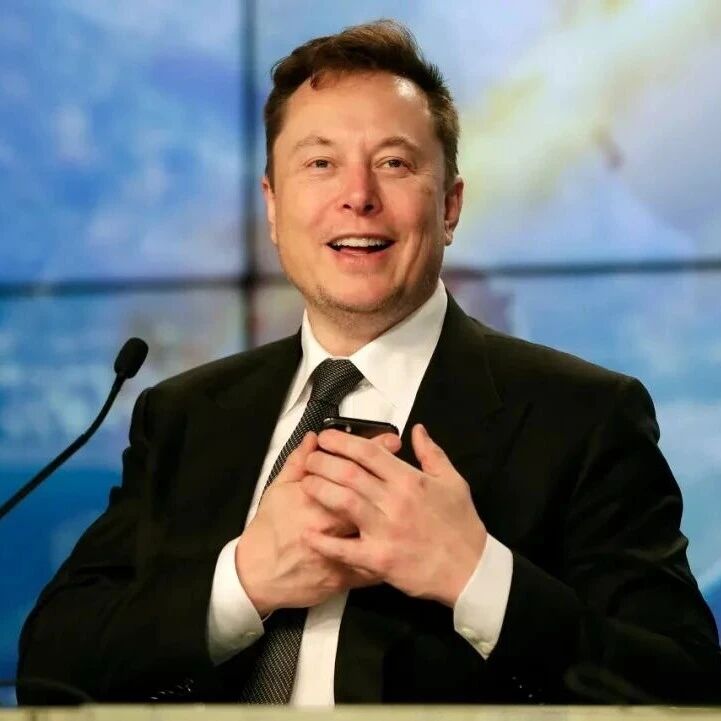
创始团队出走一半,马斯克连夜调整xAI愿景,用百万GPU追平推理短板
Sou Hu Cai Jing· 2026-02-12 02:12
Core Insights - The recent departures of xAI co-founders Tony Wu and Jimmy Ba mark a significant shift in the company's leadership, with six out of the original twelve founders having left within three years [1][5][7] - Elon Musk emphasized that the company will continue to move forward despite these departures, indicating a restructuring aimed at improving execution speed and adapting to rapid growth [4][6] - The departures are part of a broader trend of high talent mobility within the AI industry, driven by competitive offers and ideological differences regarding safety and commercialization [8][10] Company Developments - xAI was founded in July 2023 by Musk and eleven AI experts from top tech companies, with a mission to understand the universe's true nature through advanced AI [5] - The company is currently focused on its Grok series of conversational models, which have been integrated into Musk's broader corporate ecosystem [5][14] - xAI's financial situation is concerning, with a burn rate of approximately $1 billion per month and revenues of only $107 million in the first three quarters of 2025, leading to speculation that the recent merger with SpaceX is a "lifeline" for the company [13][16] Talent Dynamics - The departures of Wu and Ba may be linked to internal restructuring and disagreements within the technical team regarding AI model performance [7][11] - The high turnover rate at xAI reflects a common trend in Silicon Valley, where top AI researchers are frequently lured away by lucrative offers and the desire for alignment with their technical philosophies [8][10] - The loss of key personnel like Wu, who led the reasoning team, could slow down the development of the Grok model and create potential weaknesses in specific areas of AI performance [16][18] Strategic Shifts - xAI is transitioning from a focus on algorithmic breakthroughs to a more resource-driven approach, emphasizing large-scale computational power [11][15] - The merger with SpaceX is expected to enhance xAI's capabilities, providing access to unique resources such as a "space data center" and significant computational power [13][14] - This shift in focus may blur the lines between Musk's various enterprises, posing challenges for xAI's core team as they adapt to new technological directions [15][18]
xAI 关键人物跑路,马斯克 AI 野心遭重创
3 6 Ke· 2026-02-11 06:13
Core Insights - The departure of Tony Wu, a co-founder of xAI, marks a significant loss for the company, especially in the critical area of AI reasoning capabilities, which is essential for advancing towards general artificial intelligence [1][2][3] - xAI has experienced a high turnover rate, with nearly half of its founding team leaving within a year, raising concerns about its stability and future prospects in a competitive AI landscape [5] Group 1: Impact of Departures - Tony Wu's role was crucial as he was responsible for AI reasoning, a key technology that differentiates advanced models like GPT-4 from true general AI [2][4] - The loss of Wu is particularly detrimental given the rapid pace of AI development, where losing a key technical leader can lead to significant delays in research and development [4][14] - The departure of Wu follows that of Igor Babuschkin, indicating potential underlying issues within xAI that could hinder its progress [1][5] Group 2: Management Style and Talent Retention - The management style of Elon Musk, characterized by extreme pressure and a focus on rapid execution, may not align well with the creative and iterative nature of AI research [8][9] - There is a growing sentiment that top AI talent prefers environments that allow for focused research and decision-making autonomy, which may not be present at xAI [11][13] - Comparatively, companies like OpenAI and Anthropic, which are led by AI researchers, provide a more conducive atmosphere for talent retention [13][14] Group 3: Industry Context - The AI industry is currently experiencing a "talent war," with top researchers in high demand and lucrative offers from multiple leading firms [11][12] - The scarcity of skilled AI professionals is likened to the demand for nuclear physicists in the past, emphasizing the competitive landscape for talent [12] - The ability to attract and retain talent is critical, as the most valuable resource in AI development is individuals who can innovate and advance machine reasoning capabilities [15]
Our Systems Have Reached the End of the Road | Dex Hunter-Torricke | TEDxBerlin Salon
TEDx Talks· 2026-02-09 16:21
I'm happy to uh have a conversation now with the Dex Hunter Torica and he worked for um Google DeepMind. He was the global coms lead there for quite some time and he took a decision to actually leave the private sector and also join um the public side a couple of months ago and we have him coming in through a call. So he he is and welcome to Berlin, Dexter.How are you. >> Yeah, I'm great. Great to see you.>> Fantastic. Thank you for joining. And uh we know it's we would have loved to have you here in person ...
X @Demis Hassabis
Demis Hassabis· 2026-02-06 17:37
Super cool use case of Genie 3 simulations!Waymo (@Waymo):We’re excited to introduce the Waymo World Model—a frontier generative mode for large-scale, hyper-realistic autonomous driving simulation built on @GoogleDeepMind’s Genie 3.By simulating the “impossible”, we proactively prepare the Waymo Driver for some of the most rare and https://t.co/Pl80OMDqLC ...