Veeva Systems Inc.

Search documents
JPMorgan Flags 'AI-Resilient' Software Names After Selloff
Yahoo Finance· 2026-02-17 19:30
Fears that artificial intelligence (AI) will rapidly disrupt software companies have been overdone, according to JPMorgan. The bank’s strategists believe parts of the sector are more resilient than believed, creating a potential opportunity for investors. “Given the positioning flush, overly bearish outlook on AI disruption of software and solid fundamentals, we believe the balance of risks is increasingly skewed towards a rebound,” said Dubravko Lakos‑Bujas, Head of Global Markets Strategy. In a recent ...


Futures Fall As AI Selloff Resumes
ZeroHedge· 2026-02-17 13:39
Market Overview - US equity futures resumed their selloff after a brief bounce, with S&P 500 futures down 0.5% and Nasdaq 100 contracts falling 1.0%, driven by concerns over AI disruption [1] - All major tech stocks in the "Magnificent 7" are lower, with notable declines in Nvidia (-0.9%) and Alphabet (-1.5%) [3] - Energy, financials, industrials, and defensive sectors showed pockets of outperformance amid the broader market decline [1] Corporate News - Activist investor Elliott has built a significant stake in Norwegian Cruise Line, leading to a rise of over 7% in its shares [4] - Apple is set to hold a product launch on March 4, which may impact its stock performance [3] - ImmunityBio shares rose 6% after receiving encouragement from the Saudi Food and Drug Authority to submit a regulatory package for its bladder cancer therapy [4] - Masimo shares surged 34% following reports of a nearly $10 billion acquisition deal by Danaher [4] AI and Technology Sector - Investors are cautious about the profitability of AI spending, with concerns about competition and potential disruptions to various industries [6][7] - A record number of investors believe companies are overspending on AI, with 25% citing an "AI bubble" as a top market risk [10] - Despite selloff concerns, two-year forward earnings estimates for software stocks have risen, indicating resilience in the sector [11] Economic Indicators - Upcoming economic data includes the ADP employment change, Empire State manufacturing survey, and NAHB housing market index for February, which could influence market sentiment [1][22] - The UK unemployment rate rose to 5.2%, leading to increased expectations for a Bank of England rate cut [16] Commodities and Geopolitical Factors - Oil prices rose due to geopolitical tensions, particularly military drills by Iran in the Strait of Hormuz, impacting Brent crude prices [13][48] - Gold prices have declined, with spot gold dropping toward $4,900 an ounce amid a risk-off sentiment [1][48]



上一次“软件要亡”论发生在10年前,后续如何了?
Hua Er Jie Jian Wen· 2026-02-15 07:39
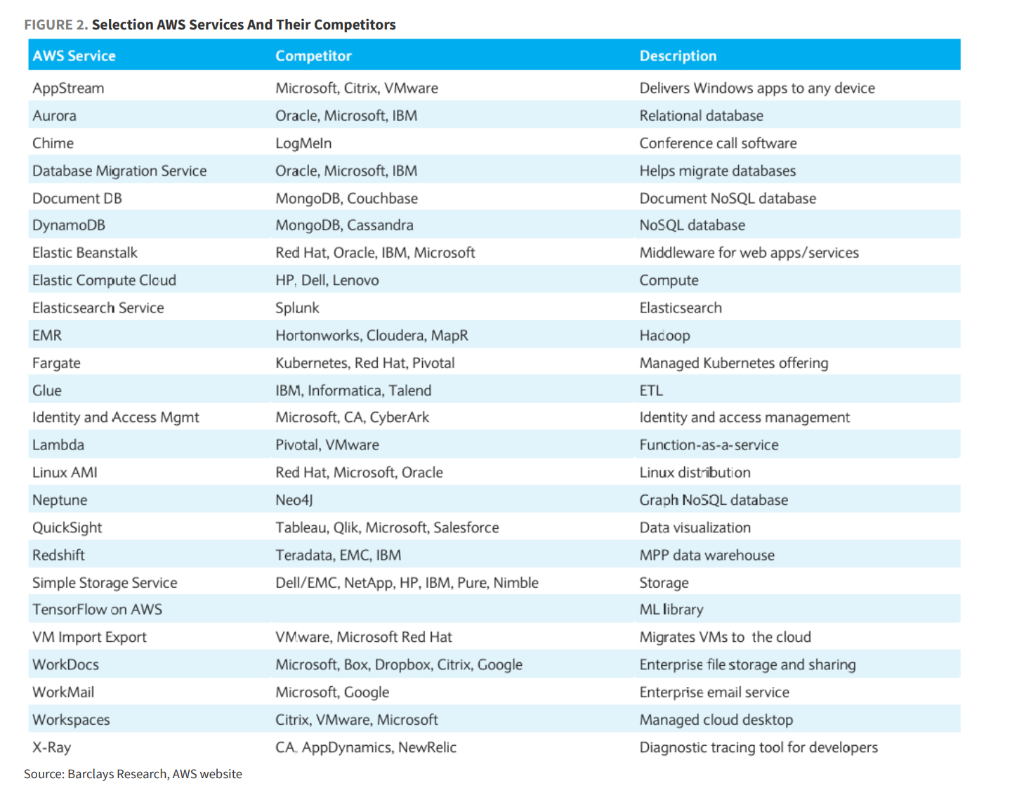
Core Viewpoint - Barclays believes that the current market panic regarding generative AI (GenAI) is based on a "worst-case scenario" assumption, predicting the extinction of traditional software companies, which mirrors the panic seen a decade ago with the rise of Amazon AWS [1][2] Historical Context - The current investor sentiment in the software sector is extremely negative, with a simplistic investment logic of buying AI newcomers and shorting traditional software [2] - This situation is reminiscent of the panic surrounding AWS's growth, where established software companies faced similar doomsday predictions, yet none went bankrupt due to AWS competition [4][5] Market Dynamics - Historical data shows that while AWS gained significant market share, it did not lead to the extinction of mature software companies; instead, these companies evolved and thrived [4][5] - The market's current indiscriminate sell-off of software stocks, with the IGV (software ETF) down approximately 24% year-to-date, is viewed as irrational [6] Mispricing Opportunities - Barclays identifies significant mispricing opportunities in the current market, particularly for companies with strong core record systems and specific domain moats that are being undervalued [1][6] - The panic selling creates an opportunity for investors to identify industry leaders that have been unfairly punished [7] Defensive Sectors - Two defensive sectors highlighted are: 1. Owners of record systems, such as Salesforce and SAP, which hold core enterprise data and are difficult to replace [9] 2. Vertical SaaS companies, like Veeva Systems and Tyler Technologies, which possess deep domain-specific data moats [9] Company Performance - Notable company performances include: - CyberArk's market cap surged from $885 million to $22.516 billion, a 2443% increase [8] - Microsoft and Google also saw significant market cap growth, with increases of 1048% and 871%, respectively [8] - Traditional companies like Teradata experienced a 73% decline, while others like Tableau and Splunk were acquired at high premiums [8]



Here’s Why Veeva Systems (VEEV) Traded Down in Q4
Yahoo Finance· 2026-02-10 13:23
Group 1: Fund Performance - Baron Asset Fund achieved a return of 7.89% in Q4 2025, outperforming the Russell Midcap Growth Index by 11.59 percentage points, which ended the quarter down 3.70% [1] - The Fund held a total of 53 positions as of December 31, 2025, with the 10 largest holdings representing 52.8% of net assets and the 20 largest holdings representing 73.3% of net assets [1] Group 2: Veeva Systems Inc. Analysis - Veeva Systems Inc. (NYSE:VEEV) was highlighted as a notable detractor for the Baron Asset Fund, with a one-month return of -19.20% and a 12-month decline of 21.22% [2] - The company's market capitalization is reported at $30.347 billion [2] - Following a quarterly update in November, Veeva's management tempered expectations for customer retention, expecting only 14 of the top 20 global pharmaceutical companies to adopt its next-generation Vault CRM product, down from 18 for the legacy Veeva CRM [3] - The termination of Veeva's long-standing partnership with Salesforce has allowed for greater control over its product roadmap but has also introduced direct competition with Salesforce, which has announced its own product development efforts [3] - Despite recent challenges, the company retains long-term conviction in Veeva due to favorable secular tailwinds and confidence in its 2030 financial targets [3]

BSX Stock Dips in Premarket Trading Despite Q4 Earnings, Revenue Beat
ZACKS· 2026-02-04 18:15
Core Insights - Boston Scientific Corporation (BSX) reported fourth-quarter 2025 adjusted earnings per share (EPS) of 80 cents, a 14.3% increase from the previous year, surpassing the Zacks Consensus Estimate by 2.6% and exceeding the company's guidance of 77-79 cents [1][2] - The company's full-year adjusted EPS reached $3.06, marking a 21.9% increase from 2024, also exceeding the Zacks Consensus Estimate by 0.7% and the 2025 guidance range of $3.02-$3.04 [2] Revenue Performance - Fourth-quarter revenues totaled $5.29 billion, reflecting a 15.9% year-over-year increase on a reported basis and 14.3% on an operational basis, with organic growth of 12.7% [3] - For the full year 2025, revenues were $20.07 billion, up 19.9% on a reported basis, 19.2% operationally, and 15.8% organically compared to 2024 [4] Regional Revenue Breakdown - In Q4, revenues increased by 17% in the United States, 12.4% in Europe, the Middle East and Africa (EMEA), 15.2% in the Asia Pacific, and 15.9% in Latin America and Canada [5] Segment Performance - MedSurg revenues in Q4 were $1.81 billion, up 15.9% year over year, with Endoscopy generating $760 million (8.2% organic growth) and Urology revenues at $717 million (3.2% organic growth) [7] - The Cardiovascular segment generated $3.48 billion in Q4 revenues, an 18.2% increase reported and 16.1% organically year over year [10] Margin Analysis - The gross margin expanded by 172 basis points to 69.6%, while adjusted operating margin increased by 180 basis points to 24% despite rising costs [11] Future Outlook - For 2026, Boston Scientific anticipates net sales growth of approximately 10.5-11.5% on a reported basis and 10-11% organically, with adjusted EPS expected in the range of $3.43-$3.49 [12] - Q1 2026 revenue growth is projected at 10.5-12% on a reported basis and 8.5-10% organically, with adjusted earnings expected between 78-80 cents per share [13] Strategic Developments - The company achieved broad regulatory approvals and clinical milestones across various franchises, including strategic acquisitions to enhance its vascular and neuromodulation portfolio [15]


IDEXX Stock Down Despite Q4 Earnings & Revenue Beat, Margins Rise
ZACKS· 2026-02-02 15:46
Core Insights - IDEXX Laboratories, Inc. (IDXX) reported Q4 2025 earnings per share (EPS) of $3.08, an 18% increase year over year, surpassing the Zacks Consensus Estimate by 5.17% [2] - Full-year 2025 earnings reached $13.08, a 22.6% rise from 2024, exceeding the Zacks Consensus Estimate by 1.2% [2] Revenue Performance - Quarterly revenues increased by 14% year over year to $1.09 billion, exceeding the Zacks Consensus Estimate by 1.86% [3] - The Companion Animal Group (CAG) grew by 15% as reported and 13% organically, while Water revenue grew by 12% as reported and 10% organically [3] - Full-year 2025 total revenues were $4.30 billion, a 10% improvement from 2024, driven by 9% reported and 8% organic growth in CAG Diagnostics recurring revenue, beating the Zacks Consensus Estimate by 0.5% [4] Segment Analysis - CAG revenues rose 14.7% year over year to $998.5 million [6] - Water segment revenues increased by 11.9% to $50.5 million [6] - Livestock, Poultry, and Dairy (LPD) revenues grew by 8.5% to $37.5 million [6] - Revenues from the Other segment decreased by 0.4% to $4.1 million [7] Margin and Expense Overview - Gross profit rose by 15.3% to $658.1 million, with gross margin expanding by 55 basis points to 60.4% despite a 12.7% rise in the cost of revenues [8] - Sales and marketing expenses increased by 11.3% to $167.1 million, while G&A expenses rose by 7.4% to $109 million, and R&D expenses jumped by 15.8% to $66.8 million [8] Financial Position - IDEXX ended Q4 with cash and cash equivalents of $180.1 million, down from $288.3 million at the end of 2024 [10] - Cumulative net cash from operating activities was $1.18 billion, compared to $929 million in the prior year [10] 2026 Guidance - IDEXX forecasts 2026 revenues between $4.63 billion and $4.72 billion, implying 7.6%-9.6% growth on a reported basis [11] - Full-year EPS is projected to be between $14.29 and $14.80, indicating growth of 9-13% [11] Strategic Outlook - The company highlighted a pivotal year in 2025 with the launch of IDEXX Cancer Dx for canine lymphoma and strong adoption of IDEXX inVue Dx, indicating a new phase of growth [13] - IDEXX enters 2026 with a robust innovation pipeline and strong momentum across its global business [13]


HOLX Stock Slips on Q1 Earnings and Revenue Miss, Margins Crash
ZACKS· 2026-01-30 14:32
Core Insights - Hologic, Inc. reported adjusted EPS of $1.04 for Q1 fiscal 2026, a 1% increase year over year, but missed the Zacks Consensus Estimate by 4.46% [1] - The company's GAAP EPS was 79 cents, reflecting a 9.2% decrease year over year [1] Revenue Performance - Total revenues for the quarter reached $1.05 billion, up 2.5% year over year, but fell short of the Zacks Consensus Estimate by 2.14% [2] - U.S. revenues increased by 2% to $773.5 million, while international revenues rose 4% year over year to $274.3 million, although they decreased by 1% at constant exchange rates [2] Segment Analysis - Diagnostics revenues decreased by 1.3% year over year to $464.4 million, with Molecular Diagnostics revenues down 3.5% due to lower sales of COVID-19 tests [3] - Breast Health revenues increased by 1.8% to $375.9 million, driven by strong sales of Endomagnetics products [4] - GYN Surgical revenues surged 87% year over year to $180.8 million, primarily due to higher sales from the acquired Gynesonics business [4] - Skeletal Health revenues increased by 69% to $26.7 million, attributed to higher sales volume of Horizon DXA systems [4] Margin Performance - Adjusted gross margin decreased by 150 basis points to 60.1%, mainly due to increased tariff expenses [5] - Adjusted operating margin was reported at 29%, down 40 basis points [5] Financial Position - Hologic ended Q1 fiscal 2026 with cash and cash equivalents of $2.17 billion, an increase from $1.96 billion at the end of fiscal 2025 [6] - Total long-term debt remained stable at $2.51 billion [6] Operating Cash Flow - Net cash provided by operating activities was $229.9 million, compared to $189.3 million a year ago [8] Overall Assessment - Hologic's revenues and earnings missed estimates, with both gross and operating margins contracting, although there was year-over-year improvement in both metrics [9] - Weakness in Molecular Diagnostics was offset by stronger sales in other segments, particularly GYN Surgical [9]


Trial acceleration: AI supports progress, relationships drive success
Yahoo Finance· 2026-01-23 09:00
Core Insights - The pharmaceutical industry faces significant delays in clinical trials due to inefficiencies in training, communication, and contract negotiations, which need to be addressed to accelerate the process [1][5][10] Group 1: Training and Communication - Sites often undergo redundant training, which delays enrollment and adds to inefficiencies [1] - Effective relationship management and open communication between sites, sponsors, and CROs are essential for efficient trial execution [3][4] - A central database for training records could help avoid duplication and streamline processes [8] Group 2: Contract Negotiations - Current practices in contract negotiations lead to inefficiencies, as sites and sponsors often start from scratch for each study [10][11] - Back-and-forth negotiations create bottlenecks, emphasizing the need for clearer communication and understanding of expectations [11] Group 3: Role of Technology - AI can assist in various areas such as site selection and data management, but foundational issues must be resolved for it to be effective [6][12] - Collaboration and early engagement with technology can help de-risk trials and improve outcomes [17][18] - Historical data and insights from previous trials can inform better protocol design, potentially reducing trial costs by 15% to 20% [13][16]
The Ithaka Group Q4 2025 Commentary
Seeking Alpha· 2026-01-21 03:20
Market Overview - U.S. equity markets ended the fourth quarter positively, with the S&P 500 and Nasdaq 100 rising 2.4% and 2.6% respectively, while the Dow Jones Industrial Average led with a 3.6% return [2] - The Russell 1000 Growth Index lagged, increasing only 1.1% as investors shifted from high-growth technology stocks to more defensive sectors [2] - The quarter was marked by significant volatility, influenced by a 43-day government shutdown that affected market transparency and risk appetite [2] Economic and Monetary Policy - Approximately 83% of S&P 500 companies reported positive earnings surprises, indicating a broadening economic recovery beyond the "Magnificent Seven" [4] - The Federal Reserve implemented two 25-basis point cuts, bringing the federal funds rate to a range of 3.50% to 3.75% by year-end, and concluded its quantitative tightening program [4] - The Fed's balance sheet expanded by approximately $100 billion to $6.6 trillion, reflecting a shift from "abundant" to "ample" bank reserves [4] Sector Performance - Ithaka's portfolio underperformed the Russell 1000 Growth Index by 700 basis points, with stock selection detracting 740 basis points from relative performance [6] - Positive relative returns were generated in the Materials and Processing sector, while Technology and Consumer Discretionary sectors were significant sources of underperformance [7] - Weakness in Technology was attributed to fears of AI disintermediating software stocks, while Consumer Discretionary faced pressures from consumer spending concerns [7] Top Contributors and Detractors - Top contributors included Intuitive Surgical (26.6% return), Advanced Micro Devices (32.4%), and Alphabet (28.9%), driven by strong earnings and positive investor sentiment [9][10][12] - Major detractors were ServiceNow (-16.8%), Netflix (-21.8%), and Veeva Systems (-25.1%), with concerns over AI impacts and unexpected financial disclosures affecting stock performance [9][15][16] Investment Strategy and Outlook - Ithaka initiated three new positions and eliminated four during the quarter, with a trailing 12-month turnover of 22.1% [17] - The investment approach focuses on long-term wealth creation through concentrated positions in high-quality companies with strong management and favorable market conditions [4][19] - The narrative around AI is shifting towards tangible productivity gains, suggesting that the economic opportunities from AI will continue to expand [18]






JPM医疗年会:37家AI医疗公司,谁在拿到确定性溢价
GLP1减重宝典· 2026-01-14 15:14
Core Viewpoint - The article discusses the evolving landscape of AI in healthcare, emphasizing the need for AI technologies to integrate into clinical workflows and payment systems to create sustainable revenue streams and improve efficiency [5][38]. Group 1: AI in Drug Development and Research - AI is transitioning from a standalone tool to an integral part of the drug development pipeline, focusing on producing clinically viable molecules and breaking down uncertainties through milestone-based collaborations [8]. - Companies like Recursion Pharma are leveraging AI to transform computational power and data into quantifiable assets, with significant investments such as a $50 million partnership with NVIDIA [9][10]. - Insitro exemplifies a transactional approach by embedding machine learning directly into drug discovery, with collaborations that include milestone payments to manage research timelines [12]. Group 2: AI in Medical Devices and Imaging - The competition in AI medical devices is shifting from algorithm strength to the integration of algorithms into clinical pathways and reimbursement systems, aiming to shorten decision-making and operational chains for physicians [13]. - Companies like HeartFlow and Butterfly Network are focusing on embedding AI into clinical decision-making processes, with HeartFlow's products receiving regulatory approval and Butterfly's portable ultrasound devices emphasizing software and service models [15][17]. Group 3: AI in Diagnostics and Precision Medicine - AI diagnostics and precision medicine are the largest segments, connecting the testing needs of doctors and patients with pharmaceutical companies' demands for real-world data and companion diagnostics [18]. - Tempus, a leader in this space, reported a total contract value exceeding $1.1 billion and a revenue growth of approximately 31% in data and application services [20]. Group 4: AI in Digital Health and Clinical Workflows - The digital health market is evolving towards quantifiable time-saving and cost-control solutions, with products that integrate into daily workflows being more likely to secure budgets [23]. - Companies like Abridge and Omada Health are focusing on automating clinical documentation and chronic disease management, respectively, to enhance operational efficiency and patient engagement [26]. Group 5: AI Infrastructure and Medical IT Platforms - Companies that control distribution channels and have established customer relationships are positioned to leverage AI as a tool for revenue growth, rather than starting from scratch [28]. - Innovaccer and Modernizing Medicine are examples of platforms that enhance patient access and workflow efficiency, indicating that administrative and process efficiency is often the first area where AI is adopted [31]. Group 6: AI in Payment and Medical Services - The payment and medical services sector is focused on reducing errors and management costs, with a strong emphasis on auditability and traceability of AI solutions [32]. - Companies like Labcorp are integrating AI into their operational frameworks to enhance efficiency and quality control, indicating that AI is viewed as an operational upgrade rather than a standalone product [35].