平安人寿

Search documents
从领涨到连跌,银行真的不能买了吗?
Sou Hu Cai Jing· 2025-08-19 09:37
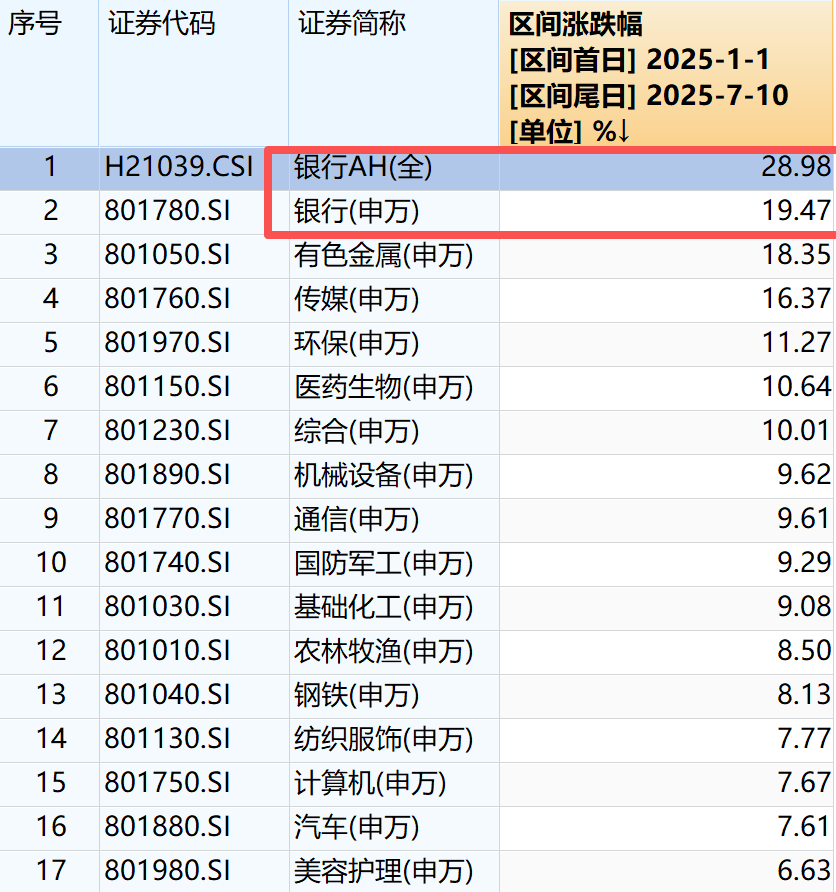
Core Viewpoint - The banking sector has experienced significant fluctuations, with a notable decline in stock prices recently, despite a strong performance earlier in the year. The interest from insurance companies in bank stocks suggests potential investment opportunities amidst the current downturn [1][3]. Group 1: Market Performance - As of July 10, 2025, the Shenwan Bank Index has achieved a year-to-date increase of 19.47%, ranking first among 31 Shenwan primary industries, while the Bank AH Index has risen nearly 29% [1][2]. - Since July 10, 2025, bank stocks have undergone high-level adjustments, showing a general downward trend despite occasional rebounds, contrasting with the rising technology sector [2][3]. Group 2: Investment Activity - On August 15, 2025, Ping An Life announced it had acquired 15% of Postal Savings Bank's H-shares, triggering a mandatory disclosure under Hong Kong regulations. This marks the eighth time this year that Ping An Life has increased its stake in bank H-shares [3]. - Other insurance companies, including Xinhua Insurance and Hongkang Life, have also shown interest in bank stocks, with multiple stake increases throughout the year [3]. Group 3: Dividend and Valuation Insights - The preference for bank stocks among insurance companies is attributed to their high dividend yields and stable returns, making them attractive for long-term investment strategies [3][7]. - As of August 15, 2025, the dividend yield for the China Securities Bank Index is 3.98%, while the Bank AH Index offers a yield of 4.36%, both significantly higher than the 10-year government bond yield [7][9]. - The latest price-to-book (PB) ratio for the Bank AH Index stands at 0.73, indicating it remains at a historical low despite recent valuation adjustments [7]. Group 4: Fund Flows - Recent data indicates that the Bank AH Preferred ETF has seen substantial inflows, with a net inflow of 328.1 million in the last week and approximately 880 million over the past two months, suggesting strong institutional interest in bank stocks during the current market correction [9].

平安人寿继续增持农业银行H股 持股占该行H股总数突破14%
Xin Lang Cai Jing· 2025-08-19 02:37
Core Viewpoint - Ping An Life has significantly increased its stake in Agricultural Bank of China (ABC) H-shares, indicating strong confidence in the bank's future performance and potential growth opportunities [1] Summary by Relevant Sections Shareholding Increase - On August 12, Ping An Life acquired an additional 26.515 million shares of ABC H-shares, raising its total holdings to 4.329 billion shares, which now represents over 14% of the total H-shares of the bank [1] - Previously, on February 17, Ping An Life had initiated a stake in ABC H-shares, holding over 5% of the total H-shares at that time [1] Investment Amount - From February 17 to August 12, Ping An Life has cumulatively increased its holdings by approximately 2.84 billion shares, with an estimated total expenditure of around 14 billion Hong Kong dollars based on the average transaction price during this period [1]

年内险资举牌银行股达14次 未来银行股的资金吸引力依然较强
Zheng Quan Ri Bao· 2025-08-17 23:59
Group 1 - Ping An Life Insurance has increased its stake in Postal Savings Bank of China (PSBC) H-shares to 15.05%, triggering a third regulatory notice [1] - The stock price of PSBC H-shares has risen by 25.2% this year, indicating a strong upward trend [1] - Ping An Life has made nine significant investments in bank stocks this year, with multiple stakes in PSBC and other banks [1] Group 2 - Other insurance institutions have also shown interest in bank stocks, with several instances of shareholding increases in various banks [2] - The appeal of listed banks lies in their stable operations, good liquidity, high dividend yields, and potential for appreciation [2] - The H-shares of listed banks are perceived to be undervalued compared to A-shares, providing a greater potential for future gains [2] - Policies encouraging long-term capital inflow into the market have increased the demand for insurance capital to invest in bank stocks [2] - The banking sector is highlighted for its high dividend yield, making it an attractive option for insurance capital in a low-interest-rate environment [2]
中国算力总规模全球第二,腾讯二季度净利增长17% | 财经日日评
吴晓波频道· 2025-08-15 00:30
Group 1: Social Financing and Monetary Data - In July, the social financing scale increased by 1.16 trillion yuan, with a cumulative increase of 23.99 trillion yuan from January to July, which is 5.12 trillion yuan more than the same period last year [2] - The total amount of RMB loans increased by 12.87 trillion yuan in the first seven months, but decreased by 500 billion yuan in July, marking a rare decline [2] - The broad money supply (M2) reached 329.94 trillion yuan at the end of July, with a year-on-year growth of 8.8% [2] Group 2: Real Estate and Consumer Lending - The slowdown in the recovery of the domestic real estate market and the decline in borrowing willingness among residents and enterprises are significant factors contributing to the weakening of credit data [3] - Recent policies aimed at boosting consumer loans and service industry support may have limited effects on stimulating credit demand [3] Group 3: Computing Power and Digital Infrastructure - As of June 2025, China's computing power ranks second globally, with 5G base stations expected to reach 4.55 million and gigabit broadband users at 226 million [4] - The data industry is projected to grow significantly, with the number of data enterprises exceeding 400,000 and the industry scale reaching 5.86 trillion yuan, a 117% increase from the end of the 13th Five-Year Plan [4][5] Group 4: Intelligent Driving Regulations - The State Administration for Market Regulation has released new regulations for intelligent connected vehicles, focusing on recall management, production consistency, and advertising standards [6][8] - The regulations prohibit companies from conducting software online upgrades without approval and from pushing untested software versions to users [7] Group 5: Insurance Sector and Bank Stocks - In 2023, insurance capital has made 26 stake acquisitions, with 11 involving bank stocks, indicating a trend of insurance companies increasing their holdings in stable, high-dividend sectors [9][10] - The focus of domestic insurance capital remains on high net asset yield and high dividend industries, with a notable shift from retail and real estate to banking [10] Group 6: Tencent's Financial Performance - Tencent reported a 15% year-on-year revenue increase to 184.5 billion yuan in Q2 2025, with a net profit of 55.6 billion yuan, up 17% [11] - The gaming sector continues to drive growth, with domestic game revenue increasing by 17% to 40.4 billion yuan [11][12] Group 7: BYD Insurance's Performance - BYD Insurance achieved a net profit of 31.35 million yuan in the first half of 2025, reversing previous losses, with a focus on car insurance [13][14] - The company has leveraged its resources in vehicle manufacturing and repair to reduce claims costs, which is crucial in the challenging landscape of new energy vehicle insurance [14] Group 8: US Stock Market Trends - The S&P 500 index reached its 17th closing high of the year, reflecting a general upward trend in US stock indices [15] - Despite the positive market performance, there are warnings about hidden risks, including labor market cooling and rising price pressures [16]

年内险资26次举牌
财联社· 2025-08-14 05:53
Core Viewpoint - The article highlights the increasing trend of insurance companies, particularly Minsheng Life, acquiring shares in banks like Zheshang Bank, driven by the need for stable returns and the impact of new accounting standards on profit volatility [1][2][12]. Group 1: Shareholding Activities - Minsheng Life increased its stake in Zheshang Bank by acquiring 1 million H-shares on August 11, reaching a 5% ownership threshold that triggered a disclosure requirement [1][2]. - Other insurance companies, including Ping An Life and Xinhua Insurance, have also been actively purchasing bank shares, with over 100 acquisitions this year, leading to multiple instances of shareholding disclosures [1][12]. - Zheshang Bank has seen significant interest from various insurance firms, with Ping An Life and others also making substantial investments in its shares [7][12]. Group 2: Strategic Implications - The low interest rate environment and asset scarcity are pushing insurance funds towards equity markets, with listed banks being favored for their stable operations and attractive dividend returns [2][12]. - Insurance companies are increasingly focusing on bank shares to enhance their investment strategies, particularly as bancassurance channels become vital for premium growth [2][10]. - The shift towards high-dividend assets is seen as a strategy to stabilize cash flows and mitigate profit volatility due to market fluctuations [8][16]. Group 3: Historical Context and Future Outlook - Minsheng Life has a historical connection with Zheshang Bank, having acquired shares from its major shareholder, Wanxiang Holdings, in previous years [6][4]. - The trend of insurance companies increasing their stakes in banks is expected to continue, as they seek to adapt to new accounting standards and enhance their long-term investment portfolios [16][12].


民生人寿出手举牌,4家险企争相竞逐浙商银行,年内险资26次举牌11次涉及银行股
Xin Lang Cai Jing· 2025-08-14 05:17
Core Viewpoint - Minsheng Life Insurance increased its stake in Zheshang Bank, reaching 5% of the bank's H-share capital, triggering a mandatory disclosure under Hong Kong stock market rules [1][2]. Group 1: Investment Activity - On August 11, Minsheng Life purchased 1 million shares of Zheshang Bank H-shares for HKD 2.7679 per share, totaling HKD 276.79 million [2][3]. - Following this transaction, Minsheng Life holds 296,023,000 shares of Zheshang Bank H-shares, representing 5% of the bank's total H-share capital [2][3]. - Other insurance companies, including Ping An Life and Xinhua Insurance, have also been actively increasing their holdings in bank stocks, with over 100 instances of share purchases this year [1][10]. Group 2: Strategic Rationale - The shift in accounting standards and the low-interest-rate environment are driving insurance companies to seek stable returns in equity markets, with listed banks being a preferred investment due to their solid operational performance and attractive dividend yields [2][10]. - Minsheng Life's investment strategy aims to balance long-term investment returns with current profit volatility, leveraging the support from its major shareholder, Wanxiang Holdings, which is also a founding shareholder of Zheshang Bank [1][2][4]. Group 3: Market Context - The insurance sector is increasingly focusing on high-dividend assets to stabilize cash flow and mitigate profit fluctuations caused by equity price volatility [10][12]. - In 2023, insurance companies have made 26 instances of share purchases, with 11 involving bank stocks, indicating a strong preference for this sector [10][12].


两家上市银行,同一天被举牌!
证券时报· 2025-08-14 03:31
险资举牌潮仍在延续! 港交所披露易最新信息显示,平安人寿于8月8日增持1414.1万股邮储银行H股股份后,于当日达到该行H股股本的15%,根据香港市场规则,触发举牌。 同一天,弘康人寿也在场内增持990万股郑州银行H股股份,所持股份数量突破该行H股股本的15%,触发举牌。 在此之前,平安人寿曾在1月8日、5月9日举牌邮储银行H股,所持该行H股数量占其H股总数分别突破5%、10%;弘康人寿则在6月27日、7月25日连续举牌郑州银 行H股。 截至目前,2025年已有7家上市银行被险资举牌。其中,农业银行H股被二度举牌,招商银行H股、邮储银行H股、郑州银行H股均被三度举牌。 2月17日,平安人寿所持农行H股数量突破该行H股股本的5%,触发举牌。到6月17日,其持股数量超过42亿股,在农行H股总数中占比接近14%,占该行总股本的 1.21%。 3月12日,瑞众保险所持中信银行H股数量突破该行H股股本的5%,触发举牌。不过在6月26日,瑞众保险减持300万股该行H股股份,持股占比回落至5%以内。 更早之前,平安人寿在去年12月20日举牌工商银行H股,所持该行H股数量占该行H股总数突破15%。而到今年2月14日,其持股占 ...

险资狂飙!2025年7家银行遭举牌,平安、弘康同日“三度”出手
Jin Rong Jie· 2025-08-14 01:28
Core Insights - Insurance capital is increasingly favoring bank stocks, with significant shareholding actions drawing market attention, particularly on August 8, when Ping An Life and Hongkang Life made notable investments in Postal Savings Bank and Zhengzhou Bank, indicating a recognition of the long-term value in the banking sector [1][2][3] Group 1: Investment Actions - Ping An Life increased its stake in Postal Savings Bank to 15.05% through the purchase of 14.14 million H-shares, marking its third shareholding action within seven months, with total investments exceeding 100 billion HKD [2] - Hongkang Life also raised its stake in Zhengzhou Bank to 15% on the same day, following two previous shareholding actions earlier in the year, reflecting a similar investment strategy [3] - A total of seven listed banks have been targeted by insurance capital this year, with notable repeated investments in China Merchants Bank, Postal Savings Bank, and Zhengzhou Bank [4] Group 2: Market Performance - Zhengzhou Bank's H-shares have seen a year-to-date increase of 39.5%, significantly outperforming the Hang Seng Index, attributed to the confidence instilled by insurance capital investments [3][7] - Postal Savings Bank's H-shares have also risen by 28.6% this year, indicating a broader trend of bank stock appreciation linked to insurance capital's involvement [7] Group 3: Investment Rationale - The low valuation of bank stocks, with several banks trading at a price-to-book ratio below 0.5, presents a compelling investment opportunity for insurance capital [5][6] - The stable and generous dividends offered by banks, such as China Merchants Bank's average dividend yield exceeding 4%, align with the long-term income requirements of insurance capital [6] - Regulatory encouragement for long-term investments has further supported insurance capital's focus on bank stocks as a key asset class [6] Group 4: Market Implications - The influx of insurance capital is expected to drive a valuation recovery for bank stocks, enhancing market confidence and improving stock price performance [7] - Concerns regarding high insurance capital ownership potentially influencing bank management decisions have been raised, but experts suggest that these investments are typically strategic and comply with regulatory requirements [7]
两家上市银行 同一天被第三次举牌!
Zheng Quan Shi Bao Wang· 2025-08-14 00:27
Core Viewpoint - The trend of insurance capital increasing stakes in banks continues, with significant shareholdings triggering mandatory disclosures in the Hong Kong market [1][2][3]. Group 1: Insurance Capital Increases - On August 8, Ping An Life increased its holdings in Postal Savings Bank by 14.14 million shares, reaching 15.05% of the bank's H-share capital, triggering a mandatory disclosure [1][6]. - On the same day, Hongkang Life increased its holdings in Zhengzhou Bank by 9.9 million shares, surpassing 15% of the bank's H-share capital, also triggering a mandatory disclosure [2][8]. - Since January 8, 2025, a total of 7 listed banks have been targeted by insurance capital, with Postal Savings Bank, Zhengzhou Bank, and China Merchants Bank each experiencing three rounds of stake increases [3][12]. Group 2: Historical Context of Stake Increases - Ping An Life first disclosed its stake in Postal Savings Bank on January 8, 2025, when it held 5% of the H-shares [4]. - On May 9, 2025, Ping An Life further increased its holdings to over 10%, constituting a second round of stake increase [5]. - By August 8, 2025, Ping An Life had cumulatively acquired over 2 billion shares of Postal Savings Bank, with total expenditures exceeding 10 billion HKD during this period [7]. Group 3: Current Holdings and Market Performance - As of August 8, 2025, Ping An Life holds 2.989 billion shares of Postal Savings Bank, valued at approximately 17.2 billion HKD [8]. - Hongkang Life's holdings in Zhengzhou Bank reached 309 million shares, with a market value of about 435 million HKD [10]. - Year-to-date, Postal Savings Bank and Zhengzhou Bank have seen share price increases of approximately 28.6% and 39.5%, respectively [11].