
博雅生物

Search documents
博雅生物公布2025半年度分配预案 拟10派1.5元
Zheng Quan Shi Bao Wang· 2025-08-22 10:55
Core Viewpoint - Boya Bio announced a semi-annual distribution plan for 2025, proposing a cash dividend of 1.5 yuan per 10 shares, totaling approximately 75.64 million yuan, which represents 33.57% of the company's net profit [2]. Company Financials - For the first half of 2025, Boya Bio reported revenue of 1.008 billion yuan, a year-on-year increase of 12.51%. However, net profit decreased by 28.68% to 225 million yuan, with basic earnings per share at 0.45 yuan and a weighted average return on equity of 2.97% [2]. Dividend History - The company has distributed dividends 16 times since its listing. The latest distribution plan is as follows: - 2025.06.30: 10 shares, 1.5 yuan (total 0.76 billion yuan, dividend yield 0.54%) - 2024.12.31: 10 shares, 1.6 yuan (total 0.81 billion yuan, dividend yield 0.51%) - 2024.06.30: 10 shares, 1.6 yuan (total 0.81 billion yuan, dividend yield 0.53%) - 2023.12.31: 10 shares, 3 yuan (total 1.51 billion yuan, dividend yield 0.87%) [2]. Industry Comparison - In the pharmaceutical and biotechnology sector, 24 companies announced their semi-annual distribution plans for 2025. Boya Bio's cash distribution of 75.64 million yuan ranks it among the lower end of the spectrum compared to peers like WuXi AppTec, which announced a distribution of 1.003 billion yuan [4].

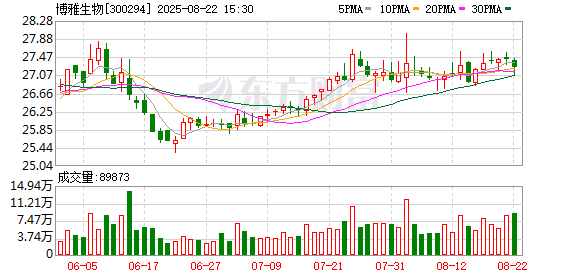
8月22日晚间重要公告一览
Xi Niu Cai Jing· 2025-08-22 10:13
Group 1 - Gujia Home achieved a net profit of 1.02 billion yuan in the first half of 2025, a year-on-year increase of 13.89% [1] - Gujia Home's revenue for the first half of 2025 was 9.80 billion yuan, up 10.02% year-on-year [1] - Phoenix Holdings reported a net profit of 11.04 million yuan, successfully turning a profit [1] - Phoenix Holdings' revenue increased by 200.78% year-on-year to 291 million yuan [1] - Zheshang Securities recorded a net profit of 1.15 billion yuan, a year-on-year growth of 46.49% [1] - Zheshang Securities' revenue decreased by 23.66% to 6.11 billion yuan [1] Group 2 - Tianjin Port's net profit was 503 million yuan, a year-on-year decrease of 18.33% [3] - Tianjin Port's revenue for the first half of 2025 was 6.18 billion yuan, an increase of 4.33% year-on-year [3] - Xuantai Pharmaceutical reported a net profit of 45.59 million yuan, down 15.82% year-on-year [5] - Xuantai Pharmaceutical's revenue was 220 million yuan, a slight increase of 0.74% year-on-year [5] Group 3 - Yilida achieved a net profit of 40.03 million yuan, a year-on-year increase of 18.32% [7] - Yilida's revenue for the first half of 2025 was 758 million yuan, up 12.56% year-on-year [7] - Zhongji United reported a net profit of 262 million yuan, a significant year-on-year increase of 86.61% [9] - Zhongji United's revenue was 818 million yuan, a year-on-year growth of 43.52% [9] Group 4 - China Shipbuilding Special Gas reported a net profit of 178 million yuan, a slight decrease of 0.55% year-on-year [10] - China Shipbuilding Special Gas' revenue was 1.04 billion yuan, an increase of 12.60% year-on-year [10] - Xinyuan Intelligent Manufacturing achieved a net profit of 9.79 million yuan, a year-on-year increase of 284.45% [11] - Xinyuan Intelligent Manufacturing's revenue was 329 million yuan, up 388.33% year-on-year [11] Group 5 - Jiudian Pharmaceutical reported a net profit of 291 million yuan, a year-on-year increase of 2.57% [13] - Jiudian Pharmaceutical's revenue was 1.51 billion yuan, a year-on-year growth of 10.67% [13] - Boya Biological reported a net profit of 225 million yuan, down 28.68% year-on-year [15] - Boya Biological's revenue was 1.01 billion yuan, an increase of 12.51% year-on-year [15] Group 6 - True Love Home achieved a net profit of 197 million yuan, a year-on-year increase of 484.48% [17] - True Love Home's revenue was 390 million yuan, up 21.82% year-on-year [17] - Dongfang Electronics reported a net profit of 302 million yuan, a year-on-year increase of 19.65% [19] - Dongfang Electronics' revenue was 3.16 billion yuan, a year-on-year growth of 12.18% [19] Group 7 - Watte Holdings achieved a net profit of 18.41 million yuan, a year-on-year increase of 23.94% [21] - Watte Holdings' revenue was 906 million yuan, up 12.29% year-on-year [21] - Tianqin Equipment reported a net profit of 16.36 million yuan, a year-on-year increase of 2.78% [22] - Tianqin Equipment's revenue was 111 million yuan, a year-on-year growth of 18.42% [22] Group 8 - Yingfeng Environment achieved a net profit of 382 million yuan, a year-on-year increase of 0.43% [24] - Yingfeng Environment's revenue was 6.46 billion yuan, up 3.69% year-on-year [24] - Kexin Machinery reported a net profit of 52.20 million yuan, a year-on-year decrease of 46.18% [26] - Kexin Machinery's revenue was 592 million yuan, down 17.26% year-on-year [26] Group 9 - Tengda Construction reported a net profit of 108 million yuan, a year-on-year decrease of 0.69% [27] - Tengda Construction's revenue was 1.61 billion yuan, down 5.20% year-on-year [27] - Canaan Technology achieved a net profit of 7.35 million yuan, a year-on-year decrease of 38.46% [29] - Canaan Technology's revenue was 560 million yuan, up 1.29% year-on-year [29] Group 10 - Metro Design reported a net profit of 221 million yuan, a year-on-year increase of 6.58% [30] - Metro Design's revenue was 1.32 billion yuan, up 5.31% year-on-year [30] - China Shipbuilding Special Gas plans to use up to 2.9 billion yuan of idle funds for cash management [31] - The company intends to invest in safe, liquid, principal-protected products [31] Group 11 - Jiuchuang Biotechnology received a medical device registration certificate for its lupus anticoagulant detection kit [32] - The product is intended for in vitro qualitative detection of lupus anticoagulant in human plasma [32] - Xinowei's subsidiary received approval for clinical trials of its innovative drug [33] - The drug is a humanized monoclonal antibody intended for treating multiple cancers [33] Group 12 - Dongcheng Pharmaceutical's subsidiary received FDA approval for clinical trials of its targeted radiopharmaceutical [34] - The drug is intended for treating advanced prostate cancer [34] - Shandong Road and Bridge received approval to issue bonds up to 4 billion yuan [35] - The company specializes in road and bridge engineering construction [35] Group 13 - Diou Home plans to invest 500 million yuan to establish a subsidiary focused on generative AI [36] - The investment aims to transform the company into a full-stack industrial intelligent service provider [36] - Dayilong achieved a net profit of 90.87 million yuan, a year-on-year increase of 217.89% [37] - Dayilong's revenue was 957 million yuan, up 57.35% year-on-year [37] Group 14 - Chaohongji reported a net profit of 331 million yuan, a year-on-year increase of 44.34% [38] - Chaohongji's revenue was 4.10 billion yuan, up 19.54% year-on-year [38] - Taiji Group reported a net profit of 139 million yuan, a year-on-year decrease of 71.94% [39] - Taiji Group's revenue was 5.66 billion yuan, down 27.63% year-on-year [39] Group 15 - Suneng Co. reported a net profit of 93.19 million yuan, a year-on-year decrease of 90.13% [41] - Suneng Co.'s revenue was 5.57 billion yuan, down 17.15% year-on-year [41] - Three Gorges Water Conservancy reported a net profit of 47.93 million yuan, a year-on-year decrease of 79.07% [42] - Three Gorges Water Conservancy's revenue was 4.90 billion yuan, down 6.10% year-on-year [42] Group 16 - Furida reported a net profit of 108 million yuan, a year-on-year decrease of 15.16% [44] - Furida's revenue was 1.79 billion yuan, down 7.05% year-on-year [44] - Chenzhou Electric International achieved a net profit of 25.92 million yuan, a year-on-year increase of 29.55% [46] - Chenzhou Electric International's revenue was 1.96 billion yuan, up 1.26% year-on-year [46] Group 17 - Farlantek achieved a net profit of 122 million yuan, a year-on-year increase of 41.05% [47] - Farlantek's revenue was 1.18 billion yuan, up 46.63% year-on-year [47] - Huitai Medical reported a net profit of 425 million yuan, a year-on-year increase of 24.11% [48] - Huitai Medical's revenue was 1.21 billion yuan, up 21.26% year-on-year [48] Group 18 - Dameng Data's director is under investigation for suspected violations [49] - The company's daily operations remain normal [49] - Maiwei Co. reported a net profit of 394 million yuan, a year-on-year decrease of 14.59% [50] - Maiwei Co.'s revenue was 4.21 billion yuan, down 13.48% year-on-year [50] Group 19 - Waiservice Holdings achieved a net profit of 384 million yuan, a year-on-year increase of 5.51% [52] - Waiservice Holdings' revenue was 12.25 billion yuan, up 16.15% year-on-year [52] - Huakang Co. reported a net profit of 134 million yuan, a year-on-year decrease of 3.38% [53] - Huakang Co.'s revenue was 1.87 billion yuan, up 37.32% year-on-year [53] Group 20 - Bluelight Optical achieved a net profit of 103 million yuan, a year-on-year increase of 110.27% [54] - Bluelight Optical's revenue was 577 million yuan, up 52.54% year-on-year [54] - Shunwang Technology reported a net profit of 162 million yuan, a year-on-year increase of 69.22% [55] - Shunwang Technology's revenue was 1.01 billion yuan, up 25.09% year-on-year [55] Group 21 - Anbiping reported a net loss of 12.50 million yuan in the first half of 2025 [56] - Anbiping's revenue was 159 million yuan, down 30.11% year-on-year [56] - Jinhua Co. reported a net profit of 6.20 million yuan, a year-on-year decrease of 34.53% [57] - Jinhua Co.'s revenue was 241 million yuan, down 1.90% year-on-year [57] Group 22 - Xiehe Electronics achieved a net profit of 28.96 million yuan, a year-on-year decrease of 8.31% [59] - Xiehe Electronics' revenue was 451 million yuan, up 12.13% year-on-year [59] - Huguang Co. reported a net profit of 276 million yuan, a year-on-year increase of 8.40% [60] - Huguang Co.'s revenue was 3.63 billion yuan, up 6.20% year-on-year [60]


华润医药(03320.HK):博雅生物上半年净利润2.25亿元 同比下降28.68%

Ge Long Hui· 2025-08-22 09:33
Core Viewpoint - China Resources Pharmaceutical (03320.HK) announced that Boya Bio (300294.SZ) achieved a revenue of 1.008 billion yuan in the first half of 2025, representing a year-on-year growth of 12.51%. However, the net profit attributable to shareholders decreased by 28.68% to 225 million yuan, and the net profit excluding non-recurring gains and losses fell by 36.05% to 166 million yuan, with basic earnings per share at 0.45 yuan [1]. Financial Performance - Boya Bio's revenue for the first half of 2025 reached 1.008 billion yuan, marking a 12.51% increase compared to the previous year [1]. - The net profit attributable to shareholders was 225 million yuan, which is a decline of 28.68% year-on-year [1]. - The net profit excluding non-recurring gains and losses stood at 166 million yuan, reflecting a decrease of 36.05% year-on-year [1]. - Basic earnings per share were reported at 0.45 yuan [1].
华润医药(03320):博雅生物(300294.SZ)上半年股东应占净利润2.25亿元 同比减少28.68%
智通财经网· 2025-08-22 09:28
Group 1 - The core viewpoint of the article highlights the financial performance of China Resources Pharmaceutical's subsidiary, China Resources Boya Biotechnology, for the six months ending June 30, 2025, showing a total revenue of 1.008 billion RMB, which represents a year-on-year increase of 12.51% [1] - The net profit attributable to shareholders for the same period is reported at 225 million RMB, reflecting a year-on-year decrease of 28.68% [1]
博雅生物2025年上半年净利润同比下降28.68%
Bei Jing Shang Bao· 2025-08-22 09:21
Core Viewpoint - Boya Bio announced a revenue of 1.008 billion yuan for the first half of 2025, representing a year-on-year growth of 12.51% while the net profit attributable to shareholders decreased by 28.68% to 225 million yuan [1] Financial Performance - The company's revenue for the first half of 2025 reached 1.008 billion yuan, showing a year-on-year increase of 12.51% [1] - The net profit attributable to shareholders was 225 million yuan, which is a decline of 28.68% compared to the previous year [1] - The net profit after deducting non-recurring gains and losses was 166 million yuan, reflecting a decrease of 36.05% year-on-year [1]
博雅生物发布上半年业绩,归母净利润2.25亿元,下降28.68%
智通财经网· 2025-08-22 08:53
Core Insights - The company reported a revenue of 1.008 billion yuan for the first half of 2025, representing a year-on-year growth of 12.51% [1] - The net profit attributable to shareholders decreased to 225 million yuan, a decline of 28.68% year-on-year [1] - The net profit attributable to shareholders after deducting non-recurring gains and losses was 166 million yuan, down 36.05% year-on-year [1] - The basic earnings per share stood at 0.45 yuan [1]
博雅生物:上半年净利润同比下降28.68% 拟10派1.5元
Zheng Quan Shi Bao Wang· 2025-08-22 08:45
Core Insights - The company reported a revenue of 1.008 billion yuan for the first half of 2025, representing a year-on-year growth of 12.51% [1] - The net profit attributable to shareholders decreased to 225 million yuan, a decline of 28.68% compared to the previous year [1] - The basic earnings per share stood at 0.45 yuan [1] - The company plans to distribute a cash dividend of 1.5 yuan per 10 shares (tax included) [1] Financial Performance - Revenue for the first half of 2025: 1.008 billion yuan, up 12.51% year-on-year [1] - Net profit attributable to shareholders: 225 million yuan, down 28.68% year-on-year [1] - Basic earnings per share: 0.45 yuan [1] Dividend Announcement - Proposed cash dividend: 1.5 yuan per 10 shares (including tax) [1] Reasons for Profit Decline - The decline in net profit is primarily attributed to the decrease in gross profit from blood products and the amortization of the valuation increase resulting from the acquisition of Green Cross [1]
博雅生物(300294.SZ)发布上半年业绩,归母净利润2.25亿元,下降28.68%
智通财经网· 2025-08-22 08:44
智通财经APP讯,博雅生物(300294.SZ)发布2025年半年度报告,该公司营业收入为10.08亿元,同比增 长12.51%。归属于上市公司股东的净利润为2.25亿元,同比减少28.68%。归属于上市公司股东的扣除非 经常性损益的净利润为1.66亿元,同比减少36.05%。基本每股收益为0.45元。 ...
博雅生物:2025年半年度净利润约2.25亿元,同比下降28.68%
Mei Ri Jing Ji Xin Wen· 2025-08-22 08:35
Group 1 - The company reported a revenue of approximately 1.008 billion yuan for the first half of 2025, representing a year-on-year increase of 12.51% [2] - The net profit attributable to shareholders was approximately 225 million yuan, showing a year-on-year decrease of 28.68% [2] - The basic earnings per share were 0.45 yuan, which is a year-on-year decrease of 28.57% [2]
博雅生物(300294) - 公司关于召开2025年第一次临时股东大会的通知
2025-08-22 08:31
华润博雅生物制药集团股份有限公司 关于召开 2025 年第一次临时股东大会的通知 本公司及董事会全体成员保证公告内容真实、准确和完整,没有虚假记载、 误导性陈述或重大遗漏。 证券代码:300294 证券简称:博雅生物 公告编号:2025-064 一、召开会议基本情况 (六)股权登记日:2025 年 9 月 4 日。 (一)大会届次:2025 年第一次临时股东大会。 (二)会议召集人:公司董事会。(经公司第八届董事会第十五次会议审议 通过,决定召开本次股东大会) (三)会议召开的合法、合规性:召集程序符合有关法律、行政法规、部门 规章、规范性文件和《公司章程》的规定。 (四)会议召开时间:2025 年 9 月 12 日下午 14:00。 网络投票时间:通过深圳证券交易所交易系统进行网络投票的时间为 2025 年 9 月 12 日上午 9:15-9:25,9:30-11:30,下午 13:00—15:00;通过互联网投票系 统投票的时间为 2025 年 9 月 12 日上午 9:15—下午 15:00 期间的任意时间。 (五)会议召开方式:现场投票和网络投票相结合的方式。 现场投票:股东本人出席现场会议或通过授权 ...