
人工智能技术

Search documents
香港署理创新科技及工业局:加速推动人工智能产业化 营造健康有序的AI发展生态
Zhi Tong Cai Jing· 2026-03-18 08:07
Core Viewpoint - The Hong Kong government is accelerating the industrialization of artificial intelligence (AI) and promoting its deep integration with various industries, aiming for widespread and responsible use of AI among the public [1][2]. Group 1: AI Governance and Framework - AI governance is emphasized as the foundation for ensuring the safe, ethical, and responsible application of AI technologies [1]. - The Digital Policy Office has released and continuously updates documents such as the "AI Ethical Framework" and "Guidelines for Generative AI Technology and Applications in Hong Kong," providing a governance framework tailored to Hong Kong's context [1]. - The Hong Kong AI Research Institute aims to enhance the local AI governance system and strengthen the foundation for AI technology empowerment, including the establishment of AI standards and rules [1]. Group 2: Legislative and Regulatory Measures - The Hong Kong government has appointed a board for the AI Research Institute to expedite personnel deployment and operational readiness by the second half of the year [2]. - A cross-departmental working group has been established to review existing laws to ensure they align with technological advancements, including AI, and to address potential risks associated with AI applications [2]. - The working group will conduct a comprehensive review of current laws to identify gaps and propose targeted, actionable solutions [2]. Group 3: Education and Public Awareness - The Hong Kong Education Bureau is encouraging universities to enhance measures related to AI and technology applications, supported by a funding of HKD 100 million from the Education and Manpower Bureau [3]. - The 2026-2027 budget proposes the organization of AI-related courses and activities to improve awareness and skills in AI among students, youth, and the public [3]. - The government is actively preparing to launch related projects in collaboration with public institutions, enterprises, and higher education institutions in the second half of the year [3].
读懂2026(二):36省市政府工作报告中的产业雄心
Guohai Securities· 2026-03-11 05:47
1. Report Industry Investment Rating No information provided regarding the report industry investment rating. 2. Core Views of the Report - The report systematically sorts out the 2026 government work reports of 27 provinces, 4 municipalities directly under the Central Government, and 5 planned -单列 cities, aiming to understand the industrial development plans and key points in 2026 [5][16]. - New quality productivity is an important consensus for local industrial development, with artificial intelligence and new energy being the two most penetrative main lines. Each province is accelerating the formation of distinctive industries [8][37]. - In 2026, artificial intelligence has relatively greater development potential as it is the most frequently mentioned keyword in the 36 provincial government work reports [8][20]. 3. Summary According to the Directory 3.1 Focus on the Government Work Report to Anchor the Investment Direction in 2026 3.1.1 How to View the Industrial Development Plan in the Government Work Report? - In 2026, as the starting year of the 15th Five - Year Plan, a series of policies will be accelerated to promote high - quality economic development. The report further sorts out the specific development plans of key industries in the 2026 government work reports of various provinces [15]. - The government work report reflects the annual development strategies of each region based on its resource endowment and industrial foundation, and provides an objective basis for market players to understand policy capital flows and judge industrial pattern changes [16]. 3.1.2 View the Industrial Development Direction in the Government Work Report from Multiple Perspectives 3.1.2.1 Industry Perspective: Which Industries are Frequently Mentioned in the 2026 Government Work Reports of Various Provinces? - In the 2026 government work reports of 36 provinces and important cities, popular keywords such as artificial intelligence, automobile, computing power, chemical industry, new materials, digital economy, modern service, equipment manufacturing, and low - altitude economy are frequently mentioned. Among them, artificial intelligence is mentioned 160 times, ranking first [20]. - The report clarifies the concepts of advanced manufacturing, strategic emerging industries, and future industries. Advanced manufacturing includes strategic emerging industries, strategic emerging industries are part of emerging industries that can grow into leading or pillar industries, and future industries are the "tomorrow" of strategic emerging industries [21][26]. 3.1.2.2 Regional Perspective: What are the Top Three Key Industries to be Developed in the 2026 Government Work Reports of Various Provinces? - From a common trend perspective, new quality productivity is an important consensus for local industrial development, with artificial intelligence and new energy being the two most penetrative main lines. Regionally, each province is forming distinctive industries [37]. - Resource - based provinces such as Shanxi, Inner Mongolia, Ningxia, and Xinjiang extend to downstream high - value - added links and cultivate new growth points in culture and tourism and logistics [7][37]. - Economically developed provinces and coastal cities such as Guangdong, Jiangsu, Shanghai, Zhejiang, and Shandong focus on high - end and globalization, and seize the top of the global value chain in frontier fields [7][38]. - Ecological and agricultural provinces such as Yunnan, Heilongjiang, Jilin, and Henan upgrade characteristic industries and efficiently transform production capacity on the basis of ensuring food security [7][38]. - Hub - economic provinces such as Chongqing, Sichuan, Shaanxi, and Guangxi reshape hub functions and improve two - way opening - up levels through digital means [7][38]. - The five planned -单列 cities of Shenzhen, Ningbo, Qingdao, Dalian, and Xiamen focus on common tracks of artificial intelligence and marine economy and explore new industrial paths according to local conditions [7][38]. 3.1.2.3 Regional Perspective: How to Compare the Specific Work Arrangements of 36 Provinces and Municipalities for Strategic Emerging Industries and Future Industries in the 2026 Government Work Reports? - Regions with strong economic and scientific research capabilities such as Shenzhen and Ningbo have put forward clear quantitative development goals for strategic emerging industries [41]. - Digital economy is a popular layout track in 2026. Many provinces have put forward more specific plans for the relevant industrial revenues of the digital economy [41][42]. - Artificial intelligence is also a popular layout track in 2026. Some provinces such as Shenzhen, Qingdao, and Zhejiang have put forward more specific plans for the relevant industrial revenues of artificial intelligence [44]. - For future industries, economically more active regions show relatively stronger layout power in frontier fields [44]. 3.2 Explore New Opportunities in High - Quality Development and Explain the Industrial Development Context in the 2026 Government Work Reports of Various Provinces and Municipalities 3.2.1 North China Region (Beijing, Tianjin, Hebei, Shanxi, Inner Mongolia) - Beijing focuses on promoting the development of new quality productivity, strengthening the real economy, and developing advanced manufacturing, modern service industries, and future industries [49]. - Tianjin focuses on "three new" and "three quantities", promotes the transformation of the manufacturing industry, and builds a modern industrial system [49]. - Hebei aims to build a strong manufacturing province, promotes the development of county - level characteristic industrial clusters, and implements the "artificial intelligence +" action [49]. - Shanxi promotes energy transformation and industrial upgrading, stabilizes coal production, and develops new energy and digital economy [51]. - Inner Mongolia focuses on the real economy, promotes the transformation and upgrading of traditional industries, and develops emerging industries such as green computing power and new energy equipment [51]. 3.2.2 Northeast Region (Liaoning, Jilin, Heilongjiang) - Liaoning aims at new - type industrialization, promotes the upgrading of four trillion - level industrial bases, and develops emerging industries such as low - altitude economy and artificial intelligence [62]. - Jilin builds a characteristic modern industrial system, focuses on the development of new energy and equipment manufacturing industries, and cultivates emerging industries [62]. - Heilongjiang ensures food security and accelerates the cultivation of new quality productivity, with the strategic emerging industries' revenue expected to grow by about 15% [62]. 3.2.3 East China Region (Shanghai, Jiangsu, Zhejiang, Anhui, Fujian, Jiangxi, Shandong) - Shanghai strengthens the core function of the international economic center, focuses on new energy storage, construction, and the integration of culture, tourism, and business [69]. - Jiangsu takes the marine economy, energy, and digital economy as growth poles, and promotes the construction of zero - carbon parks and the "artificial intelligence +" action [70]. - Zhejiang is driven by the digital economy and artificial intelligence, with clear growth targets for the core industries of artificial intelligence and the digital economy [70]. - Anhui relies on new energy, advanced equipment manufacturing, and biomedicine, and extends to artificial intelligence and the elderly care service industry [70]. - Fujian focuses on new energy, new materials, and advanced equipment manufacturing, and develops the marine economy and modern agriculture [70]. - Jiangxi focuses on the transformation of electronic information, non - ferrous metals, and advanced equipment manufacturing, and develops emerging industries such as lithium - battery new energy and low - altitude economy [70]. - Shandong focuses on artificial intelligence, steel, and advanced equipment manufacturing, and promotes the development of the digital economy [70]. 3.2.4 Central - South Region (Henan, Hubei, Hunan, Guangdong, Guangxi, Hainan) - Henan focuses on major project investment and digital economy expansion, and consolidates the agricultural foundation [91]. - Hubei focuses on large - scale project construction and agricultural revitalization [91]. - Hunan focuses on major investment and the expansion of industrial enterprises [91]. - Guangdong promotes infrastructure upgrading and an open - type economy, and ensures agricultural supply [91]. - Guangxi takes artificial intelligence and intelligent manufacturing as the core of new quality productivity, and promotes major projects and agricultural construction [93]. - Hainan strengthens open - type economic indicators around the construction of a free trade port, and develops emerging industries and agriculture [93]. 3.2.5 Southwest Region (Sichuan, Guizhou, Yunnan, Tibet, Chongqing) - Sichuan promotes the "intelligent transformation and digital transformation" of the manufacturing industry and the empowerment of artificial intelligence, and enhances the development level of the Chengdu - Chongqing economic circle [108]. - Guizhou focuses on the development of digital industries, and also develops mountain agriculture and tourism [108]. - Yunnan strengthens resource - based industries, focuses on plateau - characteristic agriculture, and promotes innovation - driven development [108]. - Tibet builds a national clean energy base and develops Tibetan medicine [108]. - Chongqing focuses on building the Chengdu - Chongqing economic circle and a scientific and technological innovation center [108]. 3.2.6 Northwest Region (Shaanxi, Gansu, Qinghai, Ningxia, Xinjiang) - Shaanxi promotes the development of photonics, new energy, and cultural tourism industries [40]. - Gansu develops service industries, transportation, and computing power, and focuses on new energy and coal industries [40]. - Qinghai develops green - low - carbon industries, artificial intelligence, and cultural tourism, and focuses on new energy and salt - lake chemical industries [40]. - Ningxia develops tourism, modern chemical industry, and characteristic agriculture, and focuses on new energy and coal industries [40]. - Xinjiang develops modern agriculture, low - altitude economy, and cross - border e - commerce [40]. 3.2.7 Important Cities (Shenzhen, Ningbo, Qingdao, Dalian, Xiamen) - Shenzhen aims to develop strategic emerging industries and artificial intelligence, and builds a future industrial pilot zone [40][44]. - Ningbo promotes the development of strategic emerging industries, artificial intelligence, and the marine economy [40][44]. - Qingdao focuses on artificial intelligence, the marine economy, and low - altitude economy [40]. - Dalian develops software and information technology services, electronic information manufacturing, and the new energy industry [40]. - Xiamen focuses on electronic information, high - end equipment manufacturing, and new energy, and develops the marine economy [40].
谷歌与OpenAI员工发表公开信,支持Anthropic在五角大楼事件中立场
Xin Lang Cai Jing· 2026-02-28 04:09
Core Viewpoint - Anthropic is in a deadlock with the U.S. Department of Defense over the military's demand for unrestricted use of its AI technology, with significant support from employees of Google and OpenAI urging their leadership to back Anthropic's stance against this demand [1] Group 1: Company Position - Anthropic opposes the use of artificial intelligence for domestic mass surveillance and autonomous weapons [1] - The company has set clear red lines regarding the application of its technology in military contexts, particularly concerning large-scale monitoring and fully autonomous weaponry [1] Group 2: Employee Support - Over 300 Google employees and 60 OpenAI employees have signed an open letter advocating for their companies to support Anthropic and reject the unilateral demands from the Department of Defense [1] - The signatories of the letter emphasize the need for unity among the companies to resist the pressure from the Department of Defense, highlighting that the strategy of division relies on a lack of understanding of each other's positions [1] Group 3: Leadership Response - The letter specifically calls on the executives of Google and OpenAI to uphold Anthropic's established boundaries against mass surveillance and fully autonomous weapons [1] - As of now, the leadership of both companies has not formally responded to the open letter [1]

瑞穗(MFG.US)宣布“AI换人”计划:十年内削减5000个行政岗位
智通财经网· 2026-02-27 06:47
Core Viewpoint - Mizuho Financial Group plans to replace approximately 5,000 administrative positions in Japan with artificial intelligence over the next decade to enhance operational efficiency [1] Group 1: Company Strategy - Mizuho aims to reallocate human resources to key business areas by leveraging AI technology, emphasizing that this is not a layoff strategy [1] - The bank currently has about 15,000 administrative positions across its core banking division and other subsidiaries, with affected employees being reassigned to other roles [1] Group 2: Industry Trends - Japanese companies are increasingly investing in AI applications, which has become a key component of Prime Minister Fumio Kishida's policy agenda [1] - The global banking sector is investing heavily in AI for various operations, with JPMorgan Chase reportedly spending around $2 billion annually on AI technology development, which also saves the same amount in expenses each year [1] Group 3: Employment Concerns - Executives in the Japanese banking industry are working to alleviate concerns about job losses due to AI, with Mizuho's CEO Masahiro Kihara stating that he does not believe humans will lose their value and that employees can focus on higher-value tasks [1]

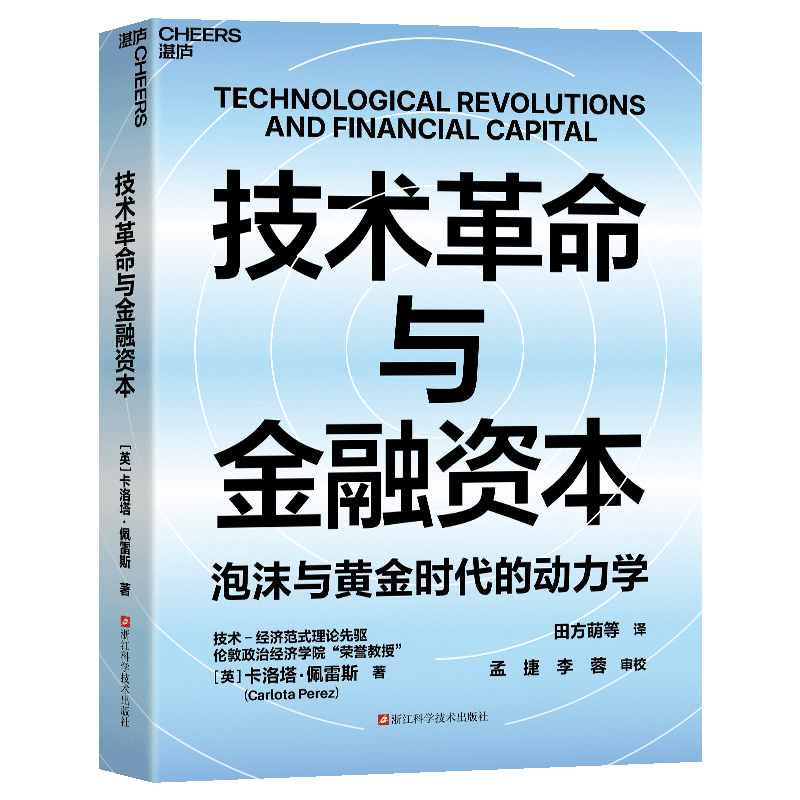
钢铁、芯片与技术未来︱21书评
2 1 Shi Ji Jing Ji Bao Dao· 2026-02-27 05:47
Core Insights - The article discusses the historical context and implications of Carlota Perez's "Technological Revolutions and Financial Capital," emphasizing the cyclical nature of capitalism driven by technological revolutions [1][2] Group 1: Technological Revolutions - The author identifies five technological revolutions that have occurred since the early 21st century: the Industrial Revolution, the Steam and Railway Era, the Steel, Electricity, and Heavy Industry Era, the Oil, Automobile, and Mass Production Era, and the Information and Communication Era [1] - The current technological environment is influenced by the AI revolution, open-source innovation, distributed finance, and global geopolitical competition, which may alter the historical conditions of the "technological-economic paradigm" [2] Group 2: Economic Implications - The article highlights that significant events in the global economy since the book's original publication include the ongoing breakthroughs in the information revolution, the irreversible threat of climate change, and China's rise as the world's second-largest economy [4] - China has leveraged both mature technologies from the fourth technological revolution and emerging technologies from the fifth to achieve substantial economic growth, paralleling the historical achievements of the U.S. and Germany during the third technological revolution [5] Group 3: Institutional Changes - The article emphasizes the necessity of major institutional reforms to facilitate innovation and investment, address social inequality, and achieve a green transition before climate change becomes irreversible [8] - Historical examples illustrate how previous technological revolutions required significant institutional changes to adapt to new economic realities, suggesting that similar reforms are needed today [6][8] Group 4: Challenges Ahead - The article notes that despite the potential for a new golden age of the information revolution, significant changes that could have occurred after the 2000 tech bubble and the 2008 financial crisis did not materialize, leading to continued speculative behavior in finance rather than long-term investments in the real economy [9] - The book aims to provide insights into the relationship between technological, economic, and political changes, rather than making predictions, encouraging readers to learn from historical patterns [9]

Anthropic表示无法接受美国防部要求,希望后者重新考虑条款
Xin Lang Cai Jing· 2026-02-27 00:49
Core Viewpoint - Anthropic has rejected the U.S. Department of Defense's request, stating that the threat from the Pentagon "will not change our position" [1] Group 1: Company Position - Anthropic insists on establishing safety mechanisms before providing services to the military and hopes the Department of Defense will reconsider its stance [1] - The company emphasizes the importance of ethical considerations in its operations, particularly in relation to military applications of its AI technology [1] Group 2: Government's Stance - A Pentagon spokesperson indicated that the request for Anthropic to allow the government to use its AI technology for "all legitimate purposes" is "simple" and "reasonable" [1] - The Pentagon has stated that it will not allow any company to dictate terms regarding how military decisions are made [1] Group 3: Negotiation Dynamics - The Pentagon's Chief Technology Officer, Emil Michael, revealed that the military has made "several substantive concessions" to reach an agreement with Anthropic [1] - The Department of Defense has offered Anthropic the opportunity to participate in its AI ethics committee, indicating a willingness to engage in dialogue [1]
“双向奔赴”:桂港构建命运共同体
Guang Xi Ri Bao· 2026-02-26 02:06
Core Viewpoint - The cooperation between Guangxi and Hong Kong is transitioning from a traditional "front shop, back factory" model to a new phase of deep collaboration characterized by strategic integration and mutual support in key economic factors [1]. Group 1: Economic Factors - The five core economic factors driving growth—land, labor, capital, technology, and institutions—are highly complementary between Guangxi and Hong Kong, enabling a dual flow of resources and collaborative configuration [1][2]. - Guangxi has advantages in land, labor, and geographical location, while Hong Kong excels in capital allocation, institutional environment, and international regulatory alignment, creating a synergistic relationship [2][3]. Group 2: Structural Changes in Cooperation - The traditional cooperation model has room for structural improvement, as Guangxi has primarily been a supplier of basic products, relying on land and labor, which limits added value [3]. - The recent visit of the Guangxi delegation to Hong Kong aims to open new cooperation avenues in high-tech fields like artificial intelligence, marking a shift from "factor complementarity" to "capability co-construction" [3]. Group 3: Land and Infrastructure - Land is being redefined in the context of modern economic corridors, where it serves as a vehicle for institutional embedding and market connectivity [4]. - Guangxi's land and infrastructure are positioned to facilitate Hong Kong's access to the ASEAN market, transforming Guangxi into a strategic hub [4][5]. Group 4: Financial Cooperation - Hong Kong, as a major global financial center, provides a platform for Guangxi enterprises to overcome financing challenges and achieve asset securitization [6]. - The dual flow of capital between Hong Kong and Guangxi is creating a positive cycle, with Hong Kong capital seeking investment opportunities in Guangxi's infrastructure and industry upgrades [6]. Group 5: Talent and AI Collaboration - Cooperation is shifting from low-end labor to high-end talent sharing and professional service collaboration, particularly in fields like artificial intelligence and digital economy [7]. - The collaboration aims to establish a cross-border AI cooperation platform, integrating Hong Kong's international innovation resources with Guangxi's market access capabilities [8]. Group 6: Strategic Outlook - The essence of Guangxi-Hong Kong cooperation is a reorganization of comparative advantages and functional upgrades, with both regions contributing unique strengths to expand strategic opportunities [9]. - Continuous efforts to break down barriers to resource flow and deepen collaboration in areas like AI, cross-border finance, and tourism will drive the partnership towards a more integrated framework [9][10].
速递|AI会计初创公司Basis完成1亿美元融资,处理涉及多合伙人文件拆分、利润分配追踪等复杂任务
Z Potentials· 2026-02-25 02:55
Core Insights - The article highlights the rise of Basis, an AI startup focused on accounting, which has achieved a valuation of $1.15 billion after raising $100 million in a new funding round led by Accel, with participation from notable investors like GV and Lloyd Blankfein [1][2]. Group 1: Company Overview - Basis, founded in 2023, provides AI technology to accounting firms, assisting in tasks such as financial statement preparation, tax filing, and expense tracking [1]. - The company has raised a total of $138 million and its platform is adopted by approximately 30% of the world's top 25 accounting firms and 20% of the top 150 firms [5]. Group 2: Market Context - The demand for accounting professionals is expected to grow in the coming years, despite a decline in students choosing accounting as a major and an increase in retirements among accountants [4]. - Other startups in the accounting AI space include Accrual, which received $65 million from General Catalyst, and Pennylane, which raised €175 million (approximately $204 million) [2]. Group 3: Technological Advancements - Basis aims to fill the talent gap in the accounting sector by automating routine tasks, allowing accountants to focus on higher-level work such as tax strategy and capital allocation [4]. - The company is developing long-cycle AI agents capable of handling complex accounting tasks over extended periods and is collaborating with OpenAI to enhance its capabilities [4]. Group 4: Future Plans - With the new funding, Basis plans to expand its customer base and deepen its tax and audit functionalities, as well as grow its machine learning and engineering teams [5].

老虎环球和Adage Capital第四季度减持人工智能重量级公司股票
Ge Long Hui· 2026-02-18 01:33
Group 1 - Tiger Global Management and Adage Capital Partners reduced their holdings in major AI companies, including Nvidia and Amazon, due to concerns over high valuations and insufficient returns on AI investments [1] - Tiger Global decreased its Microsoft shares from 6.5 million to 5.47 million, maintaining a stake valued at $2.6 billion, making it one of the largest investors in Microsoft [2] - The firm also reduced its Amazon holdings by 9.35%, bringing its total shares to 10 million, valued at $2.3 billion, and decreased its Nvidia position to a value of $2.1 billion [2] Group 2 - Adage Capital reported minor reductions in its stakes in Microsoft, Alphabet, Amazon, and Nvidia, with decreases ranging from 1% to 3% [2] - Adage increased its Oracle holdings by approximately 19%, reaching 1.87 million shares valued at about $365 million [2]



老虎环球和 Adage Capital 第四季度减持人工智能重量级公司股票
Xin Lang Cai Jing· 2026-02-17 23:40
Core Viewpoint - Major investors, including Tiger Global Management and Adage Capital Partners, reduced their holdings in key AI companies like Nvidia and Amazon in Q4 2025 due to concerns over high valuations and insufficient returns on AI investments [1][2]. Group 1: Investor Actions - Tiger Global Management decreased its Microsoft shares from 6.5 million to 5.47 million, maintaining a significant investment valued at $2.6 billion [3]. - The firm also reduced its Amazon holdings by 9.35%, ending 2025 with 10 million shares valued at $2.3 billion [3]. - Additionally, Tiger Global reduced its Nvidia position, which is currently valued at $2.1 billion [3]. Group 2: Adage Capital's Strategy - Adage Capital reported minor reductions in its stakes in Microsoft, Alphabet, Amazon, and Nvidia, with decreases ranging from 1% to 3% [3]. - The firm increased its Oracle holdings by approximately 19%, bringing its total to 1.87 million shares valued at about $365 million [3].
