
Samsung Electronics

Search documents
Arm Holdings To Open Chip School In South Korea To Train 1,400 Experts For AI
Benzinga· 2025-12-05 15:52
Group 1: Semiconductor and AI Development - South Korea's industry ministry and SoftBank's Arm Holdings signed an agreement to enhance the semiconductor and AI sectors in South Korea [1] - Arm will establish a chip design school in South Korea, aiming to train approximately 1,400 high-level chip design specialists [2] - SoftBank's CEO highlighted the increasing demand for AI, which will significantly boost chip requirements, and identified energy as a bottleneck for AI development in South Korea [3] Group 2: AI Ambitions and Global Partnerships - South Korea aims to rank among the top three AI powers globally, with President Lee engaging with tech leaders like OpenAI's CEO and Nvidia's CEO to further this goal [4] - Nvidia confirmed it will supply over 260,000 advanced AI chips to the South Korean government and major companies, including Samsung Electronics [5] Group 3: U.S.-South Korea Trade Relations - The U.S. has cut its general tariff rate on imports from South Korea to 15%, which is retroactive to November 1, 2025, aligning rates with Japan and the EU [6][7] - Amazon Web Services announced a commitment to invest at least $5 billion in South Korea by 2031 for new AI data centers, as part of a broader $40 billion plan across APEC economies [8][9] - Amazon's investment follows other companies pledging a combined $9 billion over five years to enhance South Korea's AI infrastructure [10]


Asian Markets Retreat as Japan Leads Pullback, Tech Shares Slip Amid PCE Inflation Data Anticipation
Stock Market News· 2025-12-05 01:08
Market Overview - Asian stock markets broadly retreated on December 5, 2025, with Japan leading the decline as investor caution intensified ahead of key US inflation data [2][9] - The MSCI Inc.'s gauge for regional shares fell as much as 0.6%, primarily driven by a significant pullback in Japan [9] Japan's Market Performance - The Nikkei 225 (JP225) index fell by 1.34% to 50,346 points, extending losses from the previous session, largely due to expectations of a potential Bank of Japan (BOJ) interest rate hike [3][9] - The Topix index also saw a 1.1% drop, reflecting the negative sentiment in the market [3] Technology Sector Impact - The technology sector emerged as the biggest drag on the regional benchmark, with South Korean chipmakers like Samsung Electronics and SK Hynix contributing to the decline in the KOSPI index [4][9] - Reports about Microsoft potentially trimming AI sales growth targets briefly rattled global tech sentiment, highlighting investor sensitivity to AI-fueled valuations [4] US Market Context - Despite the cautious sentiment in Asian markets, the US S&P 500 (SPX) managed to hold steady, closing up 0.15% at 6,860.00 on December 4, 2025, remaining only 0.5% shy of its peak [6][9] - The resilience of the S&P 500 comes amidst mixed economic indicators and ongoing discussions surrounding the long-term impact and valuation of artificial intelligence investments [6] Upcoming Economic Indicators - Market participants are highly cautious ahead of the release of the US Personal Consumption Expenditures (PCE) price index, which is expected to influence future interest rate decisions by the Federal Reserve [5][9] - Money markets are currently pricing in a high probability, around 87% to 90%, of a 25-basis-point rate cut by the Fed at its upcoming December 9-10 meeting [5]


ASML Is Becoming the New "Pick-and-Shovel" Stock for the AI Era
The Motley Fool· 2025-12-03 14:45
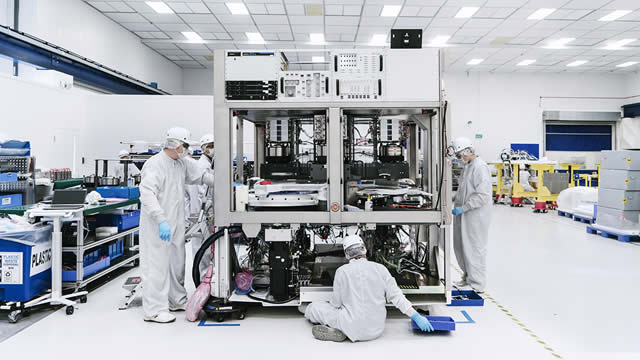
Core Insights - ASML plays a foundational role in advancing AI by providing essential lithography machines necessary for chip manufacturing, particularly in producing advanced AI chips [4][14][17] Company Overview - ASML is the most valuable company in Europe, located in a small city in the southern Netherlands, and is not listed in the S&P 500 [4] - The company has a market capitalization of $430 billion, with a current stock price of $1,111.76 and a gross margin of 52.70% [9] Role in Semiconductor Manufacturing - ASML's extreme ultraviolet (EUV) machines are critical for producing chips with nodes below 7 nanometers, which are essential for advanced AI applications [10][12] - The company has a monopoly on the high-precision machines needed for the production of today's most advanced AI chips, making it a key player in the semiconductor industry [17] Technological Advancements - ASML's EUV machines utilize 13.5nm light for printing features with resolutions unattainable by traditional deep ultraviolet (DUV) machines, enhancing transistor density and performance [12] - The company offers different classes of NXE lithography systems designed for various chip production processes, with high-NA machines providing even greater precision [11][14] Market Position and Future Outlook - ASML is well-positioned to capitalize on the increasing demand for smaller and more powerful AI chips, as its machines are integral to the manufacturing processes of major chipmakers like Nvidia and AMD [16][20] - Approximately 27% of ASML's sales come from servicing its existing equipment, indicating a diversified revenue stream beyond just new machine sales [19] Investment Perspective - ASML is considered a "pick-and-shovel" stock for the AI era, as it benefits from the overall growth in semiconductor demand without being tied to the fortunes of specific chipmakers [2][20]


Asian shares are mixed as steady bond yields, rebound for bitcoin push US stocks higher
ABC News· 2025-12-03 08:21
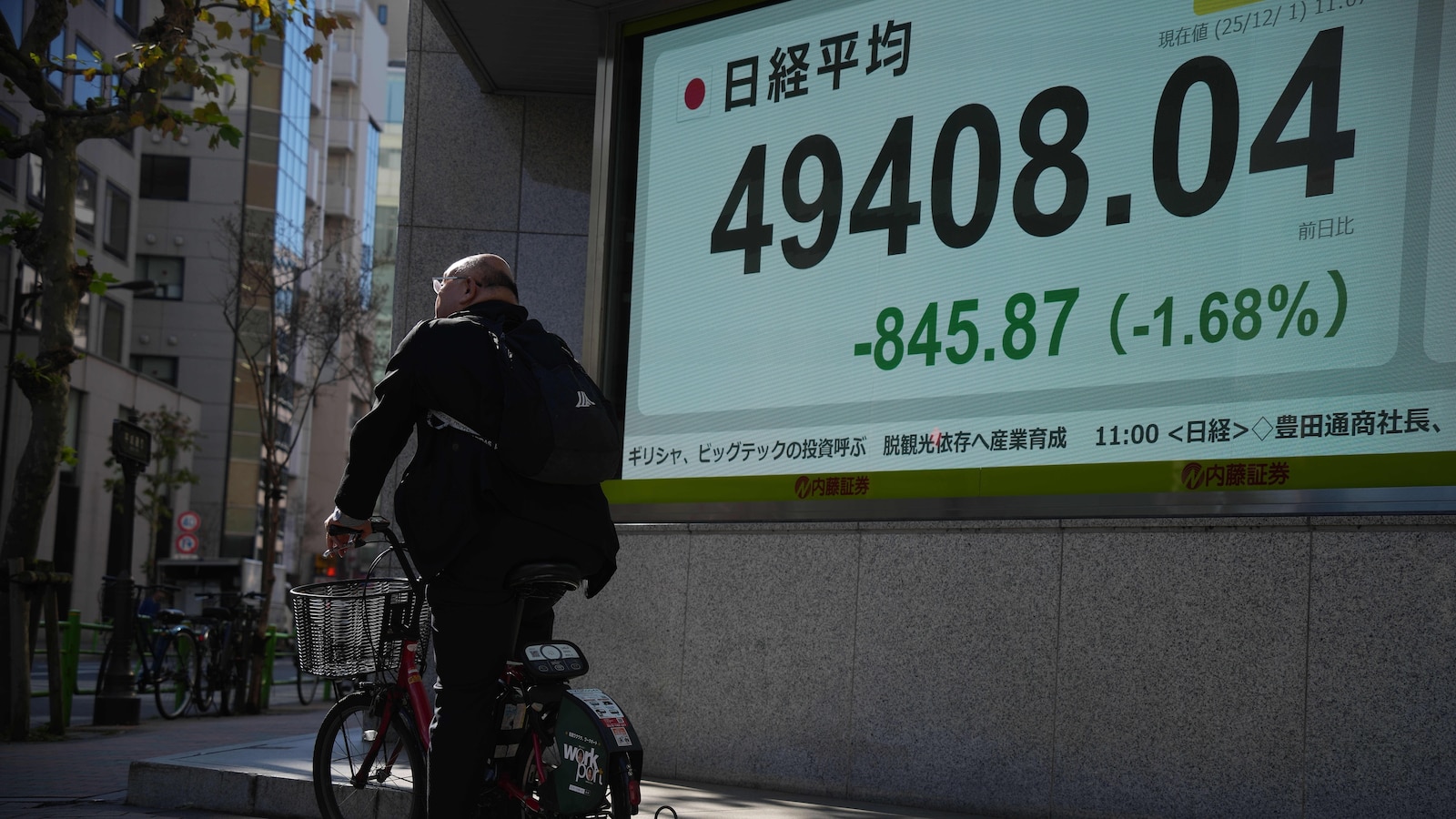
Asian shares are mixed after U.S. stocks held steadier as both bond yields and bitcoin stabilizedA person on a bicycle waits in front of an electronic stock board showing Japan's Nikkei index at a securities firm Monday, Dec. 1, 2025, in Tokyo. (AP Photo/Eugene Hoshiko)BANGKOK -- Asian shares were mixed Wednesday after stocks on Wall Street held steadier as both bond yields and bitcoin stabilized.U.S. futures rose and oil prices edged higher. Tokyo's Nikkei 225 jumped 1.1% to 49,864.68 on big gains for tech ...

Risk sentiment returns to markets, U.S.-Russia talks fall short
Youtube· 2025-12-03 08:02
Market Overview - US stocks closed higher, driven by key AI companies, boosting hopes for a year-end Santa rally [2][19] - Bitcoin surged towards the $94,000 level, recovering from a recent selloff, with notable volatility [20][21] - The VIX, a volatility indicator, has decreased as markets stabilized, with the NASDAQ experiencing a 3% rally over the past two weeks [4][5] AI Industry Dynamics - OpenAI is under pressure as competitors like Google and Anthropic gain ground, with Anthropic preparing for a potential IPO in 2026 [6][7][57] - The competitive landscape in AI is intensifying, leading to concerns about commoditization and reduced profit margins for AI technologies [8][9][10] - OpenAI's CEO issued a "code red" memo, indicating urgency in improving their chatbot product amid rising competition [11][58] Economic Outlook - The macroeconomic environment is perceived as favorable, with equities at all-time highs and credit spreads at 15-year lows, but the probability of sustained perfection is low [28][31] - Inflation is expected to rise due to strong demand and supply chain constraints, with potential implications for central bank policies [32][35] - Japan's inflation is increasing, with corporate profitability rising significantly, indicating a need for higher interest rates [42][44] Geopolitical Factors - Ongoing Russia-Ukraine peace talks have not yielded results, which may have implications for European markets [51][53] - The potential resolution of the Ukraine conflict could positively impact the European economy, but expectations for a quick resolution are low [52][53] Company-Specific Insights - Nissan's CFO highlighted the company's success in China, attributing it to giving local teams maximum autonomy to meet customer demands [66][71] - The company is launching new models in Japan and Europe, aiming to enhance its global relevance [68][72]

全球半导体:尽管三星扩大普通 DRAM 产能,供应短缺仍将持续-Global Semiconductors-Supply Shortage to Persist despite Samsung’s Commodity DRAM Expansion
2025-12-03 02:16
Summary of Conference Call on Global Semiconductors and Samsung Electronics Industry Overview - The semiconductor industry is currently facing a supply shortage, which is expected to persist despite Samsung Electronics' expansion in commodity DRAM production [1][4][6]. Key Company: Samsung Electronics - Samsung Electronics is reallocating 30-40% of its 1anm HBM3E capacity to 1bnm capacity for conventional DRAM due to the higher profitability of conventional DRAM, which has reached 60% [1][2]. - The company is focusing on producing DDR5, LPDDR5X, and GDDR7 memory types as part of this transition [2]. - HBM3E pricing is projected to decline by over 30% next year, prompting Samsung to prioritize conventional DRAM production [2]. Core Insights - Samsung is expected to prioritize migrating legacy nodes of 1znm and below to 1bnm rather than converting 1anm capacity currently allocated to HBM3E production [3]. - If Samsung converts 25kwpm of HBM capacity into 1bnm, it could increase its commodity DRAM capacity by 15%, from 530kwpm to 610kwpm, although actual bit growth will be lower due to the time required for full conversion [3]. - The overall memory supply shortage is anticipated to continue, driven by strong demand for AI inference [6]. Price Projections - Commodity DRAM price growth is projected to moderate in the second half of 2026, while HBM supply shortages may resurface [1][4]. Risks - Potential risks that could impact Samsung's share price include: - Delays in HBM shipment approvals to key customers [9]. - Weaker-than-expected PC sales affecting NAND demand [9]. - Aggressive investments by competitors in memory semiconductors impacting prices [9]. - Intensified competition in the handset market reducing margins for Samsung [9]. - Major appreciation of the Korean won affecting earnings [9]. Valuation - The 12-month target price for Samsung Electronics is set at W170,000, based on a sum-of-the-parts (SOTP) methodology referencing global peers [8]. Conclusion - The semiconductor industry, particularly in the context of Samsung Electronics, is navigating a complex landscape of supply shortages and shifting production priorities, with significant implications for pricing and profitability in the coming years.
The AI frenzy is driving a new global supply chain crisis
Yahoo Finance· 2025-12-03 02:01
Core Insights - The global shortage of memory chips is significantly impacting both artificial intelligence and consumer electronics sectors, leading to soaring prices and supply constraints [6][8][18] Industry Overview - Average inventory levels for DRAM suppliers have decreased from 13-17 weeks in late 2024 to 2-4 weeks in October 2023, indicating a tightening supply chain [1] - The shortage is affecting various types of memory, including flash chips and high-bandwidth memory (HBM), with prices in some segments more than doubling since February 2023 [4][18] - Major tech companies like Nvidia, Google, Microsoft, and Alibaba are competing for limited supplies, which has led to a significant increase in demand for advanced chips [2][5][16] Economic Implications - The memory shortage has escalated from a component-level issue to a macroeconomic risk, potentially slowing AI-driven productivity gains and delaying investments in digital infrastructure [3] - Economists warn that the ongoing supply crisis could contribute to inflationary pressures in economies already grappling with rising prices [3] Company Actions - Companies like Samsung and SK Hynix are expanding production capacity to meet the increased demand for memory chips, although new factories for conventional chips will not be operational until 2027 or 2028 [8][17] - Micron and other firms are facing pressure to fulfill open-ended orders from major tech companies, with some firms reporting that all their chips are sold out for 2026 [16][17] Market Dynamics - The competition from Chinese manufacturers producing lower-end DRAM has prompted South Korean firms to shift focus towards higher-margin products [12] - Price increases have led to warnings from Chinese smartphone makers about potential price hikes of 20-30% for their devices due to rising memory costs [20] Consumer Impact - Retailers in Japan are limiting purchases of memory products to prevent hoarding, and prices for popular memory products have surged significantly [23][24] - Taiwanese laptop maker ASUS has indicated it will adjust pricing in response to the memory component shortages [21] Future Outlook - Analysts predict that the memory shortfall could persist through late 2027, with significant implications for future data center projects and overall market stability [8][17]
X @The Wall Street Journal
The Wall Street Journal· 2025-12-02 23:46
The U.S. will soon get its first mass-market smartphone that folds not just once, but twice with the Samsung Electronics’ Galaxy Z TriFold https://t.co/iEnaN4BcdM ...
Samsung unveils first triple-folding phone ahead of expected Apple launch — but it will cost you
New York Post· 2025-12-02 16:04
Core Viewpoint - Samsung Electronics has launched its first multi-folding smartphone, the Galaxy Z TriFold, to strengthen its position in the competitive foldable smartphone market, which is expected to see intensified competition from Chinese rivals [1][9]. Product Details - The Galaxy Z TriFold is priced at approximately 3.59 million won ($2,440.17) and features a 253.1 millimeter (10-inch) display, which is nearly 25% larger than the Galaxy Z Fold 7 model [2][5]. - The device will be available for sale in South Korea starting December 12, with plans for rollout in China, Singapore, Taiwan, and the UAE within the year, and a potential US launch in the first quarter of next year [4][9]. Market Outlook - Samsung's Executive Vice President, Alex Lim, believes that the foldable market will continue to grow, with the TriFold potentially acting as a catalyst for growth in key segments [3]. - Analysts suggest that the TriFold may serve more as a showcase of new technology rather than a volume-driving flagship, given its status as a first-generation product [7][10]. - The foldable smartphone market is projected to account for less than 2% of the total smartphone market this year, with expectations to rise to under 3% by 2027 [10]. Competitive Landscape - Competition in the foldable smartphone market is increasing, with Huawei having launched the first three-way folding phone and Apple expected to release its first foldable next year [9]. - Samsung's shipment share of the foldable market surged to 64% in the third quarter, up from 9% in the previous quarter, indicating the volatility of market share based on product launch timing [11].


X @The Wall Street Journal
The Wall Street Journal· 2025-12-02 14:22
The U.S. will soon get its first mass-market smartphone that folds not just once, but twice with the Samsung Electronics’ Galaxy Z TriFold https://t.co/TfBfFh2rrA ...