
Rambus

Search documents
美股存储芯片指数收跌超4.7%,1月Sandisk涨约143%,希捷科技、美光、西数都累涨超40%
Ge Long Hui A P P· 2026-01-30 23:52
格隆汇1月31日|周五(1月30日),美股存储芯片与硬件供应链指数收跌4.72%,报103.68点,成分股 西部数据收跌10.12%、希捷科技跌8.71%、Rambus跌6.39%、拉姆研究跌5.93%、应用材料跌5.57%、美 光科技跌4.80%、泰瑞达跌4.30%、Sandisk涨6.85%。1月份,Sandisk累涨142.75%,希捷科技涨 48.04%,美光涨45.36%,西部数据涨45.25%,拉姆研究涨36.38%,应用材料涨25.42%,泰瑞达涨 24.54%,Rambus涨23.88%。 降息赢家指数收跌2.08%,报101.56点,1月份累计上涨3.47%,1月16日美股开盘时曾达到108.47 点。"特朗普关税输家"指数收跌0.11%,报112.94点,1月份累涨2.34%。"特朗普金融指数"收跌0.84%, 报170.38点,1月份累跌1.09%。散户抱团概念股指数/迷因股(meme stock)指数收跌3.65%,报14.13 点,1月份累跌8.08%,1月9日开盘时达到17.09点,随后持续下挫,30日尾盘跌至14.03点。 ...
半导体IP市场,变了
3 6 Ke· 2026-01-30 03:02
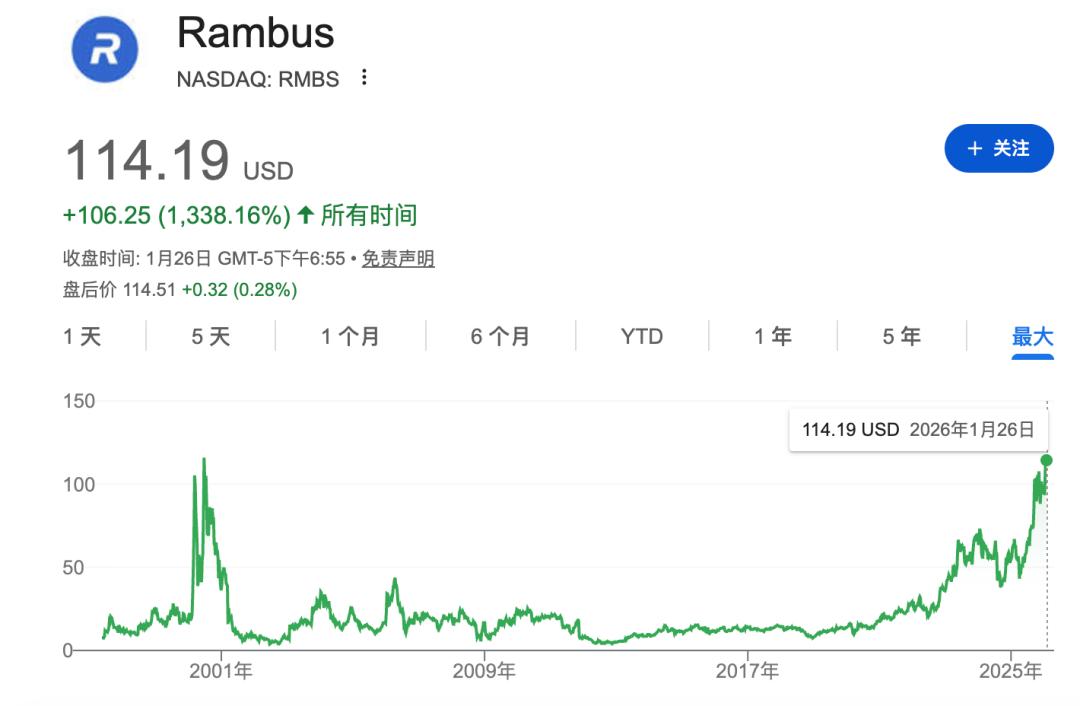
Core Insights - The semiconductor IP market is undergoing significant transformations driven by the rise of generative AI, with companies like Rambus, Synopsys, and Alphawave Semi experiencing drastic changes in their business models and market positions [1] Rambus' Transformation - Rambus has seen its stock price nearly double, reaching approximately $115–125, with a peak of $135, reflecting a nearly 100% increase over the past year due to heightened demand for its technology in the AI era [2][5] - Analysts have raised Rambus' target price to around $120–130, indicating a shift from a reliance on patent licensing to a more central role in AI and data center infrastructure [5] - Rambus has strategically adjusted its product line, selling some assets to focus on high-performance memory subsystems and security IP, which has contributed to its growth [5][6] Market Dynamics and Demand - The current challenge in AI computing is not the speed of GPUs but the data transfer capabilities, with Rambus' DDR5 RCD interface chips being essential for ensuring efficient data flow [6] - Rambus holds over 40% market share in the DDR5 RCD chip segment, which is critical as AI servers transition to DDR5 standards [6] - The company anticipates significant growth in the MRDIMM market, projecting to capture over 40% of this $600-700 million segment [7] Synopsys' Strategic Shift - Synopsys' decision to sell its ARC processor business reflects a shift towards AI-enhanced EDA tools and a focus on high-margin software solutions [8][9] - The sale allows Synopsys to concentrate on AI infrastructure, moving away from the competitive landscape of general-purpose CPU architectures [9][10] - The acquisition of Ansys strengthens Synopsys' capabilities in system-level simulation, positioning it to better serve clients like NVIDIA and Google [9] Alphawave Semi's Acquisition - Alphawave Semi, initially focused on IP supply, transitioned to a full SoC design capability and was acquired by Qualcomm, marking the end of its independent status [11][12] - The acquisition is strategic for Qualcomm as it seeks to enhance its position in high-performance computing and AI infrastructure, leveraging Alphawave's expertise in high-speed interconnect technology [12][13] - The disappearance of Alphawave as an independent entity highlights the increasing difficulty for mid-sized IP companies to survive in the competitive landscape dominated by larger players [13] Industry Trends - The semiconductor industry is witnessing a shift from a focus on CPU performance to the importance of data pathways and interconnect technologies, as AI systems require efficient data flow for optimal performance [14][15] - The market share of processor IP is declining, while interface IP is expected to grow significantly, potentially reaching over 25% of the IP market by 2026 [15][16] - The competitive focus is shifting towards interconnect and system-level capabilities, indicating a structural reorganization within the semiconductor IP market [16]

半导体IP市场,变了!
半导体行业观察· 2026-01-30 02:43
Core Insights - The semiconductor IP market has undergone significant changes due to the rise of generative AI, leading to a re-evaluation of companies within the industry [2] - Rambus has seen its stock price nearly double, becoming a crucial player in the AI server supply chain, while Synopsys divested its ARC processor business, and Alphawave Semi was acquired by Qualcomm [2][4][12] Group 1: Rambus' Transformation - Rambus has shifted from a "patent troll" reputation to a key player in high-speed interface technology, with its stock price reaching approximately $115–125, and peaking at $135, reflecting nearly 100% growth over the past year [4][6] - Analysts have raised Rambus' target price to around $120–130, recognizing its transition from a patent-dependent model to a core player in AI and data center infrastructure [6] - Key products driving Rambus' growth include DDR5 RCD interface chips, HBM4 controller IP, and MRDIMM, with the company holding over 40% market share in these segments [6][7] Group 2: Synopsys' Strategic Shift - Synopsys sold its ARC processor business to GlobalFoundries, marking a shift from general-purpose computing to focusing on AI-enhanced EDA tools and system-level simulation capabilities [8][10] - The decline in demand for traditional CPU IP, like ARC, is attributed to the rise of RISC-V architecture, which allows for customizable instruction sets without high licensing fees [9][10] - Synopsys aims to capitalize on AI infrastructure by investing in AI-enhanced EDA and merging with Ansys to strengthen its simulation capabilities [9][10] Group 3: Alphawave Semi's Acquisition - Alphawave Semi, initially focused on IP supply, transitioned to a full SoC design capability and was acquired by Qualcomm, ending its independent status [12][13] - The acquisition is strategic for Qualcomm as it seeks to enter the high-performance computing and AI data center markets, leveraging Alphawave's expertise in UCIe and high-speed interfaces [12][13] - The acquisition highlights the increasing difficulty for mid-sized IP companies to survive independently in the competitive landscape dominated by larger players [13] Group 4: Market Dynamics and Trends - The semiconductor IP market is experiencing a structural shift, with value moving from core processors to surrounding technologies such as interfaces and connectivity solutions [16][17] - The market share of processor IP has declined from 57.6% in 2017 to below 45% by 2025, while interface IP is expected to grow to over 25% of the market by 2026 [17] - The focus of competition is shifting towards interface, interconnect, and system-level capabilities, with interface IP segments growing at a compound annual growth rate (CAGR) exceeding 20% [17]
What Rambus Has to Do to Keep Its Stock Soaring
The Motley Fool· 2026-01-25 17:07
Core Insights - Rambus is experiencing renewed investor interest due to its potential role in artificial intelligence (AI) development, leveraging its intellectual property portfolio to enhance AI capabilities [2][4][6] Company Overview - Rambus has a history of innovation in high-performance computing, particularly in memory technology, which is crucial for meeting the demands of evolving AI models [4][6] - The company has diversified its technology applications beyond memory chips, focusing on power management, interconnects, security, and clocking, particularly for data center applications [5] Growth Prospects - The demand for high-performance semiconductor chips driven by AI is a significant growth factor for Rambus, as it continues to innovate and improve memory performance to keep pace with processor speeds [4][7] - Rambus' extensive intellectual property portfolio provides a strong foundation for developing new products and maintaining its competitive edge in the tech sector [7] Financial Metrics - Rambus currently has a market capitalization of $12 billion, with shares trading at approximately 18 times revenue and nearly 55 times earnings, indicating a higher-risk profile compared to other companies [8] - The company's gross margin stands at 75.75%, reflecting its strong profitability despite the high valuation metrics [8] Investment Considerations - While Rambus has shown adaptability and potential for future growth, its current stock price may present challenges for new investments, suggesting a cautious approach for inclusion in diversified portfolios [9]


Rambus Q4 Preview: Further Tailwinds To Come, Keep Holding It (NASDAQ:RMBS)
Seeking Alpha· 2026-01-22 18:08
Core Viewpoint - Rambus Inc. (RMBS) has experienced a significant increase in its share price, rising over 36% in the first three weeks of 2026, indicating strong market performance and investor interest [1]. Company Summary - Rambus Inc. has seen its share price skyrocket, reflecting positive market sentiment and potential growth opportunities for investors [1].
Rambus Q4 Preview: Further Tailwinds To Come, Keep Holding It
Seeking Alpha· 2026-01-22 18:08
Core Viewpoint - Rambus Inc. (RMBS) has experienced a significant increase in its share price, rising over 36% in just three weeks of 2026, indicating strong market interest and potential growth opportunities for investors [1]. Company Summary - Rambus Inc. has seen its share price skyrocket, reflecting positive investor sentiment and market performance [1].

Rambus: The Plumbing And Security AI Play Most Pass Off (NASDAQ:RMBS)
Seeking Alpha· 2026-01-15 15:23
Core Insights - Rambus Inc. (RMBS) is highlighted as an undervalued company in the AI sector, suggesting it deserves more attention from the market [1]. Company Analysis - Rambus Inc. operates in the technology sector, specifically focusing on AI, which is currently experiencing significant growth opportunities [1]. - The analyst emphasizes a rigorous research approach, indicating a high standard for investment decisions, particularly in tech, SaaS, and cloud businesses [1]. Industry Trends - The technology sector, especially AI, SaaS, and cloud businesses, is characterized by active developments and frequent news updates, presenting numerous investment opportunities [1]. - The energy and minerals sectors are also noted for their growth potential, indicating a diversification of interest within the analyst's research focus [1].

Rambus: The Plumbing And Security AI Play Most Pass Off
Seeking Alpha· 2026-01-15 15:23
Core Insights - Rambus Inc. (RMBS) is highlighted as an undervalued company in the AI sector, suggesting it deserves more attention from the market [1] Company Analysis - The analyst has over a decade of experience in financial markets, primarily in hedge funds, indicating a strong background in investment analysis [1] - The focus on technology sectors, particularly SaaS and cloud businesses, along with recent interest in energy and minerals, suggests a diversified investment approach [1] - The analyst emphasizes rigorous research standards, which may enhance the credibility of insights regarding Rambus Inc. [1]
Evaluating Intel Against Peers In Semiconductors & Semiconductor Equipment Industry - Intel (NASDAQ:INTC)
Benzinga· 2026-01-02 15:01
Core Insights - The article provides a comprehensive comparison of Intel against its competitors in the Semiconductors & Semiconductor Equipment industry, focusing on financial metrics, market position, and growth prospects to offer insights for investors [1] Company Overview - Intel is a leading digital chipmaker specializing in microprocessors for personal computers and data centers, holding a significant market share in both PC and server markets [2] - The company aims to revitalize its chip manufacturing business and develop advanced products within its Intel Products segment [2] Financial Metrics Comparison - Intel's Price to Earnings (P/E) ratio is 615, significantly higher than the industry average, indicating potential overvaluation [3] - The Price to Book (P/B) ratio is 1.65, slightly below the industry average, suggesting possible undervaluation [3] - Intel's Price to Sales (P/S) ratio is 3.04, which is lower than the industry average, indicating potential undervaluation based on sales performance [3] - The Return on Equity (ROE) for Intel is 3.98%, which is below the industry average, indicating inefficiency in generating profits from equity [3] - Intel's EBITDA stands at $7.85 billion, which is below the industry average, suggesting lower profitability [3] Profitability and Growth - Intel's gross profit is $5.22 billion, indicating lower revenue after production costs compared to the industry average [7] - The revenue growth for Intel is 2.78%, significantly lower than the industry average of 34.59%, indicating a slowdown in sales expansion [7] Debt to Equity Ratio - Intel has a debt-to-equity ratio of 0.44, which is lower than its top four peers, suggesting a more favorable balance between debt and equity [9]


2025年中国高速互连芯片行业政策、产业链、市场规模、竞争格局及发展趋势研判:行业正处于快速发展阶段,预计2030年中国市场规模超140亿美元[图]
Chan Ye Xin Xi Wang· 2025-12-31 02:11
Core Insights - The high-speed interconnect chip market is experiencing exponential growth driven by the surge in computing power demand due to the AI wave, particularly the rapid development of large models [1][3] - The global high-speed interconnect chip market is projected to reach $15.5 billion in 2024, with China's market size estimated at $3.875 billion, accounting for approximately 25% of the global market [1][5] - By 2030, the global market is expected to grow to $49 billion, with China's market projected to reach $14.7 billion, increasing its share to about 30% [1][5] Industry Definition and Classification - High-speed interconnect chips are essential components for enabling high-speed data exchange in data centers, servers, and computers, addressing bottlenecks in data transmission amid the ongoing upgrade of intelligent computing systems [2][3] - These chips are categorized into communication, computing, and storage types based on application areas, and further classified into memory interconnect chips, PCIe/CXL interconnect chips, and Ethernet/optical interconnect chips based on technology [2] Current Development Status - The demand for high-speed interconnect chips is rapidly increasing due to the AI boom, with the global market size expected to reach $15.5 billion in 2024, including $1.2 billion for memory interconnect chips, $2.3 billion for PCIe/CXL interconnect chips, and $12 billion for Ethernet/optical interconnect chips [3][4] - By 2030, the market is projected to grow to $49 billion, with memory interconnect chips reaching $5 billion, PCIe/CXL interconnect chips $9.5 billion, and Ethernet/optical interconnect chips $34.5 billion [3] Industry Chain - The industry chain consists of upstream semiconductor materials and IP core design, midstream chip design and production, and downstream applications primarily in servers, communication, data centers, and AI [5][6] - The demand for high-speed interconnect chips in AI servers is a key driver for market expansion [5][7] Policy Environment - The chip industry is receiving significant attention and support from national policies in China, which recognize high-speed interconnect chips as a core component of computing infrastructure [9] - Various policies have been implemented to promote the development of the high-speed interconnect chip industry, including the "Computing Power Interconnection Action Plan" and the "2025-2026 Electronic Information Manufacturing Industry Growth Action Plan" [9] Competitive Landscape - Major players in the high-speed interconnect chip market include companies like Lanqi Technology, Renesas Electronics, Rambus, Muxi Technology, and Micron Technology [11][12] - The market is highly concentrated, with the top three companies holding a combined market share of 93.4% in 2024, where Lanqi Technology leads with a 36.8% share, followed by Renesas Electronics at 36% and Rambus at 20.5% [12] Development Trends - The high-speed interconnect chip industry is witnessing a demand explosion driven by advancements in AI, big data, and other technologies, leading to continuous protocol iterations, technological breakthroughs, and an expanding range of application scenarios [13][14] - The market is expected to see a concentration towards leading companies as the industry evolves [13]

