Red Hat

Search documents
X @Bloomberg
Bloomberg· 2025-10-22 20:18
IBM reported disappointing revenue in its closely watched Red Hat unit https://t.co/H6c9E5S6PB ...
NetApp Boosts ONTAP Security With OPSWAT Integration for Safer Data
ZACKS· 2025-10-20 14:16
Core Insights - NetApp, Inc. has integrated OPSWAT's MetaDefender Storage Security with NetApp ONTAP to enhance file security across various environments, including on-premises, cloud, and hybrid setups [1] - The integration aims to provide multi-layered protection against hidden malware, macro threats, sensitive data leaks, and file-borne vulnerabilities without disrupting existing workflows [1][2] Security Enhancements - The collaboration features OPSWAT's technologies such as MetaDefender Multiscanning for threat identification, Deep CDR for file sanitization, Proactive DLP for data leak prevention, vulnerability assessment, and adaptive sandboxing for dynamic threat analysis [2] - The solution supports SMB, NFS, and SFTP, ensuring flexibility for integration with existing infrastructure [3] Strategic Partnerships - NetApp's partnerships, including an expanded alliance with Red Hat, focus on accelerating the adoption of Red Hat OpenShift Virtualization, simplifying IT modernization, and aiding cloud-native workload migration [5] - A partnership with Alphabet Inc. has led to new capabilities for Google Cloud NetApp Volumes, enhancing performance and reducing complexity for cloud storage workloads, particularly those driven by AI [6] Financial Outlook - For Q2 of fiscal 2026, NetApp anticipates revenues between $6.625 billion and $6.875 billion, with a projected non-GAAP EPS of $1.84 to $1.94 [7] - The company faces competition from major players like HP Inc., Dell, IBM, and Pure Storage [7]

Inside Bobby Leibrock’s first 100 days as ACI Worldwide CFO
Yahoo Finance· 2025-10-16 10:00
Core Insights - ACI Worldwide is perceived as undervalued and underappreciated despite its long-standing service in the banking and payments industry, with a cultural reboot underway to modernize and drive growth [2][5] - The new CFO, Bobby Leibrock, emphasizes the importance of transparency and communication in establishing credibility with investors and employees during his initial days [7][8] - ACI is focusing on leveraging technology, particularly AI, to enhance predictive and analytical capabilities within its finance function [19][20][21] Company Overview - ACI Worldwide has been serving banks and customers globally for nearly 50 years, showcasing impressive scale but lacking recognition from investors and customers [2] - The company is currently undergoing a cultural transformation aimed at growth and modernization, reminiscent of Red Hat's evolution in the past [2][5] Leadership and Strategy - Bobby Leibrock brings two decades of experience from IBM, including leadership roles in finance and operations, which positions him well to guide ACI through its transformation [6][9] - The CFO's approach includes engaging with investors and analysts to gather feedback, which informs communication strategies and prioritizes transparency [7][8] Operational Focus - ACI is in the midst of a three-year strategic plan and budget cycle, indicating a fast-paced environment with no downtime for the new leadership [8] - The CFO believes in the importance of operational excellence, which encompasses both quantitative measures like reliable reporting and qualitative influence in decision-making [23][25] Technology Integration - ACI is committed to enhancing its technology foundation, particularly through AI, to improve decision-making and operational efficiency [19][20] - The focus is on using technology not just for automation but to free up resources for strategic thinking, thereby enhancing the overall effectiveness of the finance function [21][25]

Quantum Computing Can Generate $1 Trillion Economic Value by 2035: 2 Quantum Artificial Intelligence (AI) Stocks to Buy Now
The Motley Fool· 2025-10-02 00:00
Core Insights - Quantum computing represents a high-risk, high-reward investment opportunity, potentially surpassing the impact of artificial intelligence [1] - The combination of quantum computing and AI is projected to generate over $1 trillion in economic value by 2035 [2] Company Analysis: International Business Machines (IBM) - IBM is transitioning from its traditional mainframe and enterprise software business to become a leader in quantum computing, achieving a significant milestone with the deployment of IBM Quantum System Two in Japan [3] - The company has accumulated nearly $1 billion in bookings for its quantum business from 2017 to early 2025, indicating a shift from research to monetization [4] - IBM aims to demonstrate quantum advantage by 2026 and plans to reveal the first error-corrected quantum computer by 2028, with a goal of building a large-scale, fault-tolerant quantum computer by 2029 [5] - The open-source quantum computing software ecosystem, Qiskit, is designed to create a loyal customer base and facilitate practical quantum applications [6] - In Q2 of fiscal 2025, IBM reported $17 billion in revenue (5% year-over-year increase) and $2.80 in non-GAAP earnings per share (15% year-over-year increase), with $4.8 billion in free cash flow [7] - The hybrid infrastructure business, particularly the IBM Z platform, saw a revenue increase of 67% year-over-year, driven by hybrid cloud architecture adoption for AI workloads [8] - IBM's forward P/E ratio is 21.9, significantly lower than its five-year average of 38.7, making it an attractive investment option [9] Company Analysis: IonQ - IonQ is a pure-play quantum hardware company utilizing trapped-ion qubits, which are believed to offer cost and power advantages over superconducting qubits [11][12] - The trapped-ion system provides more stable qubits, reducing error rates, and IonQ is experiencing commercial success through partnerships with organizations like AIST G-QuAT and KISTI [13][14] - In Q2 of fiscal 2025, IonQ's revenues increased by 81.8% year-over-year to $20.7 million, exceeding revenue guidance [15] - IonQ has a strong balance sheet with $1.6 billion in pro forma cash following a $1 billion equity raise, and it expects fiscal 2025 revenues between $82 million and $100 million [15] - The company aims to achieve 800 logical qubits by 2027 and 80,000 by 2030, indicating rapid progress in addressing commercial challenges across various industries [16] - Despite facing execution risks and not yet being profitable, IonQ offers significant upside potential in the quantum computing space, albeit with a high price-to-sales ratio of over 380x [17]



MERGE Growth Trajectory Accelerates with Appointment of Former Meta Content Leader Cait Vlastakis Smith to Head Creative Strategy
Businesswire· 2025-10-01 14:00
Core Insights - MERGE has appointed Cait Vlastakis Smith as Executive Vice President of Creative Strategy, aiming to enhance its creative and content capabilities across various mediums in the age of AI [2][3] - Cait brings extensive experience from Meta, where she led content and UX teams, and has a strong background in data-driven content strategy and experience design [2][4] - The appointment is part of a broader strategy to integrate technology and creativity, enhancing personalized consumer experiences at scale [3][6] Company Overview - MERGE is a marketing and technology agency focused on the intersection of health and wellness, leveraging human insight, creativity, and AI to create personalized experiences [7][8] - The agency has over 750 specialists across multiple cities in the U.S. and partners with leading brands such as Abbott, GE Healthcare, and American Express [8] Leadership Changes - Cait's appointment follows several other executive announcements at MERGE this year, including the hiring of Heidi West as Chief Revenue Officer and John Bracey as Chief Data and Performance Officer [6][11] - These strategic hires are aimed at strengthening MERGE's mission of integrated growth and innovation [11]



IP Fabric ServiceNow Extension Improves and Automates CMDB Accuracy and Dependency Mapping
Globenewswire· 2025-09-24 13:00
BOSTON, Sept. 24, 2025 (GLOBE NEWSWIRE) -- IP Fabric, the Automated Network Assurance Platform, today announced a new ServiceNow® extension that ensures accurate Configuration Management Database (CMDB) records and delivers actionable dependency mapping between network infrastructure and business services. By connecting directly to the ServiceNow API, IP Fabric provides a continuously validated source of truth for enterprise IT teams. Across industries, up to 40 percent of an enterprise CMDB is incomplete a ...


Top 10 Cloud Trends You Can’t Afford to Ignore in 2026
Medium· 2025-09-24 03:32
Core Insights - The article discusses the top cloud trends expected to shape the industry by 2026, emphasizing the necessity of hybrid and multi-cloud strategies, cloud-native development, AI integration, and other emerging technologies. Group 1: Hybrid and Multi-Cloud Strategies - By 2026, 75% of organizations are projected to adopt hybrid or multi-cloud strategies, enhancing flexibility, scalability, and risk mitigation [1][2] - These strategies help avoid vendor lock-in and optimize workloads across various environments [1] Group 2: Cloud-Native Development and Microservices - By 2026, 90% of global organizations are expected to embrace cloud-native development, which promotes modular and scalable application structures [3] - Microservices enable rapid innovation and deployment, allowing businesses to scale applications based on demand without system disruption [4] Group 3: AI-Powered Cloud Services - The integration of AI with cloud computing is anticipated to grow by 25% annually by 2026, driven by advancements in machine learning and data analytics [5] - Organizations aim to leverage AI for enhanced customer experiences and operational efficiency [5][6] Group 4: Serverless Computing - The serverless computing market is projected to reach $21.1 billion by 2026, with a compound annual growth rate of 22% [7] - This model simplifies deployment and reduces operational complexity, allowing developers to focus on application development [8] Group 5: Edge Computing - The edge computing market is expected to be valued at $43 billion by 2026, facilitating data processing closer to its source [9] - This trend is crucial for industries requiring low-latency responses, such as manufacturing and healthcare [9] Group 6: Cloud Security and Zero Trust Architectures - The shift to Zero Trust security models is expected to dominate cloud security strategies by 2026, addressing sophisticated cyber threats [10] - Investing in cloud-native security solutions will be a top priority for businesses [10] Group 7: Quantum Cloud Services - Quantum cloud services are anticipated to significantly impact the industry by 2026, allowing organizations to access quantum computing power remotely [11] - Major companies are developing quantum cloud platforms for various industries [11][12] Group 8: Sustainable Cloud and Green Computing - Green cloud computing is projected to increase by 40% over the next decade, driven by consumer demand for environmentally-friendly practices [14] - Companies are focusing on using renewable energy sources to reduce their carbon footprints [14] Group 9: Cloud Integration and Interoperability - Advanced cloud interoperability platforms will be essential for integrating various cloud solutions and legacy systems by 2026 [15] - Seamless integration is crucial for digital transformation and maximizing cloud investments [16] Group 10: Cloud-Enabled Automation and DevOps - Cloud-enabled automation and DevOps practices will reshape IT operations, improving productivity and reducing human error [17] - Organizations will benefit from tools that facilitate continuous integration and delivery, leading to quicker time-to-market [18]


最受欢迎的开源大模型推理框架 vLLM、SGLang 是如何炼成的?
AI科技大本营· 2025-09-24 02:01
Core Viewpoint - The article discusses the development stories of vLLM and SGLang, two prominent open-source inference engines for large language models (LLMs), highlighting their innovations, community engagement, and performance metrics. Group 1: LLM Inference Challenges - The core challenge of LLM inference lies in deploying models with hundreds of billions of parameters under strict constraints of latency, throughput, and cost [3] - The inference process involves applying learned knowledge to new data, which requires efficient computation and memory management [2][3] Group 2: vLLM Development - vLLM originated from a 2023 paper on PagedAttention, which innovatively applied operating system techniques for memory management, significantly enhancing throughput [7][8] - vLLM demonstrated remarkable performance improvements, handling up to 5 times the traffic and increasing throughput by 30 times compared to previous backends [9] - The project quickly evolved from a research initiative to a community-driven open-source project, amassing over 56,000 stars on GitHub and engaging thousands of developers [15][9] Group 3: SGLang Development - SGLang was developed from the paper "SGLang: Efficient Execution of Structured Language Model Programs," featuring RadixAttention for optimized performance [12] - SGLang retains the KVCache from previous requests to reduce computation during the prefill phase, showing significant performance advantages over traditional inference engines [12] - Although SGLang's community is smaller than vLLM's, it has over 2,000 participants and has shown rapid iteration and growth [13] Group 4: Community Engagement - vLLM has a robust community with over 12,000 participants in issues and pull requests, while SGLang's community is less than half that size [15][13] - Both projects have faced challenges in managing a growing number of issues and pull requests, with vLLM generally responding faster than SGLang [13] Group 5: Performance Metrics and Comparisons - vLLM and SGLang have both integrated advanced features like Continuous Batching and various attention mechanisms, leading to significant performance enhancements [29] - The competition between these two projects has intensified, with both claiming performance leadership in their respective releases [26] Group 6: Future Trends and Developments - The article notes that as the performance race heats up, both vLLM and SGLang are focusing on reproducible methods and real-world metrics rather than just benchmark results [26] - The trend indicates a convergence in model architectures and features among leading inference engines, with a shift in competition towards factors beyond performance [29] Group 7: Investment and Support - Both projects have attracted attention from investment firms and open-source foundations, with vLLM receiving support from a16z and SGLang being recognized in the PyTorch ecosystem [31][40]

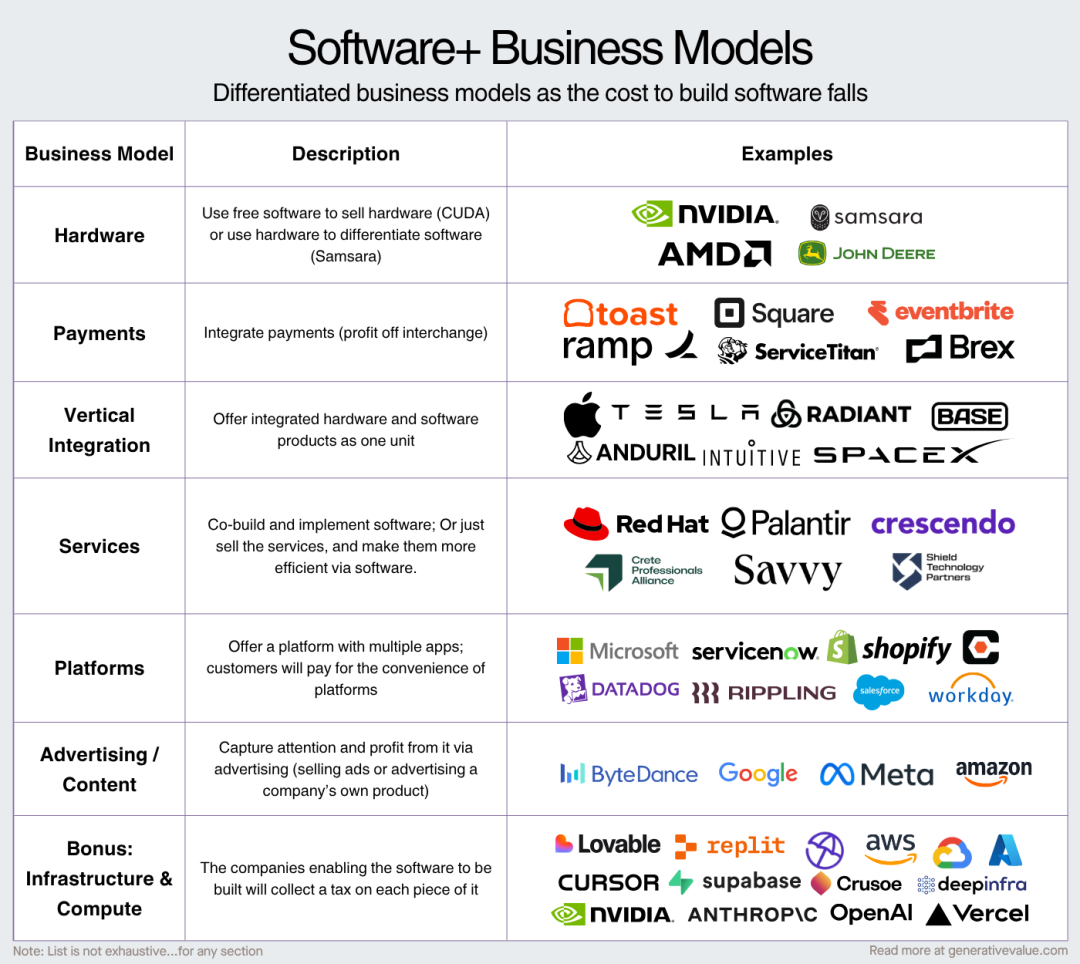
当AI时代软件成本趋于零时,商业模式会有哪些变化?
Hu Xiu· 2025-09-04 00:26
Group 1 - The software business model is undergoing a significant transformation, with AI tools drastically reducing software development costs, leading to a fundamental restructuring of the software industry's commercial logic [1][3][36] - As software creation costs approach zero, traditional software sales models become unsustainable, necessitating differentiation in other areas [1][3][36] - Historical parallels are drawn, indicating that the current shift resembles the free software movement of the 1990s, which began with companies like Red Hat [5][48] Group 2 - The decline in software development costs will impact the distribution of value within the industry, making it harder to create and maintain technological differentiation [3][41] - Companies are likely to adopt various business models, including hardware differentiation, vertical integration, and service-oriented approaches, to adapt to the changing landscape [2][10][12] Group 3 - Hardware is becoming a core differentiator in the new software landscape, with companies like Nvidia successfully using free software to enhance their hardware offerings [7][9] - The trend of vertical integration is expected to rise, allowing companies to control user experiences more effectively and innovate within their sectors [10][12] Group 4 - Service models are evolving, with companies needing to ensure software adoption and optimal usage through human labor integration [13][16] - The payment model is highlighted as a way to integrate software into existing financial infrastructures, allowing companies to profit without charging directly for software [19][20] Group 5 - Platform strategies are gaining importance, as companies seek to provide integrated solutions that simplify user experiences and reduce the management burden of multiple software tools [23][28] - Advertising models are also emerging, where companies leverage software to capture attention and monetize it, similar to Google and Facebook [29][30] Group 6 - The infrastructure model is becoming crucial, as companies providing the foundational services for software development will capture significant value in the AI era [32][34] - The shift towards free software may lead to a dual-track market, where low-risk applications dominate with free models, while high-risk, complex applications retain traditional pricing structures [45][46] Group 7 - The implications of these changes extend to talent needs and organizational structures, requiring companies to build multidisciplinary teams and adapt to new roles [51][53] - Investors and entrepreneurs must rethink traditional metrics for evaluating software companies, as new business models may not align with conventional SaaS indicators [55][59] Group 8 - The future of the software industry will depend on understanding user needs and building sustainable business models, rather than merely focusing on coding skills [60][61] - The barriers to software development are diminishing, allowing more individuals to create software and businesses, which will intensify competition in the market [61][62]

Trimble Announces Executive-Level Leadership Changes
Prnewswire· 2025-08-18 10:30
Company Leadership Changes - Trimble announced the retirement of Chief Accounting Officer (CAO) Julie Shepard in early 2026 after over 18 years of service, with Kenny Bement appointed as the new CAO effective September 2025 [1] - Julie Shepard and Kenny Bement will collaborate for six to eight months to ensure a smooth transition, with Shepard continuing to support the auditor transition for the 2025 financial statements [1] New Appointments - Kenny Bement brings over two decades of experience in financial reporting, controls, compliance, and finance operations, having previously served as CAO for multiple companies and worked at the Financial Accounting Standards Board [2] - Jim Palermo has been hired as Chief Information Officer (CIO), a newly created position aimed at enhancing IT infrastructure to support Trimble's digital transformation efforts [3] Strategic Focus - The company aims to simplify and focus its operations to deliver on its "Connect and Scale" strategy, with leadership changes expected to support this initiative [4] - Phil Sawarynski, CFO at Trimble, acknowledged Julie Shepard's significant contributions, particularly in transitioning to subscription licensing models [4] Company Overview - Trimble is a global technology company that integrates the physical and digital worlds, driving innovation in various essential industries such as construction, geospatial, and transportation [5]