
Unilever

Search documents
CNBC's UK Exchange newsletter: Compass shifts its trading to dollars — and it might not be the last
CNBC· 2026-02-11 06:47
Company Overview - Compass is a leading global contract caterer, serving 5.5 billion meals annually across more than 25 countries, and is recognized as a well-managed business [2] - The company derives approximately 75% of its revenues in U.S. dollars, highlighting its international operations [4] Currency Change Announcement - Compass announced it will change the currency of its share trading from sterling to U.S. dollars effective April 1, 2024, to align its trading currency with its reporting currency, thereby reducing foreign exchange volatility [1] - This move is part of a broader trend among British companies, with many now reporting in currencies other than sterling [8] Industry Context - The change in trading currency follows a recent adjustment in FTSE Russell's membership rules, allowing companies trading in dollars or euros to be considered for inclusion in the FTSE U.K. Index Series [5] - Other major companies, such as InterContinental Hotels Group, have also adopted this practice, indicating a shift in how British firms operate in global markets [6] Historical Perspective - The trend of companies reporting in foreign currencies is not new, with major firms like HSBC, AstraZeneca, and Shell having transitioned to dollar reporting in recent years [8][11] - Historically, Avis Europe was an early adopter of non-sterling reporting, having faced challenges in the past when attempting to report in the European Currency Unit [9][10] Market Reactions - The announcement from Compass has sparked discussions about the potential for more U.K. companies to follow suit and possibly list on the New York Stock Exchange, reflecting a growing trend of British firms seeking to align with global financial practices [4][13]



Edgewell Personal Care Company's Financial Performance and Strategic Moves
Financial Modeling Prep· 2026-02-10 01:00
Core Insights - Edgewell Personal Care Company reported a Q1 fiscal 2026 GAAP EPS of -$1.41, impacted by the divestiture of its Feminine Care business, while adjusted EPS from continuing operations was -$0.16, outperforming the Zacks Consensus Estimate of -$0.18, resulting in an earnings surprise of 11.11% [1] - Revenue for the period was $422.8 million on a continuing operations basis, a 1.9% year-over-year increase, but below the Zacks Consensus Estimate of approximately $481.3 million, representing a 12.15% miss [2] - The company completed the divestiture of its Feminine Care business to Essity for $340 million, which is seen as a strategic move to focus on core areas and strengthen its balance sheet [3] Financial Performance - On a consolidated basis, net sales were $486.8 million, reflecting a 1.8% increase from the prior year, while organic net sales decreased by 0.5% on a continuing operations basis [2] - The company has exceeded consensus revenue estimates only once in the past four quarters, indicating ongoing challenges in meeting market expectations [2] - Financial ratios post-divestiture show a negative trailing P/E ratio of approximately -23.96, a P/S ratio of 0.42, a debt-to-equity ratio of 1.05, and a current ratio of 2.12, suggesting solid short-term financial health [5] Strategic Developments - The divestiture of the Feminine Care business is viewed as a pivotal milestone in the company's transformation, positioning Edgewell as a more focused and agile organization [3] - The company operates in a competitive consumer products industry, facing rivals such as Procter & Gamble and Unilever, and its Q1 performance modestly exceeded internal expectations for organic net sales, adjusted EPS, and adjusted EBITDA [4]

Huntsman (HUN) Climbs 13% Ahead of Earnings
Yahoo Finance· 2026-02-04 14:52
Core Viewpoint - Huntsman Corp. (NYSE:HUN) has shown significant stock performance, surging 13.07% to close at $12.98 ahead of its earnings report for Q4 and full-year 2025 [1]. Financial Performance - Huntsman is set to release its financial highlights on February 18, targeting adjusted EBITDA in the range of $25 million to $50 million for Q4, impacted by an unplanned outage at its Rotterdam facility [2]. - The outage is expected to result in a $10 million negative impact on the company's fourth quarter adjusted EBITDA [3]. Market Position - Huntsman Corp. is recognized as a global producer of differentiated and specialty chemicals, serving notable clients such as BMW, GE, Chevron, Procter & Gamble, Unilever, and Walkaroo [3]. - Recent price targets for Huntsman stock have been set at $13 and $12 by RBC and UBS, respectively, although both firms maintain "sector perform" and "neutral" ratings [4].

Freshpet Strengthens Leadership Team with Strategic Appointments Across Finance and Supply Chain
Globenewswire· 2026-02-04 13:00
Leadership Appointments - Freshpet, Inc. has appointed John O'Connor as Chief Financial Officer effective February 9, 2026, and Ana Lopez as Senior Vice President of Supply Chain effective February 2, 2026 [2][3] - O'Connor succeeds Ivan Garcia, who served as Interim CFO since October 2025 and will transition to Senior Vice President of Finance [2][3] Leadership Experience - John O'Connor brings over 20 years of financial leadership experience, particularly in animal health, having previously worked at Zoetis and Thrive Pet Healthcare [4] - Ana Lopez has over 20 years of global supply chain leadership experience, most recently at Unilever, and has held senior roles at Johnson & Johnson [5] Company Outlook - Freshpet has reaffirmed its guidance for fiscal 2025, with financial results for the fourth quarter and full year expected to be reported on February 23, 2026 [3]


How to choose profit for people and planet | Verena Kaiser | TEDxHM
TEDx Talks· 2026-02-02 17:08
[music] [applause] [applause] Hi, my name is Vina. As a professor for responsible innovation, I ask my students every semester why they are here studying business. Some say they simply had no clue what else to do.Sounds familiar. Others say they want to make an awful lot of money later. And then there are those who claim they want to make a change for society or the environment and that they're not sure whether they are right here at a business school or whether they should go to the social science departme ...

Big Food gets leaner with divestitures and breakups as consumers turn away from packaged snacks
CNBC· 2026-01-31 13:00
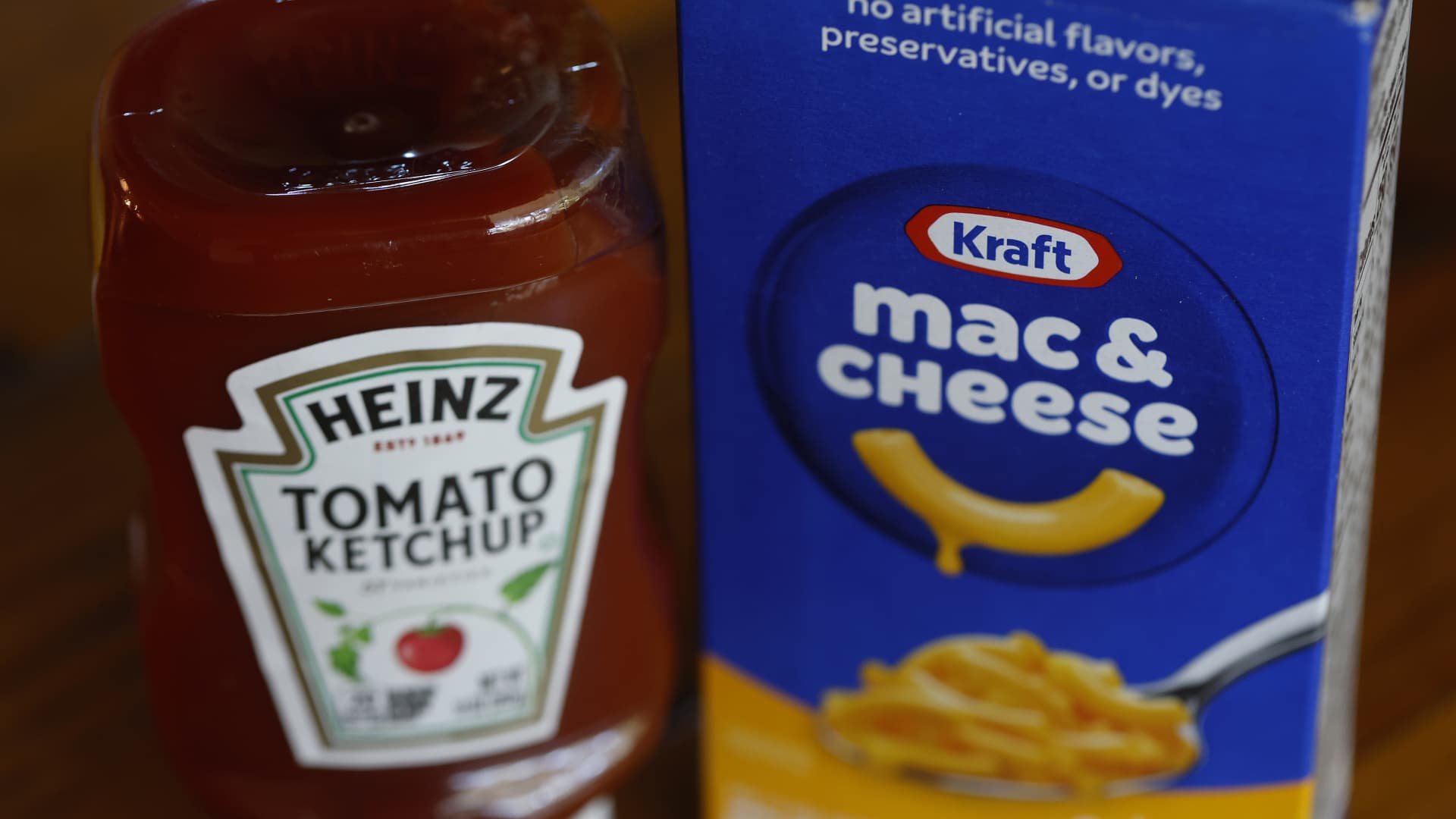
Core Viewpoint - Kraft Heinz is planning to split into two separately traded companies, reversing its 2015 merger, amid a broader trend in the food industry where companies are divesting underperforming brands due to changing consumer preferences and regulatory pressures [1][2][18]. Industry Trends - The consumer products industry is experiencing a significant shift, with nearly half of M&A activity in 2024 coming from divestitures, as companies like Unilever and Keurig Dr Pepper also pursue similar strategies [3][2]. - The trend of breaking up is not limited to consumer packaged goods; industrial companies and legacy media firms are also undergoing similar transformations [4]. Market Dynamics - There is increasing pressure on packaged food and beverage companies due to lower demand and shrinking sales volumes, prompting them to divest underperforming brands to regain investor confidence [5][11]. - Consumers are shifting their purchasing habits towards fresh produce and protein, leading to declining sales for traditional grocery items [7]. Regulatory Environment - Regulatory scrutiny on processed foods is intensifying, influenced by health initiatives and the rise of medications that reduce appetite for sugary and salty snacks [8]. Competitive Landscape - Major consumer packaged goods companies are losing market share to upstart brands and private-label products, with only about 35% of their portfolios in high-growth categories compared to over half for private-label brands [9][10]. Financial Performance - Kraft Heinz has seen a 73% decline in its stock price since its merger, attributed to aggressive cost-cutting measures that neglected brand investment [19]. - The merger of Keurig Green Mountain and Dr Pepper Snapple Group in 2018 is cited as an example of a poorly conceived deal, leading to a significant rise in shares but still underperforming compared to the S&P 500 [15][14]. Strategic Moves - Kraft Heinz has appointed Steve Cahillane, former CEO of Kellogg, to lead the new entity focused on high-growth brands post-split [23]. - The divestiture trend is expected to continue, with companies like General Mills and Nestle also announcing sales of non-core brands to concentrate on their main offerings [25]. Acquisition Landscape - Smaller acquisitions are becoming more common, with deals under $2 billion representing a growing share of consumer products transactions, as larger deals face regulatory hurdles [26][27].

Why global investing matters now more than ever
MINT· 2026-01-31 11:31
Core Insights - Global investing is a long-standing practice for Indian investors, deeply rooted in cultural behavior rather than a recent trend [1][2] - The intent behind investing in gold or overseas assets is to diversify risk and reduce dependence on a single currency [2] Investment Strategies - Geographic diversification is essential as different countries perform well at different times, highlighting the need for a varied investment approach [3][4] - Borate shared a personal investment example where a ₹5 lakh investment in a Nasdaq ETF grew to approximately ₹85–90 lakh, demonstrating the potential of global investments [5] - Access and structure are critical, as limitations imposed by the Reserve Bank of India create costs for investors in international feeder funds [6] Currency and Market Dynamics - Currency depreciation is a long-term structural issue, with the rupee's value significantly decreasing since independence [7][8] - Historical shifts in global equity market shares illustrate the importance of diversification, as countries like Britain have seen their market share decline dramatically over the past century [9][10] Routes to Global Exposure - Indian investors have several practical routes for global exposure, including domestic feeder funds, multi-asset funds, direct investments through the Liberalised Remittance Scheme, GIFT City retail funds, and Alternative Investment Funds [12][13][14] - GIFT City offers structural advantages, such as exemption from US estate tax and simplified compliance, making it an attractive option for global investments [15] Professional Investment Insights - Professional investors emphasize the importance of managing compliance and operational challenges when investing globally [21][25] - Home country bias is a common issue, and firms like PPFAS focus on globalized businesses to mitigate this risk [24] Risk Management - The discussion highlighted that uncertainty is a constant in investing, and managing risk is more important than timing the market [28][29] - Gold should not exceed 10% of a portfolio, as it cannot be fundamentally valued despite recent gains [29] Conclusion - The overarching message is that global investing is about recognizing currency risk, respecting market cycles, and building resilient portfolios that can endure over time [32]


CFOs On the Move: Week ending Jan. 30
Yahoo Finance· 2026-01-30 09:29
Executive Changes - Progressive CFO John Sauerland will retire on July 3, having been with the company since 1990 and CFO since 2015. Andrew Quigg, the current chief strategy officer, will succeed him [2] - Trade Desk appointed Tahnil Davis as interim CFO while searching for a permanent replacement. Davis has been with the company for nearly 11 years and was previously the chief accounting officer [3] - Frank Sluis will join athletics brand On as CFO on May 1, having previously served as CFO for Europe and Indonesia at Ahold Delhaize. He succeeds Martin Hoffmann, who will continue overseeing the finance organization until Sluis starts [4] - Brunt Workwear hired Stephen Stanton as CFO and COO, coming from ButcherBox where he was finance chief for over three years. He has a background in finance leadership roles at Athenahealth and Staples [5]


On Announces Appointment of New Chief Financial Officer
Businesswire· 2026-01-28 10:00
Core Viewpoint - On Holding AG has announced the appointment of Frank Sluis as Chief Financial Officer (CFO), effective May 1, 2026, to support the company's global ambitions and rapid expansion [1][5]. Group 1: Leadership Background - Frank Sluis previously served as CFO for Europe & Indonesia at Ahold Delhaize, managing financial operations for over EUR 30 billion in annual net sales and leading a team of approximately 800 professionals [2]. - With over 25 years of experience in finance leadership roles at major consumer companies like Reckitt Benckiser and Unilever, Sluis possesses a strong understanding of consumer behavior and brand management [3]. Group 2: Company Vision and Strategy - The leadership at On believes that Sluis's experience aligns with the company's long-term vision and financial leadership needs, especially as the brand continues to resonate globally and achieve record results [6]. - Sluis expressed enthusiasm for joining On, highlighting the company's unique brand, strong values, and ambitious growth trajectory in the sportswear market [6]. Group 3: Transition and Continuity - Sluis will succeed Martin Hoffmann, who has expanded his role as CEO while continuing to oversee the Finance organization until Sluis's start date to ensure a smooth transition [5].

2026年欧洲并购展望——领导者的十大交易主题
奥纬咨询· 2026-01-27 05:55
Investment Rating - The report indicates a positive outlook for European M&A activity, expecting continued momentum into 2026, with a strong case for consolidation across various sectors [3][4][6]. Core Insights - European M&A deal value increased by 12% in 2025, reaching approximately $820 billion, driven by a shift in investor asset allocation towards Europe [3]. - Corporate profitability in Europe has risen by 50% from pre-2008 levels, yet many companies remain sub-scale, indicating a strong need for acquisitions to build capabilities [5]. - A robust pipeline of announced but uncompleted deals, along with favorable capital availability and regulatory conditions, suggests sustained M&A activity in 2026 [6]. Summary by Relevant Sections 1. Banking Sector - European banking M&A has seen a doubling in deal volumes since 2020, driven by restored profitability and regulatory support for consolidation [13]. - Banks are expected to generate over $500 billion in excess capital above regulatory minima over the next three years, which will be increasingly deployed in M&A [15]. 2. Asset Management - The asset and wealth management sector is facing consolidation due to profit margin pressures, with predictions of a 20% reduction in the number of asset managers by 2030 [17]. - M&A activity is expected to intensify, with 100 to 200 transactions anticipated annually in Europe [19]. 3. Telecommunications - The European telecom market is maturing, necessitating M&A for value-accretive deals amid high investment needs for 5G and fiber [20]. - The average EU operator has about 5 million subscribers, compared to 107 million in the US, highlighting the need for consolidation [20]. 4. Defense Sector - Military spending in Europe is projected to grow at approximately 9% annually through 2030, leading to increased demand for production capabilities [23]. - M&A is shifting towards acquiring production capabilities, with a focus on modernizing technical advantages [25]. 5. Logistics - The logistics sector is prioritizing transformative M&A strategies to address e-commerce growth and traditional mail network contraction [28]. - Acquirers are focusing on contract logistics and technology capabilities as core to deal value capture [31]. 6. Pharmaceuticals - Pharma dealmaking is becoming essential as companies face patent expirations and pipeline gaps, with a focus on high-value assets [33]. - Transaction activity is expected to be dominated by selective, de-risked acquisitions and structured deals to manage valuation risks [36]. 7. Chemicals - The chemical industry is leveraging M&A to refocus portfolios on specialty segments and secure cash flow amid economic challenges [37]. - Larger transactions are aimed at building global platforms and enhancing sustainability efforts [39]. 8. Insurance - M&A activity in the insurance sector is driven by private equity consolidation, accounting for about 90% of transactions by volume [42]. - The report anticipates continued acquisitions of specialty underwriting franchises by strategic buyers [45]. 9. Private Equity - European corporates hold approximately €2.6 trillion in cash, creating opportunities for trade buyers of private equity-backed assets [48]. - In 2026, over 1,500 European PE-backed assets, representing $760 billion in enterprise value, could potentially come to market [49]. 10. Portfolio Rebalancing - Portfolio rebalancing is becoming a core theme in European M&A as companies respond to economic headwinds and high capital costs [56]. - One-third of European corporates deliver returns below their cost of capital, indicating a need for divestitures of non-core assets [56].