
陆家嘴

Search documents
房地产开发板块7月30日跌0.93%,陆家嘴领跌,主力资金净流出6.52亿元
Zheng Xing Xing Ye Ri Bao· 2025-07-30 08:27
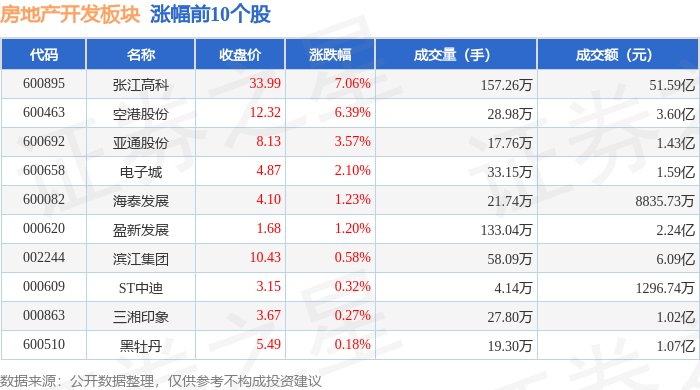
从资金流向上来看,当日房地产开发板块主力资金净流出6.52亿元,游资资金净流入2406.6万元,散户资 金净流入6.28亿元。房地产开发板块个股资金流向见下表: 证券之星消息,7月30日房地产开发板块较上一交易日下跌0.93%,陆家嘴领跌。当日上证指数报收于 3615.72,上涨0.17%。深证成指报收于11203.03,下跌0.77%。房地产开发板块个股涨跌见下表: | 代码 | 名称 | 收盘价 | 涨跌幅 | 成交量(手) | 成交额(元) | | | --- | --- | --- | --- | --- | --- | --- | | 600895 | 张江昌科 | 33.99 | 7.06% | 157.26万 | | 51.59 Z | | 600463 | 空港股份 | 12.32 | 6.39% | 28.98万 | | 3.60亿 | | 600692 | 亚通股份 | 8.13 | 3.57% | 17.76万 | | 1.43亿 | | 600658 | 电子城 | 4.87 | 2.10% | 33.15万 | | 1.59亿 | | 600082 | 海泰发展 | 4.10 | 1 ...


上海市经信委:争取年内实现浦东除陆家嘴外全域开放自动驾驶
Cai Jing Wang· 2025-07-30 04:18
据智通财经报道,7月28日,上海市经信委二级巡视员、汽车产业处处长韩大东在2025世界人工智能大 会上接受采访时透露,上海将有序扩大自动驾驶的开放区域,争取在今年年内实现浦东新区自动驾驶测 试道路全域开放,同步推动奉贤、闵行等区域开放。年内开放的浦东全域不含陆家嘴等重点区域。(中 国汽车报) ...
债市早报:中美经贸会谈在瑞典斯德哥尔摩举行;资金面均衡偏松,债市调整
Sou Hu Cai Jing· 2025-07-30 03:27
【内容摘要】7月29日,央行继续净投放,资金面维持均衡偏松状态;债市短暂回暖后继续调整;转债 市场跟随权益市场有所上扬;各期限美债收益率普遍下行,主要欧洲经济体10年期国债收益率普遍保持 不变。 一、债市要闻 (一)国内要闻 【中美经贸会谈在瑞典斯德哥尔摩举行】当地时间7月28日至29日,中美经贸中方牵头人、国务院副总 理何立峰与美方牵头人、美国财政部长贝森特及贸易代表格里尔在瑞典斯德哥尔摩举行中美经贸会谈。 根据会谈共识,双方将继续推动已暂停的美方对等关税24%部分以及中方反制措施如期展期90天。何立 峰表示,下一步,双方应继续按照两国元首通话重要共识,充分发挥好中美经贸磋商机制作用,不断增 进共识、减少误解、加强合作,进一步深化对话磋商,不断争取更多双赢结果。 【蓝佛安:用好用足更加积极的财政政策,加大财政逆周期调节力度】财政部部长蓝佛安在学习时报发 表《以优良作风凝心聚力 为经济持续向新向好贡献财政力量》文章指出 ,用好用足更加积极的财政政 策,加大财政逆周期调节力度。加快发行和使用超长期特别国债、地方政府专项债券,尽早形成实物工 作量。发挥财政资金引导和带动效应,推动各项政策效能不断释放。落实好助企帮 ...
今日16家公司公布半年报 5家业绩增幅翻倍
Zheng Quan Shi Bao Wang· 2025-07-30 02:54
证券时报·数据宝统计,7月30日共有16家公司公布2025年半年报,其中13家净利润同比增长,3家同比 下降,14家营业收入同比增长,2家同比下降,净利润和营业收入同时增长的公司有仕佳光子等12家, 净利润和营业收入均下降的有键邦股份等1家,业绩增幅翻倍的公司有5家,其中仕佳光子增幅最大,达 1712.00%。(数据宝) | 代码 | 简称 | 每股收益 | 净利润(万 | 净利润同比 | 营业收入(万 | 营业收入同比 | | --- | --- | --- | --- | --- | --- | --- | | | | (元) | 元) | (%) | 元) | (%) | | 688313 | 仕佳光 子 | 0.4793 | 21664.75 | 1712.00 | 99262.53 | 121.12 | | | 华康洁 | | | | | | | 301235 | 净 | 0.1900 | 1868.30 | 273.48 | 83491.15 | 50.73 | | 600078 | 澄星股 份 | 0.0280 | 1856.12 | 211.08 | 177611.77 | 9.85 | | ...

汽车早餐 | 上海欲年内实现浦东除陆家嘴外全域开放自动驾驶;丰田将于2028年在欧生产电动汽车;阿维塔2030年将推出17款新品
Zhong Guo Qi Che Bao Wang· 2025-07-30 01:21
Domestic News - Five departments, including the Ministry of Transport, issued a notice prohibiting the promotion of motor vehicle and traffic safety pooling as insurance products, emphasizing the need to control risks associated with traffic safety pooling business [2] - Inner Mongolia has introduced management measures for the testing, demonstration application, and commercialization of intelligent connected vehicles, focusing on safety and gradual progression [3] - Shanghai aims to fully open autonomous driving testing roads in the Pudong area by the end of the year, excluding key regions like Lujiazui [4] - Shaanxi Province has secured 97.32 million yuan in central subsidy funds for a large-scale transportation equipment update, including the replacement of 675 electric buses and 226 old freight vehicles [5] International News - The U.S. automotive industry expressed dissatisfaction with the new 15% tariff on Japanese cars, arguing that it favors Japanese automakers and may not significantly improve U.S. car exports to Japan [6] - Toyota plans to start producing electric vehicles in Europe by 2028, with an annual production target of approximately 100,000 units at its Czech subsidiary [7] - Waymo announced a partnership with Avis Budget Group to expand its ride-hailing service to Dallas, Texas, by 2026, focusing on fleet management services [8] - Audi reported a more than 30% decline in net profit for the first half of 2025, attributed to U.S. tariffs on EU-imported vehicles, with a profit of 1.346 billion euros [10] Corporate News - China Changan Automobile Group was officially established in Chongqing, marking the first central enterprise headquartered in the city and enhancing the development of intelligent connected new energy vehicles [11] - A new company, FAW Qiyu (Shenzhen) Technology Co., Ltd., was established with a registered capital of 100 million yuan, focusing on the research and development of intelligent robots and AI applications [12] - Avita plans to launch 17 new products by 2030, having completed its three-year, four-vehicle strategic layout [13] - Tesla's Shanghai Gigafactory has produced its 1,000th Megapack energy storage system, which will be shipped to Europe [14] - NIO's legal department announced plans to sue multiple online accounts for spreading false information that has harmed the reputation of the company and its new model, the L90 [15] - Chery Automobile has published patents related to flying cars, indicating its interest in innovative automotive technologies [16]

财经早报:外资机构抢筹港股忙青睐两类优质资产 多地提醒“稳定币投资”新骗局
Xin Lang Zheng Quan· 2025-07-30 00:11
Group 1 - The China-US economic talks held in Stockholm were described as in-depth, candid, and constructive, focusing on mutual economic interests and macroeconomic policies [2] - Both sides agreed to extend the suspension of the US's 24% tariffs and China's countermeasures for an additional 90 days [2] - The Chinese side emphasized the importance of mutual respect and cooperation, stating that a stable and healthy China-US economic relationship benefits both countries and the global economy [2] Group 2 - In July, the A-share market saw a significant increase in new fund launches, reaching a year-high, driven by improved investor sentiment and a recovering stock index [3] - The Shanghai Composite Index closed at 3609.71 points, up 0.33%, indicating a shift from a volatile first half of the year to a more aggressive market stance [3] - Fund companies are rapidly launching various products, including equity and mixed funds, in response to the positive market conditions [3] Group 3 - Hong Kong's new stablecoin licensing guidelines are set to take effect on August 1, with only a few licenses expected to be issued initially [4][5] - The Hong Kong Monetary Authority has encouraged institutions interested in applying for licenses to contact them by September 30, 2025 [5] Group 4 - The Indian trade negotiations with the US are ongoing, with the US Trade Representative indicating that more discussions are needed to address market protection policies [6] - The deadline for reaching an agreement is approaching, with significant differences remaining in sectors such as automotive and agriculture [6] Group 5 - Foreign investment in Hong Kong stocks has surged, particularly in technology and renewable energy sectors, with the Hang Seng Index up over 27% year-to-date [7] - The proportion of stable and flexible foreign capital holdings in Hong Kong stocks reached 60.4%, indicating strong interest in undervalued assets [7] Group 6 - 31 companies reported positive half-year earnings, with notable growth in net profits, including Haida Group, which saw a 24.16% increase [8] - A total of 52 out of 80 companies that disclosed half-year reports achieved year-on-year net profit growth [8] Group 7 - The establishment of China Chang'an Automobile Group marks the formation of a new central enterprise in the automotive sector, adding to the existing major players [10] - The State-owned Assets Supervision and Administration Commission now oversees 100 central enterprises, with Chang'an listed as the 73rd [10] Group 8 - The EU plans to purchase €40 billion worth of AI chips as part of a trade agreement with the US, significantly impacting semiconductor stocks [11] - Major semiconductor companies like Nvidia and AMD saw stock price increases following the announcement [11] Group 9 - WuXi AppTec raised its full-year revenue forecast after reporting a 20.64% increase in total revenue for the first half of 2025 [14] - The company expects continued double-digit growth in its ongoing business revenue, adjusting its revenue forecast upward [14] Group 10 - The A-share market is transitioning from a stock-based competition to an incremental market, driven by improved liquidity and macro policies [20] - Institutional funds are increasingly flowing into the market, with a notable shift towards long-term investments in core assets [20]



8点1氪:国航南航东航支持在“民航版12306”直销平台购票;少林寺通报新住持任职;三胎概念股集体大涨
36氪· 2025-07-30 00:10
Group 1 - The three major domestic airlines in China, Air China, China Southern Airlines, and China Eastern Airlines, have announced their support for the "Civil Aviation Version 12306" direct sales platform for ticket purchases, ensuring passenger rights [3] - The airlines have initiated direct sales of tickets through the "Hanglv Zongheng" platform, which offers transparent pricing, no bundled sales, and aligns with airline rules, ensuring information security [3] - The tickets sold on the "Hanglv Zongheng" platform are directly sourced from the airlines, unlike traditional OTAs such as Ctrip and Qunar, which rely on multiple ticket agents [3] Group 2 - The National Childcare Subsidy Implementation Plan was announced, providing an annual subsidy of 3,600 yuan for each child, regardless of whether they are the first, second, or third child, starting from January 1, 2025 [4] - Following the announcement, stocks related to the three-child policy, such as Beiyinmei and Sunshine Dairy, saw significant increases, with some stocks hitting the daily limit [4] Group 3 - The International Monetary Fund (IMF) has raised its forecast for China's economic growth this year by 0.8 percentage points to 4.8%, reflecting stronger-than-expected economic activity in the first half of the year [8] - The IMF also adjusted global economic growth forecasts for this year and next, indicating a resilient but fragile global economic outlook [8] Group 4 - Standard Chartered Group has signed a strategic cooperation memorandum with Alibaba Group to accelerate the integration of financial services and artificial intelligence technology [21] - The partnership aims to leverage Alibaba Cloud's AI capabilities to enhance financial services [21] Group 5 - Heng Rui Pharmaceutical has entered into a cooperation agreement with GlaxoSmithKline (GSK) to jointly develop up to 12 innovative drugs, with GSK paying an upfront fee of $500 million and potential milestone payments of up to $12 billion [18] - This collaboration highlights the increasing trend of multinational pharmaceutical companies partnering with domestic firms at earlier stages of drug development [18] Group 6 - The 2025 Fortune Global 500 list revealed that 130 Chinese companies made the list, with a total revenue of approximately $10.7 trillion, a decrease of about 3% compared to the previous year [11] - The average revenue of Chinese companies on the list was approximately $82 billion, lower than that of U.S. companies, which averaged $105.8 billion [11]
8点1氪|国航南航东航支持在“民航版12306”直销平台购票;少林寺通报新住持任职;三胎概念股集体大涨
3 6 Ke· 2025-07-30 00:09
Group 1 - Zhengpin Holdings Limited submitted a listing application to the Hong Kong Stock Exchange, with Hongbo Capital as the exclusive sponsor [1] - Major Chinese airlines, including Air China, China Southern Airlines, and China Eastern Airlines, announced support for the "Civil Aviation Version 12306" direct sales platform to ensure passenger rights [2][3] - The implementation plan for the national childcare subsidy system was announced, providing an annual subsidy of 3,600 yuan per child until the age of three, leading to a surge in stocks related to the three-child policy [3][4] Group 2 - The International Monetary Fund (IMF) raised China's economic growth forecast for this year by 0.8 percentage points to 4.8%, reflecting stronger-than-expected economic activity in the first half of the year [7] - Standard Chartered Group signed a strategic cooperation memorandum with Alibaba Group to accelerate the integration of AI and financial services [19] - Heng Rui Pharmaceutical signed a cooperation agreement with GlaxoSmithKline (GSK) to jointly develop up to 12 innovative drugs, with GSK paying an upfront fee of $500 million and potential milestone payments of up to $12 billion [20] Group 3 - Nvidia's market capitalization surpassed $4.3 trillion, marking a significant milestone for the company [12] - The stock of Hengtong Electronics surged following rumors of a partnership with Ant Group regarding stablecoin cooperation, although the company has not confirmed the collaboration [16] - The number of foreign tourists visiting Thailand decreased by 6.18% year-on-year, with approximately 18.98 million foreign tourists visiting the country [13]

股市直播|688313,净利润大增超1700%;605178,终止筹划控制权变更事项
Zhong Guo Zheng Quan Bao· 2025-07-29 23:23
Group 1: Company News - The State-owned Assets Supervision and Administration Commission (SASAC) announced the establishment of China Changan Automobile Group Co., Ltd., marking the total number of state-owned enterprises under SASAC to 100 [4] - WuXi AppTec announced an adjustment to its share repurchase plan, raising the maximum repurchase price from 90.72 yuan to 114.15 yuan per share [6] - Shijia Photon reported a significant increase in net profit for the first half of 2025, achieving 217 million yuan, a year-on-year growth of 1712%, driven by the rapid growth of the AI market [7] - Time Space Technology announced the termination of its control change planning, stating that it will not adversely affect the company's operations or financial status [7] - Quzhou Development is planning to issue shares to acquire assets and raise matching funds, with a suspension of trading expected for no more than 10 trading days [8] - Huqin Technology plans to acquire 12 million shares of Crystal Integrated Circuit for 1.993 billion yuan, aiming to enhance resource integration and strategic investment [8] - Ancar Detection announced a potential change in its controlling shareholder, leading to a suspension of trading for up to 2 trading days [8] Group 2: Industry News - The National Health Commission and other authorities introduced a nationwide parenting subsidy system, which is expected to impact sectors such as dairy products, maternal and infant chains, and postpartum care services positively [9] - The China Photovoltaic Industry Association clarified misinformation regarding the photovoltaic industry's competition, emphasizing a commitment to market-oriented principles [4] - The Ministry of Finance reported a decline in revenue and profit for state-owned enterprises in the first half of 2025, with total revenue at 4.075 trillion yuan, down 0.2% year-on-year [5]

上海陆家嘴金融贸易区开发股份有限公司2025年半年度报告摘要
Shang Hai Zheng Quan Bao· 2025-07-29 17:44
Core Viewpoint - The company has released its 2025 semi-annual report, highlighting its financial performance and operational status, with a focus on significant changes and ongoing projects [1][3]. Group 1: Company Overview - The company is Shanghai Lujiazui Financial Trade Zone Development Co., Ltd., primarily engaged in real estate development and management [2]. - The report includes key financial data and shareholder information, although specific figures are not detailed in the provided text [2]. Group 2: Important Events - The company has faced issues related to soil pollution at a subsidiary, Green Shore Company, leading to a suspension of development activities since April 2022. Remediation efforts have been completed, and the company is monitoring the situation closely [3]. - The board of directors and supervisory board have confirmed the accuracy and completeness of the semi-annual report, which has been approved without any dissenting votes [4][6][14]. Group 3: Financial Performance - As of the end of Q2 2025, the company holds a total building area of 3.96 million square meters across various property types, including 2.45 million square meters of Grade A office space [16]. - For the first half of 2025, the company reported a rental cash inflow of 1.854 billion yuan, a decrease of 14% year-on-year, while residential property sales saw a significant increase, with a contract sales amount of 4.769 billion yuan, up 111% year-on-year [16][17]. - The company completed projects totaling 410,200 square meters in the first half of 2025, with a notable increase in residential sales cash inflow to 5.548 billion yuan, also up 105% year-on-year [18].