Apple

Search documents
Budget iPhone 17e to Boost Apple Revenues? ETFs to Consider
ZACKS· 2026-03-04 17:32
Core Insights - Apple reported record-breaking iPhone revenues of $85.27 billion for the fiscal first quarter of 2026, a 23% year-over-year increase, surpassing market expectations [1] iPhone 17e Launch - The introduction of the iPhone 17e aims to attract price-sensitive consumers with a starting price of $599 for the 256GB model, enhancing Apple's product lineup [2] - The iPhone 17e features improved charging capabilities and up to 26 hours of battery life, slightly less than the iPhone 17's 30 hours [3] - Powered by the A19 processor, the iPhone 17e maintains performance consistency with the flagship model, although it has one fewer GPU core [4] - The device incorporates 30% recycled content and is manufactured using 55% renewable electricity, aligning with Apple's sustainability goals [5] Market Positioning - The iPhone 17e is positioned to compete in the mid-tier smartphone segment against lower-priced alternatives from competitors like Samsung and Google [6] - The aggressive pricing strategy is expected to serve as a growth catalyst for Apple's flagship segment, which is already performing strongly [7] Ecosystem Growth - The iPhone 17e is anticipated to sustain growth by addressing an underserved market segment, while also serving as an entry point into Apple's broader ecosystem of hardware, software, and services [8] - Apple's active installed base has surpassed 2.5 billion devices, which supports recurring revenue growth from high-margin digital services [9] Stock Outlook - The average brokerage recommendation for Apple is 1.95, indicating a gradual shift toward more favorable views on the company's shares [12] - Of the 43 recommendations, 51.16% are Strong Buy, reflecting an improvement from 48.84% two months ago [13] - The average price target for Apple is $294.46, suggesting an 11.64% increase from its current stock price of $263.75 [14] Industry Challenges - Apple is facing memory supply constraints that could impact margins in the upcoming quarters, similar to challenges faced by the broader consumer technology industry [15] ETFs Exposure - Several ETFs have significant exposure to Apple, including Global X PureCap MSCI Information Technology ETF (20.06%), iShares U.S. Technology ETF (15.71%), and others [16]



Apple Uses Low Prices to Attack Rivals During Memory-Chip Crunch
WSJ· 2026-03-04 17:11
Core Insights - The company is leveraging its supply-chain capabilities to increase its market share in the lower-priced phone and laptop segments [1] Group 1 - The company aims to expand its presence in the cheaper phone category, indicating a strategic shift towards more budget-friendly products [1] - The company is also targeting the laptop market, suggesting a broader approach to capturing value in various consumer electronics segments [1]

Apple Expands Mac Portfolio With New Devices: Can They Revive Growth?
ZACKS· 2026-03-04 16:55
Core Insights - Apple is expanding its Mac portfolio with the launch of new MacBook Air and MacBook Pro models, which is crucial as it faces increasing competition from Lenovo, HP, and Dell Technologies [1][9] - Mac sales in Q1 fiscal 2026 were $8.39 billion, a decrease of 6.7% year-over-year, accounting for 5.8% of total net sales, and missing the Zacks Consensus Estimate by 7.54% [1][9] Product Details - The new M5 Pro and M5 Max chips utilize a new Apple-designed Fusion Architecture, enhancing performance with two third-generation 3-nanometer dies, featuring a powerful CPU, scalable GPU, Media Engine, and advanced connectivity options [2] - The MacBook Air is equipped with the M5 chip, offering a faster CPU, next-generation GPU, and starting storage of 512GB, configurable up to 4TB, along with Wi-Fi 7 and Bluetooth 6 capabilities [3] - The MacBook Pro models, powered by M5 Pro and M5 Max, deliver superior performance with the world's fastest CPU core and up to eight times AI performance compared to M1 models, starting storage at 1TB for M5 Pro and 2TB for M5 Max [4] Competitive Landscape - Apple faces significant competition in the PC market, with Lenovo leading at 27.2% market share, followed by HP at 21.5% and Dell at 16.5%, while Apple holds a 9.4% market share [5] - HP anticipates a decline in PC unit volumes for fiscal 2026, with only slight revenue growth expected from higher specifications rather than an increase in buyers [6] Financial Performance - Apple shares have increased by 10% over the past six months, outperforming the broader Zacks Computer and Technology sector, which returned 6.5% [7] - The Zacks Consensus Estimate for fiscal 2026 earnings is $8.41 per share, reflecting a 0.5% increase over the past 30 days and suggesting a year-over-year growth of 12.7% [11] - Apple is currently trading at a forward price/earnings ratio of 30.03X, higher than the broader sector's 24.91X, indicating a premium valuation [13]

Apple expands into market for budget laptops with $599 MacBook Neo
MarketWatch· 2026-03-04 16:54
Core Viewpoint - Apple has launched its latest and most affordable MacBook, concluding a three-day event that introduced several new hardware products including the iPhone 17e, iPad Air, MacBook Pro, and MacBook Air [1] Group 1 - The new MacBook is positioned as the cheapest option in Apple's lineup [1] - The hardware announcements included a total of five new products [1] - The event showcased Apple's continued innovation and expansion in its product offerings [1]

Apple launches $599 MacBook Neo, threatening Windows PC market
BusinessLine· 2026-03-04 16:09
Core Viewpoint - Apple Inc. has launched the $599 MacBook Neo, marking a significant entry into the low-end laptop market to compete with Windows PCs and Chromebooks aimed at budget-conscious consumers [1][7]. Product Features - The MacBook Neo features a 13-inch screen, making it one of Apple's smallest laptops, and runs on an iPhone A18 Pro chip, which is a first for the Mac lineup [2]. - The base model includes 256 gigabytes of storage, with a $699 upgraded version offering double the storage and Touch ID [3]. - The device boasts 16 hours of battery life, a display brightness of up to 500 nits, and weighs 2.7 pounds [4]. Market Positioning - Apple aims to attract a broader customer base, including students and corporate buyers, with its lower price point and compatibility with Mac and iPhone apps [4][6]. - The MacBook Neo is priced higher than the cheapest Chromebooks and Windows PCs, which range from $200 to $600, but is positioned as a premium offering due to its design and features [6]. Sales Context - The launch comes after a disappointing holiday season for Apple's Mac line, which saw a 6.7% decline in sales to $8.39 billion, falling short of analyst expectations [7]. Strategic Implications - Apple anticipates that the new MacBook Neo will draw new customers into its ecosystem, potentially leading to increased sales of other devices like iPhones and iPads [7].
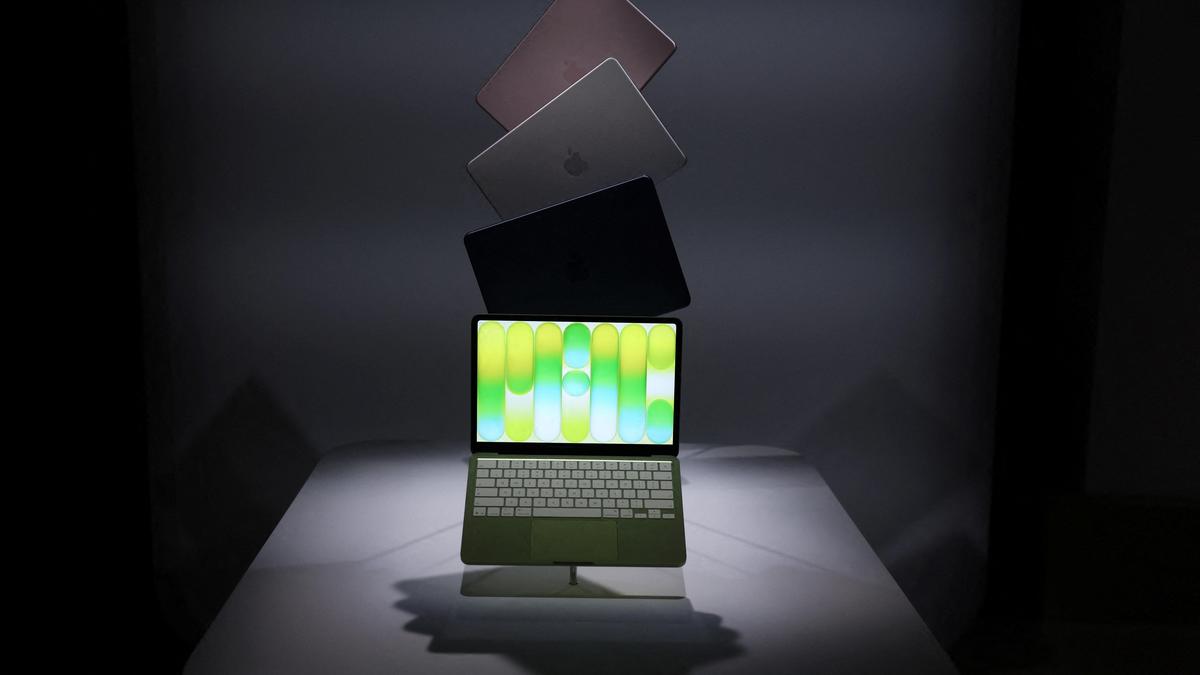
Analyst revises Apple stock price target as new MacBook Neo announced
Finbold· 2026-03-04 15:44
Core Viewpoint - Apple has launched the MacBook Neo, its most affordable laptop to date, but the stock experienced a 0.5% decline following the announcement [1]. Group 1: Stock Performance and Analyst Sentiment - The decline in Apple's stock is attributed to a bearish crossover signal, indicating a potential pullback towards the $200 level, as the 50-day moving average has crossed below the 100-day moving average [2]. - Bernstein has reaffirmed its 'Outperform' rating for Apple, maintaining a price target of $340, citing Apple Intelligence as a key factor for increased product replacement cycles and higher services revenue [3]. - Barclays analyst Tim Long has raised the price target for Apple to $248 while maintaining a 'Sell' rating, reflecting mixed sentiments among analysts [5]. Group 2: Earnings and Upgrade Potential - Bernstein estimates that accelerated upgrade activity could increase earnings per share (EPS) by 13%, with an additional 16% upside from premium-tier monetization of Apple Intelligence [4]. - The analysis suggests that on-device AI processing requirements may drive users to upgrade their hardware, reversing the trend of elongation in upgrade cycles [4]. Group 3: Analyst Consensus - Among 26 analysts, 16 recommend buying Apple stock, 9 suggest holding, and only 1 recommends selling, indicating a generally bullish outlook on the stock [7]. - The consensus price target on TipRanks stands at $307.16, suggesting a potential upside of approximately 16.5% from the latest closing price [5].

Apple's $599 MacBook Neo: The Pros and Cons
WSJ· 2026-03-04 15:26
Core Insights - The article discusses a new MacBook priced at $599, which is noted as a historically low price for the product line, indicating a strategic pricing move by the company to attract more consumers [1] Group 1: Product Features - The new MacBook comes with certain trade-offs, suggesting that while the price is lower, there may be compromises in specifications or features compared to higher-priced models [1] Group 2: Market Implications - The introduction of a lower-priced MacBook could impact the competitive landscape, potentially increasing market share for the company in the budget laptop segment [1]
Apple Launches $599 MacBook Neo, Its Most Affordable Mac Yet - Apple (NASDAQ:AAPL)
Benzinga· 2026-03-04 15:04
Core Insights - Apple Inc. has launched the MacBook Neo, its most affordable laptop to date, starting at $599, with a special price of $499 for education customers [1] - The MacBook Neo features a 13-inch display and is powered by the A18 Pro chip, the same processor used in the iPhone 16 Pro lineup [2] Performance - Apple claims that the MacBook Neo is up to 50% faster for everyday tasks compared to Intel Core Ultra 5 PCs, up to 3 times faster for on-device AI features, and up to 2 times faster for photo editing based on Affinity benchmarks [3] Design and Sustainability - The MacBook Neo is designed to be more affordable and is made with 60% recycled content, including 90% recycled aluminum and 100% recycled cobalt, produced using 45% renewable energy [5] - Apple aims to achieve carbon neutrality across its entire footprint by 2030 [5] Market Reaction - Following the announcement, Apple shares were down 0.46% at $262.54 [5]
Apple announces MacBook Neo, its first budget laptop in over a decade
CNBC· 2026-03-04 14:47
Core Insights - Apple has introduced the MacBook Neo, significantly reducing the entry price for its Mac lineup from $999 to $599, marking a strategic move to attract budget-conscious consumers [1][2] - The MacBook Neo is designed to compete directly with Google Chromebooks and entry-level Windows laptops, targeting classrooms and first-time buyers [2] - The laptop features a 13-inch display, a lightweight metal body, and a colorful finish, making it more appealing to a broader consumer base compared to other MacBook models [3] Product Details - The MacBook Neo is Apple's first dedicated budget Mac in over a decade, emphasizing affordability and accessibility [2] - The device is powered by an iPhone-grade chip, showcasing Apple's commitment to integrating its advanced technology into more affordable products [1] - The launch of the MacBook Neo follows a series of hardware updates, including the iPhone 17e, iPad Air, and the entire MacBook Pro line, indicating a robust product refresh strategy [1]
Other World Computing (OWC) Announces Unmatched Roster of Storage, Connectivity, and Expansion Solutions for the Newly Announced Apple MacBook Pro, MacBook Air, iPad Air, Studio Display, and Studio Display XDR
Businesswire· 2026-03-04 14:39
Core Insights - Other World Computing (OWC) announced a range of storage, connectivity, and expansion solutions tailored for the new Apple MacBook Pro featuring M5 Pro and M5 Max chips, as well as the MacBook Air with M5 and the Apple iPad Air [1] Group 1: Company Overview - OWC is recognized as a leader in high-performance storage, memory, connectivity, software, and accessories [1] - The company aims to empower creative and business professionals by maximizing performance, enhancing reliability, and streamlining workflows [1] Group 2: Product Offerings - The newly announced solutions by OWC are specifically designed to complement the latest Apple devices, including the MacBook Pro and MacBook Air [1] - The product lineup includes unmatched storage and connectivity options that cater to the needs of users of the new Apple hardware [1]