玉龙股份

Search documents
98.06%同意!*ST天茂公告,股东会审议通过主动终止上市议案
Zhong Guo Zheng Quan Bao - Zhong Zheng Wang· 2025-08-26 04:20
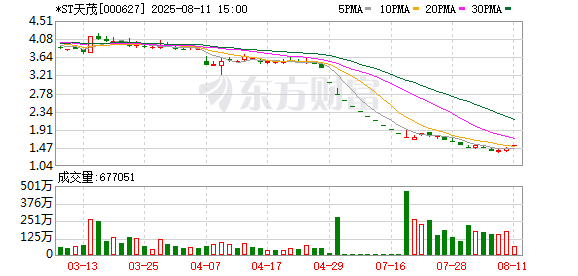
Core Viewpoint - *ST Tianmao has made significant progress towards voluntary delisting, with shareholders approving the proposal to terminate the company's stock listing with a 98.06% agreement rate at the extraordinary general meeting held on August 25 [1][2]. Group 1: Delisting Process - The company will submit an application to the Shenzhen Stock Exchange for the termination of its stock listing within fifteen trading days after the shareholders' resolution [2]. - The last trading day for *ST Tianmao was August 13, with a closing price of 1.58 yuan [3]. - Shareholders eligible for cash options can exercise their rights at a price of 1.60 yuan per share during the cash option declaration period [3]. Group 2: Financial Implications - The cash option will be distributed based on the number of shares held by eligible shareholders as of the cash option registration date on September 2, 2025 [3]. - Jingmen Weituo Hongcheng Management Partnership (Limited Partnership) is expected to provide cash options for up to 1.629 billion shares, with the final distribution quantity to be confirmed after the registration date [3]. Group 3: Regulatory Issues - The company faces a risk of forced delisting due to the failure to disclose the 2024 annual report and the 2025 first-quarter report within the legal timeframe [4]. - The company has been under investigation by the China Securities Regulatory Commission for failing to disclose periodic reports on time [4]. Group 4: Industry Trends - Several companies have opted for voluntary delisting this year, indicating a trend towards companies choosing to exit the market proactively [5][6]. - The increasing number of voluntary delistings reflects a maturing market mechanism, with the concept of "voluntary exit" becoming more accepted among companies [7].

从“震慑”到“清退” 今年以来23家公司完成退市
Shang Hai Zheng Quan Bao· 2025-08-25 20:09
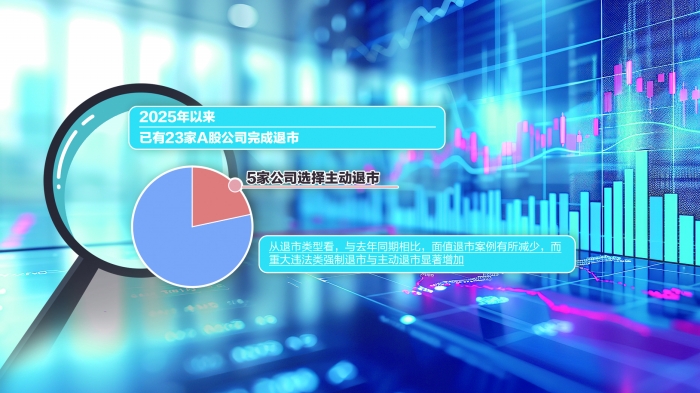
Core Viewpoint - The A-share delisting ecosystem is undergoing profound changes, with a significant increase in both mandatory and voluntary delistings, reflecting a shift from policy deterrence to normalized execution of delisting mechanisms [3][4][5]. Regulatory Changes - As of this year, 23 A-share companies have completed delisting, with 9 companies delisted in July alone. The types of delistings have shifted, with a notable increase in mandatory delistings due to major violations and voluntary delistings [3][4]. - Regulatory bodies have improved the efficiency of handling major violations, with some companies facing criminal charges post-delisting, indicating a "zero tolerance" approach to regulation [3][4]. - The execution of delisting has become faster, more precise, and harsher, with a significant reduction in the time from investigation to punishment, effectively eliminating opportunities for market speculation [4][5]. Delisting Cases - The case of *ST Jinkang illustrates the rapid process of delisting due to financial fraud, taking only about two months from the administrative penalty to formal delisting [5]. - There has been a marked increase in major violation delistings compared to the previous year, with 9 companies facing administrative penalties for financial fraud, triggering mandatory delistings [4][5]. Voluntary Delistings - There has been a rise in voluntary delistings, with 5 companies opting for this route this year, driven by factors such as strategic mergers and significant operational uncertainties [8][9]. - Companies like Yulong Co. and AVIC Industry have set cash options for investors during voluntary delistings, often at prices above the last trading price, to protect small investors [8][9]. Strategic Implications - The trend of voluntary delisting is shifting from a last resort to a strategic choice, allowing companies to escape short-term performance pressures and focus on long-term restructuring [9]. - Benefits of voluntary delisting include reduced operational costs and the ability to concentrate on risk management during periods of uncertainty [9].

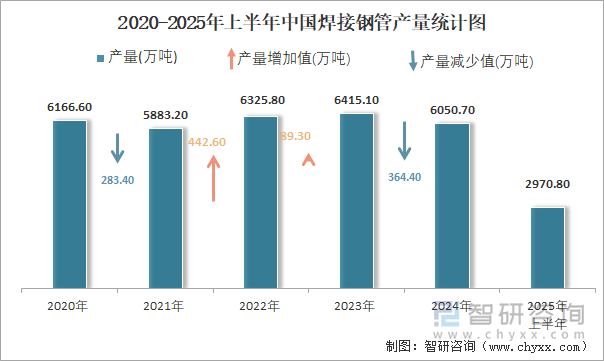
2025年上半年中国焊接钢管产量为2970.8万吨 累计增长4.4%
Chan Ye Xin Xi Wang· 2025-08-20 03:40
Group 1 - The core viewpoint of the article highlights the growth potential of China's welded steel pipe industry, with a projected production increase of 8.4% year-on-year by June 2025 [1] - According to the National Bureau of Statistics, the cumulative production of welded steel pipes in China reached 29.708 million tons in the first half of 2025, reflecting a growth of 4.4% [1] - The report by Zhiyan Consulting provides an analysis of the development model and future prospects of the welded steel pipe industry in China from 2025 to 2031 [1] Group 2 - Listed companies in the welded steel pipe sector include Baosteel Co., Ltd. (600019), Xinxing Ductile Iron Pipes (000778), Changbao Steel (002478), Jiuli Special Materials (002318), Honglu Steel Structure (002541), Youfa Group (601686), CITIC Special Steel (000708), Jinzhu Pipeline (002443), and Yulong Co., Ltd. (601028) [1] - Zhiyan Consulting is recognized as a leading industry consulting firm in China, specializing in in-depth industry research reports and providing comprehensive industrial solutions [2] - Data sources for the report include the National Bureau of Statistics and Zhiyan Consulting [3]
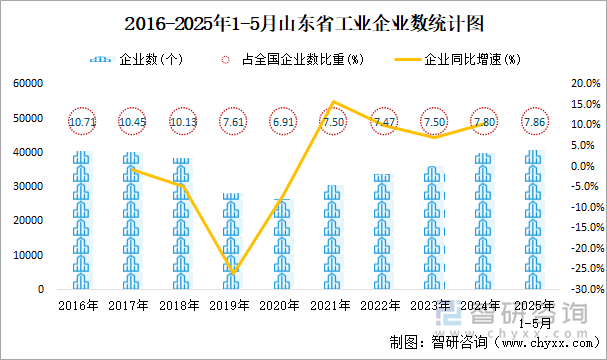
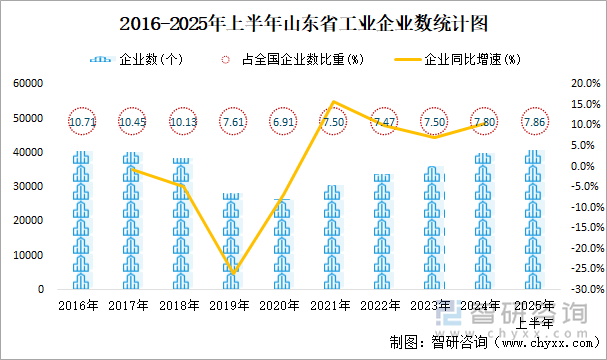
2025年1-5月山东省工业企业有40831个,同比增长3.75%
Chan Ye Xin Xi Wang· 2025-08-18 03:03
Core Insights - The report by Zhiyan Consulting provides a deep assessment of the industrial cloud market in China from 2025 to 2031, highlighting investment opportunities [1] Group 1: Company Information - Listed companies mentioned include Yanzhou Coal Mining Company (600188), New Trend Energy (600777), Taishan Petroleum (000554), and others, indicating a focus on the industrial sector [1] - The report suggests that these companies may benefit from the growth in the industrial cloud market [1] Group 2: Industry Data - As of January to May 2025, the number of industrial enterprises in Shandong Province reached 40,831, an increase of 1,475 compared to the same period last year, representing a year-on-year growth of 3.75% [1] - Shandong's industrial enterprises account for 7.86% of the national total, indicating its significant role in the overall industrial landscape of China [1]
又一家上市公司拟主动退市 此前因年报逾期“披星戴帽”
Jin Rong Shi Bao· 2025-08-14 02:28
Core Viewpoint - Tianmao Group has announced its intention to voluntarily delist from the A-share market due to significant operational uncertainties and the inability to publish its 2024 annual report on time, which has led to considerable delisting pressure [1][4]. Group 1: Delisting Announcement - Tianmao Group's board has approved a resolution to voluntarily withdraw its A-share listing on the Shenzhen Stock Exchange, pending approval from shareholders [2]. - The delisting requires a two-thirds majority vote from shareholders, with the controlling shareholder holding 66.78% of the shares, making the support of the remaining 33.23% crucial for the resolution's passage [2][3]. Group 2: Reasons for Delisting - The company cited business restructuring and significant uncertainties as the primary reasons for the delisting decision [2]. - Tianmao Group has faced pressure due to the failure to disclose its 2024 annual report within the legal timeframe, leading to a delisting risk warning from the Shenzhen Stock Exchange [4]. Group 3: Financial Performance - Tianmao Group has reported declining performance over the years, with net profits decreasing by 67.32%, 18.88%, 41.78%, and 337.82% from 2020 to 2023, culminating in a net loss of 6.52 billion yuan in 2023 [5]. - For the first three quarters of 2024, the company has projected a net loss of 3.33 billion yuan, with expectations of a total loss between 5 billion to 7.5 billion yuan for the year [6]. Group 4: Investor Protection Mechanism - The company has established an investor protection mechanism, allowing shareholders to exercise a cash option for their shares post-delisting, ensuring they receive cash compensation for their holdings [3]. Group 5: Industry Context - Several companies have voluntarily delisted from the A-share market this year, including Haitong Securities and Yulong Co., due to operational uncertainties and financial difficulties [7]. - The trend of voluntary delisting is seen as a move to reduce "shell speculation" and optimize market ecology, reflecting the maturity of market mechanisms [8].
又一家上市公司拟主动退市
Jin Rong Shi Bao· 2025-08-14 01:35
值得关注的是,在此次主动申请退市前,因2024年年报难产,天茂集团本身也面临着较大的退市压 力。 今年以来,A股已有多家公司主动退市。 设有投资者保护机制 A股又有一家上市公司拟主动退市。 近日,天茂实业集团股份有限公司(以下简称"天茂集团")发布公告称,公司拟以股东会决议方式 主动撤回A股股票在深交所的上市交易。不过,目前以股东会决议方式主动退市尚须股东表决通过。 在主动申请退市前,因2024年年报"难产",天茂集团面临着较大的退市压力。根据此前公告,天茂 集团因未在法定期限内披露2024年年报、2025年一季报,公司自7月8日起复牌并实施退市风险警示。根 据上市规则,如果自实施退市风险警示之日起的两个月内仍未披露2024年年报,深交所将决定终止公司 股票上市交易。 5月6日,天茂集团公告称,收到中国证监会下发的《立案告知书》,因涉嫌未按期披露定期报告, 5月6日,中国证监会决定对公司立案。 此后,公司在股票停牌的两个月内仍未能披露2024年年度报告和2025年第一季度报告,7月8日,公 司股票复牌并被深交所实施退市风险警示,股票简称变为"*ST天茂"。根据深交所股票上市规则,若公 司在股票交易被实施退市风 ...
曹中铭:对问题公司的主动退市须从严监管
Xin Lang Cai Jing· 2025-08-12 10:20
Group 1 - The core viewpoint of the articles is that the proactive delisting of companies like *ST Tianmao raises concerns about regulatory oversight and the need for stricter measures for problem companies in the market [1][3] - The number of companies voluntarily delisting has increased, with 30 companies announced to be delisted this year, including 5 that chose to delist voluntarily [1][2] - The proactive delisting trend is expected to continue, with 2025 projected to be a significant year for voluntary delistings, contrasting with previous years where the numbers were much lower [2][3] Group 2 - The current delisting rate in the Shanghai and Shenzhen markets is notably low, with less than 1% of listed companies delisting annually, indicating a need for improvement compared to mature markets [2][3] - There are concerns regarding the effectiveness of the current delisting regulations, particularly in cases of financial fraud, where many companies are not forced to delist despite engaging in fraudulent activities [2][3] - The case of *ST Tianmao highlights the complexities surrounding voluntary delisting, including ongoing investigations by regulatory bodies and the need to protect investor rights even after delisting [3]
两家公司同日退市引关注 主动退市案例增多
Huan Qiu Wang· 2025-08-12 04:36
Core Viewpoint - The A-share market has seen a significant increase in both voluntary and involuntary delistings, indicating a tightening regulatory environment and a shift towards higher quality standards in the capital market [3][4]. Group 1: Voluntary Delistings - As of August 10, 2023, there have been five companies that voluntarily delisted through shareholder resolutions or mergers, surpassing the annual average of 1-4 cases from 2020 to 2024 [3]. - Companies such as 中航产融 (AVIC Capital) and 玉龙股份 (Yulong Co.) have already completed their delistings, while *ST天茂 (ST Tianmao) is in the process of withdrawing its listing due to failure to disclose financial reports [3]. - The proactive delisting of *ST天茂 is attributed to its inability to disclose the 2024 annual report, which could trigger mandatory delisting if not resolved by early September [3]. Group 2: Involuntary Delistings - Ten companies have triggered mandatory delisting criteria due to serious violations, with *ST高鸿 (ST Gaohong) being a notable case involving systematic financial fraud, including inflated revenues of 3.5 billion and profits of 4 billion [3]. - The chairman of *ST高鸿 has been fined 7.5 million and banned from the market for life, with total penalties for responsible parties amounting to 167 million [3]. Group 3: Regulatory Changes - New regulations effective in 2024 will raise the financial delisting revenue threshold from 100 million to 300 million, and introduce new criteria for delisting due to severe fraud [4]. - Eight companies have already been delisted this year for failing to meet the new market capitalization requirement of 500 million or for having share prices below par [4]. Group 4: Market Trends - A total of 30 companies have been delisted this year, with a balanced distribution among those delisted for major violations, financial issues, and trading problems [5]. - The regulatory body has initiated investigations against 35 out of 55 delisted companies, reflecting a more stringent enforcement approach [5]. - Policies encouraging market-driven delistings and discouraging "shell protection" behaviors have led to 12 cases of mergers, such as the absorption of 海通证券 (Haitong Securities) by 国泰君安 (Guotai Junan) [5].


2025年上半年山东省工业企业有40871个,同比增长3.76%
Chan Ye Xin Xi Wang· 2025-08-12 03:23
Group 1 - The core viewpoint of the news highlights the growth of industrial enterprises in Shandong Province, with a total of 40,871 enterprises reported in the first half of 2025, marking an increase of 1,482 enterprises compared to the same period last year, representing a year-on-year growth of 3.76% and accounting for 7.86% of the national total [1][3]. Group 2 - The report mentions several listed companies in the industrial sector, including Yanzhou Coal Mining Company (600188), New Trend Energy (600777), and others, indicating a broad interest in the industrial cloud market [1]. - The report titled "2025-2031 China Industrial Cloud Industry Market Deep Assessment and Investment Opportunity Forecast" by Zhiyan Consulting provides insights into the industrial cloud sector, suggesting potential investment opportunities [1].
资本市场多元化退市渠道进一步畅通
Zheng Quan Ri Bao· 2025-08-11 16:40
Core Viewpoint - The number of companies voluntarily delisting from the Chinese capital market has increased significantly this year, reflecting a deeper implementation of the "should delist, must delist" principle under stricter regulations [2][3][4]. Group 1: Voluntary Delisting Cases - Five companies have announced voluntary delisting as of August 10 this year, which is a notable increase compared to previous years [3]. - The methods of voluntary delisting include shareholder resolutions to withdraw from trading and mergers, with three companies opting for the former and two for the latter [3][4]. - The increase in voluntary delisting is attributed to market factors such as poor stock performance and the desire to alleviate short-term pressures [4]. Group 2: Regulatory Environment - The China Securities Regulatory Commission (CSRC) has emphasized the need to solidify and deepen the regular delisting mechanism, enhancing investor protection during the delisting process [5]. - A total of 30 companies have announced their delisting this year, with various reasons including major violations, trading-related issues, and financial irregularities [5][6]. - The regulatory framework for delisting has become more refined, with stricter standards for companies involved in financial fraud and other violations [6]. Group 3: Consequences of Delisting - Companies that delist, whether voluntarily or involuntarily, are still subject to regulatory scrutiny and potential penalties for past violations [7][9]. - For instance, *ST Tianmao is under investigation for failing to disclose financial reports on time, which could lead to further penalties even after voluntary delisting [8][9]. - The CSRC has taken a firm stance on holding companies accountable for their actions, ensuring that delisting does not exempt them from legal responsibilities [9].