Huawei

Search documents
There is demand for Nvidia chips in China regardless of what Beijing says: Bernstein’s Stacy Rasgon
CNBC Television· 2025-08-21 18:50
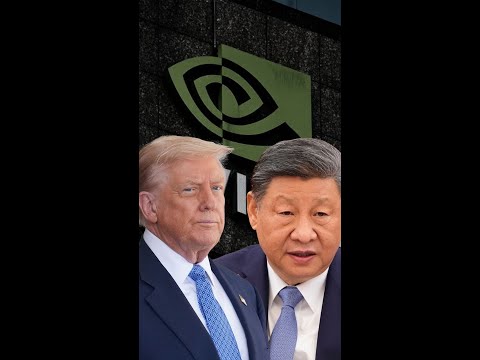
Market Dynamics & Geopolitics - 中国公司被要求减少或停止购买英伟达H20芯片,转而依赖华为等本土选项[2][3] - 尽管中国有本土替代品,但由于英伟达在生态系统和软件兼容性方面的优势,中国市场对英伟达芯片仍有需求[14][15] - 深势科技(Deepseek)曾因华为芯片难以使用而延迟R2项目,表明其更倾向于使用英伟达产品[16] - 中国刺激本地芯片需求的举措是必然趋势,与“被冒犯”无关[13] Nvidia's Financials & Revenue Impact - 目前英伟达的财报数字中,来自中国的收入为零[6][10] - 上一季度,中国市场贡献了46亿美元的收入,约占总收入的近13%[7] - 市场对H20禁令解除后,中国市场恢复出货对英伟达总收入的影响存在分歧[8][9] - 即使可以自由销售,恢复供应链也需要时间,预计本季度不会有明显收入,下季度影响也很小,可能要到年底才能在数据上有所体现[10][11] Competitive Landscape - 华为的昇腾芯片在计算能力上不如英伟达,但价格更低,更本土化[3][4] - 中国AI初创公司DeepSeek同时使用华为和英伟达的芯片,表明本土芯片有一定竞争力[4] - 英伟达在性能方面有所限制,但其生态系统和软件兼容性具有优势[14]


Sen. Chris Coons on China chip sales, U.S. government stake in Intel and Fed Gov. Lisa Cook
CNBC Television· 2025-08-21 13:14
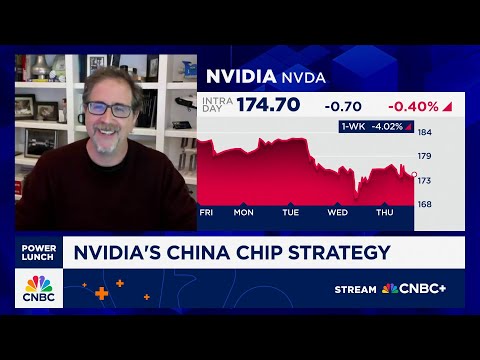
group of Senate Democrats writing a letter to President Trump asking him to walk back his deal to sell chips to China, saying the following. The willingness displayed in this arrangement to negotiate away America's competitive edge that is key to our national security in exchange for what is in effect a commission on a sale of AI enabling technology to our main global competitor is cause for serious alarm. Joining us right now uh to sound that alarm, Delaware Senator Chris Coons, who signed that letter.Good ...
伟仕佳杰(00856) - 2025 Q2 - 业绩电话会
2025-08-21 09:30
Financial Data and Key Metrics Changes - Revenue grew by 13.6%, reaching HKD 45.5 billion, while profit attributable to equity shareholders increased by 34.7%, reaching HKD 610 million, with an EPS of HKD 0.4406 and ROE of 13.7%, significantly higher than the Hang Seng Index average ROE of 10.94% [3] - The company has maintained a steady growth in revenue since being listed, with a CAGR of 24% and an average annual growth rate of 28% for net profit [4] Business Segment Data and Key Metrics Changes - Enterprise Systems revenue increased by 14.1%, from 22.5 billion yen to 25.7 billion yen, while Consumer Electronics grew by 7.5%, from 15.9 billion yen to 17.2 billion yen [6] - Cloud computing revenue grew exponentially by 67.9%, from 1.56 billion yen to 2.61 billion yen [7] Market Data and Key Metrics Changes - North Asia revenue increased from 26.4 billion yen to 28.7 billion yen, while Southeast Asia grew by 22.5%, from 13.6 billion yen to 16.7 billion yen [7] - Southeast Asia saw significant growth in various countries: Thailand (50%), Philippines (45.4%), Malaysia (31%), and Indonesia (30%), with Singapore experiencing a revenue decrease of 19% [10][11] Company Strategy and Development Direction - The company aims to become one of the largest ICT industry solutions technology platforms in the Asia Pacific region, focusing on digital construction and maintaining a leading position in the industry [15] - The strategy includes enhancing cross-border payment efficiency through innovative technologies like stablecoins and creating value in the digital economy [2] Management's Comments on Operating Environment and Future Outlook - Management expressed optimism about the sustainable growth of AI computing demand, which has driven revenue in Southeast Asia [20] - The company plans to continue investing in AI and cloud capabilities, with expectations of further growth in these areas [24][30] Other Important Information - The company maintains a stable dividend payout policy at around 35% and has no immediate plans to increase the payout ratio [31] - There are ongoing considerations for M&A expansions, with a strong intention to accelerate the process [32] Q&A Session Summary Question: Regarding AI and Southeast Asia strategy amidst trade conflicts - Management highlighted that AI infrastructure demand has positively impacted revenue, and they are exploring opportunities for domestic products in Southeast Asia [19] Question: Details on CloudStar's business development - Management discussed the advantages of CloudStar in multi-cloud management and the ongoing investments in R&D and AI capabilities [24] Question: Future prospects for AI business and revenue growth - Management acknowledged the unexpected 76% growth in AI business and emphasized continued investment in this area [30] Question: Dividend strategy and M&A plans - The company confirmed a stable dividend policy and expressed strong intentions for M&A expansions [31][32] Question: Revenue guidance for the next two to three years - Management indicated challenges in forecasting business in China but noted opportunities in overseas markets, particularly in Southeast Asia [33]
中国云计算深度分析-China Cloud Deep Dive
2025-08-20 04:51
Summary of China Cloud Market Research Industry Overview - The research focuses on the **China Cloud Market** with projections from 2020 to 2027, indicating significant growth in market size and revenue. - The market is expected to grow from **RMB 187.2 billion** in 2020 to **RMB 899.1 billion** by 2027, reflecting a compound annual growth rate (CAGR) of approximately **14%** from 2023 to 2027 [3][3]. Key Market Data - **Market Size Projections**: - 2020: RMB 187.2 billion - 2021: RMB 262.3 billion (40% YoY growth) - 2022: RMB 393.2 billion (50% YoY growth) - 2023: RMB 500.2 billion (27% YoY growth) - 2024: RMB 589.1 billion (18% YoY growth) - 2025E: RMB 688.2 billion (17% YoY growth) - 2026E: RMB 790.8 billion (15% YoY growth) - 2027E: RMB 899.1 billion (14% YoY growth) [3][3]. Market Share of Major Players - **AliCloud**: - 2023: 21% - 2024: 20% - 2025E: 21% - 2026E: 22% - 2027E: 23% - **Tencent Cloud**: - 2023: 12% - 2024: 11% - 2025E: 11% - 2026E: 11% - 2027E: 12% - **Huawei Cloud**: - 2023: 11% - 2024: 12% - 2025E: 12% - 2026E: 14% - 2027E: 15% - **China Telecom**: - 2023: 19% - 2024: 19% - 2025E: 19% - 2026E: 18% - 2027E: 17% - **China Mobile**: - 2023: 17% - 2024: 17% - 2025E: 16% - 2026E: 15% - 2027E: 14% [3][3]. Competitive Landscape - The competitive landscape shows that **AliCloud** remains the market leader, but its market share is declining, while **Huawei Cloud** is gradually increasing its share. - The **China Telecom** and **China Mobile** are also significant players, with their cloud services growing rapidly [5][5]. Benchmarking Against the US Market - The research indicates that the **China cloud market** has a potential **4x upside** when benchmarked against the US market, highlighting the disparity in cloud-related spending as a percentage of GDP [10][10]. - **Cloud-related spending** in China is significantly lower than in the US, suggesting room for growth in the coming years [10][10]. Margin Analysis - The margins of Chinese cloud operators are significantly lower than their US counterparts, indicating potential for improvement in operational efficiency and profitability [16][16]. Digitalization Trends - **Enterprise digitalization revenue** is outpacing traditional telecom service revenue, with a projected CAGR of **18%** from 2022 to 2024 for enterprise digitalization services [19][19]. - This trend indicates a shift in focus for telecom operators towards cloud and digital services, which are becoming increasingly important for revenue growth [19][19]. Conclusion - The **China Cloud Market** is poised for substantial growth, driven by increasing digitalization and cloud adoption across various sectors. - Major players are adapting to the competitive landscape, with a focus on enhancing service offerings and improving margins to capture a larger share of the growing market.




X @Bloomberg
Bloomberg· 2025-08-19 21:00
Don't be fooled by Beijing's icy reception to the return of Nvidia's H20 chips, writes @cathythorbecke. China is buying time for Huawei (via @opinion) https://t.co/sxG5oZg4KK ...
Nvidia developing more powerful AI chip to sell in China: report
New York Post· 2025-08-19 18:23
Core Viewpoint - Nvidia is developing a new AI chip for China, named B30A, which is more powerful than the H20 model currently allowed for sale in the region, but less advanced than the blocked Blackwell B300 design [1][2]. Group 1: Chip Development and Specifications - The B30A chip is expected to deliver about half of the raw computing power of the B300, aligning with President Trump's indication of allowing a chip that is "30 to 50% off" in terms of power [2]. - Nvidia aims to send samples of the new B30A chip to Chinese clients for testing as early as next month [4][10]. Group 2: Regulatory and Market Context - Nvidia's spokesperson stated that the company evaluates various products for its roadmap to compete within government regulations, ensuring all offerings have the necessary approvals [5]. - There are ongoing national security concerns regarding the sale of AI chips to China, which may affect Nvidia's ability to receive regulatory approval for the new chip [8]. Group 3: Financial and Market Share Considerations - Nvidia's revenue from China accounted for approximately 13% of its total revenue in the past financial year, highlighting the importance of the Chinese market for the company [11]. - An unprecedented deal was announced where Nvidia and AMD would give the US government 15% of their revenue from sales in China in exchange for permission to resume sales of the H20 model [6].
Nvidia said to be developing new, more powerful AI chip for sale in China
TechCrunch· 2025-08-19 12:58
Core Insights - Nvidia is developing a new AI chip for the Chinese market, codenamed B30A, which is designed to be less powerful than its flagship B300 Blackwell GPU but more powerful than the currently allowed H20 GPUs [1][2] - The B30A will feature a single-die design, contrasting with the dual-die design of the B300, while retaining similar features such as fast data transmission and support for NVLink [2] - The development of the B30A is reportedly separate from another chip Nvidia is working on for China, indicating a strategic approach to product offerings in response to regulatory environments [3] Regulatory Environment - Recent changes in U.S. policy have relaxed restrictions on exporting high-performance AI chips to China, although approvals for the new B30A chip remain uncertain [4] - The geopolitical landscape, particularly the tensions between the U.S. and China, is influencing the technology supply chain, with critics urging the U.S. to maintain its technological lead [5] Market Strategy - Nvidia emphasizes the importance of the Chinese market, arguing that relinquishing it to competitors like Huawei would be detrimental to its business strategy [5] - The company asserts that all its product offerings are compliant with applicable regulations and are intended for beneficial commercial use [3]
中国 AI芯片,中国芯片控制框架,HBM 何去何从
2025-08-19 05:42
Summary of Key Points from the Conference Call Industry and Company Involved - **Industry**: AI Chips and Semiconductor Manufacturing - **Companies**: Nvidia, AMD, TSMC (Taiwan Semiconductor Manufacturing Company) Core Points and Arguments 1. **Nvidia's Export Licenses**: The U.S. Commerce Department began issuing export licenses for Nvidia's H20 chips to China after CEO Jensen Huang's meeting with President Trump, reversing a previous ban [2][3][4] 2. **High-Bandwidth Memory (HBM) Negotiations**: Chinese officials are pushing for the relaxation of export restrictions on HBM chips during trade negotiations with the U.S. [5][6] 3. **Revenue Sharing Agreement**: Nvidia and AMD agreed to share 15% of their revenues from chip sales in China with the U.S. government as part of the export license agreement [7][8][9] 4. **Constitutional Concerns**: The arrangement of revenue sharing raises constitutional questions, as it may violate the prohibition against taxes on exports [10][11] 5. **U.S. Policy Options**: The U.S. government has several options regarding China and AI, including cutting off all chip access, limiting advanced capabilities, or allowing sales of advanced chips while restricting manufacturing equipment [15][16][21] 6. **Dependency on TSMC**: Allowing Chinese companies to contract with TSMC for chip manufacturing could create dependency on Taiwan, reducing the risk of military action against it [18][20] 7. **Challenges in Chip Manufacturing**: The complexity of chip manufacturing creates a "water runs downhill" effect, where Chinese companies will opt for easier and cheaper solutions, even against government directives [14][17] 8. **Long-term Risks**: Cutting off all access to chips could lead to China developing its own advanced chip manufacturing capabilities, undermining U.S. technological dominance [15][16] 9. **HBM's Role in AI**: HBM is critical for AI chip production, and its manufacturing is both difficult and expensive, which could influence U.S. export policies [22][24] 10. **Market Forces and Chinese Independence**: The Chinese government is likely to continue efforts to create an independent semiconductor supply chain, but success may be limited without U.S. market pressures [21][27] Other Important but Overlooked Content 1. **Potential for Military Competition**: The development of advanced AI in China could lead to military competition with the U.S., necessitating careful policy considerations [21][30] 2. **Rare Earth Metals**: The issue of rare earth metals is highlighted as a significant factor in U.S.-China relations, influencing export policies and negotiations [27] 3. **Nuanced Policy Recommendations**: The discussion suggests a nuanced approach to HBM exports, weighing the benefits of dependency on U.S. technology against the risks of enabling Chinese self-sufficiency [26][24]

Prediction: Nvidia's New China Deal Will Be a Game-Changer. Here's Why
The Motley Fool· 2025-08-17 22:00
Core Insights - Nvidia has agreed to pay 15% of its China sales to the U.S. government, marking a significant development in its operations in the Chinese market [8][11][14] - The company has faced challenges in 2025 due to tariff policies and export controls affecting its influence in the Chinese AI market [2][6] - Despite setbacks, Nvidia's market cap has rebounded to $4.4 trillion, reclaiming its position as the most valuable company globally [1] Market Opportunity - The global total addressable market (TAM) for semiconductors reached $627 billion in 2024, with a projected CAGR of 19%, potentially reaching $2 trillion by 2040 [4] - China is a crucial market for high-performance chipsets, with Nvidia's CEO estimating the AI opportunity in China could be worth up to $50 billion [5] - In 2024, Nvidia generated $130 billion in revenue, with China accounting for approximately 13% of this total [5] Strategic Importance of the Deal - The new agreement allows Nvidia to penetrate the Chinese market with its tailored H20 chips while paying a fixed percentage of sales rather than profits [8][9] - This arrangement is likened to revenue-sharing agreements common in global business practices, particularly in the energy sector [10] - The deal is viewed as a strategic trade-off that helps Nvidia maintain its competitive edge against domestic rivals like Huawei [11] Financial Outlook - Nvidia's forward price-to-earnings (P/E) ratio has expanded but remains lower than previous peaks during the AI revolution, indicating potential for growth [12] - The agreement with Washington is expected to provide renewed momentum and secure revenue in a critical market without significantly impacting profits [14] - As the fundamentals improve, Nvidia's valuation multiples may expand, potentially driving the stock to new highs [15]
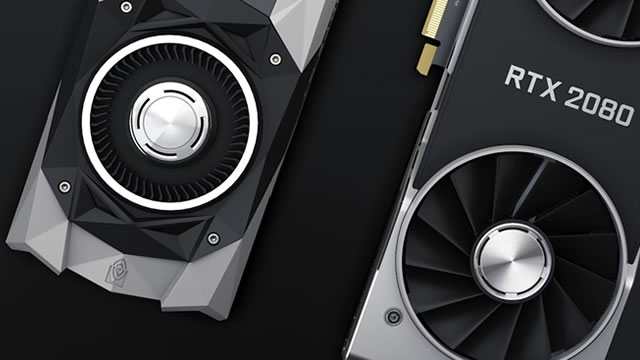
Inside the US-China Showdown Over AI Chips
Bloomberg Television· 2025-08-17 16:40
How good are China's own AI chips. And will their guidance against Nvidia's H20 actually stick. Washington just cleared Nvidia and AMD to sell downgraded AI chips to China, but only if they hand over 15% of those sales back to the US.Trump calls the H20 obsolete, yet still insists there's a market for it in China. The chip that we're talking about, the H20, it's uh it's an old chip, but the H20 is obsolete. You know, it's one of those things, but it still has a market.Beijing's response, security warnings, ...