PACCAR

Search documents
经纬恒润(688326):Q2扭亏为盈 智驾业务成长驱动业绩持续向好
Xin Lang Cai Jing· 2025-10-13 06:27
Core Viewpoint - The company reported a significant increase in revenue for H1 2025, achieving 2.908 billion yuan, a year-on-year growth of 43.48%, while narrowing its net loss to 87 million yuan, a reduction of 73.91% compared to the previous year [1] Group 1: Financial Performance - In Q2 2025, the company achieved revenue of 1.580 billion yuan, a year-on-year increase of 38.90% and a quarter-on-quarter increase of 18.98% [1] - The company turned a profit in Q2 2025 with a net profit of 33 million yuan and a non-recurring net profit of 19 million yuan, marking a significant recovery [1] - The gross margin for Q2 2025 was 24.6%, an increase of 3.7 percentage points year-on-year and 3.3 percentage points quarter-on-quarter [1] Group 2: Business Expansion and Product Development - The company is focusing on automotive electronics, with a wide range of products covering over 80% of the components in the automotive electronics industry [1] - The company has established strategic partnerships with major clients such as Geely, Xiaomi, and XPeng, which are expected to drive continued growth in sales [1] - New products, including intelligent driving domain controllers and integrated control systems, are set to be mass-produced in the second half of the year, enhancing the company's value per vehicle [2] Group 3: Industry Trends and Regulatory Environment - The release of the L2 strong standard is expected to promote the standardization of the intelligent driving industry and expand the market scale, benefiting the company as an industry leader [3][4] - The company is well-positioned to take advantage of the market opportunities arising from the L2 strong standard, with a comprehensive product lineup in DMS, domain control, cameras, and millimeter-wave radar [4] Group 4: Future Growth Projections - The company is projected to achieve revenues of 7.077 billion yuan, 8.624 billion yuan, and 10.177 billion yuan from 2025 to 2027, with net profits of 58 million yuan, 234 million yuan, and 448 million yuan respectively [4] - The expected growth catalysts include the mass production of urban NOA in Q4 2025 and the ramp-up of production capacity at the Malaysia factory [4]

Trump’s Market Maelstrom: Where Policy Meets Punchline
Stock Market News· 2025-10-10 06:00
Market Overview - The stock market is experiencing unprecedented highs, driven by unpredictable policy changes under the Trump administration, leading to a mix of optimism and anxiety among investors [1][2] - Jamie Dimon, CEO of JPMorgan Chase, expresses concern over a potential market correction, estimating a 30% probability within the next two years, significantly higher than the market's general sentiment of 10% [2] Pharmaceutical Sector - The pharmaceutical industry has been particularly affected by Trump's tariff policies, with a recent threat of a 100% import tax on branded drugs, which could be mitigated for companies investing in U.S. manufacturing [3] - Following reports of potential exemptions for generic drugs from tariffs, Indian pharmaceutical stocks surged, with the Nifty Pharma index rising by 1.05% [4] - Pfizer's announcement of a deal to cut drug prices and expand U.S. manufacturing in exchange for a three-year tariff exemption led to an 8.4% increase in large-cap pharma stocks over a month [5] Industrial Sector - The announcement of a 25% tariff on medium- and heavy-duty trucks has created confusion in the North American commercial vehicle market, with output dropping by approximately 30% year-over-year [6][7] - Analysts predict a potential 17% decline in U.S. demand for commercial vehicles in 2025 if the tariffs remain in place, impacting domestic manufacturers [7][8] Trade Relations with China - Renewed threats to halt mass imports from China continue to escalate the trade war narrative, with the U.S. average applied tariff rate reaching 17.9%, the highest in over a century [9][10] - China's response includes new controls over rare-earth exports, indicating a retaliatory stance in the ongoing trade conflict [10] Geopolitical Developments - A peace deal between Israel and Hamas was announced, but market reactions were muted, reflecting a general state of high valuations [11] - The U.S. agreed to purchase 11 icebreaking vessels for $6.1 billion, with limited market impact despite its significance for Arctic security [12] Investor Sentiment - The unpredictable nature of policy announcements has made it challenging for investors to forecast economic conditions, with analysts noting a heightened level of uncertainty [13] - Despite warnings of potential market instability, major indices continue to reach record highs, suggesting a peculiar resilience to chaos [14][15]



The Tariff Tango: Trump’s Latest Market Moves and the Enduring Economic Enigma
Stock Market News· 2025-10-07 06:00
Core Viewpoint - The announcement of a 25% tariff on imported medium and heavy-duty trucks by former President Donald Trump is expected to impact the market and domestic manufacturers significantly, with a scheduled implementation date of November 1, 2025 [1][12]. Market Reaction - The stock market showed a mixed reaction, with major indices like the DOW, S&P 500, and NASDAQ posting gains following the tariff announcement [2]. - Specific sectors, particularly domestic truck manufacturers, experienced notable stock price increases, indicating a positive market sentiment towards the tariff [2]. Company-Specific Impacts - PACCAR, a leading U.S. truck manufacturer, saw its stock price rise by 6.7% in pre-market trading and 4.9% by the end of the trading session on September 26, reflecting investor optimism about increased domestic demand and profit margins due to the tariff [3][12]. - Ford Motor Co. also experienced a stock increase of 3.4% on September 26, reaching its highest level since July 2024, although analysts noted that the impact of the tariff on Ford's overall business might be limited due to its small production of Class 7 trucks [4][12]. Historical Context - Trump's trade policies, characterized by unpredictability and a focus on tariffs, have evolved from surprise announcements to a more established routine, affecting market stability and investment strategies [5][11]. - The previous U.S.-China trade tensions resulted in a significant loss of $1.7 trillion in market value, highlighting the potential risks associated with such protectionist measures [6]. Analyst Perspectives - Analysts from Cambridge University Press pointed out the inconsistency of Trump's tariff actions, which often lead to destabilizing effects on the stock market and the U.S. dollar [7]. - The tariffs, while aimed at foreign producers, ultimately act as a hidden tax on American consumers and businesses, raising concerns about long-term economic implications [8][13]. Strategic Adaptations - Companies and governments are reportedly implementing contingency plans to manage disruptions caused by U.S. trade policies, indicating a shift towards more resilient supply chains [10]. - The Hudson Institute suggests that Trump's trade policy aims to revitalize American manufacturing, using tariffs to provide domestic producers with a competitive edge [10].

Trump’s Market Mayhem: A Daily Dose of Dips and Delights
Stock Market News· 2025-10-02 18:00
Market Reactions to Tariff Announcements - President Trump announced a 100% tariff on all movies made outside the United States, aiming to rejuvenate the American film industry, which led to a decline in shares for Netflix and Warner Bros Discovery [2][3] - The immediate market reaction included Netflix shares dropping 1.4% and Warner Bros Discovery falling 0.6% on September 29, with previous tariff threats causing even larger declines [3] - Other sectors affected included home furnishings, with Williams-Sonoma and RH experiencing significant drops in share prices due to new tariffs on furniture and lumber [4] Impact on the Pharmaceutical Industry - The pharmaceutical sector faced a potential 100% tariff on branded drugs unless companies agreed to build manufacturing plants in the U.S. or reduce prices [6] - Pfizer secured a three-year reprieve from tariffs by committing to cut U.S. drug prices by up to 85%, resulting in a 6.8% surge in its stock price [7] - Other pharmaceutical companies, including Roche and Novartis, also saw stock gains following the Pfizer deal, indicating a positive market response to tariff negotiations [8][9] Agricultural Sector Developments - President Trump announced a meeting with Chinese President Xi Jinping to discuss agriculture, which is expected to be a major topic, particularly regarding soybean purchases [10] - Following hints of positive trade developments, soybean prices rebounded, with November soybeans rising 1.3% to $10.15 1/4 a bushel on October 1 [11] - The volatility in soybean prices reflects the market's sensitivity to trade news, with previous declines occurring after a lack of concrete outcomes from Trump-Xi communications [11] Regulatory Changes in Banking - The Trump administration is proposing significant changes to U.S. capital rules, aiming to reduce regulatory burdens on banks, which could lead to a decrease in capital requirements [12][13] - While large banks like JPMorgan Chase and Bank of America may face challenges from lower interest margins, the overall sentiment in the banking sector remains optimistic about potential deregulation [13] - Critics warn that these changes could leave the financial system vulnerable, estimating a potential $200 billion reduction in banking system capital [13] Overall Market Trends - Major indices, including the Dow Jones and S&P 500, have generally continued to rise despite the volatility caused by tariff announcements and trade negotiations [15] - The market is experiencing a "stagflation-lite" scenario, with predictions of higher inflation and unemployment linked to the ongoing tariff impacts [15] - Investors are left questioning the sustainability of market gains amid the unpredictable nature of presidential announcements and their effects on various sectors [16]


Asian shares trade mostly higher after Wall Street snaps its 3-day losing streak
ABC News· 2025-09-29 05:49
Market Overview - Asian shares mostly increased following Wall Street's recovery from a three-day losing streak, reducing its weekly losses [1][2] - The Hang Seng in Hong Kong rose by 1.5% to 26,518.03, while the Shanghai Composite index gained 0.1% to 3,832.65 [3] - Australia's S & P/ASX 200 increased by 0.7% to 8,545.70, and South Korea's Kospi surged by 1.3% to 3,430.57 [3] U.S. Economic Indicators - U.S. inflation rose to 2.7% in August from 2.6% in July, aligning with economists' forecasts, although it remains above the Federal Reserve's 2% target [5][6] - Consumer sentiment in the U.S. was weaker than expected, with inflation expectations for the next 12 months decreasing slightly to 4.7% from 4.8% [7] Federal Reserve Actions - The Federal Reserve recently cut interest rates for the first time this year, but further cuts are uncertain due to potential inflation concerns [6] - The market is closely monitoring the Fed's actions as rising stock prices have led to criticism regarding their valuation [6] Tariffs and Market Reactions - President Trump's announcement of new tariffs on various imports, including pharmaceuticals and heavy trucks, has created uncertainty in the market [8][9] - Companies like Paccar, which produces trucks, saw a 5.2% increase in stock price, while major pharmaceutical firms like Eli Lilly and Pfizer also experienced slight gains [9] Oil Market Dynamics - U.S. benchmark crude oil prices fell by 49 cents to $65.23 per barrel, while Brent crude declined by 42 cents to $68.80 per barrel [10] - Concerns over potential oversupply have arisen due to reports that OPEC plus nations may increase production limits [10]

The Trump Market: Where Chaos Meets a Collective Shrug
Stock Market News· 2025-09-28 06:00
Tariff Announcements and Market Reactions - A 100% tariff on branded or patented pharmaceutical products is set to take effect on October 1, 2025, aimed at boosting domestic manufacturing and addressing a "feud with Tylenol" [3] - Major pharmaceutical companies like Merck, Eli Lilly, and Johnson & Johnson saw minimal stock gains, as they had already announced U.S. expansion plans [4] - European pharmaceutical firms experienced a decline in stock prices, with shares of Lonza, Novartis, and Roche dropping around 1.2%, while Japanese firm Sumitomo Pharma fell 3.5% [5] Furniture and Truck Tariffs - Upholstered furniture will face a 30% tariff, while kitchen cabinets and bathroom vanities will incur a 50% tariff, effective October 1, 2025, justified by "national security" [6] - Import-reliant furniture retailers like RH and Wayfair saw significant stock declines, with RH falling 4.16% and Wayfair nearly 3% [7] - Domestic manufacturers such as La-Z-Boy benefited from the tariffs, with La-Z-Boy's stock rising 8% [8] - A 25% import tax on heavy trucks positively impacted American truck manufacturer Paccar, whose stock surged 5.16% [9] Broader Market Trends - Despite the tariff announcements, major U.S. indices finished higher on September 27, 2025, with the Dow Jones up 0.65%, S&P 500 up 0.59%, and Nasdaq up 0.44% [12] - Analysts attributed this rally to relief over inflation data and a growing tendency for the market to overlook tariffs [13] - The overall market's ability to adapt to unpredictable trade policy announcements reflects a blend of selective attention and resilience [14]

US stocks end higher after as-expected inflation data; S&P 500, Nasdaq post weekly declines
The Economic Times· 2025-09-27 03:48
Economic Overview - Market participants are weighing signs of a stronger economy against expectations for more interest rate cuts from the Federal Reserve, which recently cut rates for the first time since December [1][10] - Investors are positioning for quarter-end, anticipating volatility due to upcoming earnings reports [3][11] Earnings Season - The S&P 500's third-quarter earnings season is set to begin around mid-October, which is expected to influence market dynamics [4][11] Stock Market Performance - The Dow Jones Industrial Average rose by 299.97 points (0.65%) to 46,247.29, the S&P 500 gained 38.98 points (0.59%) to 6,643.70, and the Nasdaq Composite increased by 99.37 points (0.44%) to 22,484.07 [6][11] - For the week, the Dow was down 0.2%, the S&P 500 down 0.3%, and the Nasdaq fell 0.7% [6][11] Company-Specific Developments - Shares of truck maker Paccar rose by 5.2% following the announcement of new import tariffs on heavy-duty trucks [11] - Drugmaker Eli Lilly's shares increased by 1.4% amid the same tariff announcements [5][11] - Electronic Arts shares surged by 14.9% after reports of advanced talks to go private [11] Market Sentiment and Fed Commentary - Richmond Fed Bank President Thomas Barkin expressed low confidence in inflation forecasts due to ongoing tariff impacts [7][11] - Fed Vice Chair Michelle Bowman highlighted the need for decisive action to address decreasing labor market dynamism [7][11] Market Activity - Advancing issues outnumbered decliners by a 2.25-to-1 ratio on the NYSE, with 205 new highs and 53 new lows [8][11] - On the Nasdaq, 2,920 stocks rose while 1,729 fell, resulting in a 1.69-to-1 ratio of advancing to declining issues [8][11] - Trading volume on U.S. exchanges was 16.98 billion shares, below the 18.11 billion average over the last 20 trading days [9][11]

Wall Street Rebounds as Inflation Data Aligns with Expectations; Tech and Pharma Lead Gains
Stock Market News· 2025-09-26 18:07
Market Overview - U.S. equities are rebounding strongly as investors react positively to the August Personal Consumption Expenditures (PCE) inflation report, which met expectations and alleviated concerns about the Federal Reserve's monetary policy [1][3] - Major U.S. stock indexes are in positive territory, with the Dow Jones Industrial Average up 0.8% to 46,316 points, the S&P 500 climbing 0.5% to 6,641, and the Nasdaq Composite increasing 0.3% to 22,455 [2] Economic Indicators - The August PCE inflation report showed consumer prices rose 2.7% year-over-year, slightly up from July's 2.6%, while core PCE inflation remained at 2.9% [3] - The University of Michigan's Consumer Sentiment survey for August was at 55.1, slightly below expectations, but consumer spending rose 0.6% in August, exceeding forecasts [4] Upcoming Events - The upcoming U.S. employment report is anticipated, with nonfarm payrolls expected to rise by 39,000 in September and the unemployment rate forecast to remain at 4.3% [5] - Other important economic indicators include worldwide manufacturing PMI surveys and Eurozone inflation numbers [6] Corporate Earnings - Several S&P 500 companies are set to report quarterly results, including Carnival, Lamb Weston Holdings, and Nike [7] - BlackBerry reported earnings of $0.04 per share, leading to an 8.8% stock increase, while CarMax saw a significant decline of 20.1% after missing earnings estimates [13] Sector Performance - Intel shares surged 6% today, continuing a strong performance with over 20% gains since Monday, partly due to acquisition discussions with Apple [8] - Boeing's stock rose 4.4% after the FAA allowed the company to sign off on its own planes again [10] - The pharmaceutical sector is performing well, with stocks like Eli Lilly and Pfizer nudging higher following a new tariff plan for drugmakers [14] Market Themes - The tech sector is experiencing significant growth driven by artificial intelligence, while consumer-facing sectors are struggling with high interest rates, indicating a "two-speed economy" [15] - In the cryptocurrency market, Bitcoin fell below $110,000, marking a decline of over 5% for the week [16]
Trump’s Tariff Tango: Markets Brace for Another Round of Economic ‘Surprises’
Stock Market News· 2025-09-26 18:00
Tariff Announcements - Former President Donald Trump announced new tariffs, including a 100% tariff on imported branded and patented pharmaceutical products, a 50% tariff on kitchen cabinets and bathroom vanities, a 30% tax on upholstered furniture, and a 25% levy on heavy trucks, effective October 1st [2][3][4] Pharmaceutical Sector Impact - Asian pharmaceutical stocks experienced declines, with Japan's Topix pharmaceutical index down 1% to 1.2%, and South Korea's SK Biopharmaceuticals shares falling 2.7% to 3.6% [3][4] - In India, the Nifty Pharma index plunged 1.81% to 2.45%, with Sun Pharma losing 2% to 2.55% and Wockhardt tumbling over 9% [4] - European pharmaceutical shares had a muted reaction, with Novo Nordisk slipping 1.9% to 3.49%, while Novartis stated the tariffs would have "no impact" due to a $23 billion investment in U.S. infrastructure [5] U.S. Pharmaceutical Companies - American pharmaceutical companies saw gains, with Eli Lilly rising 0.9% to 1.3% and Pfizer adding 0.2%, benefiting from the 100% tariff on imported drugs [6] Home Goods Sector Reaction - The home furnishings sector reacted negatively, with RH shares falling 2.6% to 5.4% and Wayfair initially slipping 3.5% to 6% but later recovering to a 0.9% gain [7][8] - American-based furniture manufacturers like La-Z-Boy and Ethan Allen Interiors saw gains due to the tariffs [8] Heavy Trucks Sector - The 25% tariff on heavy truck imports benefited American truck maker Paccar, whose shares surged 5% to 6%, while European counterparts like Daimler Truck and Traton saw declines [9] Broader Market Reaction - Despite the tariff news, the broader U.S. markets showed resilience, with the Dow Jones Industrial Average gaining 369 points (+0.8%) and the S&P 500 rising 36 points (+0.56%) [11] - The overall market reaction was described as "modest," indicating that markets have adapted to tariff announcements over time [11][12]
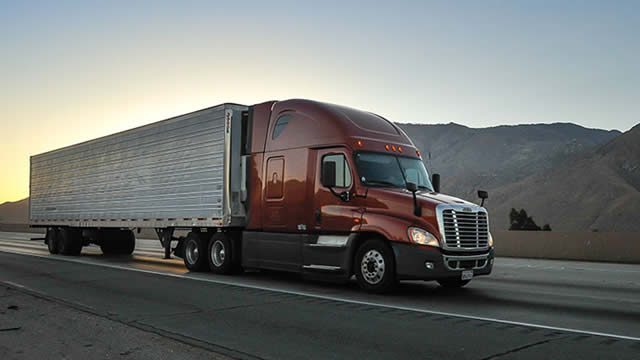
Paccar shares rise after Trump announces tariffs on foreign heavy-duty trucks
Invezz· 2025-09-26 15:34
Core Viewpoint - Shares of US truck manufacturer Paccar increased following President Donald Trump's announcement of new tariffs on foreign-made heavy-duty trucks, aimed at protecting domestic manufacturing [1] Group 1: Company Impact - Paccar's stock price rose as a direct response to the tariff announcement, indicating a positive market reaction to the protective measures for domestic manufacturers [1] Group 2: Industry Implications - The new tariffs are expected to impact the competitive landscape of the heavy-duty truck market, potentially benefiting US manufacturers like Paccar while posing challenges for foreign competitors [1]