智能驾驶域控制器

Search documents
德赛西威20260327
2026-03-30 05:15
Summary of Conference Call for Desay SV Automotive Company Overview - **Company**: Desay SV Automotive - **Industry**: Automotive electronics and intelligent driving solutions Key Points Financial Performance and Projections - **Gross Margin**: Expected fluctuations in 2026 due to increased OEM model share and low-margin sensor shipments, but overall stability is anticipated [2][4] - **Cost Management**: Storage chip costs have doubled, but the company successfully transferred costs to downstream clients and gained orders from competitors facing chip shortages [2][5] - **Revenue Recognition**: New order amounts disclosed annually are based on the full lifecycle, with revenue recognition varying by project, some completed within the year and others over two to three years [3] Product Development and Market Position - **Humanoid Robots**: Orders for humanoid robot domain controllers using NVIDIA solutions have been secured, with mass production expected in 2026 [2][6] - **Autonomous Vehicles**: The company is entering the market with a focus on logistics and urban delivery, leveraging its expertise in automotive-grade products without engaging in price wars [7] - **Product Offerings**: The Orin Y solution for autonomous vehicles was developed by the end of 2025, with ongoing development for other platforms [7][8] International Expansion - **Overseas Business Growth**: Significant growth is projected for 2027-2028, with a focus on Europe and Southeast Asia. A high-tech driving domain control project for Tata Motors is set for mass production in Q4 2026, valued at approximately 1.7 billion yuan [2][9] - **Market Strategy**: The company aims for 20% of revenue from overseas by 2030, supported by its Spanish factory and advanced driving technologies [2][16] Customer Base and Concentration - **Client Diversification**: The largest customer now accounts for less than 15% of sales, reducing dependency on any single client [2][10] - **Strategic Partnerships**: Collaborations with major automotive manufacturers like Honda and Volkswagen have been established [10] Product Pricing and Trends - **Price Trends**: Prices for intelligent driving domain controllers are slightly declining, with specific price points for various chip solutions detailed [11] - **Integrated Solutions**: The cabin and driving integration solution is expected to save clients about 20% in costs, with a product launch anticipated in H1 2026 [12] Inventory and Supply Chain Management - **Inventory Management**: Increased inventory levels are due to proactive stocking in response to rising raw material prices, not directly linked to customer vehicle iteration speeds [13] - **Supplier Relationships**: Strong relationships with suppliers allow the company to secure priority supply amidst chip shortages [5][15] Future Outlook - **Growth Expectations**: The company has not provided specific revenue and profit guidance for 2026 but anticipates a doubling of sensor shipments and increased penetration of high-value products [19] - **Logistics Vehicle Orders**: Information on logistics vehicle orders will be disclosed mid-2026, with modest growth expected in overseas business for that year [20][21] Additional Notes - **HUD Business**: The HUD business is expected to double in sales in 2026, with efforts focused on market penetration in 2025 [17] - **Hong Kong Listing**: Plans for a Hong Kong listing are ongoing, with hopes to complete by the end of 2026 [18]
德赛西威20260310
2026-03-11 08:11
Summary of Conference Call for Desay SV Automotive Company Overview - Desay SV Automotive focuses on intelligent cockpit and driving solutions, with significant growth in smart driving and cockpit businesses in 2025 [2][3]. Key Financial Performance - **Revenue**: Achieved approximately 32.6 billion yuan in 2025, a year-on-year increase of about 18% [3]. - **Net Profit Margin**: 7.6%, up by 0.3 percentage points from the previous year, driven by reduced impairment losses [3]. - **Gross Margin**: No growth in gross margin; however, profit margin improvement was attributed to a decrease in credit impairment losses [3][8]. Business Segmentation - **Smart Cockpit**: Contributed approximately 65% of total revenue, with domain controller products increasing from 19% to 24% of this segment [3]. - **Smart Driving**: Revenue share increased from 26% to 33%, with sensors contributing significantly to this growth [3]. New Orders and Growth Prospects - **New Orders**: Over 35 billion yuan in new orders for 2025, exceeding current revenue levels [4]. - **Future Growth**: Expected growth driven by multiple segments, including smart driving and AI technologies, with significant orders anticipated in 2026 [4][5]. International Expansion - **Overseas Orders**: Approximately several billion yuan in new overseas orders, with expectations for a doubling of production orders in 2026 [6]. - **Profitability**: Overseas products typically have gross margins 7-10 percentage points higher than domestic counterparts [6]. Product Development and Innovation - **AI Cockpit**: Transitioning to higher computing power, with expectations for AI cockpit computing power to increase from tens of TOPS to over 300 TOPS by 2026 [2][4]. - **New Products**: Introduction of AI Cube robot domain controllers and unmanned logistics vehicles, with production targets set for 2026 [2][4]. Cost and Margin Considerations - **Management Expenses**: Increased significantly in Q4 2025 due to stock incentive expenses [7]. - **Gross Margin Outlook**: Expected downward pressure on gross margin in 2026 due to rising costs of storage chips and changes in product mix [8][18]. Client Contributions and Market Dynamics - **Key Clients**: Major contributions from clients like Li Auto, Chery, and Xiaomi, with a balanced client structure where top clients each account for nearly 15% of revenue [2][3]. - **Market Trends**: Anticipated growth in traditional automotive brands deploying high-performance configurations, which will support revenue growth in 2026 [12]. Strategic Initiatives - **Hong Kong Listing**: The company has initiated the process for a Hong Kong listing to support long-term business expansion [17]. - **Supply Chain Advantages**: The company holds a strong position in the supply chain, which is expected to enhance its market share amid rising material costs [18]. Conclusion - Desay SV Automotive is positioned for robust growth in the coming years, driven by innovative product offerings, a balanced client portfolio, and strategic international expansion. The company is navigating challenges related to cost pressures while maintaining a focus on enhancing profitability and market presence.
趋势研判!2026年中国智能驾驶域控制器市场政策、产业链全景、发展现状及未来发展趋势分析:爆发增长迈向千亿市场,融合自主驱动产业进阶[图]
Chan Ye Xin Xi Wang· 2026-02-07 01:18
Core Insights - The article emphasizes the significance of the Automotive Domain Controller (ADCU) as the "brain" of vehicles, integrating various functions essential for advanced autonomous driving [1][5] - The ADCU market is experiencing explosive growth, with projections indicating a rise from 9.8 billion yuan in 2020 to 167.4 billion yuan by 2024, and further growth expected to reach 447.6 billion yuan by 2026 [1][6] Industry Overview - The ADCU is a core component in the evolution of intelligent connected vehicles, transitioning from distributed to centralized electronic architectures [2][5] - Recent government policies have provided robust support for the industry, focusing on reliability, standardization, AI integration, and technology transfer [1][5] Market Dynamics - The ADCU market is projected to grow at a compound annual growth rate (CAGR) of 103.1% from 2020 to 2024, driven by multi-sensor fusion and the acceleration of in-house development by vehicle manufacturers [6][8] - The overall intelligent driving domain electronic market is expected to grow from 1636.7 billion yuan in 2020 to 2595.1 billion yuan by 2025, with a CAGR of 9.66% [5][6] Product Classification - ADCUs are categorized into four types based on functionality and application scenarios, including driving safety controllers, integrated driving and parking controllers, cockpit and driving integrated controllers, and basic parking controllers [3][4] Industry Chain Analysis - The ADCU industry chain consists of upstream components like chips and sensors, midstream integration and system development, and downstream vehicle manufacturing, with a focus on passenger vehicles and emerging commercial vehicle markets [7][8] - The demand for ADCUs is primarily driven by the intelligent driving automotive sector, with significant growth in new energy vehicles [8] Future Trends - The industry is expected to evolve towards deep integration of architectures, self-sufficiency in the supply chain, and innovative application scenarios [9][11] - Key trends include the transition to a collaborative model of central computing and regional control, the deepening of domestic substitution in the supply chain, and the expansion of diverse application scenarios and business models [10][12]


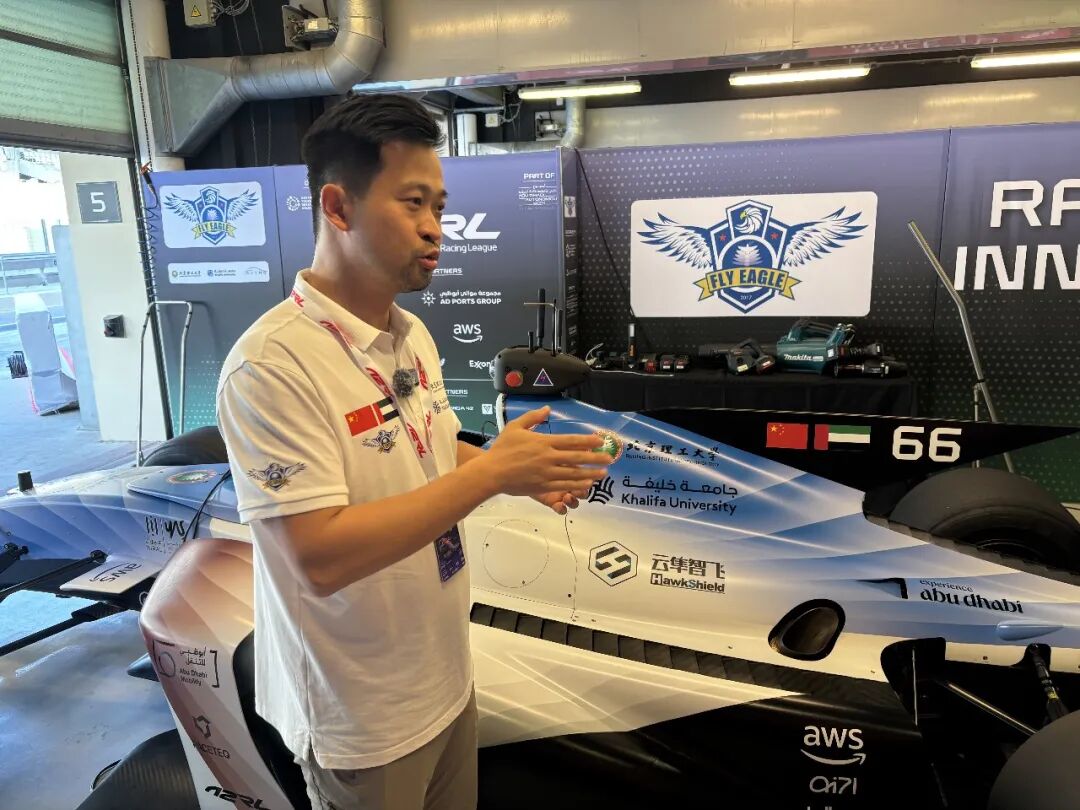
中国无人驾驶“军团”,“武装”阿布扎比!
Xin Lang Cai Jing· 2026-01-30 17:42
Core Insights - The article highlights the rapid development and commercialization of autonomous driving technology in Abu Dhabi, driven primarily by Chinese companies [5][19]. - Chinese firms are establishing a significant presence in Abu Dhabi's autonomous driving sector, with a focus on creating a comprehensive ecosystem for technology and business operations [12][24]. Group 1: Chinese Companies' Involvement - Chinese companies, including WeRide and Baidu, have successfully launched the world's first fully autonomous taxi service integrated with Uber in Abu Dhabi [4][7]. - The autonomous driving initiative in Abu Dhabi is a result of years of collaboration between Chinese enterprises and the local government, leading to the issuance of the first autonomous driving road test license in the UAE [5][6]. - By November 2025, the average daily mileage of test vehicles from Baidu's "LuoBo Kuaipao" service exceeded 200 kilometers, maintaining a zero-accident rate without human intervention [5][6]. Group 2: Government Support and Market Structure - The Abu Dhabi government has adopted a proactive role in supporting autonomous driving, creating a unique model that integrates regulatory bodies, private sectors, and academia to facilitate business growth [13][14]. - Achieving profitability for autonomous taxi operations in Abu Dhabi requires only 200 vehicles, significantly lower than the thousands needed in other markets, due to favorable market conditions such as short average trip distances and high fare rates [12][14]. - The local population structure, with a high percentage of expatriates, minimizes resistance to job displacement concerns associated with autonomous driving technology [15][18]. Group 3: Strategic Goals and Future Prospects - Abu Dhabi's push for autonomous driving is part of a broader strategy to reduce reliance on oil and develop a knowledge-based economy, with significant investments planned in AI and autonomous technologies [19][20]. - The UAE aims for AI to contribute 335 billion dirhams (approximately 633.6 billion RMB) to its GDP by 2031, with autonomous driving identified as a key area for growth [19][20]. - The autonomous driving market in the UAE is projected to reach $2.73 billion by 2030, with a compound annual growth rate of 19.2% [19].
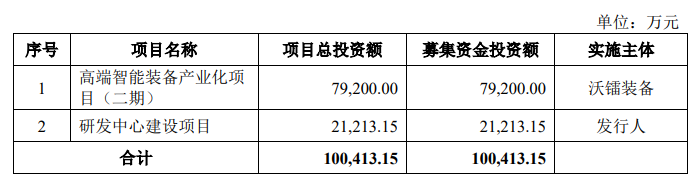
沃镭智能科创板IPO已问询 位居本土第三方检测装备厂商第一位
智通财经网· 2026-01-15 00:16
Core Viewpoint - Hangzhou Wolai Intelligent Technology Co., Ltd. has applied for listing on the Shanghai Stock Exchange's Sci-Tech Innovation Board, with a fundraising target of 1.004 billion yuan, and is recognized as a key "little giant" enterprise in the field of intelligent manufacturing solutions for emerging industries such as new energy vehicles and power semiconductors [1]. Group 1: Company Overview - Wolai Intelligent focuses on the research, development, production, sales, and service of intelligent detection equipment and intelligent manufacturing production lines, providing comprehensive solutions for the new energy vehicle and power semiconductor industries [1]. - The company has developed advanced detection technologies and intelligent control technologies, achieving domestic leadership in automotive electronic testing technology platforms and breaking the long-standing foreign monopoly in related technologies and products [1][2]. Group 2: Market Position and Technology - The company has established six core technologies, including multi-parameter mixed testing technology for automotive electronics and high-precision assembly technology for automotive electronic intelligent measurement and control [2]. - Wolai Intelligent has a high market share in key application areas such as automotive electronic controllers and intelligent driving domain controllers, with a projected market share of 10.2% in production-level intelligent driving domain controller testing equipment by mid-2025, ranking first among domestic third-party testing equipment manufacturers [3]. Group 3: Financial Performance - The company reported revenues of approximately 262 million yuan, 377 million yuan, 734 million yuan, and 267 million yuan for the years 2022, 2023, 2024, and the first half of 2025, respectively [4]. - Net profits for the same periods were approximately 26.8 million yuan, 34.8 million yuan, 84.9 million yuan, and 20.2 million yuan [4]. - The total assets of the company reached approximately 1.857 billion yuan in the first half of 2025, with a debt-to-asset ratio of 65.13% [5].
均胜电子早盘股价走强涨7%,今年获150亿元舱驾融合CCU等产品全球订单
Xin Lang Cai Jing· 2025-12-17 04:41
Group 1 - The core viewpoint of the article highlights the active trading in the autonomous driving theme, with Junsheng Electronics' stock price rising significantly, reflecting a notable increase in market sentiment [1][2] - The Ministry of Industry and Information Technology has officially announced the first batch of L3 conditional autonomous driving vehicle permits in China, marking a critical step from testing to commercial application for L3 autonomous driving [1][2] - Junsheng Electronics is expanding its presence in the automotive intelligence sector, having launched intelligent driving solutions such as multi-chip platform-based intelligent driving domain controllers and cockpit domain central computing units (CCU), supporting L2++ to L4 level intelligent driving functions across all scenarios [1][2] Group 2 - In September 2025, Junsheng Electronics announced that its integrated products, including intelligent driving, intelligent networking, and intelligent cockpit CCUs, secured global orders worth 15 billion yuan from two leading OEMs, with mass production expected to begin in 2027 [1][2]

L3级自动驾驶落地关键一步,机构称L3正式准入节点有望在2026年后到来
Zhi Tong Cai Jing· 2025-12-16 02:05
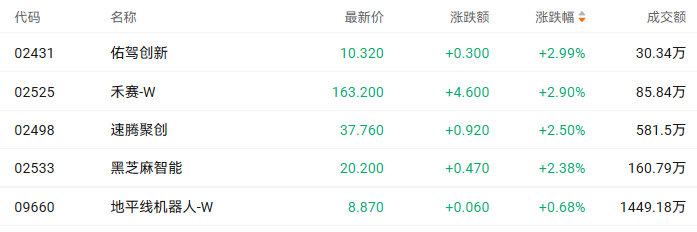
Core Viewpoint - The Ministry of Industry and Information Technology of China has officially granted conditional approval for the first batch of L3-level autonomous driving vehicles, marking a significant step towards the commercialization of L3 autonomous driving in the country [1][3]. Group 1: Regulatory Developments - Two L3 autonomous driving models, suitable for urban congestion and highway conditions, will be tested in designated areas in Beijing and Chongqing [1][2]. - The approval signifies a transition from "technical validation" to "mass production application" in China's autonomous vehicle industry [3]. - The approval process for L3 vehicles has been ongoing for over a year, with nine automotive companies identified for initial trials [3][4]. Group 2: Market Reactions - Smart driving concept stocks in Hong Kong saw a positive response, with notable increases in share prices for companies such as Youjia Innovation, Hesai Technology, and Suyuan Juchuang [1][2]. - The stock performance reflects investor optimism regarding the future of L3 autonomous driving and its market potential [1][2]. Group 3: Industry Insights - The approval of L3 vehicles is seen as a recognition of technological maturity and a response to societal expectations for smart mobility [3]. - The automotive industry is preparing for a significant increase in demand for L3 and L4 autonomous driving technologies, with expectations for broader implementation by 2025 and 2030, respectively [4][5]. - Key players in the automotive supply chain are gearing up for advancements in technology and compliance with new regulations [5]. Group 4: Company Highlights - Horizon Robotics is positioned as a leader in the advanced driver assistance systems market, providing both chips and algorithms [5][6]. - Black Sesame Technologies has developed high-performance computing solutions for autonomous driving and is collaborating with major automotive OEMs [6][7]. - Youjia Innovation has made strides in both mid-to-high level assisted driving and L4 autonomous driving solutions, securing multiple contracts [7].
L3级自动驾驶落地关键一步,机构称L3正式准入节点有望在2026年后到来(附概念股)
Zhi Tong Cai Jing· 2025-12-16 00:13
Core Viewpoint - The Ministry of Industry and Information Technology has officially granted conditional approval for the first batch of L3-level autonomous driving vehicles in China, marking a significant step towards the commercialization of L3 autonomous driving technology [1] Group 1: Industry Developments - The approval includes two models from Changan and Arcfox, which will be tested in designated areas in Beijing and Chongqing, indicating a shift from testing to commercial application in the autonomous driving sector [1] - The approval reflects the government's support for innovation and the industry's transition from technology validation to mass production [1] - The L3-level autonomous driving implementation involves a collaborative effort across multiple sectors, including vehicle manufacturing, components, software algorithms, communication, and data services [1] Group 2: Policy and Market Trends - The push for L3-level autonomous driving has been ongoing for over a year, with pilot programs initiated in June 2022 involving several major automotive companies [1] - Major cities are actively promoting L3 autonomous driving, with Shanghai designating 583 roads totaling 758.62 kilometers for testing, and other cities like Beijing and Shenzhen also establishing testing routes [2] - The automotive industry is preparing for a surge in demand for intelligent mobility solutions, with expectations for L3 and L4 levels to be implemented in urban areas by 2025 and 2030, respectively [2] Group 3: Investment Opportunities - Investment focus should be on market demand driven by policy compliance, particularly in areas like driver monitoring systems, data recording systems, and testing verification platforms, which will benefit from the implementation of new standards [2] - There are opportunities in technological upgrades, particularly in core components such as intelligent driving domain controllers, automotive-grade chips, and drive-by-wire systems, which will continue to benefit from technological advancements [2] Group 4: Related Companies - Horizon Robotics (09660) is a leading supplier in the advanced driver assistance systems market, providing both chips and algorithms, and has established a strong presence in domestic computing capabilities [3] - Black Sesame Intelligence (02533) has developed high-performance computing solutions for autonomous driving and has partnered with major automotive OEMs, enhancing its product offerings [4] - RoboSense (02498) has achieved significant market leadership in the global automotive lidar market, being recognized for its sales and market share [4] - Youjia Innovation (02431) has made strides in intelligent driving solutions and has secured funding to enhance its capabilities in mid-to-high-level autonomous driving [5]
商业化应用迈出关键一步,首批L3级自动驾驶车型产品获得准入许可
Xuan Gu Bao· 2025-12-15 23:22
Group 1 - The Ministry of Industry and Information Technology has officially granted the first batch of L3 conditional autonomous driving vehicle permits in China, marking a significant step towards commercial application from the testing phase [1] - Two models from Changan Automobile and BAIC Jihe have been approved for pilot testing in designated areas of Beijing and Chongqing, indicating a transition from technology demonstration to regulatory compliance and operational oversight [1] - The next steps involve monitoring vehicle operations and enhancing safety guarantees, while also developing a comprehensive management and regulatory framework for intelligent connected vehicles to promote high-quality development in the industry [1] Group 2 - From an investment perspective, two key areas to focus on are policy-driven market demand, including driver monitoring systems, data recording systems, and testing platforms, which will benefit from the implementation of new standards [2] - The second area is technology upgrades leading to industrial opportunities, with core components such as intelligent driving domain controllers, automotive-grade chips, and drive-by-wire actuators expected to benefit from technological iterations [2] - Guotai Junan predicts that the number of laser radars per L3 vehicle will increase to between 3 and 6, with the main radar upgrading to high-end models, potentially raising the single vehicle value to approximately $500 to $1000, thus expanding market space and strengthening leading companies' advantages [2]

中国一汽斥资逾36亿元入股卓驭科技 加码智能驾驶“大脑”
Zhong Guo Jing Ying Bao· 2025-11-22 05:36
Core Insights - Zhuoyu Technology has announced a strategic investment of over 3.6 billion yuan from China First Automobile Group (FAW), resulting in a post-investment valuation exceeding 10 billion yuan [1] - Zhuoyu Technology will continue to operate as an independent entity with its existing management team, technology roadmap, and brand strategy unchanged [1] - The collaboration between Zhuoyu Technology and FAW began with a strategic cooperation agreement on intelligent driving signed in April 2024, leading to the integration of Zhuoyu's technology in several FAW models [1][2] Company Overview - Zhuoyu Technology was established in October 2022, focusing on the development and production of intelligent driving systems and core components, including the Chengxing platform, intelligent parking systems, and visual perception sensors [3] - The company has formed partnerships with major automotive manufacturers such as Volkswagen, FAW, and BAIC Group [3] Strategic Importance - FAW's chairman emphasized the importance of mastering key technologies and establishing a national automotive brand, indicating that this investment will enhance FAW's competitiveness in the intelligent driving sector [2] - Zhuoyu Technology's CEO highlighted the mission to provide safe and easy travel experiences, viewing the investment as a recognition of their capabilities and a step towards advancing the automotive industry's intelligent transformation [2]