Pony.ai

Search documents
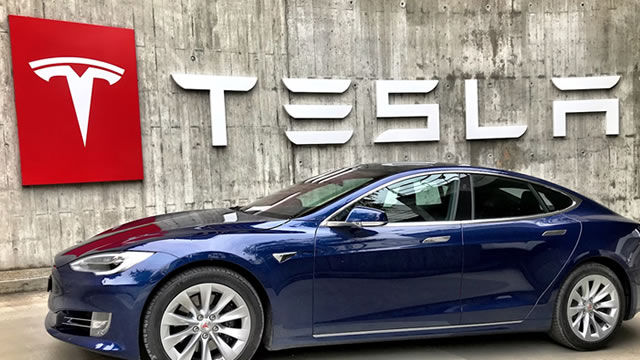
Tesla robotaxi incidents caught on camera in Austin draw regulators' attention
CNBC· 2025-06-23 22:54
Core Points - Tesla's robotaxi service was launched in Austin, Texas, but faced scrutiny after videos showed erratic driving behavior [1][2] - The National Highway Traffic Safety Administration (NHTSA) is investigating the incidents involving Tesla's robotaxis [2][3] - The pilot service is limited to a small number of invited users and operates under specific conditions [4][5] Company Overview - Tesla's robotaxis are Model Y SUVs equipped with the latest Full Self-Driving (FSD) Unsupervised software and hardware [4] - The service currently involves fewer than 24 vehicles and operates only during daylight and in good weather, with a human safety supervisor present [4] Industry Context - Tesla's stock rose by 8% following the robotaxi launch, although it did not meet Elon Musk's previous promises regarding full autonomy and robotaxi deployment [5][6] - Competitors like Waymo and various Chinese companies have made significant advancements in the robotaxi space, with Waymo surpassing 10 million paid trips [6][7]



Nvidia CEO says this is the decade of robotics and autonomous vehicles
CNBC· 2025-06-12 10:38
Group 1 - Nvidia CEO Jensen Huang predicts significant growth in autonomous vehicles (AVs) and robotics in the coming decade, emphasizing it as the "decade of AV, robotics, autonomous machines" [1] - Nvidia is a key player in the development of driverless vehicles, providing both hardware and software solutions for AVs [2] - The presence of self-driving cars is increasing in the U.S., with companies like Waymo operating robotaxi services in major cities [2] Group 2 - Chinese companies such as Baidu and Pony.ai are also actively deploying their own robotaxi fleets, indicating a competitive landscape in the AV sector [2]

摩根大通:中国峰会要点
摩根· 2025-05-29 14:12
Investment Rating - The report does not explicitly state an investment rating for the industry or companies discussed Core Insights - China's economy appears stable with a focus on boosting demand and improving consumer sentiment, despite challenges in the property market [1][4] - The property market remains fragile but stable, with government policies aimed at stimulating demand rather than supply [5][10] - Exporters are shifting production to Southeast Asia and Mexico due to high costs in the US, leading to potential price increases for Chinese products [1][5] - Industrial technology is advancing, with Chinese companies catching up to Western suppliers in automation and AI [1][28] - Datacenter construction is expected to significantly increase in 2025 due to AI adoption, with a potential doubling in compute buildout [1][6] Summary by Sections Economic Overview - The macroeconomic environment in China is stable, with minimal panic regarding tariffs and a notable focus on demand-side stimulus [4][8] - Consumer sentiment is increasingly important, with government efforts to boost consumption following trade negotiations [4][10] Property Market - The property market is stabilized by demand-side policies, but improvement is fading, and the government is focused on fixing this part of the economy [5][11] - Transaction volumes in the secondary housing market are performing better than new housing, with a notable divergence between luxury and ordinary homes [7][10] Export and Production Shifts - Exporters are moving production to existing hubs in Southeast Asia and Mexico, avoiding the US due to high costs [5][18] - Chinese appliance companies are successfully penetrating overseas markets, particularly in the EU and North America [13][19] Industrial Technology - The discrete automation market is showing signs of recovery, with Chinese companies developing competitive technologies in software and AI [28][39] - Shenzhen Inovance is gaining market share in industrial automation, focusing on customized solutions and responsiveness to customer demands [30][32] Datacenter and AI Adoption - AI adoption is accelerating, with significant investments expected in datacenter infrastructure by 2025 [6][39] - Companies are taking a pragmatic approach to AI integration, looking for validated use cases before large-scale implementation [6][39] Company-Specific Insights - Midea's domestic sales are expected to see single-digit growth, driven by a replacement cycle rather than new demand [13][21] - Haier is experiencing growth in overseas markets, particularly in Southeast Asia, while maintaining a focus on the US and EU [19][24] - Hisense is benefiting from subsidy policies, leading to revenue growth in both domestic and international markets [24][25]
Hesai Group Reports First Quarter 2025 Unaudited Financial Results
GlobeNewswire News Room· 2025-05-26 21:00
Core Insights - Hesai Group reported strong financial results for Q1 2025, with net revenues of RMB525.3 million (US$72.4 million), a 46.3% increase year-over-year [17][31] - The company shipped 195,818 lidar units in Q1 2025, representing a 231.3% increase from the same period in 2024 [16][15] - Hesai was ranked as the world's No.1 automotive lidar company by revenue market share for the fourth consecutive year in 2024 [3] Financial Performance - Net revenues for Q1 2025 were RMB525.3 million, up from RMB359.1 million in Q1 2024, driven by increased sales of ADAS lidar products [17][31] - Gross margin improved to 41.7% in Q1 2025 from 38.8% in Q1 2024, attributed to effective cost and scale optimization [17][31] - The net loss narrowed significantly by 83.6% year-over-year to RMB17.5 million (US$2.4 million) [22][31] Operational Highlights - ADAS lidar shipments reached 146,087 units in Q1 2025, a 178.5% increase from 52,462 units in Q1 2024 [16][15] - The company secured new design wins with 23 OEMs globally across over 120 vehicle models, including partnerships with Chery, Great Wall Motor, Zeekr, and Geely [5][15] - Hesai is the main lidar supplier for next-generation Robotaxi fleets from Baidu Apollo Go, DiDi, Pony.ai, and WeRide [14][15] Product Development - New products include the AT1440 lidar, which delivers ultra-high-definition point clouds, and the FTX solid-state lidar for blind spot detection [14] - The company announced the successful resolution of all IP-related litigation against it, reinforcing its commitment to innovation and R&D [8][10] Business Outlook - For Q2 2025, Hesai expects net revenues to be between RMB680 million (US$93.7 million) and RMB720 million (US$99.2 million), indicating a year-over-year increase of approximately 48% to 57% [19]


Auto Shanghai 2025 Kicks Off with Innovation and Global Collaboration
Globenewswire· 2025-04-30 06:17
Core Insights - Auto Shanghai 2025 is a significant event showcasing advancements in technology and innovation in the automotive industry, reflecting the global market's shift towards China [1][6] - The exhibition spans over 360,000 square meters with nearly 1,000 exhibitors from 26 countries, marking it as the largest in its history [2] - The event emphasizes electric vehicles, with major Chinese companies like BYD, NIO, XPeng, and Li Auto highlighting China's role in automotive innovation [2][3] Industry Trends - The exhibition features a dedicated area for automotive technology and supply chain, with over 50,000 square meters allocated to this sector [3] - Leading global auto parts suppliers and domestic leaders are showcasing innovations in autonomous driving, AI, and Internet of Vehicles (IoV) solutions [3] - Forums and symposiums, including the 2025 Global Automotive Leaders Roundtable, will discuss key trends such as electrification, autonomous driving, and digital transformation [4] Visitor Engagement - Public days from April 27 to May 2 will offer immersive experiences, integrating automotive innovation with urban culture and interactive elements [5] - Collaborations with tech platforms aim to engage visitors dynamically, highlighting the intersection of the automotive industry with modern lifestyles [5] Organizational Aspects - The event is organized by the Shanghai Council for the Promotion of International Trade and the China Association of Automobile Manufacturers, serving as a hub for global collaboration [6]
Pony.ai teams up with Tencent for robotaxi services on WeChat, other apps
CNBC· 2025-04-25 08:17
Core Insights - Pony.ai has partnered with Tencent Cloud to develop autonomous driving technology and deploy robotaxi services on Tencent's WeChat and other applications [1][2] - The collaboration will involve integration of Pony.ai's robotaxi services within WeChat and Tencent Maps, leveraging Tencent's extensive user base and cloud capabilities [2][3] - The partnership aims to enhance both companies' technological strengths, with Pony.ai focusing on autonomous driving and Tencent on cloud services and mapping [4] Company Developments - Pony.ai specializes in autonomous vehicle technology, particularly in robotaxis and robotrucks, and is listed on Nasdaq [1] - Tencent is recognized for its cloud services and has a monthly user base exceeding 1 billion for its WeChat app, which is considered a 'super app' [3] Strategic Implications - The partnership is seen as a "win-win" collaboration that will allow Pony.ai to scale up its operations while benefiting from Tencent's technological resources [2][4] - The integration of services is expected to provide users with the ability to call for robotaxi rides directly through the WeChat app in the near future [3]


2025年全球自动驾驶行业洞察报告
亚瑟·D·利特尔咨询公司· 2025-04-08 01:50
Investment Rating - The report does not explicitly provide an investment rating for the autonomous mobility industry Core Insights - The autonomous mobility sector is experiencing a paradigm shift with increasing integration of autonomous vehicles (AVs) into daily life, driven by advancements in technology and changing consumer preferences [8][10] - Despite a challenging venture-funding environment, real-world testing and deployment of AVs are expanding globally, particularly in the US and China, with notable developments in the Gulf Cooperation Council (GCC) region [13][14][16] - The successful commercialization of AVs requires an ecosystem approach, emphasizing collaboration among public and private sectors, technology providers, and transport agents [17][24] Industry Dynamics - The autonomous driving sector is pursuing commercialization despite a sluggish venture-funding environment, with trends including the exploration of robobuses and robotaxis as part of mobility-as-a-service (MaaS) offerings [13][14] - AV companies are scaling up testing and commercial pilot efforts globally, with significant activity in the US and China, while the GCC is emerging as a hotspot for AV pilots [14][16] - Financial struggles persist in the AV industry, with a shift in investor focus towards targeted applications like trucking and last-mile delivery, as companies seek profitability through specific use cases [18][20] Use Case of the Semester - Autonomous buses, or robobuses, are being integrated into urban transportation systems, offering efficiency and safety improvements while addressing driver shortages [44][45] - Successful integration of robobuses faces challenges such as safety, connectivity, and consumer acceptance, necessitating a thorough piloting process [46][48] - The deployment of robobuses requires careful planning and execution, including regulatory approvals, infrastructure modifications, and operational testing [52][55] City of the Semester: Beijing - Beijing is recognized for its rapid advancement in AV deployment, with over 300 autonomous delivery vehicles fulfilling over 4 million orders by January 2024 [70][71] - The city has established a supportive regulatory environment, advanced testing infrastructure, and public awareness initiatives to facilitate AV integration [71][89] - Beijing's digital infrastructure, including high-speed 5G networks and smart traffic management systems, supports the growth of autonomous mobility [87][90] Interview of the Semester - The interview with Dr. Tony Han, CEO of WeRide, highlights the industry's transition from testing to commercialization, emphasizing technological advancements and regulatory developments [91][92]

Pony.ai CEO doubts if Tesla can launch its robo-taxi service soon
CNBC· 2025-03-12 09:01
Core Insights - The co-founder and CEO of Pony.ai expressed uncertainty regarding Tesla's ability to launch a robo-taxi service this year, citing a lack of significant progress in deploying such vehicles on US roads [1] - In contrast, Waymo's driverless cars are already operational in major US cities like San Francisco and Los Angeles, highlighting a competitive edge in the autonomous vehicle market [2] - Despite Tesla CEO Elon Musk's long-standing discussions about robo-taxis, the company has yet to initiate a commercial service [2]