Toyota

Search documents
What BYD Needs to Prove in 2026
Yahoo Finance· 2026-02-06 17:25
Market Overview - China is the largest auto market globally, accounting for 30% of all new vehicle sales in 2025, while the United States holds an 18.4% share, and Japan and India are tied at 5.1% each [1] Domestic Manufacturers - The Chinese auto market, once dominated by foreign manufacturers like Volkswagen, Toyota, and General Motors, has seen the rise of domestic manufacturers over the past 30 years, with BYD emerging as a leader [2] Electric Vehicle Market - The International Energy Association (IEA) projects that electric vehicles (EVs) will constitute 60% of all vehicle sales in China by 2025 and grow to 80% by the end of the decade [3] Government Subsidies - China previously offered aggressive subsidies and tax breaks to promote EV purchases, but as the market matures, the government is cutting these subsidies, leading to a projected decline in domestic passenger vehicle sales in 2026 [4] Raw Material Costs - The price of lithium, a crucial material for battery production, has more than doubled from approximately $11 per kilogram to $23 per kilogram over the past year, with a 35% increase year-to-date in 2026 [5] BYD's Financial Performance - BYD's revenue for Q3 2025 decreased by 3.05% compared to Q3 2024, with diluted earnings per share (EPS) falling by 36%. Additionally, net operating cash flow for the first nine months of 2025 dropped by 27.42%, and EPS for the same period was down 11.42% compared to 2024 [6]
Toyota Showcases All-New 2026 RAV4 and Team Toyota Athletes in Super Bowl LX
Prnewswire· 2026-02-06 15:04
Group 1 - Toyota Motor North America (TMNA) is returning to the Super Bowl with two 30-second advertisements during Super Bowl LX [1] - The ads titled "Superhero Belt" and "Where Dreams Began" emphasize Toyota's commitment to human-centric storytelling [1] - The campaign highlights the importance of relationships and dreams that shape individuals, reinforcing the brand's belief in the significance of people over destinations [1]



X @The Wall Street Journal
The Wall Street Journal· 2026-02-06 13:58
Toyota's chief executive is stepping down after a relatively short term in office that was buffeted by President Trump’s tariffs and struggles to maintain market share in China https://t.co/ysXI7mgeyV ...
Toyota Smashes Earnings Estimates. The Stock Is Up.
Barrons· 2026-02-06 12:55
Core Insights - Toyota reported an operating profit of approximately ¥1.2 trillion ($7.6 billion) for its fiscal third quarter, exceeding Wall Street's expectations of about $6.7 billion [1] Financial Performance - The operating profit of ¥1.2 trillion translates to a significant financial performance, indicating strong operational efficiency and market demand [1] - The reported profit figure represents a positive deviation from analyst forecasts, highlighting the company's robust financial health in the current fiscal period [1]
Japan’s vehicle sales decline by 2% in January
Yahoo Finance· 2026-02-06 10:12
Market Overview - Japan's new vehicle market declined by 2.3% year-on-year to 367,748 units in January 2026, following a 12% rise to 376,255 in the same month last year [1] - The market remains sluggish, with Japanese consumers facing increased pressure from rising interest rates, as the Bank of Japan raised its key policy rate to a decades-high of 0.75% [5] Vehicle Sales Breakdown - Sales of passenger vehicles declined by 6.2% to 307,838 units, with larger (standard) models dropping by 12% to 130,318 units [2] - Truck sales rose by 25% to 59,214 units, driven by a 50% surge in light truck sales to 17,571 units and a 21% rise in mini-truck sales to 31,125 units [2] - Sales of medium and large buses and coaches remained unchanged at 696 units [2] Manufacturer Performance - Toyota led the market decline with a 3.5% drop to 116,007 units, reflecting a 10% fall in passenger vehicle sales, partially offset by increased truck and bus sales [3] - Daihatsu, a Toyota subsidiary, saw sales rise by almost 11% to 45,251 units, driven by a sharp increase in mini-truck sales [3] - Suzuki's sales decreased slightly to 60,863 units, while Honda's sales fell by less than 2% to 49,411 units [3] - Nissan continued to underperform, with sales falling by over 11% to 35,296 units [3] Market Share of Overseas Brands - Overseas brands accounted for less than 4% of total vehicle sales in Japan, with German automakers such as Mercedes-Benz, BMW-Mini, Audi, and Volkswagen leading this segment [4] Future Projections - GlobalData forecasts a 4.6% rise in light vehicle sales to 4.74 million units in Japan in 2026, followed by a 1% decline to 4.69 million in 2027 [5]
Toyota Motor announces leadership reshuffle — Who is new CEO Kenta Kon, ‘mastermind' behind subsidiary buyout?
MINT· 2026-02-06 08:27
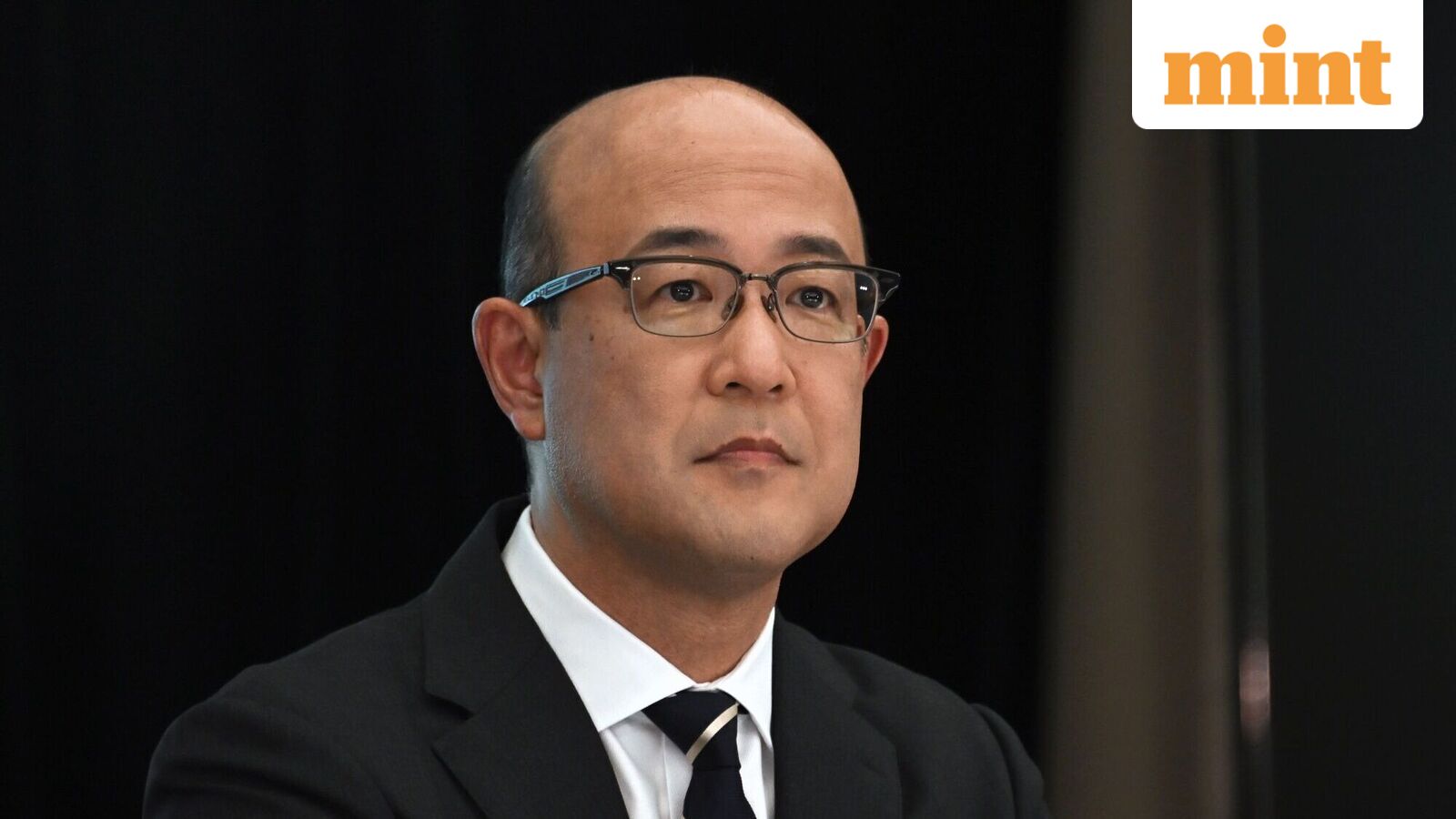
Core Viewpoint - Toyota Motor Corporation has announced a surprise reshuffle in its leadership team, effective April 1, 2026, amid efforts to privatize its key subsidiary, Toyota Industries [1][4]. Leadership Changes - Koji Sato, the current President and CEO, will transition to the role of Vice Chairman and Chief Industry Officer (CIO) [9][10]. - Kenta Kon will be appointed as the new President and CEO, moving from his current position as Chief Financial Officer (CFO) [9][10]. Purpose of Reshuffle - The leadership change aims to enhance decision-making speed in response to internal and external changes, while reinforcing Toyota's mission of "serving the country through industry" [3]. Industry Focus - Sato will leverage his position as head of the Japan Automobile Manufacturers' Association to influence the broader automotive industry [2]. Background on Kenta Kon - Kenta Kon, a long-time associate of Akio Toyoda, is recognized for his financial acumen and is seen as the "mastermind" behind the Toyota Industries buyout [5][8]. - His experience in financial matters is expected to support Toyota's business transformation efforts [8].
Toyota(TM) - 2026 Q3 - Earnings Call Transcript
2026-02-06 07:32
Financial Data and Key Metrics Changes - The company is focusing on enhancing its earning power to support future growth, indicating a shift in management strategy to improve productivity and create more affordable vehicles [4][5][7] - The break-even volume has been increasing over the past one to two years due to external factors and price levels, highlighting the need for a robust structure to withstand challenging environments [68] Business Line Data and Key Metrics Changes - The company aims to maintain a balance between production volume and quality, emphasizing the importance of delivering vehicles to customers while ensuring high standards [50] - There is a recognition that the company has been too focused on individual functions rather than a holistic view, which is being addressed through a more cross-functional approach [69] Market Data and Key Metrics Changes - The company acknowledges the competitive landscape, particularly with advancements in autonomous driving technology from competitors like Tesla and Chinese manufacturers, and is committed to leveraging its extensive data from annual sales and user interactions to catch up [63][64] Company Strategy and Development Direction - The new executive structure is designed to address management challenges and enhance collaboration within the industry, with a focus on maintaining international competitiveness [5][6][8] - The company is committed to transforming into a mobility company while continuing to prioritize the production of ever better cars, which remains central to its mission [72][78] Management's Comments on Operating Environment and Future Outlook - The management emphasizes the importance of creating an environment that fosters innovation and collaboration among engineers to tackle future challenges [66] - The leadership transition is seen as an opportunity to strengthen the company's focus on profitability while still adhering to its core values of quality and customer satisfaction [95] Other Important Information - The company is undergoing a significant leadership change, with Kenta Kon appointed as the new President and CEO, succeeding Koji Sato, who will take on a broader industry-focused role [1][2][7] - The management has expressed a commitment to corporate governance and diversity within the board, aiming to enhance decision-making processes [20][21] Q&A Session Summary Question: What is the current situation of Toyota's capabilities in autonomous driving technology? - The company acknowledges that while it is not currently advanced in autonomous driving compared to early entrants, it has a significant amount of data to leverage for future developments [63][64] Question: What challenges does the company face regarding break-even volume? - The company recognizes that break-even numbers have been increasing and aims to create a structure that can withstand tough environments while fostering cross-functional awareness [68][69] Question: What accomplishments did Koji Sato achieve during his presidency? - Sato highlighted the importance of taking action towards becoming a mobility company and emphasized the need for continuous improvement in car production [72][73] Question: How will the management structure change under Kenta Kon's leadership? - Kon stated that the team management approach will remain, focusing on collaboration to achieve the goal of making ever better cars and transforming into a mobility company [78] Question: Will there be any concerns regarding conflict of interest with the ATICO project? - Kon assured that there is an information blockade in place to manage any potential conflicts of interest during the transaction process [91]
Toyota(TM) - 2026 Q3 - Earnings Call Transcript
2026-02-06 07:32
Toyota Motor (NYSE:TM) Q3 2026 Earnings call February 06, 2026 01:30 AM ET Company ParticipantsKenta Kon - Incoming CEOKoji Sato - Outgoing CEOYuta Tomikawa - Announcer and ModeratorConference Call ParticipantsTaruno Akira - Equity Research AnalystNone - AnalystNone - AnalystNone - AnalystNone - AnalystNone - AnalystNone - AnalystNone - AnalystNone - AnalystYuta TomikawaI am Yuta Tomikawa of Toyota Times, and we are having this important notice on short notice on Toyota Times. For this notice to information ...
Toyota(TM) - 2026 Q3 - Earnings Call Transcript
2026-02-06 07:30
Financial Data and Key Metrics Changes - The company is focusing on enhancing its earning power to support future growth, indicating a shift in management strategy to improve productivity and create more affordable vehicles [3][4] - There is an emphasis on reducing the break-even volume points to ensure sustainability even in challenging environments, reflecting a proactive approach to financial stability [34][45] Business Line Data and Key Metrics Changes - The company is transitioning towards a mobility company, with a focus on improving product quality and customer satisfaction, rather than merely increasing production volume [33][48] - The management acknowledges the need for cross-functional collaboration to enhance overall performance and address challenges effectively [46] Market Data and Key Metrics Changes - The automotive industry is facing increased competition, particularly from companies like Tesla and emerging Chinese players in autonomous driving technology, prompting Toyota to reassess its technological capabilities and development strategies [40][41] Company Strategy and Development Direction - The new executive structure aims to enhance collaboration within the industry and with external partners, recognizing the importance of collective efforts to maintain competitiveness [4][5] - The company is committed to a long-term vision of creating "ever better cars," which remains central to its mission despite leadership changes [48][50] Management's Comments on Operating Environment and Future Outlook - Management acknowledges the rapid changes in the automotive industry and the need for Toyota to adapt its strategies accordingly, emphasizing the importance of innovation and agility [41][60] - The leadership transition is seen as an opportunity to strengthen the company's focus on profitability while maintaining its commitment to quality and customer satisfaction [59][60] Other Important Information - The recent executive changes were made to better align the company's leadership with its strategic goals, with Kenta Kon becoming the new President and CEO, focusing on internal initiatives [5][16] - The company is aware of the need for improved corporate governance and is committed to maintaining transparency and accountability in its operations [17][39] Q&A Session Summary Question: What is Toyota's current situation regarding autonomous driving technology? - Toyota is not currently advanced in autonomous driving compared to early entrants like Tesla, but it has a significant amount of data from its annual sales and user interactions that can be leveraged for future developments [41][42] Question: How will the leadership change affect Toyota's focus on profitability and technology? - The leadership change is intended to enhance the focus on both profitability and the development of new technologies, ensuring that the company's long-term vision remains intact [59][60] Question: What challenges does Toyota face in improving its break-even volume? - The company recognizes that external factors and pricing levels have contributed to rising break-even numbers, and it aims to create a structure that allows it to remain resilient in tough environments [45][46] Question: What accomplishments does the outgoing president believe are significant from his tenure? - The outgoing president emphasizes the importance of taking action towards transforming into a mobility company and the need to continue pursuing the goal of making ever better cars [47][48] Question: How will the new president approach management and team dynamics? - The new president intends to maintain a collaborative team management style, focusing on collective efforts to achieve the company's goals of improving product quality and transforming into a mobility company [50]
Who is Kenta Kon, Toyota's new CEO?
Reuters· 2026-02-06 07:25
Core Viewpoint - Toyota's Chief Executive Koji Sato will resign after three years, with CFO Kenta Kobayashi set to take over the leadership role [1] Company Summary - Koji Sato's tenure as CEO lasted three years, indicating a relatively short leadership period for the world's largest automaker [1] - The transition in leadership comes as Toyota continues to navigate challenges in the automotive industry, including shifts towards electric vehicles and evolving market demands [1] Leadership Change - Kenta Kobayashi, currently the Chief Financial Officer, will succeed Koji Sato as the new CEO [1] - This leadership change may signal a strategic shift in Toyota's approach to financial management and operational efficiency [1]