三博脑科

Search documents
明基医院赴港IPO三度折戟,民营医院冲上市为何这么难?
Hu Xiu· 2025-10-23 02:52
Core Viewpoint - Mingji Hospital, a private comprehensive hospital group, has failed its IPO application for the third time in Hong Kong, despite generating over 2.6 billion yuan in revenue and over 100 million yuan in profit, highlighting the challenges faced by private healthcare institutions in the current market environment [2][4][20]. Group 1: Company Performance - Mingji Hospital's revenue for 2022, 2023, and 2024 is projected to be 2.336 billion yuan, 2.688 billion yuan, and 2.659 billion yuan respectively, with net profits of 89.55 million yuan, 167 million yuan, and 109 million yuan [9]. - The hospital has managed to achieve over 100 million yuan in annual profit, which is notable given that over 50% of private hospitals in China are currently operating at a loss [8][10]. - Mingji Hospital's operational efficiency and management are considered high, allowing it to compete effectively in the competitive markets of Nanjing and Suzhou [12]. Group 2: IPO Challenges - The repeated failures of Mingji Hospital's IPO are attributed to its limited scalability and the current unfavorable healthcare policies, which have increased operational costs and affected revenue streams [14][17]. - The hospital's reliance on only two facilities limits its growth potential, making it difficult to meet market expectations for future expansion [14][20]. - The overall sentiment in the private healthcare sector has shifted, with many institutions facing similar IPO challenges, indicating a broader trend of difficulties in the market [4][22]. Group 3: Market Environment - Since 2023, there has been a wave of failed IPO attempts among private healthcare institutions, with notable examples including Shulan Healthcare and Ludaopei Medical, which have also struggled to secure listings [5][22]. - The tightening of national healthcare regulations and changes in reimbursement policies have created a challenging environment for private hospitals, leading to decreased investor confidence [17][18]. - The capital market's interest in private healthcare has waned, with fewer investment institutions actively seeking opportunities in this sector compared to previous years [19][20]. Group 4: Future Outlook - Mingji Hospital is exploring expansion strategies, including investments in new facilities, but faces significant competition in its target markets [15]. - The hospital's management acknowledges the need to improve its business model to enhance its appeal to investors and increase its chances of a successful IPO in the future [14][20]. - The ongoing debate about the suitability of private hospitals for public listing reflects a fundamental tension between the healthcare sector's public service nature and the profit-driven motives of capital markets [38][40].

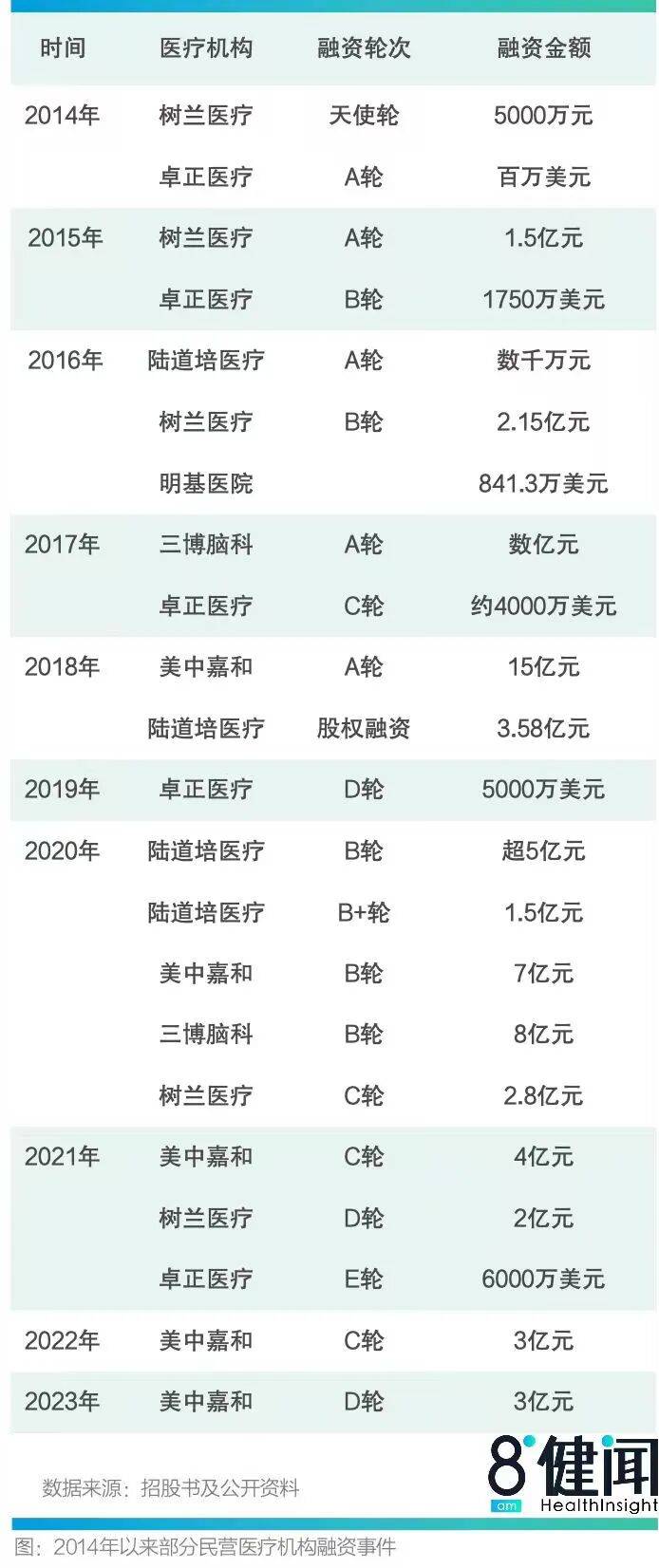
明基医院赴港IPO三度折戟背后:民营医院冲上市的困局与变数
Di Yi Cai Jing· 2025-10-23 00:16
Core Viewpoint - Mingji Hospital has faced multiple failures in its attempts to go public on the Hong Kong Stock Exchange, attributed to unfavorable industry conditions and low market expectations for comprehensive hospitals [1][3][5]. Group 1: Company Performance - Mingji Hospital generated revenues of 23.36 billion, 26.88 billion, and 26.59 billion from 2022 to 2024, with profits of 895.5 million, 1.67 billion, and 1.09 billion respectively, indicating a strong performance compared to many peers in the private healthcare sector [3][5]. - Despite its profitability, Mingji Hospital's limited number of facilities (only two hospitals) hinders its ability to attract investor confidence regarding future growth potential [4][5]. Group 2: Industry Environment - The private healthcare sector is currently facing significant challenges, with over 50% of private hospitals projected to incur losses in 2024, highlighting a broader industry struggle [3][5]. - Recent changes in national healthcare policies and stricter regulations have increased operational costs for private hospitals, further complicating their ability to secure funding and go public [5][22]. Group 3: IPO Challenges - Mingji Hospital's repeated failures to list are indicative of a structural dilemma within the healthcare sector, where many private hospitals are encountering similar obstacles in their IPO pursuits [1][7][8]. - The capital market's confidence in private healthcare has waned, with fewer investment institutions showing interest in conducting due diligence on private hospitals since 2023 [5][22]. Group 4: Future Prospects - Mingji Hospital is actively seeking solutions to its growth challenges, including investments in new facilities, but these efforts have yet to yield profitable results [4][5]. - The hospital's expansion plans face stiff competition in regions already saturated with healthcare providers, particularly in Suzhou, where the number of tertiary hospitals has reached 32 [5][22].
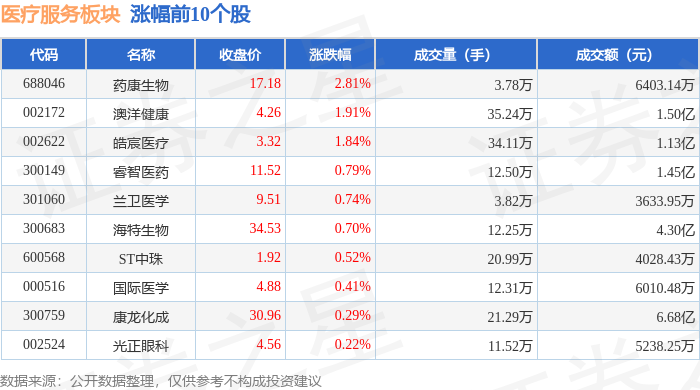
医疗服务板块10月22日跌0.9%,三博脑科领跌,主力资金净流出6.15亿元
Zheng Xing Xing Ye Ri Bao· 2025-10-22 08:19
Market Overview - The medical services sector experienced a decline of 0.9% on October 22, with Sanbo Brain Science leading the drop [1] - The Shanghai Composite Index closed at 3913.76, down 0.07%, while the Shenzhen Component Index closed at 12996.61, down 0.62% [1] Stock Performance - Notable gainers in the medical services sector included: - Yaokang Biological (688046) with a closing price of 17.18, up 2.81% [1] - Aoyang Health (002172) with a closing price of 4.26, up 1.91% [1] - Haochen Medical (002622) with a closing price of 3.32, up 1.84% [1] - Significant decliners included: - Sanbo Brain Science (301293) with a closing price of 57.19, down 4.67% [2] - Chengda Pharmaceutical (301201) with a closing price of 33.98, down 4.50% [2] - XD Haoyuan Medical (688131) with a closing price of 79.90, down 2.07% [2] Capital Flow - The medical services sector saw a net outflow of 615 million yuan from institutional investors, while retail investors contributed a net inflow of 370 million yuan [2][3] - Key stocks with notable capital flows included: - Kanglong Chemical (300759) with a net inflow of 46.59 million yuan from institutional investors [3] - Aoyang Health (002172) with a net inflow of 10.44 million yuan from institutional investors [3] - Yaokang Biological (688046) with a net inflow of 9 million yuan from institutional investors [3]





医药生物行业周报:国内脑机接口布局持续加码,政企研协同发力-20251021
Shanghai Securities· 2025-10-21 12:01
Investment Rating - The industry investment rating is "Overweight (Maintain)" [1] Core Viewpoints - The report highlights the continuous expansion of brain-computer interface (BCI) application scenarios, with various regions intensifying their layouts and significant clinical and technological advancements emerging. The Ministry of Industry and Information Technology and six other departments jointly issued the "Implementation Opinions on Promoting the Innovative Development of the BCI Industry," outlining a specific path for industrialization [4] Summary by Relevant Sections Industry Overview - The report focuses on the pharmaceutical and biotechnology industry, particularly the advancements in brain-computer interface technology and its clinical applications [1][3] Recent Developments - A series of initiatives have been launched in Beijing and Hubei to support the innovation and development of the BCI industry, including the establishment of industry alliances, special policies, and funding mechanisms. Notably, a 300 million yuan fund has been set up to inject financial resources into the BCI sector [3][4] Investment Recommendations - The report suggests paying attention to companies such as Innovative Medical, Sanbo Brain Science, Apong Medical, and Xiangyu Medical, which are positioned to benefit from the expanding BCI market [4]
第二届国际癫痫外科大会在京召开:共话癫痫外科新篇章
Zhong Guo Xin Wen Wang· 2025-10-20 14:13
全球专家齐聚,共话癫痫外科新篇章 大会开幕式由首都医科大学三博脑科医院科研处处长王雄飞教授主持,首都医科大学校长、中国医学科 学院院长吉训明院士,中国抗癫痫协会创会会长李世绰教授,现任会长周东教授,IESS主席Christian Dorfer教授,以及首都医科大学三博脑科医院首席专家栾国明教授等嘉宾出席并致辞。 与会专家一致认为,癫痫外科已进入精准化、微创化、智能化的全新阶段,中国在脑科学研究领域的国 家战略支持为全球癫痫治疗提供了创新生态与临床转化平台。 吉训明院士在致辞中指出,癫痫仍是现代医学最具挑战性的难题之一,其治疗需要全球科学家的共同探 索。中国已将脑科学列为关键前沿领域,通过大规模计划加速大脑机制研究,这种国家层面的投入正推 动人才、资源与技术的深度融合。本次大会不仅是学术交流的舞台,更是全球协作的重要契机,"真正 的进步需要彻底的合作,包括分享成功经验与失败教训,以透明度激发临床突破的火花"。 抗癫痫仍然是全球健康领域最重大的挑战之一。李世绰教授以全球5000万癫痫患者的生存现状为切入 点,揭示了诊疗体系的短板:"数百万患者无法获得及时手术,太多家庭在沉默中承受负担。"他肯定了 近年来癫痫外科的 ...
A股脑机接口概念走强:创新医疗涨停,狄耐克涨超10%
Ge Long Hui· 2025-10-20 02:50
Core Insights - The brain-computer interface sector experienced significant market activity, with notable stock price increases for several companies, including a limit-up for Innovation Medical and over 10% rise for Dineke [1] Company Performance - Innovation Medical reached its daily limit increase, indicating strong investor interest and confidence in its future prospects [1] - Dineke's stock rose by more than 10%, reflecting positive market sentiment towards its operations and potential in the brain-computer interface space [1] - Other companies such as Beikang, Aipeng Medical, Yanshan Technology, Sanbo Brain Science, and Xiangyu Medical also saw stock price increases, suggesting a broader trend in the industry [1] Industry Developments - The global first customized brain-computer interaction magnetic resonance platform, "Shengong-Shengguan," was officially launched on October 18, developed through collaboration between Tianjin University and Shanghai United Imaging Healthcare Co., Ltd [1] - This launch marks a significant advancement in the brain-computer interface technology, potentially enhancing the capabilities and applications of such systems in medical and research fields [1]

脑机接口产业趋势解读
2025-10-19 15:58
Summary of Brain-Computer Interface Industry Trends Industry Overview - The brain-computer interface (BCI) industry in China is experiencing significant advancements, particularly in clinical applications, with the National Healthcare Security Administration including relevant neurological projects in medical insurance [1][3][12] - Major cities like Zhejiang, Shanghai, and Jiangsu have begun implementing these policies, encouraging researchers to explore innovative applications [1][4] Key Technological Advancements - China has made breakthroughs in BCI technology, achieving 1,024 electrical probe channels, a signal-to-noise ratio (SNR) exceeding 20 dB, and reducing chip power consumption to 3.8 milliwatts per channel, with single-channel costs around 800 yuan [1][4][25] - Research institutions such as Fudan University Huashan Hospital and Tsinghua University have made significant contributions, particularly in areas like deep brain stimulation and high-resolution signal acquisition [5][19] Future Development Directions - Future directions for BCI technology include increasing the number of channels to 30-50, improving SNR to 30-50 dB, reducing chip power consumption to below 2 milliwatts, and lowering single-channel costs to below 500 yuan [6][7] - The development of adaptive transfer recognition algorithms for various signals (EEG, MEG, fMRI) is also a critical area, especially for early intervention in Alzheimer's disease [7] Market Potential and Demand - The market demand for BCI technology is substantial, particularly for restoring limb function in paralyzed patients and non-invasive BCI products [1][13][23] - The clinical application market is vast, with approximately 30 million stroke patients annually in China, indicating a market space of at least 50 billion yuan [23] Policy Support and Government Initiatives - The year 2025 is anticipated to be a pivotal year for the BCI industry in China, with various government policies aimed at promoting innovation and development in this field [2][12] - Policies focus on medical applications but are expected to expand into areas like silicon and carbon integration, brain simulation, and military applications [2] Competitive Landscape - Internationally, institutions like Stanford University and MIT are leading in BCI research, focusing on areas such as neural signal decoding and flexible electronic materials [8] - Despite the competitive landscape, China's focus on medical applications provides a unique advantage, particularly in treating conditions like Parkinson's and Alzheimer's diseases [8][13] Commercial Models and Applications - BCI companies are exploring various business models, including direct-to-consumer (B2C) applications for conditions like Alzheimer's and children's attention issues, as well as business-to-business (B2B) models targeting hospitals [17] - Non-invasive BCI technology is expected to see significant breakthroughs in the next 1-2 years, with applications in monitoring mental states and cognitive functions [22] Challenges and Bottlenecks - The primary bottlenecks in the BCI industry include the stability and reliability of biocompatible materials and the need for breakthroughs in chip technology [14] - The market's vast potential is countered by the challenges of achieving long-term usability and effective signal processing [14] Conclusion - The BCI industry in China is poised for rapid growth, driven by technological advancements, strong market demand, and supportive government policies. The focus on both clinical and consumer applications presents a unique opportunity for innovation and investment in the coming years [1][10][21]
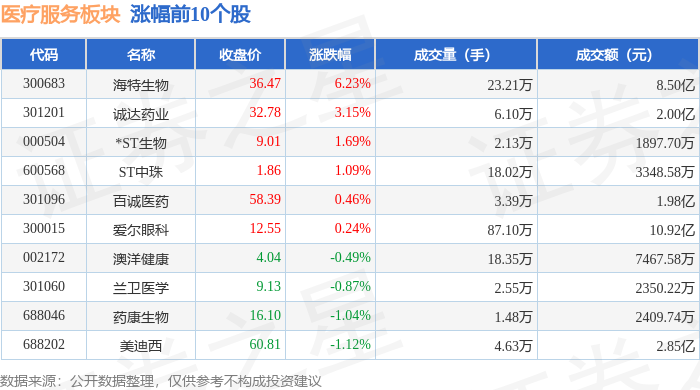
医疗服务板块10月17日跌2.76%,三博脑科领跌,主力资金净流出11.81亿元
Zheng Xing Xing Ye Ri Bao· 2025-10-17 08:31
Core Viewpoint - The medical services sector experienced a decline of 2.76% on October 17, with Sanbo Brain Science leading the drop. The Shanghai Composite Index closed at 3839.76, down 1.95%, while the Shenzhen Component Index closed at 12688.94, down 3.04% [1]. Summary by Category Market Performance - The medical services sector saw significant declines, with Sanbo Brain Science falling by 7.13% to a closing price of 58.96. Other notable declines included He Yuan Biological (-5.26%), Jiu Zhou Pharmaceutical (-4.70%), and Xin Li Cheng (-4.49%) [2]. - In contrast, Hai Te Biological and Cheng Da Pharmaceutical were among the few gainers, with increases of 6.23% and 3.15%, respectively [1][2]. Trading Volume and Value - The trading volume for Hai Te Biological reached 232,100 shares with a transaction value of 850 million yuan, while Cheng Da Pharmaceutical had a volume of 61,000 shares and a value of 200 million yuan [1]. - The overall medical services sector saw a net outflow of 1.181 billion yuan from major funds, while retail investors contributed a net inflow of 939 million yuan [2]. Fund Flow Analysis - Major funds showed a net inflow of 171 million yuan into Aier Eye Hospital, while other companies like Hai Te Biological and Cheng Da Pharmaceutical experienced mixed fund flows [3]. - Retail investors showed a significant net inflow into several stocks, indicating a potential shift in market sentiment despite the overall sector decline [3].
三博脑科:目前三博脑科仅福建院区开展过一例介入式脑机接口手术
Mei Ri Jing Ji Xin Wen· 2025-10-17 08:25
Core Viewpoint - The company, Sanbo Neuroscience, has confirmed that it has conducted one interventional brain-machine interface surgery at its Fujian facility, utilizing polyethylene glycol products, but specific product details are confidential due to collaboration agreements [1] Group 1 - The company has only performed one brain-machine interface surgery to date [1] - The surgery involved the use of polyethylene glycol, which meets national standards [1] - The specific product information used in the surgery is considered confidential among the collaborating parties [1]
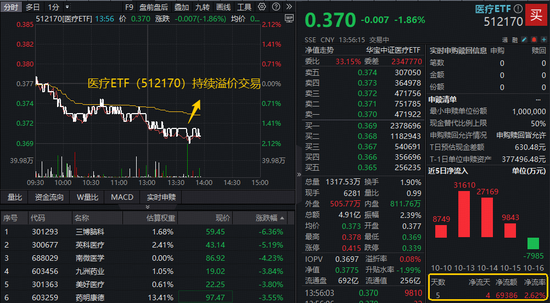
A股最大医疗ETF(512170)午后下探2%,场内溢价再起,“抄底资金”卷土重来?
Xin Lang Ji Jin· 2025-10-17 06:06
Group 1 - The medical sector experienced volatility, with the largest medical ETF in A-shares (512170) dropping over 2% in the afternoon, with real-time transactions exceeding 490 million yuan [1] - The ETF's latest scale is 25.73 billion yuan, ranking first among similar ETFs [1] - Notable declines were observed in constituent stocks, with Sanbo Brain Science falling over 6%, and other companies like Yingke Medical and Nanwei Medical dropping more than 4% [1] Group 2 - Ping An Securities indicated that the bidding environment for medical devices will remain favorable in 2025, with strong demand for ultrasound, CT, and MRI equipment driven by policy incentives [3] - The pharmaceutical and biotechnology sectors are currently affected by policy disruptions, but the long-term industry trend remains unchanged, with Chinese innovative drug companies gaining global competitiveness [3] - The medical ETF (512170) passively tracks the CSI Medical Index, with its top ten weighted stocks including WuXi AppTec, Mindray Medical, and others [3]