
SK Hynix

Search documents
Micron Gives Upbeat Forecast Amid AI Equipment Demand
Youtube· 2025-09-24 05:44
Group 1 - Micron, the largest US memory chip manufacturer, has provided an optimistic revenue forecast of $2.5 billion for the upcoming fiscal quarter, exceeding Wall Street's expectation of $1.9 billion [1][2] - The company anticipates improved profit per share, indicating it is benefiting significantly from the ongoing AI spending [2] - Despite a strong stock rally this year, with shares nearly doubling, late trading showed muted movements, suggesting that much of the positive news may already be reflected in the stock price [3] Group 2 - Micron's increased spending is necessary to meet the rising demand driven by AI applications, particularly in supplying memory for AI chips alongside competitors like Samsung and SK Hynix [1][2] - Citibank has issued bullish forecasts, raising their profit target for Micron, indicating positive market sentiment ahead of the earnings report [3]


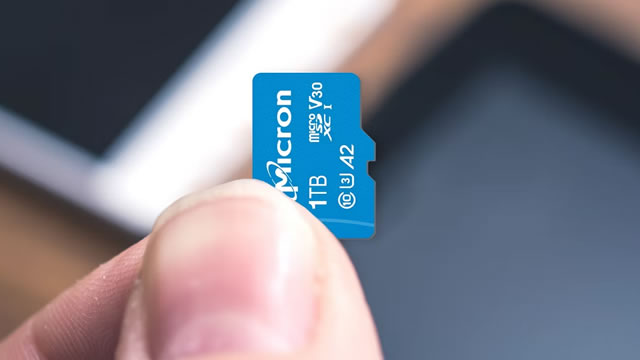
Micron Technology, Inc. (NASDAQ:MU) Surpasses Earnings Expectations
Financial Modeling Prep· 2025-09-24 05:00
Core Insights - Micron Technology, Inc. reported an earnings per share (EPS) of $3.03, exceeding the estimated $2.86, indicating strong financial performance [1][6] - The company generated revenue of $11.32 billion, slightly below the estimated $11.83 billion, but showed significant year-over-year EPS growth from $1.18 [2][6] - Growth in AI data centers has been a key driver of Micron's robust performance, contributing to increased investor confidence and a surge in stock price during extended trading [3][6] Financial Metrics - Micron's price-to-earnings (P/E) ratio stands at approximately 29.89, reflecting a premium investors are willing to pay for its earnings [4] - The price-to-sales ratio is about 5.51, and the enterprise value to sales ratio is 5.68, indicating strong valuation relative to revenue [4] - The enterprise value to operating cash flow ratio is 12.65, suggesting efficient cash generation from operations [5] - An earnings yield of 3.35% provides insight into shareholder returns, while a debt-to-equity ratio of 0.32 indicates low leverage [5] - The current ratio of 2.75 reflects a strong ability to cover short-term liabilities [5]

Micron's Q4 earnings surpass Wall Street's expectations in latest test of AI trade
Yahoo Finance· 2025-09-23 22:53
Core Insights - Micron's fiscal fourth quarter earnings exceeded Wall Street expectations, signaling positive momentum for the AI sector and investor confidence in the company's stock performance [1][2] - The company's revenue for the fourth quarter reached $11.3 billion, surpassing the $11.15 billion forecasted by analysts, with adjusted earnings per share of $3.03, exceeding the projected $2.84 [2] - Data centers contributed significantly to Micron's revenue, accounting for 40% of total revenue in the fourth quarter, driven by the AI data center boom [3] Financial Performance - Micron's guidance for the fiscal first quarter of 2026 is optimistic, projecting revenue between $12.2 billion and $12.8 billion, above the $11.9 billion expected by analysts, with adjusted earnings per share anticipated to be between $3.60 and $3.90, also exceeding the $3.05 forecasted [4] - The company has positioned itself to benefit from the anticipated trillions of dollars in AI investments, with CEO Sanjay Mehrotra highlighting Micron's unique position as the only US-based memory manufacturer [5] Competitive Landscape - Micron is one of the three leading memory chipmakers, alongside SK Hynix and Samsung Electronics, with the latter lagging in the AI sector [6] - Micron's DRAM chips, essential for various applications including AI data centers, have historically generated the majority of the company's revenue [6] - The company's HBM chips, which are critical for AI infrastructure, are utilized in conjunction with Nvidia's GPUs in data centers [7]
Chip stocks climb after Nvidia-OpenAI deal announcement
Yahoo Finance· 2025-09-23 13:25
Core Insights - Global semiconductor stocks experienced a surge following Nvidia's announcement of a potential $100 billion investment in OpenAI, despite warnings of an industry revenue shortfall necessary for future computing power [1][4] Group 1: Nvidia and OpenAI Partnership - Nvidia plans to invest significantly in building data centers, referred to as "AI factories," in collaboration with OpenAI, ensuring OpenAI has priority access to Nvidia's GPUs [1][3] - The partnership includes a supplier agreement and a financing package, with Nvidia funding the construction of data centers powered by millions of its chips, with the first facility expected to operate by the second half of 2026 [3][4] Group 2: Market Reactions - Following the announcement, shares of Taiwan Semiconductor Manufacturing Co. rose by 3.5%, and SK Hynix's shares increased by over 2.5%, reflecting positive market sentiment towards companies involved in chip manufacturing for Nvidia [2] - Samsung's shares also saw a rise of 1.4% amid expectations of receiving approval to supply memory chips to Nvidia soon [2] Group 3: Financial Outlook and Industry Concerns - Bain & Co. warned that AI companies are facing financial pressures, as they are investing heavily in data centers without generating sufficient income to cover these costs [4][5] - The Bain report projected that AI firms will require approximately $2 trillion in annual revenue by 2030 to meet demand for computing power, but they are expected to fall short by $800 billion [5][6] - OpenAI is currently incurring significant losses as it focuses on expansion, although it anticipates becoming cash-flow positive by 2029 [5]

Nvidia and OpenAI's $100-billion deal sparks global chip stock rally
CNBC· 2025-09-23 09:09
Group 1 - Major global semiconductor stocks experienced a rise following Nvidia's announcement of a $100 billion investment in OpenAI, which involves building systems requiring 10 gigawatts of power, equivalent to 4 million to 5 million GPUs [1] - The positive sentiment from Nvidia's deal led to a rally on Wall Street, particularly benefiting companies linked to Nvidia, such as Taiwan Semiconductor Manufacturing Co., which saw a 3.5% increase in shares [2] - In South Korea, SK Hynix's shares rose over 2.5%, while Samsung's shares increased by 1.4%, with market expectations that Samsung will soon supply Nvidia with high-bandwidth memory chips [3] Group 2 - The rally in semiconductor stocks in Asia extended to Europe, where companies like STMicro, Infineon, and BE Semiconductor saw gains in early trading [4] - However, ASM International projected its fourth-quarter revenue to fall below expectations, negatively impacting its shares and dragging down other chip equipment firms like ASML [5] - The strengthening AI ecosystem in Europe is expected to benefit equipment manufacturers, including ASML and ASMI, due to solid demand from TSMC, the manufacturer of Nvidia's advanced chips [6]
Asian Shares Mixed In Cautious Trade
RTTNews· 2025-09-23 08:39
Asian stocks ended mixed on Tuesday, with Japanese closed for a public holiday and Hong Kong preparing for Typhoon Ragasa, which is expected to pass the city in the next 24 hours. Mainland Chinese and Hong Kong markets ended lower as stocks retreated from a stellar rally over the past month.China's Shanghai Composite index ended 0.18 percent lower at 3,821.83, recouping some earlier losses. Suning.Com shares plunged 4.8 percent after the troubled retailer said its largest shareholder Alibaba Group Holding ...

Wolfe Raises Micron (MU) Price Target to $180, Citing AI Memory Tailwinds
Yahoo Finance· 2025-09-22 21:41
Group 1 - Micron Technology, Inc. (NASDAQ:MU) has been recognized as one of the AI stocks making significant moves on Wall Street, with Wolfe reiterating an "Outperform" rating and raising the price target to $180 per share from $160 [1][2] - The price target of $180 is based on approximately 11 times the FY27 EPS of $16.43, reflecting an increase in revenue and earnings estimates for FY26 and FY27 [2] - The positive sentiment in NAND and DRAM pricing is attributed to HDD shortages and improved server trends, with FY26 revenue and EPS estimates raised to $49.5 billion and $13.13, respectively [2] Group 2 - Micron's stock has increased by 82% over the last twelve months, which is lower than SK Hynix's 114% rise but better than Samsung's 23% increase [2] - The company is trading at 9.7 times the FY27 EPS, which is below its average of 11 times over the past two years, indicating potential for valuation improvement [2] - Micron develops and sells memory and storage products for various applications, including data centers and mobile devices, positioning itself well in the growing AI market [2]
Micron Technology Inc. (NASDAQ:MU) Price Target and Stock Performance Analysis
Financial Modeling Prep· 2025-09-22 15:04
Company Overview - Micron Technology Inc. is a significant player in the semiconductor industry, specializing in memory and storage solutions, competing with major companies like Samsung and SK Hynix [1][5] - The company's market capitalization is approximately $182.12 billion, indicating its substantial presence in the semiconductor market [4][5] Stock Performance - As of September 22, 2025, a price target of $173 was set for Micron, suggesting a potential increase of 6.31% from its current price of $162.73 [1][5] - In 2025, Micron's stock has shown a notable upward trend, although it experienced a decline of 3.63% during the afternoon trading session on September 18, 2025 [2][5] - On the day of the price target announcement, Micron's stock price decreased by 3.65%, dropping $6.16 to a low of $159.38, despite a high of $163.70 [3][5] - The stock's performance over the past year has been impressive, with a high of $170.45 and a low of $61.54, indicating significant growth potential [3] Investor Interest - The trading volume for Micron on the day was 37.31 million shares, reflecting active interest and engagement from investors [4][5] - The company's stock performance continues to be closely monitored as it remains a focal point for potential investors [4]

亚洲内存_长期向好的内存上行周期_长期向好的内存上行周期-Asia Memory Stronger-for-longer memory upcycle_ Stronger-for-longer memory upcycle
2025-09-22 01:00
Summary of Key Points from the Conference Call Industry Overview - The conference call focuses on the memory semiconductor industry, particularly DRAM and NAND sectors, with a positive outlook on memory pricing and demand driven by AI and server applications [2][3][8]. Core Insights 1. **Memory Price Outlook**: - Upgrades in memory-price outlook for commodity DRAM and NAND have led to increased target prices for SK Hynix (from KRW 390k to KRW 440k) and Samsung (from KRW 88k to KRW 105k) [2]. - Anticipated server-driven DRAM price hikes are expected to persist into the first half of 2026 due to increased demand from AI processing and reduced inventory levels at DRAM and server OEM makers [2][3]. 2. **Capex Growth**: - Capital expenditures (capex) for chipmakers are projected to rise by 9% in 2025 and 8% in 2026, indicating a robust growth cycle amid shortages in commodity DRAM and NAND [2][4]. - Domestic semiconductor capex is expected to increase by 17% in 2025 and 8% in 2026, benefiting equipment suppliers [4][8]. 3. **NAND Market Dynamics**: - The demand for NAND is expected to grow due to generative AI and high-density HDD shortages, leading to a stronger NAND price trend extending to 2026 [3]. - The eSSD market is projected to grow significantly, reaching 35-40% of total NAND in the next 2-3 years, up from approximately 20% last year [3]. 4. **Preferred Stocks**: - SK Hynix is identified as the preferred memory stock due to its leadership in HBM (High Bandwidth Memory), with a projected sales contribution of 56% in 2026 compared to 31% in 2024 [5]. - EOT is highlighted as a key equipment supplier, with expectations for Samsung to narrow the supply gap in HBM4 by the first half of 2026 [5]. Financial Projections 1. **Revenue and Operating Profit Estimates**: - Revenue estimates for SK Hynix are raised to KRW 89,677 billion for 2025 and KRW 108,758 billion for 2026, with operating profit estimates increasing by 4% in 2025, 9% in 2026, and 24% in 2027 [57][69]. - DRAM revenue is projected to be KRW 70,198 billion in 2025 and KRW 84,033 billion in 2026, while NAND revenue is expected to reach KRW 19,479 billion in 2025 and KRW 24,725 billion in 2026 [57]. 2. **Target Prices and Ratings**: - Target prices for SK Hynix and Samsung have been raised, with SK Hynix now at KRW 440,000 and Samsung at KRW 105,000, both rated as "Buy" [2][69]. Risks and Considerations - Potential risks include KRW appreciation, global trade restrictions, and economic slowdowns that could impact consumer and enterprise IT demand [70]. Additional Insights - The conference highlighted the ongoing production issues at DRAM manufacturers and Chinese producers, which are expected to limit output growth and capacity expansion [2]. - The report emphasizes the importance of the AI sector in driving demand for memory products, particularly in server applications [8]. This summary encapsulates the key points discussed in the conference call, providing a comprehensive overview of the current state and future outlook of the memory semiconductor industry.
全球半导体_随着英伟达转向 SOCAMM2,通用存储供应短缺预计进一步加剧-Global Semiconductors_ Commodity Memory Supply Shortage Expected to Deepen Further as Nvidia Pivots to SOCAMM2
2025-09-18 13:09
Summary of Key Points from the Conference Call Industry Overview - **Industry**: Global Semiconductors - **Focus**: Transition from SOCAMM1 to SOCAMM2 by Nvidia, impacting memory supply dynamics Core Insights 1. **Nvidia's Transition**: Nvidia has shifted from SOCAMM1 to SOCAMM2, collaborating with Samsung, SK Hynix, and Micron for product sampling. Commercialization of SOCAMM2 is expected to begin in early 2026 [2][5] 2. **Projected Demand Surge**: SOCAMM demand is projected to increase 5.4 times year-over-year, reaching approximately 27 billion 1Gb equivalent units in 2026, up from 5 billion in 2025. This surge is attributed to the adoption of SOCAMM in VR200 systems [5][12] 3. **Impact on Memory Supply**: The anticipated increase in SOCAMM demand is expected to exacerbate the existing commodity memory supply shortage, with SOCAMM demand projected to account for 7% of total DRAM demand and 32% of total mobile DRAM demand by 2026 [5][12] 4. **Performance Specifications of SOCAMM2**: SOCAMM2 features a data transfer speed of 8,533 MT/s, which is 33% faster than general server DRAM (6,400 MT/s). It also has an I/O count of 128, double that of standard server DRAM [4][9] 5. **Beneficiaries of SOCAMM2**: SK Hynix and Samsung Electronics are expected to be the primary beneficiaries of the SOCAMM2 rollout, alongside other related companies such as Simmtech, ISC, and Hana Micron [5][12] Additional Important Information 1. **Technical Advantages**: SOCAMM2 offers improved interface capabilities and higher power efficiency compared to traditional server memory modules, making it suitable for advanced applications [3][4] 2. **Market Valuation**: Target prices for Samsung and SK Hynix are set at W110,000 and W430,000 respectively, based on a sum-of-the-parts methodology and projected EBITDA for 2026 [12][14] 3. **Risks to Target Prices**: Potential risks include delays in HBM shipment approvals, weaker-than-expected PC sales, aggressive competition in the memory semiconductor market, and currency fluctuations impacting earnings [13][15] This summary encapsulates the critical insights and projections regarding the semiconductor industry, particularly focusing on the transition to SOCAMM2 and its implications for memory supply and market dynamics.