中国铁建

Search documents
中资离岸债每日总结(11.4) | 中国铁建(01186.HK)、国银金租(01606.HK)发行
Sou Hu Cai Jing· 2025-11-05 02:57
Group 1: Federal Reserve Officials' Perspectives - San Francisco Fed President Daly supports the recent 25 basis points rate cut, suggesting further slight reductions are appropriate given inflation is around 3%, above the 2% target, but has significantly decreased [2] - Chicago Fed President Goolsbee expresses a more hawkish stance, undecided on supporting a December rate cut, citing a higher threshold for easing due to persistent inflation above target for four and a half years [2] - Fed Governor Cook leans dovish, indicating that the December meeting remains a potential opportunity for a rate cut, highlighting rising risks in both inflation and employment [2] Group 2: Market Activity and Debt Issuance - GLPCHI has repurchased and canceled $205 million of notes, approximately 29.29% of the initial principal amount [3] - China Cinda (Hong Kong) is considering issuing offshore bonds in USD and RMB to raise about $1.2 billion [3] - Ronsin China plans to extend the maturity of six company bonds by six months to gain more time for debt restructuring [3] Group 3: Bond Yield Information - As of November 3, the yield on China's two-year government bonds is 1.41%, while the ten-year yield is 1.79% [6] - The yield on the US two-year government bonds increased by 1 basis point to 3.60%, and the ten-year yield rose by 2 basis points to 4.13% [6] Group 4: Market Performance of Chinese Dollar Bonds - The top gainers in Chinese dollar bonds include DAFAPG with a price increase of 221.739% and ZHPRHK with an increase of 148.949% [9] - The top losers include DAFAPG with a price decrease of 78.402% and JINGRU with a decrease of 34.072% [9] Group 5: Central Bank Operations - The People's Bank of China conducted a reverse repurchase operation of 117.5 billion yuan at a fixed rate of 1.40%, with a net withdrawal of 357.8 billion yuan on the day [11]



国内业务下滑、海外签单大增 基建巨头集体出海掘金
Sou Hu Cai Jing· 2025-11-04 17:19
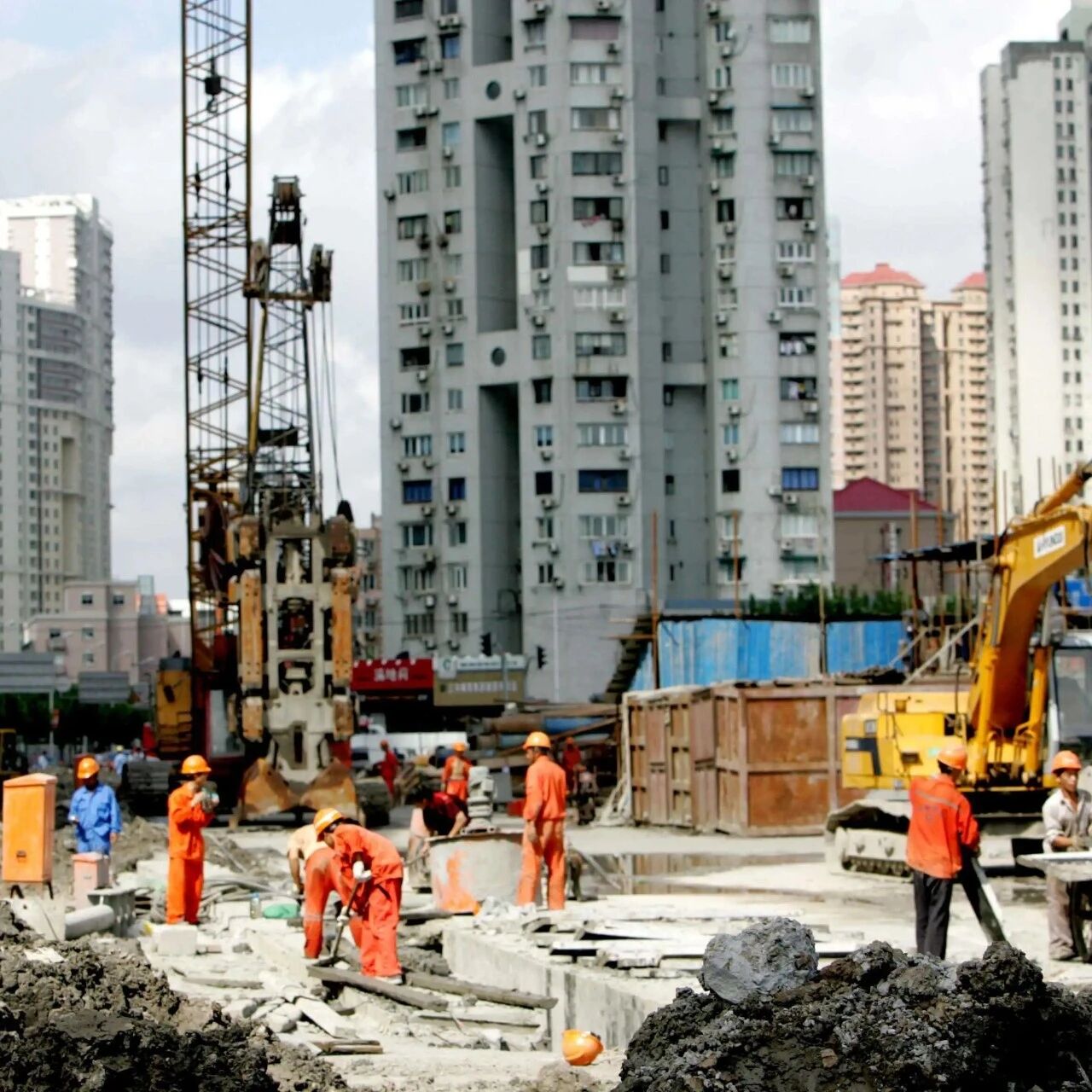
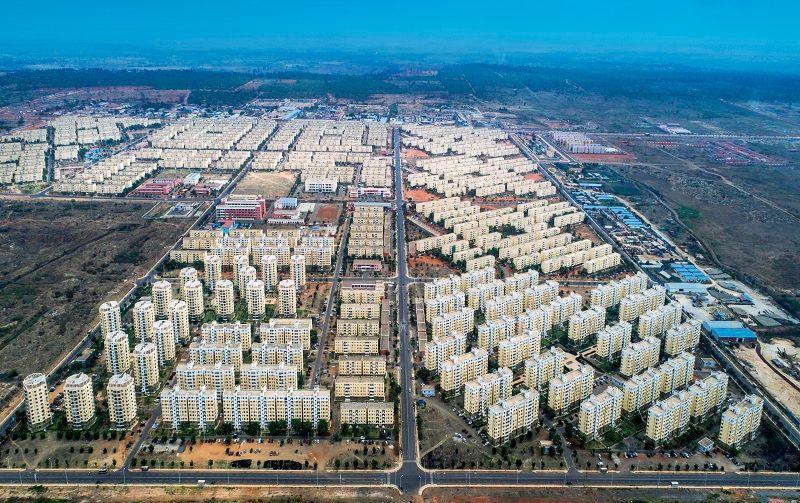
Core Insights - China's foreign contracting engineering business has been continuously growing, with "Belt and Road" new contracts maintaining over 80% share, indicating future development potential [1][6] - Major construction companies are facing challenges domestically, with five out of eight major state-owned enterprises experiencing revenue declines and seven seeing profit reductions [1][8] - The overseas market is becoming a crucial path for transformation, with significant growth in foreign contracts despite domestic pressures [2][3][8] Group 1: Overseas Contract Growth - China Communications Construction Company (CCCC) secured overseas contracts worth 359.73 billion yuan in 2024, a 12.50% increase year-on-year [2] - China Railway's overseas contracts reached 166.64 billion yuan in the first three quarters of 2023, up 35.2% year-on-year [2] - China State Construction Engineering Corporation (CSCEC) reported a 94.52% increase in overseas contracts, totaling 204.82 billion yuan in the same period [3] Group 2: Domestic Challenges - Major construction firms are at a crossroads due to declining domestic revenues, with China Metallurgical Group's revenue dropping by 18.78% to 335 billion yuan [8][9] - The overall revenue for major state-owned construction companies has decreased, with only a few like China Electric Power Construction achieving growth [8][9] - The net profit of China Metallurgical Group fell by 41.88%, highlighting the significant impact of domestic market pressures [8][9] Group 3: Strategic Shifts and Opportunities - Companies are increasingly focusing on overseas markets as a strategy to counteract domestic revenue declines, with a notable emphasis on the "Belt and Road" initiative [5][10] - The global infrastructure investment gap is projected to reach 15 trillion USD by 2030, with Asia accounting for over 60%, presenting opportunities for Chinese firms [5][6] - The demand for diverse infrastructure projects, including renewable energy and digital construction, is expected to grow significantly, further driving overseas expansion [6][10]


中国铁建将于11月11日派发2024年公开发行科技创新可续期公司债券(第五期)的利息
Zhi Tong Cai Jing· 2025-11-04 11:15
Core Viewpoint - China Railway Construction Corporation (CRCC) is issuing two types of technology innovation perpetual bonds aimed at professional investors, with a total issuance amount of RMB 30 billion [1] Group 1: Bond Issuance Details - The first type of bond, "铁建YK19," has an issuance amount of RMB 10 billion and a coupon rate of 2.26%, providing an interest payment of RMB 22.60 per 1,000 yuan face value [1] - The second type of bond, "铁建YK20," has an issuance amount of RMB 20 billion and a coupon rate of 2.45%, providing an interest payment of RMB 24.50 per 1,000 yuan face value [1] - Interest payments for both bonds will commence on November 11, 2025, covering the period from November 11, 2024, to November 10, 2025 [1]
中国铁建(01186)将于11月11日派发2024年公开发行科技创新可续期公司债券(第五期)的利息
智通财经网· 2025-11-04 11:12
Core Viewpoint - China Railway Construction Corporation (CRCC) is issuing two types of corporate bonds aimed at professional investors, with a total issuance amount of RMB 30 billion, to support its technological innovation initiatives [1] Group 1: Bond Issuance Details - The first type of bond, "铁建YK19," has an issuance amount of RMB 10 billion and a coupon rate of 2.26%, providing an interest payment of RMB 22.60 per 1,000 yuan face value [1] - The second type of bond, "铁建YK20," has an issuance amount of RMB 20 billion and a coupon rate of 2.45%, providing an interest payment of RMB 24.50 per 1,000 yuan face value [1] - Interest payments for both bonds will commence on November 11, 2025, covering the period from November 11, 2024, to November 10, 2025 [1]
中国铁建(01186) - 海外监管公告 - 2024年面向专业投资者公开发行科技创新可续期公司债券...
2025-11-04 11:06
香港交易及結算所有限公司及香港聯合交易所有限公司對本公告的內 容 概 不 負 責,對 其 準 確 性 或 完 整 性 亦 不 發 表 任 何 聲 明,並 明 確 表 示,概 不對因本公告全部或任何部分內容而產生或因倚賴該等內容而引致的 任 何 損 失 承 擔 任 何 責 任。 海外監管公告 本公告乃根據香港聯合交易所有限公司證券上市規則第13.10B條而作出。 茲 載 列 中 國 鐵 建 股 份 有 限 公 司(「本公司」)在 上 海 證 券 交 易 所 網 站 刊 登 的「中 國鐵建股份有限公司2024年面向專業投資者公開發行科技創新可續期 公 司 債 券(第 五 期)2025年 付 息 公 告」,僅 供 參 閱。 本公司全体董事或具有同等职责的人员保证本公告内容不存在任何虚假记 载、误导性陈述或者重大遗漏,并对其内容的真实性、准确性和完整性承担相应 的法律责任。 承董事會命 中國鐵建股份有限公司 董事長 戴和根 中 國 • 北 京 2025年11月4日 於 本 公 告 日 期,董 事 會 成 員 包 括:戴 和 根 先 生(董 事 長、執 行 董 事)、郜 烈 陽 先 生(非 執 行 董 事)、馬 傳 景 ...
国内业务下滑海外签单大涨,基建巨头集体出海
第一财经· 2025-11-04 09:30
Core Viewpoint - The traditional infrastructure giants are facing challenges in the first three quarters of the year, with five out of eight major state-owned construction enterprises experiencing revenue declines and seven seeing profit reductions, prompting a shift towards overseas markets as a key growth strategy [3][12]. Group 1: Performance of Major Construction Enterprises - In the first three quarters, major construction enterprises like China State Construction, China Railway, and China Communications Construction reported significant revenue declines, with China Metallurgical Group experiencing a nearly 20% drop [13][14]. - Only China Electric Power Construction, China Energy Construction, and China Chemical managed to achieve revenue growth, with increases of 3.04%, 9.62%, and 1.26% respectively [13]. - The net profit of these enterprises also showed a downward trend, with China Metallurgical Group's net profit decreasing by 41.88% [14]. Group 2: Overseas Expansion and New Opportunities - Major construction companies are increasingly focusing on overseas markets, with China Communications Construction signing contracts worth 319.746 billion yuan abroad in 2023, a 47.50% increase year-on-year [6]. - China Railway and China Electric Power Construction also reported significant growth in overseas contracts, with increases of 35.2% and 21.45% respectively [7][10]. - The "Belt and Road" initiative and other international cooperation mechanisms are providing new opportunities for these companies, as global infrastructure investment gaps are projected to reach $15 trillion by 2030 [9][10]. Group 3: Major Projects and Future Trends - Significant projects are increasingly concentrated among leading enterprises, with China Electric Power Construction and others securing large contracts in various regions, including Latin America and the Middle East [11][12]. - The demand for diverse infrastructure projects, including renewable energy and digital construction, is expected to grow, with global low-carbon infrastructure investments projected to reach $9.2 trillion from 2023 to 2030 [10]. - Countries like Indonesia, Vietnam, and Thailand are planning substantial infrastructure investments, indicating a robust future demand for construction services [10].



建筑装饰 2025Q1-3 财报综述:收入降幅收窄,现金流改善明显
Shenwan Hongyuan Securities· 2025-11-04 09:15
Investment Rating - The report maintains an "Optimistic" rating for the construction industry [2][3]. Core Insights - The construction industry faced revenue and profit pressures in Q1-Q3 2025, with total revenue of 5.52 trillion, down 5.2% year-on-year, and net profit of 118.9 billion, down 9.0% year-on-year [2][3]. - The decline in revenue has narrowed, and cash flow has shown significant improvement, attributed to local government debt resolution policies and enhanced cash flow management by companies [2][5]. - The industry’s gross margin remained stable at 9.8%, with a net margin of 2.16%, indicating effective cost control despite external pressures [2][10]. Summary by Sections 1. Financial Overview of the Construction Industry - In Q1-Q3 2025, major listed companies in the construction sector reported a total revenue of 5.52 trillion, reflecting a year-on-year decrease of 5.2%, and a net profit of 118.9 billion, down 9.0% [3][9]. - Quarterly revenues were 1.84 trillion, 1.91 trillion, and 1.76 trillion, with respective year-on-year declines of 6.2%, 5.2%, and 4.3% [3][9]. 2. ROE Analysis - The overall Return on Equity (ROE) for the industry in Q1-Q3 2025 was 3.36%, a decrease of 0.53 percentage points year-on-year [17]. - The decline in ROE is attributed to reduced investment and increased cost pressures, impacting profitability [17][28]. 3. Cash Flow Improvement - The industry’s operating cash flow showed improvement, with a net outflow of 404.7 billion, which is 70.7 billion less than the previous year [4][14]. - The cash collection ratio improved to 103%, 87%, and 108% across the three quarters, indicating better cash management [4][14]. 4. Investment and Profitability Trends - The construction sector is experiencing a shift towards cash management and asset quality improvement, with companies focusing on reducing ineffective assets [5][26]. - Investment net income in Q3 2025 decreased by 39.4 billion year-on-year, reflecting the ongoing challenges in the sector [26]. 5. Market Perception and Opportunities - The report suggests that the market underestimates the potential for investment in the construction and real estate sectors, which remain crucial to the economy [6]. - The emphasis on quality over growth by state-owned enterprises is expected to create new opportunities for sustainable growth [6].




国内业务下滑海外签单大涨,基建巨头集体出海“掘金”
Di Yi Cai Jing· 2025-11-04 08:33
Core Insights - Traditional infrastructure giants are facing challenges in revenue and profit due to a slowdown in real estate and infrastructure projects, with five out of eight major state-owned construction enterprises reporting revenue declines and seven experiencing profit shrinkage [1] - The shift towards overseas markets, particularly in Southeast Asia, is becoming a crucial path for transformation and growth for these companies [1][3] Group 1: Revenue and Profit Trends - In the first three quarters of this year, major construction enterprises like China Railway and China State Construction reported significant revenue declines, with China Metallurgical Group experiencing a nearly 20% drop [10][11] - Only a few companies, such as China Electric Power Construction and China Energy Construction, managed to achieve revenue growth, with increases of 3.04% and 9.62% respectively [10] - The overall profit situation is concerning, with most companies, except for China Chemical, showing declines in net profit, particularly China Metallurgical Group, which saw a 41.88% decrease [10][11] Group 2: Overseas Expansion - Chinese construction companies are increasingly focusing on overseas projects, with China Communications Construction Company (CCCC) signing contracts worth 319.7 billion yuan abroad in 2023, a 47.50% increase year-on-year [3][4] - China Railway and China Railway Construction Corporation also reported significant growth in overseas contracts, with increases of 35.2% and 94.52% respectively [4][5] - The trend of overseas expansion is driven by the need to offset domestic revenue declines, with companies like China Railway achieving an 8.34% increase in overseas revenue despite a 6.83% drop domestically [12] Group 3: Market Opportunities - The global infrastructure investment gap is projected to reach 15 trillion USD by 2030, with Asia accounting for over 60%, presenting significant opportunities for Chinese companies [6] - The demand for low-carbon infrastructure is expected to grow, with an estimated investment of 9.2 trillion USD in renewable energy projects from 2023 to 2030 [6][7] - Major infrastructure projects in countries like Indonesia, Vietnam, and Thailand indicate a robust pipeline of opportunities for Chinese construction firms [7]
建筑装饰2025Q1-3财报综述:收入降幅收窄,现金流改善明显
Shenwan Hongyuan Securities· 2025-11-04 07:45
Investment Rating - The report maintains a "Positive" rating for the construction and decoration industry [3][4]. Core Viewpoints - The construction industry experienced a revenue decline of 5.2% year-on-year in the first three quarters of 2025, with total revenue reaching 5.52 trillion [3][4]. - The net profit attributable to shareholders decreased by 9.0% year-on-year, totaling 118.9 billion [3][4]. - The industry is focusing on improving asset quality and cash flow management due to pressures from local government debt and the downturn in the real estate sector [3][4][6]. Summary by Sections 1. Overall Financial Situation of the Construction Industry - The construction industry faced revenue and profit pressures in Q1-Q3 2025, with quarterly revenues of 1.84 trillion, 1.91 trillion, and 1.76 trillion, reflecting year-on-year declines of 6.2%, 5.2%, and 4.3% respectively [3][4][12]. - The net profits for the same quarters were 444 billion, 431 billion, and 314 billion, with year-on-year declines of 8.8%, 3.9%, and 15.3% respectively [3][4][12]. 2. ROE Analysis - The industry’s Return on Equity (ROE) decreased by 0.53 percentage points year-on-year to 3.36% in Q1-Q3 2025 [21]. - The decline in ROE is attributed to reduced investment and profitability pressures across various sectors within the industry [21][22]. 3. Cash Flow Improvement - The operating cash flow for the industry showed improvement, with a net outflow of 404.7 billion, which is 70.7 billion less than the previous year [5][17]. - The cash collection ratios for Q1, Q2, and Q3 were 103%, 87%, and 108%, indicating a positive trend in cash management [5][17]. 4. Investment and Profitability Trends - The industry is witnessing a shift towards cash management and asset quality improvement, with a focus on reducing ineffective and low-efficiency assets [30]. - The net investment income for Q3 2025 decreased by 39.4 billion year-on-year, reflecting the industry's strategic pivot towards cash flow management [30]. 5. Market Perception and Opportunities - The report suggests that the market underestimates the potential for investment in the construction and real estate sectors, which remain critical to the economy [7]. - There is an expectation for increased investment opportunities in renovation and infrastructure projects, driven by government policies aimed at stimulating the economy [7].
金租行业再现大额股权转让!二股东获批清仓全部股份
券商中国· 2025-11-04 06:53
Core Viewpoint - The article discusses the recent significant equity transfer involving China Railway Construction Financial Leasing Co., Ltd. (中铁金租), highlighting the increase in shareholding by China Railway Construction and its affiliates to 70.588% following the transfer of 700 million shares from Zhongcai Property Insurance [1][4]. Group 1: Equity Transfer Details - Tianjin Financial Regulatory Bureau approved the transfer of 700 million shares of 中铁金租 from Zhongcai Property Insurance to 中铁建锦鲤资产管理有限公司 (Jinli Company) [1]. - After the transfer, China Railway Construction and its affiliates will hold 24 billion shares, increasing their stake from 50% to 70.588% [1][4]. - Zhongcai Property Insurance will no longer hold any shares in 中铁金租 post-transfer [3][4]. Group 2: Company Background - 中铁金租 was established in June 2016, with a registered capital of 3.4 billion yuan, and is the first financial leasing company initiated by a central construction enterprise in China [3]. - The company focuses on integrating financial services with the construction industry, particularly in infrastructure, engineering equipment, and emerging industries [3]. Group 3: Financial Performance - As of the end of last year, 中铁金租 had total assets of 41.67 billion yuan, with operating revenue of 3.445 billion yuan and net profit of 383 million yuan, reflecting year-on-year decreases of 3.45% and 9.46%, respectively [4]. Group 4: Market Trends - There has been a noticeable increase in equity transfers among financial leasing companies this year, with at least ten significant transactions reported [6]. - The article notes that many of these transactions have not been successful, indicating a challenging market environment for equity transfers in the financial leasing sector [6]. Group 5: Capital Increase Approvals - Four financial leasing companies have received approval for capital increases this year, with notable examples including 工银金租, which increased its registered capital from 18 billion yuan to 33 billion yuan [9]. - 中信金租 also raised its registered capital from 4 billion yuan to 10 billion yuan, maintaining its status as a wholly-owned subsidiary of 中信银行 [9]. Group 6: Regulatory Changes - The upcoming implementation of the "Financial Leasing Company Management Measures" in November 2024 is expected to influence the structure and capital requirements of existing financial leasing companies [10]. - The new regulations will raise the minimum registered capital requirement to 1 billion yuan and increase the major shareholder's stake from 30% to at least 51% [10].