
Berkshire Hathaway

Search documents
Warren Buffett's Portfolio Includes 10 High-Yield Dividend Stocks -- Here's My Top Pick
The Motley Fool· 2025-11-20 09:07
Core Viewpoint - Diageo is considered significantly undervalued with a forward dividend yield of approximately 4.5%, making it an attractive investment opportunity for long-term gains [1][5][10] Company Overview - Diageo is the world's leading spirits company, owning iconic brands such as Johnnie Walker, Crown Royal, and Captain Morgan [3] - The company has over 200 brands generating $20 billion in annual revenue, showcasing its tremendous distribution capabilities and global scale [8] Financial Performance - Diageo's stock has fallen around 26% this year, reflecting broader industry trends of weakening demand [3] - Management expects adjusted (non-GAAP) net sales to remain flat or slightly decline for the year, while cost savings are anticipated to drive an increase in adjusted operating profit [7] - The company is projected to generate approximately $3 billion in full-year free cash flow, with an average of 85% of free cash flow allocated to dividends over the last three years, indicating a sustainable payout [7] Investment Potential - The stock is currently trading at a forward price-to-earnings multiple of 13.8, which is half of its valuation from two years ago, suggesting potential for significant appreciation if the stock is rerated [9] - Berkshire Hathaway's small $21 million stake in Diageo, held for nearly three years, reflects confidence in the company's long-term prospects [9] Dividend Information - Diageo has a consistent history of growing its bi-annual dividend payments over the last 25 years, although it does not increase its dividend every year [5] - The current forward dividend yield of approximately 4.5% is supported by the company's consistent free cash flow generation, making it an opportune time to invest [5][10]



Will Berkshire Hathaway Still Be a Good Buy After Warren Buffett Departs as CEO?
The Motley Fool· 2025-11-20 09:05
Core Viewpoint - Warren Buffett will step down as CEO of Berkshire Hathaway at the end of the year, with Greg Abel set to take over, raising questions about the company's future performance and stock value post-Buffett [1][2]. Group 1: Succession Planning - Succession planning has been a focus for years due to Buffett's age, with concerns about whether the next CEO can maintain the company's market-beating performance [3]. - Greg Abel has been confirmed as the successor, with a clear timeline for the transition, and is expected to uphold the company's culture and values [4]. Group 2: Market Position and Comparisons - Unlike tech companies that heavily rely on visionary CEOs, Berkshire Hathaway's steady and calculated approach may mitigate risks associated with the CEO change [5][6]. - The example of Apple post-Steve Jobs illustrates that a company can continue to thrive under new leadership, as Tim Cook has led Apple to a market cap of $4 trillion [6]. Group 3: Investment Perspective - Investors should focus on the business rather than just the individual CEO, as strong management teams and established policies can ensure continued success [7]. - Berkshire Hathaway's current trading at 16 times its trailing earnings is considered attractive compared to the S&P 500 average of around 26, suggesting it may be an undervalued long-term buy [10]. - There is potential for improvement in Berkshire's portfolio, which includes slow-growing companies, indicating that leadership changes could lead to better returns [9].

Buffett Utility Reaches Oregon Wildfire Deal With Nearly 1,500 Victims
Insurance Journal· 2025-11-20 06:00
Berkshire Hathaway Inc.’s PacifiCorp said it has reached a $150 million settlement with 1,434 plaintiffs associated with the 2020 Labor Day fires in Oregon.The accord, disclosed Wednesday in a regulatory filing, will resolve claims by property owners that the utility failed to prevent its equipment from sparking the fires in dangerous weather conditions. Related: Mounting Oregon Wildfire Claims Threaten Ratings of Berkshire’s PacifiCorpThe settlement includes 340 of the plaintiffs of the roughly 1,900 who h ...

Quality Stocks Trail Like It's 1999—Will The Snapback Be Just As Violent? - Apple (NASDAQ:AAPL), BYD (OTC:BYDDY)
Benzinga· 2025-11-19 20:09
Core Viewpoint - The performance gap between high-quality U.S. equities and the broader market has widened significantly, reminiscent of the dot-com boom era, with the S&P 500 Quality Index lagging the S&P 500 by over 11% in the past six months [1][2]. Group 1: Market Dynamics - The last time such a divergence occurred was in April 1999, which subsequently led to a rally of 20.6% by December 2000 [2]. - Investors are currently favoring fast-growing, momentum-driven technology stocks, leaving stable companies behind, with AI being a unique catalyst for this cycle [3][4]. - The concentration of returns among a few mega-cap tech companies, such as Nvidia, has amplified the performance gap, as quality-focused ETFs own little to none of these companies [3][4]. Group 2: Historical Context - The current market dynamics echo the late 1990s, where a narrow group of high-growth technology stocks drove market gains, contrasting with the more profitable and entrenched tech giants of today [4][5]. - Historical patterns suggest that when speculative rallies cool, quality stocks tend to outperform, indicating that the current divergence may not be sustainable [5][9]. Group 3: Company-Specific Insights - Berkshire Hathaway, a proxy for durable, cash-generating blue chips, has underperformed the tech-heavy benchmark, with a yearly gain of around 10% [6]. - Warren Buffett's strategy of maintaining a cash-heavy position and minimal exposure to AI-driven tech leaders has limited Berkshire's performance during the tech rally [7][8]. - Recent moves, such as reducing stakes in Apple and exiting BYD, may have constrained upside potential for Berkshire during a strong tech rally [8].


Quality Stocks Trail Like It's 1999—Will The Snapback Be Just As Violent?
Benzinga· 2025-11-19 20:09
Core Viewpoint - The performance gap between high-quality U.S. equities and the broader market has widened significantly, reminiscent of the dot-com boom era, with the S&P 500 Quality Index lagging the S&P 500 by over 11% in the past six months [1][2]. Group 1: Market Dynamics - The last time such a divergence occurred was in April 1999, which subsequently led to a rally of 20.6% by December 2000 [2]. - Investors are currently favoring fast-growing, momentum-driven technology stocks, leaving stable companies behind, with AI being a unique catalyst for this cycle [3][4]. - The concentration of returns among a few mega-cap tech companies, such as Nvidia, has amplified the performance gap, as quality-focused ETFs own little to none of these companies [3][4]. Group 2: Historical Context - The current market dynamics echo the late 1990s, where a narrow group of high-growth technology stocks drove market gains, contrasting with the more profitable and entrenched tech giants of today [4][5]. - Historical patterns suggest that when speculative rallies cool, quality stocks tend to outperform, indicating that the current divergence may not be sustainable [5][9]. Group 3: Company-Specific Insights - Berkshire Hathaway, a proxy for durable, cash-generating blue chips, has underperformed the tech-heavy benchmark, with a yearly gain of around 10% [6]. - Warren Buffett's strategy of maintaining a cash-heavy position and minimal exposure to AI-driven tech leaders has limited Berkshire's performance during the tech rally [7][8]. - Despite recent underperformance, historical trends indicate that quality stocks like Berkshire may regain strength once the speculative rally subsides [9].

Meet the Supercharged Artificial Intelligence (AI) Growth Stock That Could Join Apple, Nvidia, Alphabet, and Microsoft in the $3 Trillion Club by 2027
Yahoo Finance· 2025-11-19 18:32
Key Points Semiconductor stocks have been some of the biggest beneficiaries of the artificial intelligence (AI) revolution. While Nvidia gets more of the headlines, the GPU leader relies heavily on outside partners to handle its manufacturing. Taiwan Semiconductor Manufacturing could be on a path to join the $3 trillion club sooner than many investors realize. 10 stocks we like better than Taiwan Semiconductor Manufacturing › There are currently 11 public companies that boast market capitalizatio ...

Camping World (NYSE:CWH) FY Conference Transcript
2025-11-19 18:02
Camping World (NYSE:CWH) FY Conference Summary Company Overview - Camping World operates nearly 200 RV dealerships across North America, commanding approximately 13.5% market share of all new and used RVs sold in the region, with the closest competitor at less than 6% market share [6][7] - The company sells about 25% of all new RVs in North America and 8.5% of used RVs [6][7] - Good Sam, a subsidiary, offers roadside assistance, finance, and insurance products, and has a community of about 1.6 million RV enthusiasts [8][9] Financial Performance and Projections - The company aims for an adjusted EBITDA of approximately $310 million for 2026, representing growth from 2025 [17] - Four sources of upside identified for achieving this target: 1. SG&A savings of at least $15 million [18] 2. Growth in used RV sales, projected to exceed 7%-8% year-over-year [18] 3. Additional dealership M&A opportunities [19] 4. New RV sales, which are less controllable due to reliance on OEMs [19][20] Market Dynamics - The RV industry has experienced deflation in new invoice prices for the first time, impacting pricing strategies and market dynamics [15] - The used RV market is approximately twice the size of the new RV market, presenting significant growth opportunities [8][28] - The company has developed proprietary residual value calculations for used RVs, enhancing its competitive edge [24][25] Consumer Insights - Affordability is a primary concern for consumers, with nearly 80% financing their RV purchases [58] - The average customer has a FICO score above 700 and a household income exceeding $100,000, primarily from rural areas [62] - About 75% of RV sales are to first-time buyers, indicating a growing interest in the RV lifestyle [64][66] Strategic Initiatives - The company is focusing on enhancing its private label business, which accounts for 40% of new RV sales, by leveraging exclusive manufacturing relationships [11][29] - Good Sam's expansion into adjacent markets (marine, power sports) is seen as a growth opportunity [46][48] - The company has improved its in-house roadside assistance capabilities, resulting in higher customer satisfaction scores [56] Challenges and Risks - OEMs have raised prices by 5%-7%, leading to potential resistance in the market [21] - The RV industry is cyclical, and current affordability issues are seen as a barrier to reaching mid-cycle performance levels [78] - The company is actively working on improving its net debt leverage and capital allocation strategies [79][80] Conclusion - Camping World is well-positioned in the RV market with a strong market share and growth potential in both new and used RV sales. The focus on cost savings, strategic acquisitions, and enhancing customer experience through Good Sam services will be critical in navigating the current market challenges and achieving financial targets.

Berkshire Hathaway's Net Margin Fluctuates: Can it Stabilize?
ZACKS· 2025-11-19 17:35
Core Insights - Berkshire Hathaway (BRK.B) operates as a conglomerate with over 90 subsidiaries, engaging in various capital-intensive and economically sensitive sectors, which leads to stability across economic cycles but also results in fluctuations in net margin [1][9] Business Model - The company's business model is heavily reliant on its insurance operations, which account for approximately 25% of total revenues and yield the highest return on equity [2] - Berkshire Hathaway's property and casualty insurers, including GEICO and Berkshire Hathaway Reinsurance Group, typically generate underwriting profits, but profitability can be affected by catastrophe losses, reserve adjustments, and pricing cycles [2][9] Investment Income - As an insurer, Berkshire Hathaway is sensitive to interest rate changes that impact investment income, yet it maintains a well-balanced portfolio of fixed income securities, cash equivalents, and high-quality public equities [3] Margin Volatility - Margin volatility is influenced by the performance of Berkshire's railroad, utilities, manufacturing, retail, and service segments, which are affected by economic cycles, commodity costs, and regulatory factors [4][9] - Long-term margin stability is contingent upon scaling predictable, high-quality businesses, maintaining disciplined underwriting, and reducing exposure to catastrophe-prone risks [5] Peer Comparison - Chubb Limited and Progressive Corporation have shown strong net margin improvements through disciplined underwriting and effective pricing strategies, with Chubb experiencing a 440-basis-point margin increase and Progressive a 980-basis-point rise [6][7] Stock Performance - BRK.B shares have increased by 11.3% year-to-date, outperforming the industry [8] Valuation - BRK.B trades at a price-to-book value ratio of 1.55, which is above the industry average of 1.48, and carries a Value Score of D [10] Earnings Estimates - The Zacks Consensus Estimate for BRK.B's fourth-quarter 2025 EPS has decreased by 15.8% over the past week, while estimates for full-year 2025 and 2026 EPS have also seen slight declines of 0.3% and 3%, respectively [11][14]
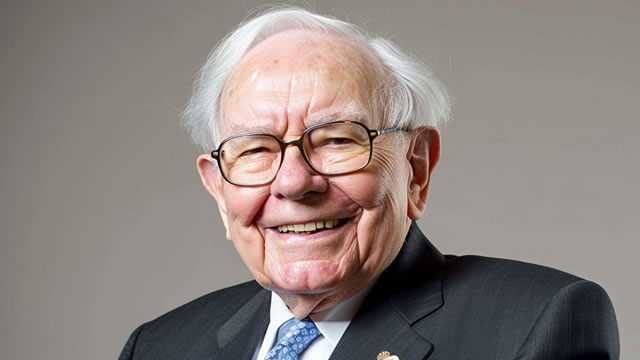
The “English Warren Buffett” Is Selling Everything in Sight. Time to Follow Suit?
Yahoo Finance· 2025-11-19 16:39
Fundsmith Quick Read Fundsmith sold its entire Mastercard (MA) position in Q3 and cut Meta Platforms by over half. Fundsmith trimmed positions aggressively in 2025 with minimal buying activity. Berkshire Hathaway built cash to $382B while Fundsmith reduced equity exposure amid high valuations. If you’re thinking about retiring or know someone who is, there are three quick questions causing many Americans to realize they can retire earlier than expected. take 5 minutes to learn more here Terry Smi ...
Tesla Stock’s Rally Hits the Brakes: Time to Sell?
Yahoo Finance· 2025-11-19 15:23
Core Viewpoint - Tesla's stock has experienced significant volatility, recently falling to around $400 per share after facing resistance near $470, raising concerns among investors about the future trajectory of the stock amidst a broader tech market downturn [1][2]. Company Performance - Tesla's shares dropped nearly 10% over the past five sessions, trading at 181 times forward earnings, indicating a high valuation relative to earnings [6]. - The company received a ride-hailing permit from Arizona for its robotaxi rollout, which could enhance its market position in the autonomous vehicle sector [6]. Market Sentiment - There is a growing bearish sentiment towards Tesla and other AI-related stocks, with notable investors like Bill Gates reportedly betting against Tesla, although it is unclear if he still holds a short position [2]. - The emergence of short-sellers and calls for a correction in the tech sector suggest a challenging environment for net buyers of big tech stocks [3]. Investment Outlook - The valuation of Tesla remains complex, with opinions divided on whether it is undervalued or overvalued compared to other AI stocks. The company is considered one of the more difficult stocks to value among the "Magnificent Seven" tech stocks [5]. - Analysts have raised Tesla's price target to $508 from $483, driven by optimism surrounding its full self-driving technology [6].
