Coatue Management

Search documents
Billionaire Philippe Laffont of Coatue Management Is Piling Into 3 Highly Volatile Momentum Stocks
The Motley Fool· 2025-06-30 07:06
Group 1: Investment Insights - Three early-stage companies with significant addressable markets have attracted attention from Wall Street's leading asset managers [1] - Institutional investors with over $100 million in assets must file Form 13F, providing insights into stock purchases and sales by top money managers [2][4] - Coatue Management's Philippe Laffont has invested in a mix of growth, value, and momentum stocks, focusing on three highly volatile stocks during the March-ended quarter [5] Group 2: QuantumScape - QuantumScape, a developer of solid-state lithium-metal batteries, saw Coatue acquire 4,294,995 shares in the first quarter [6] - The stock surged by 77% following the announcement of its Cobra separator process entering baseline production, which aims to reduce production costs and improve battery performance [7][8] - Despite the high addressable market for solid-state batteries, consumer demand for electric vehicles (EVs) has been weak due to various economic factors [10] - QuantumScape currently has no revenue and is losing money, raising skepticism about its future viability [11] Group 3: Plug Power - Plug Power, a hydrogen fuel-cell company, was another focus for Laffont, with Coatue acquiring 4,098,713 shares [13] - The company has seen a 74% surge in stock price since May 15, despite being down 43% year-to-date [13] - Plug Power is expanding its hydrogen infrastructure but is facing significant financial losses, with over $2.1 billion lost last year [16] - The company relies on stock sales to raise capital, leading to shareholder dilution [17] Group 4: CoreWeave - CoreWeave, an AI-data center infrastructure company, saw a significant investment from Coatue, acquiring 14,402,999 shares [18] - The company has experienced a 305% increase in stock price since its IPO on March 28 [18] - CoreWeave's model focuses on leasing data center space and has acquired a substantial number of GPUs from Nvidia [19] - However, the company is heavily reliant on debt financing, which has contributed to its net losses [20] - Concerns exist regarding the rapid innovation cycle of Nvidia, which could depreciate CoreWeave's assets [21] - The AI market's potential may be constrained by historical trends of early-stage bubbles bursting, raising questions about the sustainability of CoreWeave's valuation [22]





Dueling Billionaires: Artificial Intelligence (AI) Stock Nvidia Is Israel Englander's Largest Stock Holding, but Philippe Laffont Has Sold Shares for 8 Consecutive Quarters
The Motley Fool· 2025-06-17 07:51
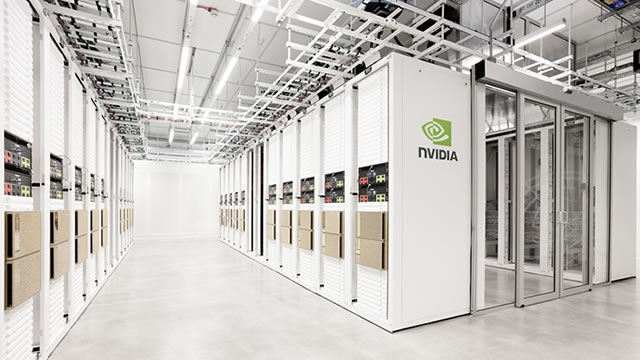
Core Viewpoint - The article discusses the contrasting perspectives of prominent Wall Street money managers regarding Nvidia, a leading player in the AI sector, highlighting the mixed sentiments about its future return potential amidst a booming AI market. Group 1: Nvidia's Market Position - Nvidia holds a monopoly-like market share in the graphics processing unit (GPU) sector for AI-accelerated data centers, with overwhelming demand for its hardware [7] - The demand for AI-GPUs has consistently outstripped supply, allowing Nvidia to charge a premium for its products, resulting in increased gross margins [8] - Nvidia's CEO, Jensen Huang, is recognized for aggressively investing in advanced chips, with new products like Blackwell Ultra expected to maintain the company's competitive edge [9] Group 2: Investment Perspectives - Israel Englander of Millennium Management is optimistic about Nvidia, holding 9,233,791 shares as of March, indicating a significant investment in the AI revolution [5] - Conversely, Philippe Laffont of Coatue Management has sold Nvidia shares for eight consecutive quarters, reducing his stake by 83% over two years, reflecting a cautious approach despite still holding a sizable position [13][14] Group 3: Competitive and Market Risks - Concerns exist regarding increasing competition, as major customers of Nvidia are developing their own AI chips, which could limit Nvidia's market share and impact its gross margins [18] - Trade policies under President Trump may restrict Nvidia's access to the Chinese market, potentially resulting in significant revenue losses [20] - Historical trends suggest that transformative technologies often experience bubbles that burst, raising concerns about Nvidia's high valuation in the early stages of AI development [21][22]

Billionaire Philippe Laffont Has Cumulatively Sold 83% of Coatue's Nvidia Stake and Is Piling Into Wall Street's Hottest Artificial Intelligence (AI) IPO
The Motley Fool· 2025-05-22 07:06
Core Insights - Coatue Management's billionaire chief, Philippe Laffont, is shifting focus from Nvidia to a newly public AI stock, CoreWeave, indicating a strategic pivot towards high-growth potential in the AI sector [1][15] - The month of May has been significant for investors due to earnings reports, economic data releases, and the Federal Open Market Committee's decisions [1][2] Company Analysis: Nvidia - Laffont has been consistently selling Nvidia stock over the past two years, reducing his position by 83% from its peak of 49,802,020 shares [6][7] - Nvidia's gross margin has surpassed 70% due to overwhelming demand for its GPUs, but competitive pressures are beginning to impact its margins [9][10] - The company faces risks from both external competitors and internal chip development by its top customers, which could diminish its market share in data centers [10][11] - Concerns about a potential AI bubble could pose significant risks to Nvidia, especially since over 90% of its net sales come from the data center segment [12][13] Company Analysis: CoreWeave - CoreWeave, an AI data center infrastructure company, has attracted Laffont's attention, with Coatue purchasing 14,402,999 shares shortly after its IPO [15][16] - The company has ambitious growth projections, with sales expected to rise from $1.92 billion in 2024 to $19.66 billion by 2028, bolstered by a strategic deal with OpenAI [17] - However, CoreWeave is experiencing accelerating net losses and significant debt financing costs, with projected net interest expenses reaching $1.06 billion in 2025 [19] - The rapid innovation cycle of Nvidia poses a risk to CoreWeave, as its reliance on Hopper GPUs may lead to obsolescence and reduced pricing power [20] - The potential for an AI bubble could adversely affect CoreWeave's business, as companies may cut back on AI infrastructure spending [21]
数字理疗平台Hinge Health(HNGE.US)IPO定价32美元 拟筹资2.73亿美元
Zhi Tong Cai Jing· 2025-05-22 01:36
数字物理治疗初创公司Hinge Health(HNGE.US)周三将其美股首次公开募股(IPO)定价为每股32美元,处 于预期区间的上限。该公司在此次发行中出售了852万股股票,募资约2.73亿美元。此次发行总量将为 1370万股,其余股份由现有股东出售。 Hinge成立于2014年,将在纽约证券交易所上市,股票代码为"HNGE"。该公司于今年3月提交初步招股 书,并在本月早些时候更新文件,公布28至32美元的预期定价区间。 按IPO价格计算,Hinge Health的估值约为26亿美元,若按完全稀释后股本计算可能更高。这一估值较 2021年10月该公司最后一轮外部融资时的62亿美元私募估值大幅缩水。 这家公司通过软件帮助患者远程治疗急性肌肉骨骼损伤、慢性疼痛及开展术后康复。其联合创始人包括 首席执行官丹尼尔.佩雷斯(Daniel Perez)和执行主席加布里埃尔.梅克伦堡(Gabriel Mecklenburg),两人都 曾亲身经历过在物理康复上的挣扎。 今年第一季度,Hinge的收入从去年同期的8270万美元增长50%至1.238亿美元,当季实现净利润1710万 美元,而去年同期净亏损为2650万美元。 ...
OpenAI raises $40B at $300B valuation in round led by SoftBank
New York Post· 2025-04-01 15:17
The AI giant will receive $10 billion in initial funding – with SoftBank and its CEO Masayoshi Son to contribute $7.5 billion and the rest of the money coming from a group of investors that includes Microsoft, Thrive Capital, Altimeter Capital and Coatue Management, Bloomberg reported. The additional $30 billion is set to be dispersed at the end of the year, with $22.5 billion coming from SoftBank and $7.5 billion from other investors. Sam Altman's OpenAI has raised $40 billion in a new funding round led by ...


软银领投,OpenAI融资400亿美元,估值高达3000亿美元
Hua Er Jie Jian Wen· 2025-04-01 03:17
Group 1 - OpenAI has secured a record $40 billion funding round led by SoftBank, raising its valuation to $300 billion, making it one of the largest private companies globally [1][2] - The investment from SoftBank accounts for 75% of the total funding, amounting to $30 billion, with other investors including Microsoft, Coatue Management, Altimeter Capital, and Thrive Capital [1] - The funding will be released in two phases: an initial $10 billion immediately, followed by $30 billion by the end of 2025, contingent on OpenAI's successful transition to a traditional profit-making model [1][2] Group 2 - OpenAI's valuation has surged from $157 billion in October of the previous year, reflecting the extreme enthusiasm in the AI sector [2] - If OpenAI were to go public today, it would rank 27th in the S&P 500, surpassing Chevron and just below Coca-Cola [2] - SoftBank's founder Masayoshi Son described AI as a "decisive force shaping the future of humanity," emphasizing the importance of the partnership with OpenAI [2] Group 3 - OpenAI announced the upcoming release of a "powerful new open-weight language model," aimed at competing with rivals like DeepSeek and Meta [2][3] - This represents a significant shift in OpenAI's traditional business model, which previously relied on subscriptions for products like ChatGPT and API access [3] - The open-weight model may allow OpenAI to monetize through custom or commercial licensing, expanding its revenue streams [3]
速递|OpenAI预计今年营收增长两倍以上,达到127亿美元,敲定软银400亿美元融资
Z Potentials· 2025-03-28 02:37
Core Viewpoint - OpenAI is nearing a significant $40 billion funding round led by SoftBank, which will substantially increase its valuation to approximately $300 billion [1][2]. Group 1: Funding Details - The new funding round will see SoftBank initially invest $7.5 billion, with an additional $2.5 billion from an investor consortium, and plans for a second round of investment later this year totaling $22.5 billion [1]. - Other hedge funds, including Magnetar Capital, Coatue Management, Founders Fund, and Altimeter Capital Management, are also in discussions to participate in this funding round, with Magnetar potentially contributing $1 billion [1]. - In a previous funding round led by Thrive Capital in 2024, OpenAI raised $6.6 billion, achieving a valuation of $157 billion [2]. Group 2: Revenue Growth - OpenAI's revenue is projected to more than double this year, reaching $12.7 billion, up from $3.7 billion last year, driven by strong growth in paid AI software [1]. - The company anticipates further rapid revenue growth, with plans to exceed $29.4 billion by 2026 [1]. Group 3: Product Offerings - OpenAI has introduced a new $200 per month ChatGPT Pro option, allowing access to its most advanced AI models, and is considering charging thousands of dollars monthly for certain AI products [2]. - Since the launch of ChatGPT over two years ago, OpenAI has rolled out various subscription services, with the enterprise version of ChatGPT reaching 1 million paid users as of September [1]. Group 4: Organizational Structure - OpenAI is in discussions with regulators to transition from a non-profit organization to a more traditional for-profit public benefit corporation [3].
Billionaire Philippe Laffont Dumped His Stake in a Consumer Favorite That's Risen 5,500% Since Its IPO in Favor of an Artificial Intelligence (AI) Stock-Split Stock
The Motley Fool· 2025-03-27 08:51
Core Insights - Philippe Laffont of Coatue Management is making significant investment moves with his nearly $30 billion hedge fund, particularly in high-growth and innovative companies [1][4] Group 1: Investment Moves - Laffont completely exited his position in Chipotle Mexican Grill, selling all 4,575,054 shares, which have appreciated 5,530% since their IPO in January 2006 [6][8] - The decision to sell Chipotle may be attributed to profit-taking after a 30% stock rally from July to December 2024 [7] - Laffont also made a notable purchase of Super Micro Computer, increasing his holdings from 24,161 shares to at least 8,866,735 shares following a 10-for-1 stock split [14][13] Group 2: Company Performance - Chipotle reported a 13.1% increase in sales to $2.83 billion in the fourth quarter, but comparable restaurant sales only rose by 5.4%, indicating a slowdown in same-store sales growth [8][11] - Super Micro Computer achieved nearly $15 billion in sales for fiscal 2024, a 110% increase year-over-year, and is projected to generate about $24.3 billion in sales for fiscal 2025 [16] Group 3: Valuation Concerns - Chipotle's shares are valued at 32 times estimated earnings per share for 2026, raising concerns about its premium valuation amid slowing organic growth and inflationary pressures [11][12] - Super Micro Computer's shares are valued at just 11 times forecast EPS for fiscal 2026, which is considered inexpensive given its expected sales growth of 60% this fiscal year and 40% next year [17] Group 4: Controversies - Super Micro Computer faced allegations of "accounting manipulation" from Hindenburg Research, leading to delayed financial reports and the resignation of its previous accounting firm [18][19] - Despite these challenges, the company has filed its delayed reports and hired a new auditor, but it will need to rebuild investor trust moving forward [19]


商业化战绩曝光!OpenAI,最新消息→
证券时报· 2025-03-27 08:25
Core Viewpoint - OpenAI is experiencing significant revenue growth but faces substantial cost pressures, with profitability expected only by 2029 [1][8]. Revenue Growth - OpenAI's revenue is projected to more than double this year, reaching $12.7 billion (approximately 92.2 billion RMB), compared to $3.7 billion in 2024 [1][3]. - The company anticipates further rapid growth, with revenue expected to exceed $29.4 billion next year [1]. Revenue Structure - OpenAI has approximately 9.88 million monthly paying users, generating an annual recurring revenue of $3.4 billion [3]. - 84% of this revenue comes from ChatGPT paid users, while API revenue accounts for about 15% [3]. Cost Structure - OpenAI's costs are primarily driven by model training and operational expenses, including server rental and data provider payments [8]. - As of last year, OpenAI's workforce reached 1,500 employees, leading to a human resource cost of $1.5 billion [8]. Financing Activities - OpenAI is nearing a $40 billion financing round led by SoftBank, which will double its valuation to $300 billion [7]. - This financing round is expected to include an initial investment of $7.5 billion from SoftBank, with additional funds coming later in the year [7]. Pricing Strategy - OpenAI has adopted a high pricing strategy for its models, with the new o1-pro model costing $150 per million tokens for input and $600 for output, significantly higher than competitors [4]. - The company plans to launch high-end AI agents, with the highest tier costing $20,000 per month, targeting high-demand sectors like finance and healthcare [4]. Future Outlook - OpenAI expects to achieve positive cash flow by 2029, with projected annual revenue exceeding $125 billion [1][8]. - The company continues to seek additional funding to support its operations and model development amid rising costs [8].

Meet One of the Only Billionaire Money Managers Who Isn't Selling Nvidia Stock
The Motley Fool· 2025-03-26 08:51
Core Insights - A prominent billionaire fund manager, Chase Coleman of Tiger Global Management, oversees $26.5 billion in assets and has not sold any shares of Nvidia, indicating strong confidence in the company's future [1][6] - The quarterly Form 13F filings from billionaire money managers provide valuable insights into stock trends and investment strategies, highlighting the contrasting approaches towards Nvidia among these investors [2][3] Investment Trends - Many billionaire fund managers with concentrated portfolios have been selling Nvidia shares, while Coleman remains a steadfast holder, maintaining a significant position of 9,683,550 split-adjusted shares [4][5][6] - The only other focused billionaire buyer of Nvidia is Ole Andreas Halvorsen of Viking Global Investors, who holds a smaller position of 2,031,985 shares [7] Market Position and Competitive Advantage - Nvidia dominates the GPU market in high-compute data centers, with its Hopper and Blackwell architectures leading in AI applications, allowing the company to exceed Wall Street's expectations [8] - The scarcity of high-powered AI GPUs has enabled Nvidia to command a premium price, ranging from 100% to 300% above competitors [9] Selling Pressure and Concerns - Notable billionaires, including Philippe Laffont and David Tepper, have sold significant portions of their Nvidia holdings, indicating a cautious outlook despite the company's competitive advantages [10] - Concerns about increasing competition and potential market share erosion from both direct competitors and Nvidia's own customers developing in-house AI chips are prevalent among investors [12][13] Potential Risks - The possibility of an AI bubble forming raises concerns, as historical trends show that transformative technologies often experience bubble-bursting events, which could negatively impact Nvidia's stock [14][15] - Nvidia's reliance on its data center segment for over 88% of net sales in fiscal 2025 makes it vulnerable to market fluctuations and competitive pressures [15]