
Vanguard

Search documents
I’m only 54 and my 401(k) plan is emailing me about buying annuities. Is this something I should do?
Yahoo Finance· 2025-12-18 16:15
Core Insights - The article discusses the evolving landscape of retirement income solutions, particularly focusing on single premium immediate annuities (SPIAs) and their integration into retirement plans [3][4][5]. Group 1: Annuity Options and Features - A $100,000 investment in a joint and survivor policy can yield $600 per month, with variations based on options like cash refund or inflation riders [1]. - The minimum investment for these annuities is $5,000, with no maximum limit on the amount that can be allocated from a 401(k) account [2]. - SPIAs are gaining traction as a popular and efficient form of annuity, with companies like Fidelity facilitating access to these products through streamlined processes [5]. Group 2: Industry Developments and Offerings - Fidelity is enabling retirees to access group rates on SPIAs, allowing for easy sign-up with insurance companies [3]. - Vanguard is introducing target-date funds that will transition into SPIAs upon retirement, although opting into the annuity requires an active choice from the worker [6][7]. - Other fund management companies, such as BlackRock and State Street, are also adopting the target-date approach, although implementation may vary by company [8]. Group 3: Consumer Education and Considerations - There is a significant need for consumer education regarding annuities, as they can be complex financial products [10][11]. - Fidelity emphasizes the importance of understanding the terms and conditions of annuity contracts, as exiting these contracts can be challenging [12]. - The article suggests that individuals should take their time to explore options and educate themselves about retirement income solutions, as the financial services industry is innovating in this space [13][14].
Crypto for Advisors: Predictions for 2026
Yahoo Finance· 2025-12-18 16:00
Core Insights - The future of blockchain governance is expected to shift towards on-chain intelligence with deterministic and verifiable rules, enhancing smart contract security and debugging capabilities [1] - AI-driven security tools are advancing rapidly, offering real-time fraud detection and high accuracy in transaction labeling, which could lead to significant improvements in blockchain security [2] - The tokenization of stocks and equities is projected to grow significantly, especially with the anticipated "Innovation Exemption" under the SEC's "Project Crypto," potentially reaching 14% of Total Value Locked (TVL) in DeFi [3] Industry Developments - A consortium of major banks is exploring the issuance of a stablecoin pegged to G7 currencies, aiming to provide compliant digital currency benefits [11][12] - The market for prediction platforms is consolidating, with significant trading volumes indicating a growing interest from institutional investors [6] - The institutional use of privacy technology is increasing, while retail adoption remains limited, indicating a widening gap in usage [13][14] Market Trends - The year 2025 saw a record number of IPOs, with a notable increase in crypto-friendly listings, suggesting a growing acceptance of digital assets in traditional markets [15] - Predictions for 2026 indicate a continued rise in digital asset public listings, with a significant portion of companies planning to incorporate tokenized assets into their portfolios [16] - The integration of crypto into mainstream financial platforms is expected to challenge existing financial systems, driven by institutional investment and compliance [17]
President Trump’s portable mortgage push could let you keep your 3% rate, but experts warn it may backfire
Yahoo Finance· 2025-12-18 15:30
Core Viewpoint - The Trump administration is exploring the introduction of portable mortgages to encourage homeowners to sell their homes, which may help alleviate the current stagnation in the housing market due to high interest rates [1][4]. Group 1: Portable Mortgages - A portable mortgage allows homeowners to transfer their existing mortgage and interest rate to a new home, avoiding the need for a new loan when moving [2]. - If the new home costs more than the current one, homeowners would need to pay the difference in cash or secure an additional loan [2]. Group 2: Current Market Conditions - A significant portion of American homeowners, approximately 52.5%, have mortgage rates below 4%, while the average 30-year fixed mortgage rate has remained above 6% since 2022 [3]. - High interest rates are discouraging homeowners from moving, which is contributing to a stagnant housing market [4]. Group 3: Potential Impact and Criticism - The introduction of portable mortgages could incentivize homeowners to sell, potentially opening opportunities for new buyers in the market [4]. - Critics express concerns that portable mortgages could disrupt the U.S. housing market, particularly as U.S. mortgages are bundled into mortgage-backed securities, which are crucial for bank liquidity and new loan issuance [5].
Income Investors Skip VOO's 1.09% Yield And Choose NOBL's 68 Dividend Aristocrats Paying Twice As Much
247Wallst· 2025-12-18 14:07
Core Insights - Vanguard 500 Index Fund ETF Shares (NASDAQ: VOO) leads the ETF market with $1.5 trillion in assets and a low expense ratio of 0.03% [1] - ProShares S&P 500 Dividend Aristocrats ETF (NYSEARCA: NOBL) is recommended for income investors seeking superior cash flow [1] Group 1 - Vanguard 500 Index Fund ETF Shares has the highest popularity among ETFs, attributed to its significant asset base [1] - The expense ratio of Vanguard 500 Index Fund ETF Shares is notably low at 0.03%, making it an attractive option for investors [1] Group 2 - ProShares S&P 500 Dividend Aristocrats ETF is highlighted for its potential to provide better cash flow for income-focused investors [1]


How To Cash In On Vanguard's Call For The Decade's Top Asset
Investors· 2025-12-18 13:00
Information in Investor's Business Daily is for informational and educational purposes only and should not be construed as an offer, recommendation, solicitation, or rating to buy or sell securities. The information has been obtained from sources we believe to be reliable, but we make no guarantee as to its accuracy, timeliness, or suitability, including with respect to information that appears in closed captioning. Historical investment performances are no indication or guarantee of future success or perfo ...
I retired at 60 and have an untouched $700k nest egg. Are RMDs going to skyrocket my taxes owed?
Yahoo Finance· 2025-12-18 12:15
Core Insights - The article discusses the importance of planning for long-term care and Required Minimum Distributions (RMDs) for retirees, particularly focusing on a case study of a retiree named Alice [1][3][4]. Long-Term Care - A significant percentage of older adults will require long-term care, with 80% of 65-year-olds expected to need it at some point [1]. - The median annual costs for long-term care in 2023 are reported as follows: $116,800 for a private nursing home room, $75,500 for a home health aide, and $64,200 for an assisted living facility [7]. - Long-term care insurance is suggested as a way to mitigate these costs, with average annual premiums of $1,200 for single males and $1,900 for single females like Alice [8]. Required Minimum Distributions (RMDs) - Alice will need to start taking RMDs from her traditional IRA once she turns 73, which is a requirement to ensure retirement funds are not left untouched indefinitely [3][12]. - Failing to take RMDs can result in a 25% tax penalty on the amount that should have been withdrawn [12]. - Strategies to minimize RMDs include converting traditional IRA funds to a Roth IRA, which is not subject to RMDs, although this requires paying income taxes on the converted amount [15][16]. Financial Planning - The article emphasizes the need for a tailored financial strategy, potentially involving the assistance of a financial advisor to navigate the complexities of RMDs and long-term care planning [15][17]. - It also mentions the back-door Roth IRA method as a long-term planning strategy for high-net-worth individuals, allowing for tax-free growth without RMDs [19][20]. - The importance of understanding tax implications and the potential impact on financial situations is highlighted, as RMDs can affect tax brackets and Medicare premiums [14].
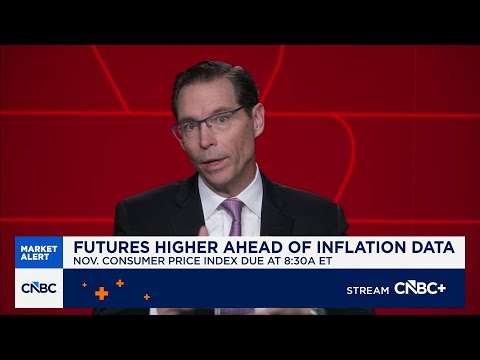
CPI data will leave Fed in a cutting bias, says Vanguard's Joe Davis
Youtube· 2025-12-18 12:09
Economic Outlook - Vanguard's economic outlook for 2026 indicates a mixed picture for inflation, with some components decreasing while others, particularly food prices and tariffs, exert upward pressure [1][2] - The Federal Reserve is expected to maintain a modest easing bias, reflecting ongoing economic challenges [3] Investment and Job Market - The potential for AI-related investments in the latter half of the year could provide upside risk to the US economy, despite current headwinds [4][5] - The labor market is currently in a holding pattern, influenced by factors such as an increase in retirements and slowed immigration, which has reduced the supply of new entrants [6][8] Inflation Dynamics - Tariffs are a significant factor in the inflation outlook, with expectations that inflation could rise above 2% due to tariff-related uncertainties [10][11] - The focus for 2026 is anticipated to shift more towards growth rather than inflation, suggesting a potential for non-inflationary growth similar to the late 1990s [11][12] Federal Reserve Policy - The Federal Reserve's approach should consider the potential for higher productivity and growth without necessarily increasing rates, as seen in historical contexts [12][13] - A scenario is proposed where higher growth could coexist with a 4% yield on 10-year Treasuries, indicating that the Fed needs to focus on capacity and productivity for future policy decisions [13][14]

CPI data will leave Fed in a cutting bias, says Vanguard's Joe Davis
CNBC Television· 2025-12-18 12:09
Economic Outlook & Inflation - Vanguard expects a mixed CPI picture with some components trending down, but pressures remain due to tariffs and food prices [2] - Tariffs and a less restrictive Fed than perceived could keep inflation above 2% [10] - The focus for 2026 is expected to shift from inflation to growth [11] Labor Market - The US labor market has effectively stalled and is in a holding pattern due to supply and demand factors [5][6] - Acceleration in retirements and slowed immigration have pushed down the break-even rate [7] - Job growth is strong in occupations with high AI exposure [7] - Younger worker job growth is at historical levels, contradicting some narratives [8] Investment & Growth - AI-related investment will be the ultimate factor influencing the US economy, particularly in the back half of the year, posing an upside risk [4][5] - Investment spending and business confidence will determine the risk to the economy in 2026 [9] - Higher productivity and innovation rates could lead to higher growth without higher rates, similar to the late 1990s [12][13] - A 4% 10-year Treasury yield is possible with stable inflation and a 2.5-3% GDP growth due to increased capacity, not just demand [13][14]
2 ETFs That Are Good Bets To Beat the S&P 500 in 2026
The Motley Fool· 2025-12-18 06:30
Core Viewpoint - The S&P 500 is a strong long-term investment, but there are ETFs that are expected to outperform it in the coming year [1][2] Group 1: iShares Russell 2000 ETF - The S&P 500 has significantly outperformed the Russell 2000 index since the end of 2022, nearly doubling its gains [4] - The iShares Russell 2000 ETF is expected to outperform the S&P 500 in 2026 due to the broadening of gains in a maturing bull market [6] - The Russell 2000 ETF is currently trading at a price-to-earnings ratio of 18.3, which is nearly 40% cheaper than the Vanguard S&P 500 ETF at 28.7 [7] Group 2: VanEck Semiconductor ETF - The VanEck Semiconductor ETF has increased by 44% year-to-date, significantly outperforming the S&P 500 [9] - Over the last decade, the VanEck Semiconductor ETF has surged by 1,180%, driven by the booming semiconductor sector [9] - The ETF is well-positioned for continued success, trading at a P/E ratio of 39.7, comparable to other tech-heavy ETFs [10] - Key holdings in the VanEck Semiconductor ETF include leading companies in the AI boom, such as Nvidia and Taiwan Semiconductor, which are experiencing substantial revenue growth [11]

X @THE HUNTER ✴️
GEM HUNTER 💎· 2025-12-18 06:25
GM CT say it back 🌄$VOOI launch coming today 13 UTC$ASTER dumped hard today again and VOOI launch may be the reason 👀 https://t.co/Hr3WMKL7Qn ...