
Toyota

Search documents
Japanese automakers vroom towards Shriram Finance after MUFG investment
BusinessLine· 2026-01-30 05:41
Japan’s Mitsubishi UFJ Financial Group has seen a surge in interest from Japanese automakers hoping to tap its 20% stake in Indian non-bank lender Shriram Finance to boost sales in the fast-growing Indian market, an MUFG executive said.India has become a major investment focus for MUFG — Japan’s largest banking group — and for clients such as Toyota, with business generated through the Shriram investment potentially lifting profitability across the group, Yasushi Itagaki, head of MUFG’s global operations ...

Joby Slides as Investors Price In Dilution From the $1.2B Capital Raise
Investing· 2026-01-29 13:01
Group 1 - The core viewpoint of the article focuses on the market analysis of Joby Aviation, highlighting its potential in the emerging electric vertical takeoff and landing (eVTOL) aircraft sector [1] Group 2 - Joby Aviation is positioned as a leader in the eVTOL market, with significant advancements in technology and regulatory approvals [1] - The company has reported substantial progress in its flight testing and is on track to begin commercial operations in the near future [1] - Financial projections indicate a strong growth trajectory, with expectations of increasing revenues as the market for urban air mobility expands [1]


Toyota tops global auto sales in 2025 as hybrids offset US tariff pressure
Invezz· 2026-01-29 12:00
Core Insights - Toyota Motor maintained its status as the world's top-selling automaker in 2025, achieving record vehicle sales despite challenges from US tariffs and increasing global competition [1] Group 1: Sales Performance - The company reported record vehicle sales in 2025, indicating strong demand and effective market strategies [1] - Ongoing disruptions from US tariffs have not significantly hindered Toyota's sales performance [1] Group 2: Competitive Landscape - The automotive industry is experiencing intensifying global competition, yet Toyota has successfully navigated these challenges [1] - The company's ability to retain its top position amidst such competition highlights its resilience and strategic advantages [1]

What tariffs? Toyota hits record sales in 2025, despite Trump's auto levies
CNBC· 2026-01-29 09:07
Core Insights - Toyota Motor has maintained its status as the world's top-selling automaker in 2025, achieving record sales of 10.5 million units, a 3.7% increase from the previous year, surpassing Volkswagen Group's 9 million units and Hyundai Motor Group's 7.27 million units [1] - The growth in sales was significantly driven by strong demand for hybrid vehicles in the U.S., particularly models like the Prius and RAV4 [1] Group 1 - Toyota's U.S. sales increased by 7.3% to 2.93 million units, despite the imposition of aggressive tariffs by the U.S. government [2] - The company successfully absorbed tariff-related costs instead of passing them onto consumers, focusing on local production and cost controls [2] - Toyota estimated that U.S. tariffs would cost it 1.45 trillion yen ($9.7 billion) in the fiscal year ending March 2026, yet raised its full-year operating profit forecast due to effective cost reductions and strong demand outside the U.S. [3]

Toyota Remains World's Top-Selling Automaker
WSJ· 2026-01-29 08:56
Core Insights - The Japanese company has secured its position as the world's top-selling carmaker for the year 2025 [1] Company Summary - The company is recognized as the leading car manufacturer globally, indicating strong sales performance and market dominance [1] Industry Summary - The automotive industry is witnessing significant competition, with the Japanese company outperforming its rivals to achieve the top sales position [1]

SAP(SAP) - 2025 Q4 - Earnings Call Transcript
2026-01-29 07:00
Financial Data and Key Metrics Changes - The total cloud backlog reached EUR 77 billion, up 30% year-on-year, indicating strong underlying business momentum [6][25] - Cloud revenue grew by 26% year-on-year, primarily driven by the strong performance of the Cloud ERP Suite, which increased by 32% [27] - Total revenue for the full year approached EUR 37 billion, up 11% [27] Business Line Data and Key Metrics Changes - More than two-thirds of Q4 cloud order entry included business AI, which increased by over 20 percentage points compared to Q3 [5] - The Cloud ERP Suite accounted for 86% of total cloud revenue for the year, reinforcing its position as a key growth engine [27] - Software licenses revenue decreased by 27%, contrasting with the growth in cloud revenue [27] Market Data and Key Metrics Changes - Brazil, France, Germany, India, Italy, South Korea, and Spain showed outstanding performances in cloud revenue, while China, Japan, Saudi Arabia, the UK, and the US were particularly strong [28] - The company outperformed the cloud market by 10 percentage points in 2025 [15] Company Strategy and Development Direction - The company is focused on leveraging AI to enhance business resilience and productivity, with a clear strategy to embed AI into business processes [4][5] - The RISE and GROW with SAP initiatives remain core pillars of the transformation strategy, targeting large-scale enterprises and mid-sized companies [24] - The company aims to achieve a run rate of around EUR 2 billion in real cost efficiencies by the end of 2028 through internal AI usage [21] Management's Comments on Operating Environment and Future Outlook - Management acknowledged geopolitical uncertainty and macroeconomic volatility as challenges but expressed confidence in the company's ability to drive growth through AI and cloud solutions [4][24] - The outlook for 2026 anticipates a moderation in CCB growth but expects total revenue growth to accelerate, supported by a strong foundation [32] Other Important Information - The company plans to initiate a new two-year share repurchase program of up to EUR 10 billion, reflecting confidence in sustainable business strengths [31] - Non-IFRS basic earnings per share increased by 36% to EUR 6.15 for the fiscal year 2025 [31] Q&A Session Summary Question: Concerns about CCB growth and pipeline for Q1 - Management noted that the 25% CCB growth was impacted by a higher share of large deals with longer ramp periods and some deals with cancellation clauses, but bookings performance was ahead of plan [40][41] Question: AI-driven cost savings and R&D focus - The company plans to achieve EUR 2 billion in savings through business growth without a restructuring plan, focusing on scaling the business with AI [47][49] Question: Customer adoption of AI offerings - Approximately 60% of existing cloud customers are actively using the AI offerings, with a significant increase in adoption of the AI copilot tool [57] Question: TCB growth dynamics and BDC contribution - Management acknowledged a steep deceleration in TCB growth but emphasized the strong pipeline and expected contributions from the Business Data Cloud in 2026 [74]

舆观 最佳品牌 排名2026-北欧版
YouGov· 2026-01-29 05:10
Investment Rating - The report does not explicitly provide an investment rating for the industry or companies analyzed. Core Insights - The YouGov Best Brand Rankings 2026 highlight the top-performing global brands based on consumer appeal over the past 12 months, with a focus on brand health as measured by YouGov BrandIndex's daily tracking [7][8]. - The top five brands globally are dominated by tech companies, including WhatsApp, Samsung, YouTube, and Google, indicating the significant role of digital platforms in daily life [7][8]. - The report incorporates consumer voices through AI-powered analysis, revealing key themes and sentiments regarding brand performance [8][21][29]. Summary by Sections YouGov Best Brand Rankings 2026 - The rankings are based on an average Index score of brands tracked in a minimum of 10 markets [16]. - The top global brands include WhatsApp (41.5), Samsung (41.4), YouTube (41.1), Google (38.6), and adidas (35.3) [57]. Top Brands by Market - **Denmark**: The top brand is REMA 1000 with an overall Index score of 47.6, followed by MobilePay (42.8) and Matas (41.6) [66]. - **Finland**: Fiskars leads with a score of 59.6, followed by Fazer (56.9) and Valio (55.4) [73]. - **Norway**: Vipps ranks first with a score of 53.4, followed by FINN.no (51.1) and NRK TV (39.7) [79]. - **Sweden**: Swish is the top brand with a score of 43.9, followed by IKEA (42.7) and Volvo (39.4) [87]. Most Improved Brands - **Denmark**: SAS shows the most improvement with an increase of 6.3 points, followed by OK (3.9) and MobilePay (3.2) [69]. - **Finland**: Coop leads with a 5.4 point increase, followed by McDonald's (3.9) and Nordea (3.7) [75]. - **Norway**: Sony has the highest improvement with 5.9 points, followed by Philips (5.1) and Electrolux (3.7) [81]. - **Sweden**: SAS again shows significant improvement with 3.4 points, followed by SJ (3.4) and BMW (2.4) [89]. Additional Markets - The report also covers brand performance in additional markets such as Australia, France, and Germany, with brands like Toyota, Samsung, and LEGO leading in their respective regions [95][103][111].


Insight: How activist investors turned a Toyota buyout into a battleground
Reuters· 2026-01-29 04:51
Core Insights - Toyota's plan to take Toyota Industries (TICO) private has sparked a significant conflict between activist investors and the company, highlighting the demand for a higher acquisition price [1] Group 1: Company Strategy - The initial perception of Toyota's bid for TICO was that it was unremarkable, but it has since escalated into a contentious situation [1] - Activist investors are pushing for a better deal, indicating a strong interest in maximizing shareholder value [1] Group 2: Market Reaction - The battle over the acquisition reflects broader trends in corporate governance and investor activism within Japan [1] - The situation may influence future corporate strategies and investor relations in the Japanese market [1]
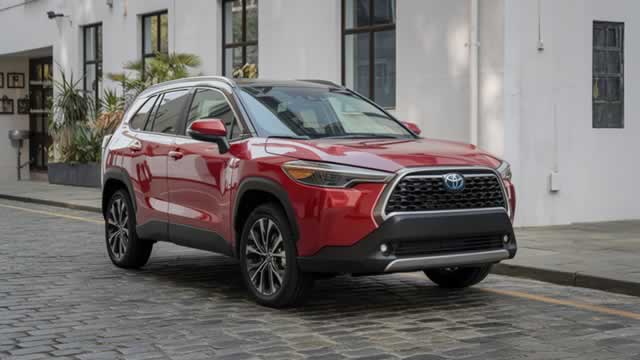
Toyota retains top auto crown in 2025 with record sales
Reuters· 2026-01-29 04:32
Group 1 - Toyota Motor sold a record 11.3 million vehicles globally in 2025 [1] - The company retained its position as the world's top-selling automaker for the sixth consecutive year [1]
Fed risks Trump’s ire by holding rates
Yahoo Finance· 2026-01-28 21:52
Speaking on Wednesday, Mr Powell said that the court battle “is perhaps the most important legal case in the Fed’s 113-year history”.The investigation into Mr Powell comes after Mr Trump tried to sack Fed governor Lisa Cook over unproven allegations of mortgage fraud, a move that she is contesting in the Supreme Court.“This is the route by which inflation creeps up gradually, and then you find yourself with a problem which only a deep recession can solve.”“I do think that the current situation is a challeng ...