Blue Owl Capital

Search documents
Blue Owl Capital: The Selloff Looks Overdone, Yield Hunters Are Stepping In
Seeking Alpha· 2026-01-20 19:17
Group 1 - The article discusses the current state of business development companies (BDCs) amidst ongoing pessimism in the financial sector [1] - It highlights that while investors are analyzing the challenges faced by BDCs, the broader financial sector continues to show resilience [1] - The author emphasizes an investment strategy focused on identifying high-potential opportunities, particularly in growth stocks and contrarian plays [1] Group 2 - The author has been recognized as a top analyst by various platforms, indicating a strong track record in identifying attractive investment opportunities [1] - The investment approach combines price action analysis with fundamental analysis to generate alpha above the S&P 500 [1] - The focus is on stocks with strong growth potential and those that have been beaten down but show significant upside recovery possibilities [1]



Retirement plan sponsors slow-walk private asset adoption, new report finds
Yahoo Finance· 2026-01-18 17:00
Group 1 - Retirement savers are interested in investing in private assets within employer-provided retirement plans, but plan sponsors are adopting these options cautiously [1][4] - A report from Cerulli Associates indicates that it will take about a decade for 20% of defined-contribution plans to include target-date products or managed accounts that allocate to private market assets [1] - The appeal of private investments lies in potentially higher returns and diversification, but the actual adoption of these investments is slower than anticipated [2] Group 2 - Concerns regarding fees and potential legal issues are significant factors slowing the adoption of private market assets by plan sponsors, with over 80% citing cost as a major concern [4] - Recent initiatives include Goldman Sachs acquiring a $1 billion stake in T. Rowe Price to facilitate access to private assets for US retirees by mid-2026 through co-branded target-date funds [5] - BlackRock and other major firms like Empower, Voya Financial, and Blue Owl Capital are also planning to offer private equity, credit, and real estate in their retirement portfolios [6]
Blue Owl Capital: Price Reset Creates A Compelling Total Return Opportunity
Seeking Alpha· 2026-01-15 13:45
Core Insights - The article emphasizes the importance of quantitative research, financial modeling, and risk management in equity valuation and market trends to identify high-growth investment opportunities [1] Group 1: Company Analysis - The company has a strong focus on corporate earnings and financial statement analysis, aiming to provide actionable investment ideas [1] - The expertise in model validation and stress testing enhances the company's ability to assess financial health and market conditions [1] Group 2: Industry Trends - There is a significant interest in macroeconomic trends, which are crucial for understanding market dynamics and potential investment opportunities [1] - The approach combines rigorous risk management with a long-term perspective on value creation, reflecting a strategic alignment with industry best practices [1]

Blue Owl Capital: The 2026-2027 Cycle Is Looking Bullish
Seeking Alpha· 2026-01-07 13:01
Group 1 - The service Beyond the Wall Investing offers significant savings on equity research reports, providing high-quality analysis and insights [1] - Oakoff Investments, led by a quantitative research analyst, focuses on balancing growth and value through proprietary Wall Street information [2] - The investing group features a fundamentals-based portfolio, weekly insights from institutional investors, and alerts for short-term trade ideas [2] Group 2 - The article emphasizes that past performance does not guarantee future results, highlighting the importance of independent analysis [4]

Interos Lands $20M Funding Round
Vcnewsdaily· 2026-01-06 23:49
Funding Announcement - Interos.ai has secured an additional $20 million in funding from Blue Owl Capital and Structural Capital [1] Company Overview - Interos is focused on operational resilience, transforming how companies manage their supply chains and business relationships through a SaaS platform that utilizes artificial intelligence [2] - The platform creates a living global map of complex business ecosystems, allowing for instant visualizations and continuous monitoring, which reduces the reliance on manual spreadsheet inputs [2] - Interos aims to help organizations reduce risk, avoid disruptions, and enhance enterprise adaptability while uncovering significant opportunities in their business relationships [2] - The company is based in Washington, DC, and serves global clients across various operational areas, including supply chain, financial, cybersecurity, regulatory and ESG compliance, and geographical considerations [2]

吴恩达年终总结:2025年或将被铭记为「AI工业时代的黎明」
Hua Er Jie Jian Wen· 2025-12-31 03:10
Group 1: Core Insights - 2025 is anticipated to mark the dawn of the AI industrial era, with significant advancements in model performance and infrastructure development driving GDP growth in the U.S. [1] - The integration of technology into daily life is expected to solidify transformative changes in the upcoming year [2] Group 2: Capital Expenditure and Energy Challenges - Major tech companies, including OpenAI, Microsoft, Amazon, Meta, and Alphabet, have announced substantial infrastructure investment plans, with data center construction costs estimated at $50 billion per gigawatt [3] - OpenAI's "Stargate" project involves a $500 billion investment to build 20 gigawatts of capacity globally, while Microsoft plans to spend $80 billion on global data centers by 2025 [3] - Bain & Co. estimates that AI annual revenue must reach $2 trillion by 2030 to support such large-scale construction, exceeding the total profits of major tech companies in 2024 [3] - Insufficient grid capacity has led to some data centers in Silicon Valley being underutilized, and concerns over debt levels have caused Blue Owl Capital to withdraw from financing negotiations for Oracle and OpenAI [3] Group 3: Talent Market Transformation - The shift of AI from academic interest to revolutionary technology has led to skyrocketing salaries for top talent, with Meta offering compensation packages worth up to $300 million [4] - Mark Zuckerberg has personally engaged in talent acquisition, successfully recruiting key researchers from OpenAI and other companies [4] Group 4: Advancements in AI Models - 2025 is viewed as the year of widespread application of reasoning models, with OpenAI's o1 model and DeepSeek-R1 demonstrating enhanced reasoning capabilities through reinforcement learning [6] - The OpenAI o4-mini achieved a 17.7% accuracy rate in a multimodal understanding test, driving the emergence of "Agentic Coding" tools capable of handling complex software development tasks [7] - Coding agents based on the latest large models completed over 80% of tasks in SWE-Bench benchmark tests, despite some limitations in complex logic and increased inference costs [8]





VanEck’s Unique BDC Income ETF Yields 12%
Yahoo Finance· 2025-12-30 13:04
Core Viewpoint - The shift of middle-market lending from banks to specialized investment vehicles presents opportunities for income investors willing to accept credit risk and volatility, exemplified by the VanEck BDC Income ETF (BIZD) which offers a 12% yield but requires careful analysis due to its unique structure [2]. Group 1: ETF Structure and Holdings - BIZD consists of 29 individual Business Development Companies (BDCs) and utilizes total return swaps for 34% of its portfolio, providing leveraged exposure to BDC indexes while paying SOFR plus 85 basis points on borrowed amounts [3][4]. - The fund's top four holdings account for approximately 67% of its assets, indicating concentrated exposure to a few large BDCs, with Ares Capital at 15.5%, Blue Owl Capital at 9.4%, and Blackstone Secured Lending at 8.1% [6]. Group 2: Performance Analysis - Year-to-date, BIZD has declined by 8%, contrasting with a 17% gain for the S&P 500, despite its attractive 12% yield [4][8]. - Over the past decade, BIZD has returned 143%, while the S&P 500 has achieved a return of 244%, highlighting underperformance relative to the broader market [8]. Group 3: Income Generation and Risks - The 12% yield of BIZD is derived from dividends of underlying BDCs, which primarily generate income from interest on middle-market loans, with most BDCs holding floating-rate debt that adjusts with interest rates [7]. - The variability in quarterly dividends, ranging from $0.40 to $0.47, reflects fluctuations in underlying BDC performance, indicating potential income instability [8].
吴恩达年终总结:2025年或将被铭记为“AI工业时代的黎明”
华尔街见闻· 2025-12-30 12:45
Core Insights - The year 2025 is anticipated to mark the dawn of the AI industrial era, characterized by unprecedented advancements in model performance and infrastructure investments that will significantly contribute to GDP growth in the U.S. [1][2] Group 1: Capital Expenditure and Energy Challenges - Major tech companies, including OpenAI, Microsoft, Amazon, Meta, and Alphabet, have announced substantial infrastructure investment plans, with each gigawatt of data center capacity costing approximately $50 billion. OpenAI's "Stargate" project, in collaboration with partners, involves a $500 billion investment to build 20 gigawatts of capacity globally [3]. - Microsoft is projected to spend $80 billion on global data centers in 2025 and has signed a 20-year agreement to restart the Three Mile Island nuclear reactor in Pennsylvania by 2028 to ensure a stable power supply [3]. - Bain & Co. estimates that to support this scale of construction, AI annual revenue must reach $2 trillion by 2030, exceeding the total profits of major tech companies in 2024 [3]. - Insufficient grid capacity has led to some data centers in Silicon Valley being underutilized, and concerns over debt levels have caused Blue Owl Capital to withdraw from negotiations to finance a $10 billion data center for Oracle and OpenAI [3]. Group 2: Talent Market Transformation - Meta has disrupted traditional compensation structures by offering lucrative packages, including cash bonuses and substantial equity, to researchers from OpenAI, Google, and Anthropic, with some four-year contracts valued at up to $300 million [5]. - Mark Zuckerberg has personally engaged in the talent acquisition battle, successfully recruiting key researchers from OpenAI [5]. - In response, OpenAI has introduced aggressive stock option vesting schedules and retention bonuses of up to $1.5 million for new employees [6]. Group 3: Proliferation of Reasoning Models and Agentic Coding - 2025 is viewed as the year of widespread application of reasoning models, with advancements such as OpenAI's o1 model and DeepSeek-R1 demonstrating enhanced reasoning capabilities through reinforcement learning [8]. - The integration of tools has led to significant improvements in model performance, with OpenAI's o4-mini achieving a 17.7% accuracy rate in a multimodal understanding test, driving the rise of "Agentic Coding" [10]. - By the end of 2025, tools like Claude Code, Google Gemini CLI, and OpenAI Codex are expected to handle complex software development tasks through intelligent workflows [10]. - Despite some limitations in reasoning models identified by research from Apple and Anthropic, the trend of utilizing AI for code generation and cost reduction in development remains strong [11].

AI巨头1200亿美元“幽灵债务”
3 6 Ke· 2025-12-26 01:24
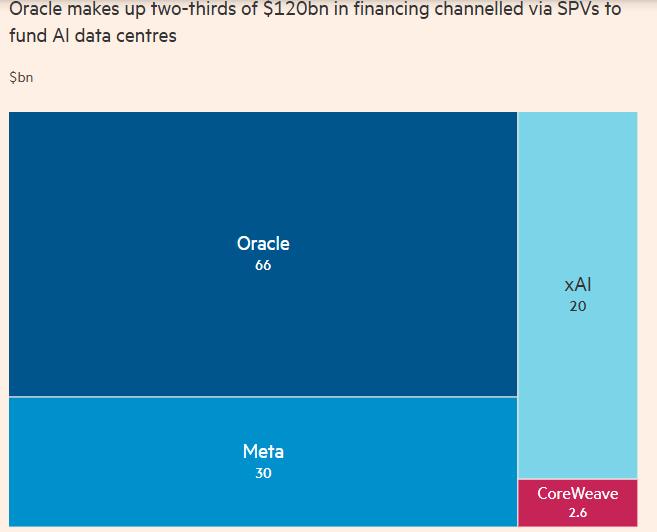
Group 1 - Major tech companies are utilizing Special Purpose Vehicles (SPVs) to offload over $120 billion in data center expenditures from their balance sheets, raising concerns about financial risks associated with their significant investments in artificial intelligence [1][4] - Companies like Meta, xAI, Oracle, and CoreWeave are leading this complex financing strategy to shield themselves from the substantial borrowing required for AI data center construction [1][4] - Financial institutions such as Pimco, BlackRock, Apollo, and major banks like JPMorgan have provided at least $120 billion in off-balance-sheet debt and equity financing for these tech firms' computing infrastructure [1][4] Group 2 - SPVs are independent legal entities established for specific purposes, such as asset securitization and risk isolation, allowing tech companies to separate their credit and bankruptcy risks from their underlying assets [3][4] - The use of SPVs for financing is becoming common, potentially obscuring the risks faced by tech companies and complicating the identification of who bears responsibility if AI demand falters [3][4] - A significant influx of private capital into SPVs for data center construction has been noted, with a large financial institution executive stating that this was unimaginable a year and a half ago, highlighting the tech sector's ability to secure capital far exceeding other industries [3][4] Group 3 - Meta completed the largest private credit data center deal in October, securing a $30 billion agreement for its Hyperion facility in Louisiana, with $27 billion sourced from loans and $3 billion in equity [4][5] - Oracle has also engaged in structured financing to support its commitments to lease data center power from OpenAI, collaborating with various builders and financial institutions to construct multiple data centers [4][5] - Oracle's off-balance-sheet financing transactions include significant loans for data centers in Texas and Wisconsin, with agreements allowing lenders to reclaim data center assets in case of default [5][6] Group 4 - The rapid increase in funding for AI infrastructure is putting pressure on tech companies' cash reserves, leading to a growing trend of raising off-balance-sheet debt through SPVs [5][6] - Morgan Stanley estimates that tech companies' AI initiatives will require $1.5 trillion in external financing support [5][6] - Investors believe that if AI service demand declines, the financial risks will ultimately fall on the tech companies leasing the facilities [6][8] Group 5 - The proliferation of SPVs raises concerns about the potential for simultaneous financial pressure on multiple AI companies, which could lead to a lack of transparency and risk spreading to private credit funds [7][8] - UBS projects that tech companies will borrow approximately $450 billion from private equity funds by early 2025, with a significant increase in project financing transactions [7][8] - The data center construction sector is increasingly reliant on the private credit market, which is experiencing rapid growth but also facing issues such as asset valuation spikes and high borrower concentration [7][8] Group 6 - The AI data center boom is heavily dependent on a few key clients, with OpenAI alone securing over $1.4 trillion in long-term computing resource commitments from major players [8] - If any major tenant encounters issues, multiple data center lenders may face similar risks, compounded by uncertainties in power supply and regulatory changes [8] - There is a trend towards more opaque structures in data center transactions, including the securitization of AI debt, which spreads loan risks across a broader investor base [8][9]

AI巨头1200亿美元“幽灵债务”
财联社· 2025-12-26 01:02
Core Viewpoint - Major tech companies are utilizing Special Purpose Vehicles (SPVs) to offload over $120 billion in data center expenditures from their balance sheets, raising concerns about the financial risks associated with their significant investments in artificial intelligence [1][4] Group 1: SPV Financing and Its Implications - Companies like Meta, xAI, Oracle, and CoreWeave are leading the way in complex financing transactions through SPVs to shield themselves from the substantial borrowing required for AI data centers [1][4] - Financial institutions such as Pimco, BlackRock, Apollo, and major banks like JPMorgan have provided at least $120 billion in off-balance-sheet debt and equity financing for these tech groups' computing infrastructure [1] - The use of SPVs allows these companies to maintain high credit ratings and improve financial metrics while concealing potential risks associated with AI demand fluctuations [4][6] Group 2: Specific Company Transactions - Meta completed a $30 billion private credit deal for its Hyperion facility in Louisiana, creating an SPV named Beignet Investor, which raised $30 billion, with $27 billion from loans and $3 billion in equity [5][6] - Oracle has engaged in structured financing to support its commitments to lease data center power from OpenAI, involving significant debt financing for multiple data centers [6][7] - xAI is raising $20 billion, including up to $12.5 billion in debt financing, using a similar SPV structure to acquire NVIDIA GPUs for leasing [7] Group 3: Market Trends and Risks - The private credit market, valued at $1.7 trillion, is rapidly expanding, with significant concerns about asset valuation, liquidity, and borrower concentration [10] - UBS projects that tech companies will borrow approximately $450 billion from private equity funds by early 2025, reflecting a $100 billion increase from the previous year [8][10] - The proliferation of SPVs may lead to a lack of transparency and potential cascading financial pressures if multiple AI companies face challenges simultaneously [8][10] Group 4: Future Outlook - The increasing reliance on a few major clients, such as OpenAI, for AI data center commitments poses risks to lenders if any single tenant encounters issues [10] - The emergence of more opaque structures in data center transactions, including AI debt securitization, is being observed, with estimates of such transactions reaching several billion dollars [10][11] - While investors view the strong balance sheets of large tech firms as a positive, the use of SPV financing may ultimately lower the overall credit quality of these companies [12]