
表外融资

Search documents
2026年2月社融数据点评:企业信贷同比多增,M1增速回升
Southwest Securities· 2026-03-15 07:30
Financing Trends - In February 2026, the total social financing (社融) stock grew by 8.2% year-on-year, maintaining the same growth rate as January[1] - The incremental social financing in February 2026 was 23,792 billion RMB, an increase of 1,461 billion RMB year-on-year, marking the second consecutive month of year-on-year growth[1] - The issuance of RMB loans to the real economy increased by 8,484 billion RMB in February 2026, up 1,956 billion RMB year-on-year, indicating a return to year-on-year growth[1] Corporate and Government Financing - Corporate loans increased by 14,900 billion RMB in February 2026, up 4,500 billion RMB year-on-year, reflecting enhanced corporate credit willingness[2] - Government bond financing in February 2026 was 14,036 billion RMB, a decrease of 2,903 billion RMB year-on-year, primarily due to base effects from the previous year[1] - Direct financing saw a new addition of 16,000 billion RMB, down 2,706 billion RMB year-on-year, largely impacted by government bond financing[1] Household Financing and Deposits - Household loans decreased by 6,507 billion RMB in February 2026, down 2,616 billion RMB year-on-year, influenced by the timing of the Spring Festival[2] - RMB deposits increased by 11,700 billion RMB in February 2026, but this represented a decrease of 32,500 billion RMB year-on-year[4] - M1 growth rate rose to 5.9%, an increase of 1 percentage point, attributed to strong foreign exchange settlements by export enterprises[4] Economic Outlook - The government set a GDP growth target of 4.5%-5% for 2026, aiming for better outcomes in practice[1] - The monetary policy remains "moderately loose," consistent with the previous year's economic work conference, with an increased focus on "reasonable price recovery"[1]
广州时隔27年重启赛马业,英伟达第四财季营收暴增 | 财经日日评
吴晓波频道· 2026-02-28 08:08
Group 1 - Guangzhou is planning to establish a 10 square kilometer deep cooperation zone for the horse industry, aiming to tap into the high-end consumption market potential of the Guangdong-Hong Kong-Macao Greater Bay Area, which is valued at hundreds of billions [2][3] - The upcoming horse racing event at the Hong Kong Jockey Club's Conghua Racecourse in October is positioned as a non-betting demonstration event, focusing on horse breeding, cultural tourism, and exhibition economy to drive profitability [2][3] - The revival of horse racing in Guangzhou is expected to create new job opportunities and enhance local employment [2] Group 2 - The revised CPA law aims to strengthen oversight and increase accountability in the auditing profession, addressing issues of audit fraud and enhancing the regulatory framework [4][5] - The draft includes 22 articles that impose stricter prohibitions on CPAs, including the issuance of false reports and failure to maintain professional skepticism [4] - The changes are anticipated to bolster the credibility of financial disclosures, which is crucial for maintaining investor confidence in the capital market [5] Group 3 - Moody's report indicates that the five major data center operators in the U.S. have made future leasing commitments totaling $662 billion, which is 113% of their adjusted debt [6][7] - By the end of 2025, the total undiscounted future leasing commitments of these companies could reach $969 billion, potentially impacting their balance sheets significantly [6][7] - The hidden debt structure poses risks, as it could lead to broader repercussions if the financial health of these companies deteriorates [7] Group 4 - NVIDIA reported a 73% year-over-year revenue growth in Q4 of fiscal 2026, reaching $68.127 billion, surpassing its guidance [8] - The data center business generated $62.314 billion in revenue, reflecting a 75% increase, while the gaming segment grew by 47% [8] - The upcoming launch of the next-generation Rubin chip in 2026 is expected to further solidify NVIDIA's leading position in the AI chip market [8] Group 5 - Ctrip's Q4 net revenue reached approximately 15.398 billion yuan, a year-on-year increase of about 20.83%, with a net profit growth of approximately 98.47% [10][11] - The company is facing challenges due to an antitrust investigation, which may impact its future performance despite strong growth driven by the recovery of the inbound tourism market [10][11] - The departure of co-founders from key positions may signal a restructuring effort amid ongoing regulatory scrutiny [11] Group 6 - CK Hutchison Holdings announced the sale of its UK Power Networks business for over HKD 110 billion, aiming to reinvest the proceeds into future opportunities [12][13] - The sale reflects a strategic shift as the company seeks to optimize its investment portfolio in light of stricter price controls in the UK public utility sector [12][13] - The group is also preparing to split its global telecom assets and focus on core retail business listings, indicating a potential pivot towards technology and energy transition investments [13] Group 7 - A trend of lowering management fees for money market funds has emerged, with several funds reducing rates significantly to maintain positive yields for investors [14][15] - Despite declining yields, the overall scale of money market funds continues to grow, with a net increase of 1.43 trillion yuan in 2025 [14][15] - Investors are increasingly turning to money market funds as a low-risk transitional option amid falling deposit rates [15] Group 8 - The stock market experienced mixed performance, with the Shanghai Composite Index closing at 4146.63 points, down 0.01%, while the Shenzhen Component Index rose by 0.19% [16][17] - Market volatility continues, with significant fluctuations in various sectors, particularly in computing hardware and energy [16][17] - The film industry has faced challenges, contributing to declines in related stocks, while real estate showed limited recovery [17]



债市不能忍了?穆迪警告:美国科技巨头利用会计准则“隐藏数百亿美元潜在负债”
Hua Er Jie Jian Wen· 2026-02-23 23:59
Core Viewpoint - The current US Generally Accepted Accounting Principles (GAAP) allow major tech companies to hide potential liabilities amounting to hundreds of billions of dollars while aggressively building AI data centers, leading to a lack of transparency regarding their financial health [1][2]. Group 1: Accounting Standards and Implications - Moody's warns that the limitations of existing accounting standards enable tech firms to obscure significant liabilities related to AI data center construction [1]. - Companies can avoid recognizing costs associated with leasing data centers by structuring short-term leases and providing guarantees for potential losses, creating a "grey area" in accounting [2][3]. - The criteria for recognizing lease renewals and guarantees are set so that many potential liabilities do not appear on the balance sheet, leading to a misleading representation of financial obligations [3][4]. Group 2: Case Study of Meta - Meta's planned Hyperion facility in Louisiana exemplifies this issue, where the company has provided a guarantee of up to $28 billion without recording any related liabilities on its balance sheet [3]. - The lease agreement allows for a short initial term of four years with options to renew for up to 20 years, complicating the assessment of future liabilities [3][4]. - Meta claims that the likelihood of needing to recognize these guarantees is not "reasonably certain," thus avoiding the need to account for them as liabilities [3]. Group 3: Moody's Response - In response to the increasing use of off-balance-sheet financing, Moody's plans to implement stricter evaluation standards for assessing credit ratings of tech companies [5]. - The agency will conduct its own probability assessments to determine which future liabilities should be considered, potentially leading to adjustments in reported debt levels [5]. - This approach indicates that even if companies comply with accounting standards, they may still face scrutiny from rating agencies regarding their actual debt levels, impacting their credit ratings and financing costs [5].

200亿美元!马斯克用养老金盖了一座未来工厂,但被投诉扰民
创业邦· 2026-01-14 10:10
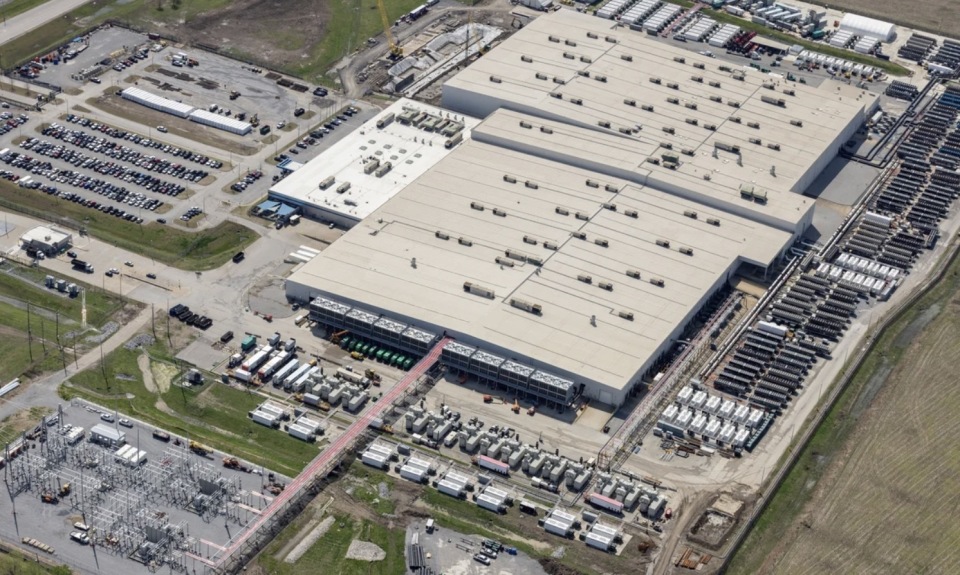
Core Viewpoint - The article discusses the financial implications and community impacts of AI data centers, particularly focusing on the Colossus supercomputer cluster by xAI in Memphis, Tennessee, highlighting the hidden risks associated with their financing structures and the burden on local communities [6][12][17]. Group 1: AI Data Centers and Financial Structures - Colossus is a supercomputer center with an initial power load of 150 megawatts and a planned total capacity exceeding 1.2 gigawatts, which is nearly 40% of Memphis's peak electricity demand [6]. - Tech companies like OpenAI and Meta are heavily investing in data centers, with OpenAI's planned computing power valued at $1.4 trillion, raising questions about the sources of funding for these "money-eating beasts" [6][12]. - The financing of data centers is structured through Special Purpose Vehicles (SPVs), allowing tech companies to offload significant expenditures from their balance sheets while securing long-term contracts and predictable cash flows [7][12]. Group 2: Community Impact and Local Economy - The construction of Colossus initially created thousands of jobs and increased local tax revenues, but the long-term effects include rising electricity prices and environmental concerns [7][17]. - By 2025, the average electricity price in Tennessee is projected to rise to 13.88 cents per kilowatt-hour, a 12% increase from the previous year, with wholesale prices in data center-heavy areas experiencing significant fluctuations [7]. - Local communities face challenges such as deteriorating water quality and increased noise and pollution from backup natural gas turbines, leading to health issues like rising asthma cases [17]. Group 3: Investment Trends and Risks - Over $120 billion has been raised for data center SPVs, with major tech companies like Meta, xAI, and Oracle participating in complex financing transactions [12]. - The financing model has evolved, with private credit markets becoming a primary source of funding, often involving pension funds and insurance companies seeking stable returns [10][13]. - The total borrowing by tech companies from private funds is expected to reach approximately $450 billion by the end of 2025, with a significant portion directed towards long-term project financing [13].


200亿美元,马斯克用养老金盖了一座未来工厂,但被投诉扰民
3 6 Ke· 2026-01-13 09:02
Core Insights - The article discusses the Colossus supercomputer cluster in Memphis, Tennessee, owned by Musk's xAI, highlighting its significant energy demands and the impact on local residents [2][4] - It raises concerns about the financing of data centers, which are increasingly viewed as financial products, and the hidden risks associated with their funding structures [6][9] Group 1: Data Center Impact - Colossus has an initial power load of 150 megawatts, with a future capacity planned to exceed 1.2 gigawatts, which is nearly 40% of Memphis's peak electricity demand [2] - The construction phase created temporary job growth and increased local government tax revenue, but this excitement faded once the servers were operational [5] - Rising electricity prices are a direct consequence of the data center's operations, with Tennessee residents expected to pay an average of 13.88 cents per kilowatt-hour by 2025, a 12% increase from the previous year [6] Group 2: Financing Mechanisms - Tech companies utilize Special Purpose Vehicles (SPVs) to finance data centers, allowing them to offload significant expenditures from their balance sheets while securing long-term contracts and predictable cash flows [6][9] - Over $120 billion has been raised for data center SPVs, with major players like Meta, xAI, Oracle, and CoreWeave participating in complex financing transactions [9][10] - The SPV structure allows lenders to only pursue the data center's assets in case of default, effectively isolating risks from the parent companies [11] Group 3: Broader Economic Implications - The financing model for AI data centers mirrors past financial crises, where risks were obscured, leading to significant market disruptions [13][14] - The article suggests that the burden of these financial structures ultimately falls on ordinary citizens, who are often unaware of the risks associated with their pension funds and insurance products [12][15] - Local communities, like Memphis, face long-term challenges such as increased electricity costs, water resource depletion, and environmental pollution due to the operations of these data centers [16]
马斯克的“未来工厂”:被养老金“包养”的数据中心
3 6 Ke· 2026-01-13 00:26
Core Viewpoint - The construction of AI data centers, exemplified by xAI's Colossus in Memphis, raises concerns about energy consumption, local community impact, and the financial mechanisms that support these projects [1][3][18] Group 1: Data Center Impact - Colossus has an initial power load of 150 megawatts, with a future capacity exceeding 1.2 gigawatts, which is nearly 40% of Memphis's peak electricity demand [1] - The presence of data centers has led to rising electricity prices, with Tennessee residents expected to pay an average of 13.88 cents per kilowatt-hour by 2025, a 12% increase from the previous year [4] - Local communities face negative consequences such as water quality degradation and increased noise and pollution due to the operation of cooling systems and backup gas turbines [4][18] Group 2: Financial Mechanisms - Tech companies utilize Special Purpose Vehicles (SPVs) to finance data centers, allowing them to offload significant expenditures from their balance sheets while securing long-term contracts and predictable cash flows [5][8] - Over $120 billion has been raised for data center SPVs by companies like Meta, xAI, Oracle, and CoreWeave through complex financing transactions [9][12] - The financing structure often involves private credit markets, with pension funds and insurance companies seeking stable returns, thus transferring risks away from the tech companies [5][7][12] Group 3: Historical Context and Risks - The trend of off-balance-sheet financing is not new and has historical parallels, such as the Enron scandal, where risks were hidden through similar financial structures [13][16] - The current AI data center financing model mirrors the logic of the dot-com bubble, where superficial growth masked underlying risks that ultimately burdened the public [16][18] - The reliance on "invisible debt" and assumed long-term demand raises questions about who will bear the consequences of potential failures in this financial ecosystem [17][18]
甲骨文如何扭转市场叙事?瑞银:OpenAI信仰修复、负债压力证明可控
Hua Er Jie Jian Wen· 2026-01-05 09:41
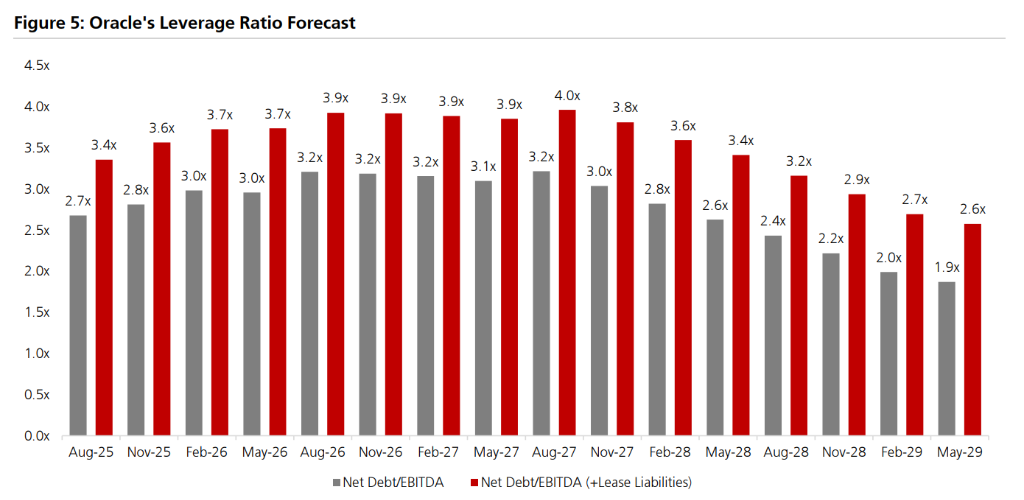
Core Viewpoint - Oracle's stock price has experienced a significant decline of 41% since mid-September, reflecting market concerns about OpenAI's ability to fulfill its trillion-dollar promises and Oracle's substantial net debt of $88 billion [1][4] Group 1: Market Sentiment and Stock Performance - Investors are anxious about OpenAI's ability to meet commitments, which has negatively impacted Oracle as a key supplier [4] - UBS maintains a "Buy" rating, arguing that the market has overestimated the risks associated with OpenAI and Oracle's financing pressures [1][4] - The current price-to-earnings ratio for Oracle based on 2026 earnings expectations is 29 times, and only 11 times for 2030, indicating an attractive risk-reward ratio [1] Group 2: OpenAI's Financial Situation - OpenAI is reportedly raising $100 billion at a valuation of $830 billion, with significant commitments from SoftBank and Amazon, which could alleviate concerns about Oracle's risk exposure [7] - The anticipated release of GPT-6 in Q1 is expected to enhance OpenAI's competitive position and restore investor confidence [7] Group 3: Oracle's Debt and Financing Strategies - Oracle's net debt stands at $883 billion, with a net debt/EBITDA ratio of 2.8 times, raising concerns about its balance sheet [6] - To manage capital expenditures and debt, Oracle is pursuing aggressive financing strategies, including off-balance sheet financing and a "Bring Your Own Chip" (BYOC) model [6][7] - UBS estimates that if 50% of Oracle's funding needs are met through these strategies, direct financing requirements could drop from $80 billion to $40 billion over the next three years [7] Group 4: Market Position and Growth Potential - Despite concerns about competition from Google's Gemini, UBS's enterprise AI survey indicates that OpenAI remains dominant in the enterprise market [5] - Oracle's revenue growth is projected to accelerate from 16% to 46% between FY26 and FY28, suggesting a robust growth narrative [9] - Even in a worst-case scenario where OpenAI's contributions to Oracle's revenue cease, the stock's price-to-earnings ratio would still be relatively low at 12.4 times [9]
科技巨头借道“表外SPV” 承载超1200亿美元AI债务
Huan Qiu Wang· 2025-12-26 02:11
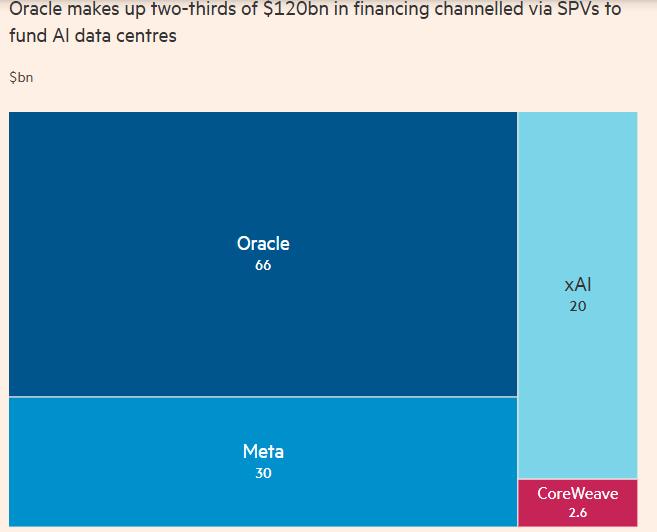
Core Insights - Major tech companies like Meta, Oracle, and xAI are increasingly relying on Special Purpose Vehicles (SPVs) for financing AI infrastructure, with disclosed off-balance-sheet financing exceeding $120 billion [1][3] - This financial maneuver helps optimize financial statements but raises concerns about potential risks associated with hidden debt [1][3] Group 1: SPV Financing Mechanism - SPVs are independent legal entities used for risk isolation and project financing, allowing tech companies to secure private capital from large financial institutions like BlackRock and Apollo for data center investments [3] - Meta completed a $30 billion financing for its data center projects through SPVs in October, while Oracle has also utilized similar structures for significant financing [3] - Companies like xAI are seeking to raise substantial funds through similar methods, indicating a growing trend in the use of SPVs [3] Group 2: Risks and Market Implications - Analysts express caution regarding the accumulation of debt through SPVs, as a potential shortfall in AI demand could expose risks for multiple companies simultaneously, impacting private credit funds and leading to unpredictable chain reactions [3] - The low transparency of these structures complicates the market's ability to accurately assess the true financial leverage of tech giants in the AI race [3] - Morgan Stanley estimates that the tech industry requires up to $1.5 trillion in external funding to support high AI capital expenditures, making off-balance-sheet financing through SPVs a crucial financial strategy for balancing growth and financial metrics [3] Group 3: Emerging Trends in Financing - Wall Street is promoting more opaque structures in data center transactions, with reports of AI debt securitization transactions emerging, where lenders bundle loans and sell them as asset-backed securities (ABS) to investors [4] - Estimates suggest that the scale of such transactions currently reaches several billion dollars [4]

AI巨头1200亿美元“幽灵债务”
3 6 Ke· 2025-12-26 01:24
Group 1 - Major tech companies are utilizing Special Purpose Vehicles (SPVs) to offload over $120 billion in data center expenditures from their balance sheets, raising concerns about financial risks associated with their significant investments in artificial intelligence [1][4] - Companies like Meta, xAI, Oracle, and CoreWeave are leading this complex financing strategy to shield themselves from the substantial borrowing required for AI data center construction [1][4] - Financial institutions such as Pimco, BlackRock, Apollo, and major banks like JPMorgan have provided at least $120 billion in off-balance-sheet debt and equity financing for these tech firms' computing infrastructure [1][4] Group 2 - SPVs are independent legal entities established for specific purposes, such as asset securitization and risk isolation, allowing tech companies to separate their credit and bankruptcy risks from their underlying assets [3][4] - The use of SPVs for financing is becoming common, potentially obscuring the risks faced by tech companies and complicating the identification of who bears responsibility if AI demand falters [3][4] - A significant influx of private capital into SPVs for data center construction has been noted, with a large financial institution executive stating that this was unimaginable a year and a half ago, highlighting the tech sector's ability to secure capital far exceeding other industries [3][4] Group 3 - Meta completed the largest private credit data center deal in October, securing a $30 billion agreement for its Hyperion facility in Louisiana, with $27 billion sourced from loans and $3 billion in equity [4][5] - Oracle has also engaged in structured financing to support its commitments to lease data center power from OpenAI, collaborating with various builders and financial institutions to construct multiple data centers [4][5] - Oracle's off-balance-sheet financing transactions include significant loans for data centers in Texas and Wisconsin, with agreements allowing lenders to reclaim data center assets in case of default [5][6] Group 4 - The rapid increase in funding for AI infrastructure is putting pressure on tech companies' cash reserves, leading to a growing trend of raising off-balance-sheet debt through SPVs [5][6] - Morgan Stanley estimates that tech companies' AI initiatives will require $1.5 trillion in external financing support [5][6] - Investors believe that if AI service demand declines, the financial risks will ultimately fall on the tech companies leasing the facilities [6][8] Group 5 - The proliferation of SPVs raises concerns about the potential for simultaneous financial pressure on multiple AI companies, which could lead to a lack of transparency and risk spreading to private credit funds [7][8] - UBS projects that tech companies will borrow approximately $450 billion from private equity funds by early 2025, with a significant increase in project financing transactions [7][8] - The data center construction sector is increasingly reliant on the private credit market, which is experiencing rapid growth but also facing issues such as asset valuation spikes and high borrower concentration [7][8] Group 6 - The AI data center boom is heavily dependent on a few key clients, with OpenAI alone securing over $1.4 trillion in long-term computing resource commitments from major players [8] - If any major tenant encounters issues, multiple data center lenders may face similar risks, compounded by uncertainties in power supply and regulatory changes [8] - There is a trend towards more opaque structures in data center transactions, including the securitization of AI debt, which spreads loan risks across a broader investor base [8][9]
表外融资1200亿美元!科技巨头联手华尔街玩转AI基建,风险正向私募信贷转移
Hua Er Jie Jian Wen· 2025-12-24 09:35
Core Insights - The article discusses how Silicon Valley tech giants are using complex financial instruments to transfer significant infrastructure spending off their balance sheets while maintaining strong financial statements [1][3] - Companies like Meta, xAI, Oracle, and CoreWeave have utilized Special Purpose Vehicles (SPVs) to shift over $120 billion in data center financing debt to Wall Street investors, raising concerns about risk transparency and potential financial contagion [1][2] Financing Strategies - Tech companies are leveraging SPVs to raise funds for AI data centers without significantly increasing their on-balance-sheet debt, thus protecting their credit ratings [3][4] - Major financial institutions, including Pimco, BlackRock, and JPMorgan, have injected at least $120 billion into these SPV-structured projects, allowing companies to secure necessary funding for AI infrastructure [1][3] Specific Transactions - Meta raised $30 billion through an SPV named "Beignet Investor" for its Louisiana Hyperion facility, with $27 billion coming from loans by major financial firms, enabling it to borrow without showing debt on its balance sheet [4] - Oracle has also engaged in significant debt transactions through SPVs, including a $13 billion investment from Blue Owl and JPMorgan for its Texas data center [4][5] Private Credit Market Concerns - The private credit market has seen a surge in project financing, with tech companies borrowing approximately $450 billion from private funds, reflecting a $100 billion year-over-year increase [6][7] - Concerns are rising about the $1.7 trillion private credit industry, particularly regarding asset valuation, liquidity issues, and borrower concentration risks [7] Risk Exposure and Differentiation - Despite the intention to isolate risks through SPVs, tech companies may still bear financial risks if AI service demand declines, as seen in the "Beignet Investor" case where Meta holds a 20% stake and provides a "residual value guarantee" [8] - Not all tech giants are adopting off-balance-sheet financing; companies like Google, Microsoft, and Amazon continue to fund their data center expansions through cash or direct bond issuance, indicating varied risk management strategies [8]