
TransUnion

Search documents
U.S. consumers dial back in sign of anxiety heading Into holidays
Fortune· 2025-11-25 22:24
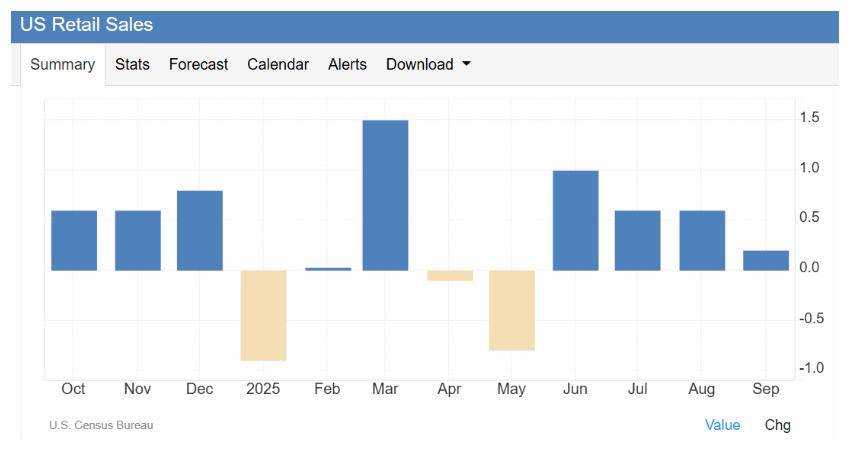
Consumer Sentiment and Spending Trends - US consumers are showing signs of fatigue leading up to the longest government shutdown, with a worsened outlook impacting the holiday-shopping season [1] - Retail sales increased by a modest 0.2% in September, following several months of stronger spending, indicating a slowdown in consumer consumption [2][9] - Consumer sentiment has dropped to its lowest level in seven months, reflecting concerns about the labor market and overall economic conditions [2] Corporate Earnings and Retail Performance - Recent corporate earnings indicate that consumers are pulling back on big-ticket items and are more inclined to seek bargains, although some retailers like Kohl's and Best Buy have raised their forecasts [4] - Best Buy reported better-than-expected demand during back-to-school shopping and anticipates a strong Black Friday and Cyber Monday, with over half of Americans expecting to spend at least the same amount as last year during the holiday season [5] Economic Indicators and Federal Reserve Outlook - The pre-shutdown economy shows a decline in discretionary spending categories, suggesting a slowdown in consumer momentum [8][10] - The producer price index (PPI) data indicates a modest increase in wholesale inflation, which may influence Federal Reserve decisions on interest rates [7][11] - Policymakers are divided on whether to lower interest rates, with ongoing debates about employment and inflation levels [8][12] Consumer Spending Disparities - Aggregate consumer spending is increasingly supported by wealthier households, while lower- and middle-income groups are facing challenges due to slower wage growth and rising essential costs [10] - There is a disconnect between consumer confidence and actual spending, with indications that incomes may not be rising as quickly as consumer spending suggests [13][14]




降息预期再获提振!美国9月零售增速放缓 市场焦点转向感恩节+黑五购物季
Sou Hu Cai Jing· 2025-11-25 15:12
Core Viewpoint - The unexpected slowdown in U.S. retail sales growth highlights a decrease in consumer spending amid a weakening labor market and temporary inflation caused by tariffs, yet the resilience in retail sales supports the narrative of a "Goldilocks" economic environment in the U.S. [1] Retail Sales Data - In September, U.S. retail sales showed a modest increase of 0.2% month-over-month, falling short of the expected 0.4% growth, following a strong 0.6% increase in August. Excluding autos and gas, sales rose only 0.1% [5][6] - Among 13 categories, 8 recorded growth, primarily in gas stations and personal care stores, while auto sales declined for the first time in four months, and spending on electronics, clothing, and sports goods also decreased [6][8] Consumer Behavior - The data indicates that middle and low-income consumers are becoming more cautious due to rising inflation and employment challenges, leading to a pause in spending [5][7] - Retailers like Walmart and TJX have noted that shoppers are increasingly seeking discounts and essential goods, while Home Depot has warned of delayed large home purchases [7] Economic Outlook - Morgan Stanley economists predict that the OBBBA tax cuts from the Trump administration will significantly boost economic growth starting in 2026, alongside the temporary nature of inflation from tariffs and ongoing AI infrastructure investments by tech giants [1] - The NRF forecasts a record number of shoppers during the upcoming Thanksgiving and Black Friday shopping weekend, which could provide a significant boost to the U.S. economy in Q4 and 2026, as consumer spending accounts for 60%-70% of GDP [9][10] Federal Reserve and Interest Rates - Following the retail data release, expectations for a Federal Reserve rate cut in December have increased, with an 80% probability of a rate cut according to CME FedWatch Tool [3][4][7] - There is a notable division among Federal Reserve officials regarding the decision to cut rates, reflecting concerns over consumer affordability [7]
Canadians Take on More Credit Amid Lower Interest Rates as Mortgage Churn Rises and Economic Disparities Deepen
Globenewswire· 2025-11-25 09:00
Core Insights - Total Canadian consumer debt increased by 4.1% year-over-year, reaching $2.6 trillion, driven by rising mortgage and non-mortgage balances [1][7] - Mortgage originations rose by 18% year-over-year, with borrowers favoring shorter-term fixed mortgages to navigate high interest rates [2][7] - Average new mortgage loan amounts increased by 4.1% year-over-year to $359,623, indicating ongoing affordability challenges [3][7] Consumer Debt Trends - Mortgage balances grew by 4.1% year-over-year to $1.89 trillion, while non-mortgage debt rose by 4.3% to $673 billion [1] - The number of credit-active consumers increased by 2.7% year-over-year, with total credit balances growing at a faster rate of 4.1% [1] - The average non-mortgage balance per consumer reached $27,100, up 2.6% year-over-year, reflecting a return to pre-pandemic growth rates [1] Mortgage Market Dynamics - Homeowners are prioritizing affordability by opting for shorter mortgage terms, which has led to increased turnover in the market [2] - The average new mortgage loan size varies significantly by city, with Quebec City seeing a 14.01% increase year-over-year [4] - Despite rising loan sizes, mortgage delinquency rates remain low, with serious delinquency rates at 0.26%, up 2 basis points year-over-year [6][10] Delinquency Trends - Early-stage delinquency rates have declined, while late-stage delinquency rates have risen, indicating a widening gap in financial health among consumers [9][10] - Ontario, Alberta, and Quebec have experienced the most significant increases in delinquency rates, with Alberta's rate rising to 2.31% [14][15] - Geographic disparities in delinquency rates reflect varying regional economic conditions, with Alberta facing the highest delinquency rate [11][14] Credit Card Market Insights - New credit card originations decreased by 8.6% year-over-year, although the pace of decline is slowing, suggesting early signs of stabilization [17] - Average new credit card limits increased by 4.8% to over $6,500, indicating a selective lending approach [17] - Average card balances per consumer rose by 1.9% year-over-year to $4,652, with below-prime consumers experiencing a sharper increase [18] Future Outlook - The Consumer Credit Industry Indicator fell by 6 points year-over-year, reflecting ongoing challenges in the Canadian credit market [24] - Lenders are expected to adopt cautious strategies, focusing on targeted acquisition and disciplined credit line management to navigate the evolving credit landscape [23]


Auto payments near record high: Here's what to know
CNBC Television· 2025-11-24 14:13
Auto Price Trends - Average transaction price for new cars in October was just under $50,000, roughly $11,000 more than in 2018, a 295% increase [2] - Average monthly new vehicle auto loan payment is more than $750 [2][3] - Used vehicle monthly payments are about $150 to $170 less than new vehicles, placing them in the $570-$580 range [6][7] - Auto prices have plateaued but show no indication of decreasing [7] Factors Driving Price Increases - Automakers are focusing on higher trim levels with more technology and features, as consumers prefer these [3][4][9] - Automakers are facing higher costs for raw materials, labor contracts, and tariffs, impacting profit margins [5] Congressional Scrutiny - Senator Ted Cruz plans to examine auto affordability in a hearing next month (January) [6] Consumer Behavior - Consumers are often convinced they want the latest features in new vehicles, leading them to choose higher trim levels [9] - Very few people order base model vehicles [4][10]
What are credit bureaus? A guide to Equifax, Experian, and TransUnion.
Yahoo Finance· 2025-11-21 18:58
Core Insights - The article emphasizes the importance of understanding the roles of the three major credit bureaus: Equifax, Experian, and TransUnion, which compile consumer credit information and generate credit reports that creditors use to assess loan eligibility and interest rates [1][3]. Group 1: Credit Bureau Functions - Credit bureaus, also known as consumer reporting agencies (CRAs), compile information about borrowing and repayment history from creditors to create credit reports [3]. - Each bureau collects its own data, leading to potential variations in credit reports and scores across the three agencies [4]. - Creditors, not the bureaus, make decisions on loan qualifications based on personal information, including credit reports, income statements, and employment history [4]. Group 2: Fair Credit Reporting Act (FCRA) - The FCRA, enacted in 1996 and amended multiple times, ensures accuracy, fairness, and privacy in consumer reporting [6]. - Consumers have the right to access their credit reports for free and can dispute errors, which the bureaus are required to investigate [7][8]. - The FCRA mandates that negative information must be removed from credit reports after seven years [7]. Group 3: Accessing Credit Reports - Consumers can obtain free copies of their credit reports from each bureau once per week through AnnualCreditReport.com, the only federally authorized source [9]. - Special circumstances allow for additional free reports, such as placing a fraud alert or being denied credit recently [10].
Red Violet (NasdaqCM:RDVT) FY Conference Transcript
2025-11-20 14:57
Summary of Red Violet Conference Call Company Overview - **Company Name**: Red Violet - **Ticker Symbol**: RDVT - **Industry**: Identity intelligence and data analytics - **Core Offering**: Cloud-native platform for identity verification, fraud detection, risk management, and compliance [1][2] Business Model and History - **Management Background**: The management team has nearly three decades of experience in the identity space, previously founding companies like SizenT and TransUnion [2][3] - **Cloud-Native Advantage**: Red Violet's cloud-native platform allows for scalability and flexibility, differentiating it from legacy competitors who struggle with technology updates [4] Use Cases and Verticals - **Key Verticals Served**: 1. **Collections**: Provides debt collectors with accurate contact information and bankruptcy status [5] 2. **Financial and Corporate Risk**: Background screening services for companies like Walmart to verify applicant data [6][7] 3. **Real Estate**: Offers safety solutions through the Forewarn app, which provides background checks for real estate agents [10][11] 4. **Investigative Services**: Supports law enforcement and private investigators in locating individuals and assets [12] 5. **Emerging Markets**: Focus on government contracts and potential growth in sectors like insurance [13] Financial Performance - **Revenue Model**: Predominantly contractual revenue, with 75% of revenue being contractual in nature [40] - **Free Cash Flow**: Last quarter's free cash flow was approximately $7 million, with adjusted EBITDA around $9 million [22] - **Cost Structure**: Fixed costs associated with data acquisition, with nearly 100% contribution margin on additional revenue [16] Growth Strategy - **M&A Strategy**: Filed a $150 million shelf for potential acquisitions, focusing on unique data assets and complementary technologies [23] - **Public Sector Focus**: Significant growth expected in public sector contracts, with a roadmap laid out for future revenue contributions [29][31] - **Background Screening Expansion**: Directly targeting end-users in the background screening space, with a notable contract expected to ramp up in 2026 [32][33] Competitive Landscape - **Main Competitors**: Direct competition with TransUnion and LexisNexis, with a focus on data quality and customer service [25][26] - **Market Position**: Red Violet has approximately 9,800 customers, compared to competitors with significantly larger customer bases [25] Technology and Innovation - **AI Integration**: Exploring the use of AI to enhance data processing and customer interactions, aiming for high confidence in identity verification [35][36] - **Data Quality**: Emphasis on high-quality data aggregation to improve customer outcomes and reduce inefficiencies [21][22] Key Challenges and Considerations - **Seasonality**: Revenue may experience seasonal fluctuations, particularly in Q4 due to fewer business days and year-end bonuses [40] - **Regulatory Compliance**: Maintaining compliance with regulations such as the Fair Credit Reporting Act while providing background checks [37] Conclusion - Red Violet is positioned for growth in multiple verticals, leveraging its cloud-native platform and strong management team to capitalize on emerging opportunities in identity verification and data analytics. The focus on public sector contracts and background screening services, combined with a robust financial position, suggests a positive outlook for future performance.

US consumers expected to use credit cards more for holiday shopping, survey says
Reuters· 2025-11-20 13:08
Core Insights - U.S. consumers are expected to increasingly rely on credit cards for shopping during the Thanksgiving holiday season according to a survey conducted by TransUnion [1] Consumer Behavior - The survey indicates a shift in consumer behavior towards credit card usage for holiday shopping, reflecting a potential trend in spending habits [1]

Higher Credit Card Usage Expected Among U.S. Shoppers this Holiday Shopping Season
Globenewswire· 2025-11-20 13:00
Core Insights - Holiday shoppers are increasingly relying on credit cards, with 42% naming it their preferred payment method, up from 38% last year [1] - The majority of Americans (57%) expect to spend the same or more this holiday season compared to last year, with 58% planning to spend over $250, an increase from 56% last year [2][3] - Optimism about household finances remains stable, with 55% of Americans expressing a positive outlook, although this is a slight decline from 58% last year [6] Consumer Spending Trends - 41% of consumers plan to shop online between Thanksgiving and Cyber Monday, while 33% intend to shop in person during that weekend [1] - Among different generations, 64% of Millennials and 63% of Gen X expect to spend more than $250 this holiday season, compared to 54% of Boomers [3] Credit Card Usage - Nearly 175 million Americans hold one or more active credit cards, indicating strong consumer demand for credit [5] - 30% of consumers plan to apply for new credit or refinance existing credit within the next year, with 55% of those intending to apply for a new credit card [11] Financial Concerns - Inflation remains the top financial worry for consumers, with 81% citing it as a major concern, followed by recession (52%) and housing prices (43%) [7] - 48% of Americans expect their income to increase in the next 12 months, a decline from 53% last year, with 86% expressing concern over potential trade tariffs [8] Credit Monitoring and Education - TransUnion launched Credit Essentials, offering free credit management tools to help consumers monitor their credit and receive tailored credit offers [12][13] - Over half of Americans (55%) check their credit report at least monthly, with 95% acknowledging the importance of monitoring their credit [14]

P/E Ratio Insights for TransUnion - TransUnion (NYSE:TRU)
Benzinga· 2025-11-19 22:00
Core Viewpoint - TransUnion Inc. shares are currently trading at $81.88, reflecting a 2.13% increase, but have decreased by 16.95% over the past year, raising questions about potential undervaluation despite current performance [1]. Group 1: Stock Performance - The stock has increased by 1.50% over the past month, indicating some short-term positive momentum [1]. - Over the past year, the stock has experienced a significant decline of 16.95%, suggesting potential long-term challenges [1]. Group 2: P/E Ratio Analysis - TransUnion has a P/E ratio of 37.46, which is higher than the Professional Services industry average of 35.84, indicating that investors may expect better future performance from TransUnion compared to its peers [6]. - A higher P/E ratio may suggest that the stock is overvalued, although it could also reflect investor optimism regarding future performance and potential dividend increases [5][6]. Group 3: Investment Considerations - The P/E ratio is a useful metric for evaluating market performance, but it should be interpreted cautiously as a low P/E could indicate undervaluation or weak growth prospects [9][10]. - Investors should consider the P/E ratio alongside other financial metrics, industry trends, and qualitative factors for a comprehensive analysis of the company's financial health [10].
Zillow Lets Renters Report Payments to Credit Bureaus
PYMNTS.com· 2025-11-19 16:40
Core Insights - Zillow has launched a new tool called CreditClimb that allows renters to build credit through their rent payments, which can be reported to major credit bureaus for an annual fee of $20 [2][3] - The initiative aims to help renters improve their credit scores, with evidence suggesting that those using similar programs have seen significant increases in their scores [3] Company Developments - CreditClimb enables renters to report on-time payments to Equifax, Experian, and TransUnion, and also allows them to add up to two years of previous rent payments to their credit report [2] - Zillow's senior vice president, Michael Sherman, emphasized that this tool can help renters qualify for better financing options and move towards homeownership [3] Industry Trends - According to TransUnion, the percentage of consumers whose rent payments are reported has increased from 11% in 2024 to 13% in 2025, indicating a growing trend in rent payment reporting [4] - However, the number of property managers participating in rent payment reporting has decreased from 48% to 44%, suggesting a potential shift towards self-reporting by consumers [5] Consumer Behavior - Recent data indicates that consumers are seeking ways to improve their credit scores without necessarily acquiring new credit cards, with many expressing a desire for higher credit limits to enhance financial flexibility [7][8]

