
零售行业

Search documents
卓悦控股(00653)公布中期业绩 净亏损6884.8万港元 同比收窄48.81%
智通财经网· 2026-02-27 13:55
Core Viewpoint - The company reported a significant decline in revenue while managing to reduce its net loss, indicating a focus on cost management and operational efficiency despite challenging market conditions [1] Financial Performance - Revenue for the six months ending December 31, 2025, was HKD 12.324 million, representing a year-on-year decrease of 50.4% [1] - The net loss narrowed to HKD 68.848 million, a reduction of 48.81% compared to the previous year [1] - Earnings per share were reported at a loss of HKD 0.06 [1] Operational Insights - The reduction in losses reflects the company's rigorous cost management and maintenance of operational efficiency amidst a challenging retail environment [1] - The company continues to invest in digital infrastructure, which may support future growth despite current revenue challenges [1]
特朗普关税,中国要得回来吗?
财富FORTUNE· 2026-02-27 13:07
Core Viewpoint - The recent U.S. Supreme Court ruling declared that the global tariffs imposed by Trump under "emergency powers" were illegal, raising significant questions for governments and companies regarding the validity of previously negotiated tariff agreements and the possibility of reclaiming paid tariffs [1][3]. Group 1: Legal and Financial Implications - Over 900 U.S. companies have filed lawsuits seeking refunds for tariffs paid, with expected total claims exceeding $130 billion [3]. - The U.S. government collected approximately $175 billion in IEEPA tariffs over the past year, which constituted about half of its total tariff revenue during that period [4]. - The likelihood of the government returning the full amount of collected tariffs is considered low due to the substantial financial burden it would impose [4]. Group 2: Chinese Companies' Involvement - Chinese companies can potentially join the refund claims through various avenues, with 20% of U.S. imports from China being registered as eligible for refunds [3][6]. - There are three scenarios where Chinese exporters could claim refunds: sharing refunds with U.S. importers, using DDP (Delivered Duty Paid) shipping terms, or having U.S. branches that can apply for refunds [6][8]. - The trend of Chinese companies registering as U.S. importers has increased significantly, from 9% to 20% of trade volume by the end of the year [8]. Group 3: Impact on U.S.-China Trade Relations - The Supreme Court ruling has enhanced China's negotiating position in trade discussions with the U.S., especially with Trump's upcoming visit to China [10]. - The ruling resulted in a 7.1% decrease in the trade-weighted average tariff on China, while some countries with prior agreements may face increased tariffs [11]. - Despite the short-term reduction in tariffs, long-term uncertainties remain as Trump indicated intentions to continue imposing tariffs through other legal frameworks [11][12]. Group 4: Future Tariff Strategies - Trump may utilize Section 232 and Section 301 tariffs, which do not require congressional approval, to impose new tariffs on various sectors, including electric batteries and telecommunications [12][13]. - The White House has indicated plans to investigate and potentially impose new tariffs on industries related to intellectual property theft and market distortions [14]. - The Supreme Court ruling has created structural constraints that may hinder the rapid imposition of new tariffs, suggesting a temporary period of stability for Chinese exporters [14].


死撑了三天,美国终于低头,这场全球大战,结局真被中国说准了
Sou Hu Cai Jing· 2026-02-24 16:02
Core Viewpoint - The U.S. Supreme Court ruled that Trump's global tariff policy was unconstitutional, invalidating $175 billion in tariffs collected over the past year, which were deemed illegal [3][5][10] Group 1: Legal and Economic Implications - The Supreme Court's decision labeled the tariffs as unconstitutional, leading to the immediate termination of the tariff system that was previously touted as a savior for American manufacturing [3][5] - The ruling necessitates the return of $175 billion in tariffs to thousands of businesses and consumers, highlighting the financial impact of the policy [5][7] - Following the ruling, the average tariff rate on Chinese exports is expected to decrease from 32% to 24%, reducing cost pressures across the Asian supply chain [8][19] Group 2: Political and International Relations - The ruling exposed divisions within the U.S. government, revealing that tax authority lies with Congress, not the President, undermining Trump's approach to trade policy [10][12] - In response to the ruling, the Trump administration proposed a new 15% tariff on all imports under a lesser-known trade law, which negatively impacts U.S. allies like the UK and Australia, raising their tariffs to the same level as competitors [13][15] - This approach has led to a deterioration of U.S. international credibility, as allies realize they could be treated as expendable in U.S. trade policy [17][19] Group 3: Strategic Outcomes - The U.S. is now forced back to the negotiation table, as actions that violate economic principles and legal boundaries ultimately lead to failure [19][21] - China's strategic patience and reform efforts have positioned it favorably in negotiations, while the U.S. finds its negotiating power diminished [21][23] - The trade conflict, initially perceived as a means to gain leverage, has resulted in a situation where the U.S. must confront the consequences of its unilateral actions [23]
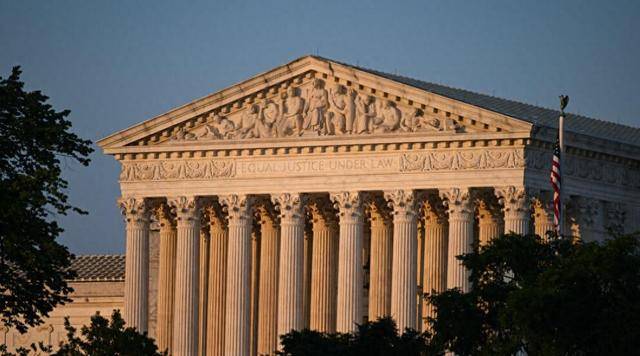
Pepkor Holdings Limited (PPKRF) Shareholder/Analyst Call Transcript
Seeking Alpha· 2026-02-24 12:34
Core Viewpoint - Pepkor Holdings Limited continues to achieve solid results despite a challenging economic environment, driven by effective strategic execution and strong retail brands [2]. Group 1: Company Performance - The company emphasizes its commitment to addressing customer needs, focusing on affordability and accessibility [2]. - The Annual General Meeting (AGM) was properly constituted with a quorum present, indicating strong shareholder engagement [1]. - A voluntary update was published on February 2, 2026, covering the three months ended December 2025 [1]. Group 2: Governance and Oversight - All directors, including committee chairs, were present at the AGM, highlighting the importance of governance oversight [2]. - The voting process for the AGM was determined to proceed by way of a poll, conducted electronically to ensure transparency [3]. - A representative from the transfer secretaries was nominated to act as scrutineer for the poll voting [3].


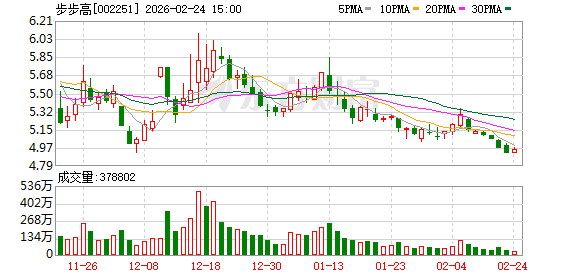
步步高:公司已于2026年1月30日披露《2025年年度业绩预告》
Zheng Quan Ri Bao· 2026-02-24 11:38
Group 1 - The company, Bubu Gao, announced on its interactive platform that it has disclosed the "2025 Annual Performance Forecast" on January 30, 2026 [2]

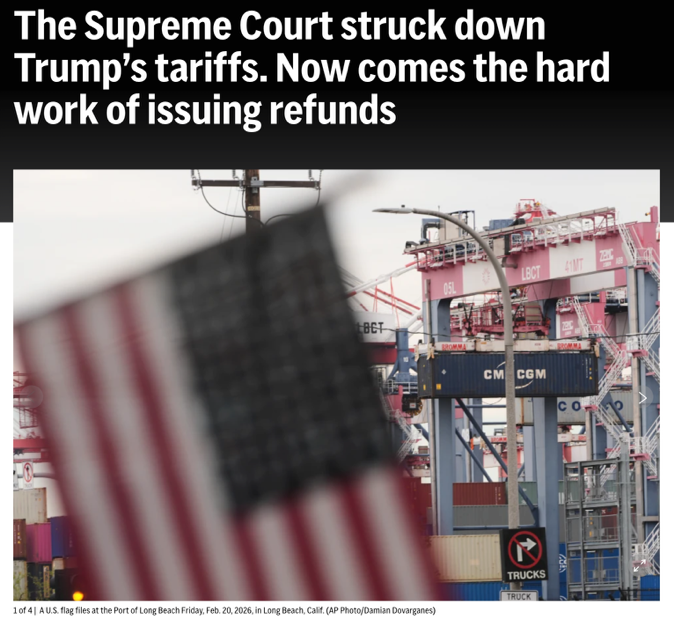
美拟以国家安全为由推出新关税!超1000家企业起诉美国政府要求“退税”
Mei Ri Jing Ji Xin Wen· 2026-02-24 01:53
Group 1 - The U.S. government is considering imposing new tariffs on approximately six industries, citing "national security" as the reason. The proposed tariffs may include large batteries, cast iron and iron fittings, plastic pipes, industrial chemicals, and equipment for electric grids and telecommunications [1] - The U.S. Supreme Court recently ruled that the International Emergency Economic Powers Act (IEEPA) does not authorize the President to impose large-scale tariffs, leading to the termination of previously enacted tariffs under this act [1][4] - Over 1,000 companies, including major firms like Costco and Reebok, have joined legal actions seeking refunds for tariffs already paid [2] Group 2 - U.S. Treasury Secretary Scott Bencet emphasized that the Supreme Court's ruling did not address the refund process for the tariffs, which will be determined by lower courts [7][8] - The potential refund amount is estimated to be around $134 billion, with some models suggesting it could exceed $175 billion when considering future adjustments [11][12] - The refund process is expected to involve a combination of court actions, customs, and administrative departments, with companies filing lawsuits to secure their claims within specific timeframes [12][13] Group 3 - The situation surrounding the IEEPA tariffs represents a significant legal and financial tug-of-war between businesses and the U.S. Treasury, with political implications as the Trump administration seeks to maintain a strong stance despite legal setbacks [16]
特朗普刚宣布向全球加关税,白宫马上向中国解释一切不变
Sou Hu Cai Jing· 2026-02-23 22:27
Core Points - The U.S. Supreme Court ruled that tariffs imposed under the International Emergency Economic Powers Act (IEEPA) were unconstitutional, impacting the legal basis for tariffs on Chinese goods and undermining a key negotiation tool for the Trump administration [5][10] - Following the ruling, President Trump announced a new executive order imposing a temporary global tariff of 15% on imports, effective immediately, as a response to the Supreme Court's decision [2][3] - The U.S. Trade Representative emphasized that existing trade agreements with major partners like China, the EU, and Japan remain valid despite the new tariffs, indicating a complex balancing act in U.S. trade policy [3][10] Group 1 - The Supreme Court's decision invalidated approximately 34% of tariffs that were part of the U.S.-China "truce agreement," which included a 10% baseline tariff and a suspended 24% tariff [5][10] - The ruling has led to a potential financial crisis, with estimates suggesting that tariffs collected under the IEEPA may exceed $175 billion, prompting lawsuits from U.S. companies seeking refunds [8][10] - The average tariff rate on U.S. imports dropped from about 16.8% to approximately 9.5% following the ruling, although the new 15% global tariff largely offsets this decrease [8] Group 2 - The legal ruling highlights the checks and balances within the U.S. political system, restricting the executive branch's ability to impose taxes without congressional approval [10] - The uncertainty created by the tariff changes complicates business decisions for companies regarding tax refunds and future supply chain planning [10] - The Chinese government has expressed its opposition to unilateral tariff measures and is closely monitoring the U.S. actions, indicating potential tensions in trade relations [7][10]

早盘:美股走低 道指下跌逾200点
Xin Lang Cai Jing· 2026-02-19 15:12
Market Overview - The Dow Jones Industrial Average fell by 223.76 points, a decrease of 0.45%, closing at 49,438.90 points; the Nasdaq dropped by 36.68 points, down 0.16%, at 22,716.96 points; and the S&P 500 index decreased by 14.10 points, a decline of 0.20%, ending at 6,867.21 points [3][7] - Investors are weighing Walmart's disappointing earnings outlook against the escalating tensions between the U.S. and Iran, which have contributed to rising oil prices [3][7] Company Specifics - Walmart's stock price declined after the company's full-year earnings forecast fell short of expectations, overshadowing its better-than-expected fourth-quarter performance [3][7] Economic Indicators - The number of initial jobless claims in the U.S. fell by 23,000 to 206,000, marking the largest decline since November, indicating stabilization in the labor market [4][8] - The four-week moving average of initial claims remained steady at 219,000, while the number of continuing claims rose to 1.87 million, the highest since early January [4][8] - Wholesale inventories increased by 0.2% in December, reaching $917.2 billion, aligning with economists' median forecast [5][9] - The trade deficit in December expanded to $703 billion, with imports rising by 3.6% and exports declining by 1.7%, resulting in a total trade deficit of $9,015 billion for the year, the largest since records began in 1960 [5][9]
在全球企业营收榜霸榜12年,沃尔玛终于被亚马逊超越
Mei Ri Jing Ji Xin Wen· 2026-02-19 14:37
Group 1 - Amazon has officially surpassed Walmart to become the highest-grossing company globally, with 2025 sales reaching $717 billion compared to Walmart's $713.2 billion for the 12 months ending January 31 [1] - Walmart's stock saw a pre-market increase of nearly 1%, after previously dropping over 3% [1] - Walmart's fourth-quarter revenue was $190.66 billion, slightly above the estimated $190.58 billion, with an adjusted earnings per share of $0.74, exceeding the forecast of $0.73 [3] Group 2 - Walmart's adjusted earnings per share for the first quarter are projected to be between $0.63 and $0.65, while for the fiscal year 2027, the expected range is $2.75 to $2.85, which is below market expectations of $2.97 [3]

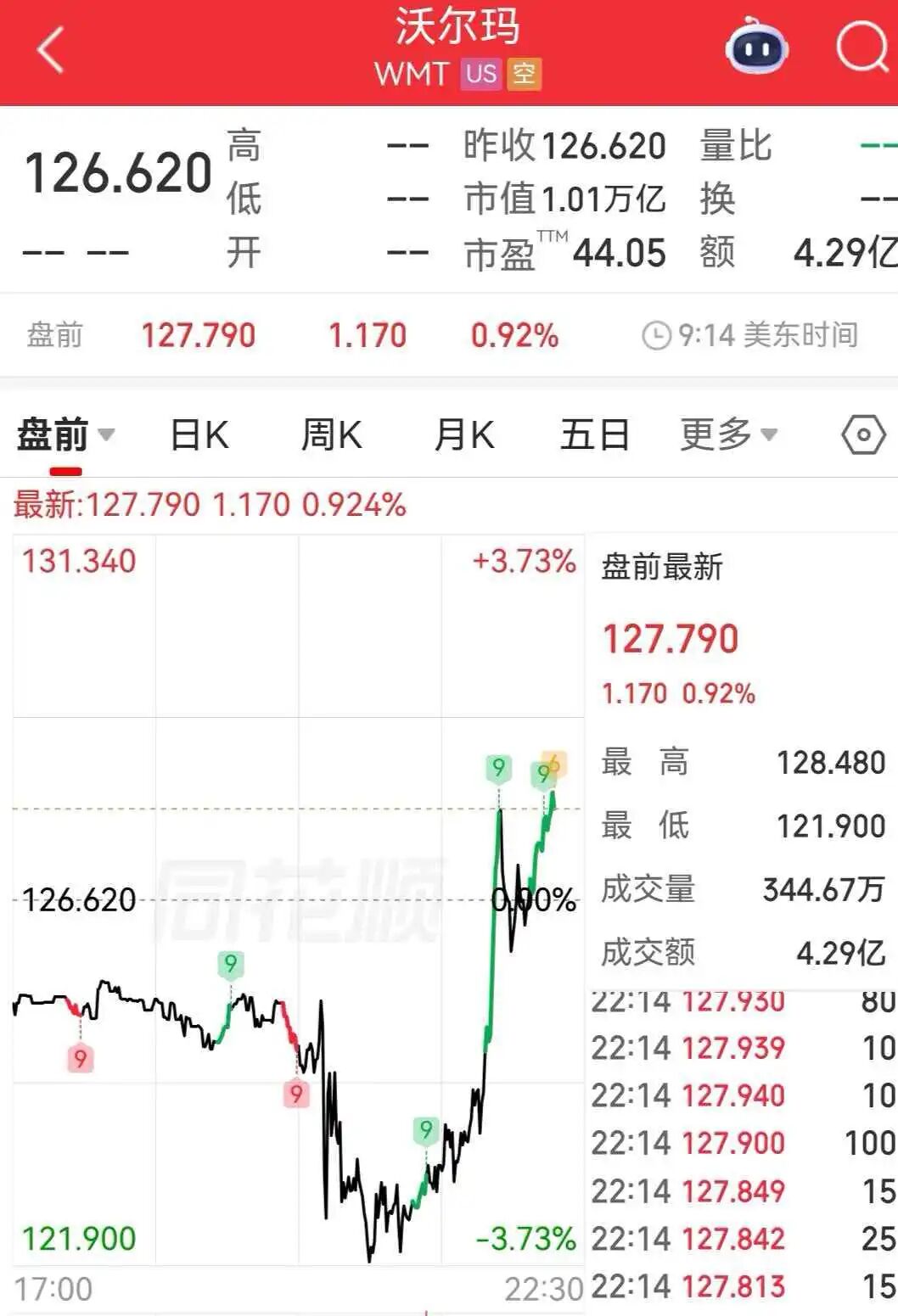
亚马逊超越沃尔玛,成为全球营收最高的公司
Xin Lang Cai Jing· 2026-02-19 12:24
Core Insights - Amazon has officially surpassed Walmart to become the highest-grossing company globally, marking a significant shift in the retail landscape [1] - Walmart, which held the title for over a decade, reported a sales figure of $713.2 billion for the 12 months ending January 31 [1] - In contrast, Amazon announced projected sales of $717 billion for the year 2025, indicating its growth trajectory [1]
