Frontline Management AS

Search documents
航运价格飙升467% 因大宗商品供应线路被扰乱
Xin Lang Cai Jing· 2025-12-04 11:31
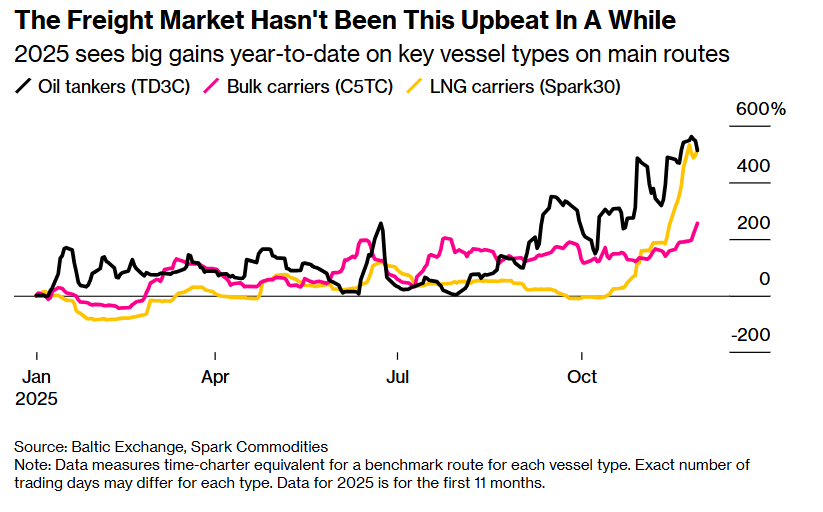
散货(包括谷物和矿石)运费基准指标在11月底升至20个月高点,原因是围绕几内亚一项大型铁矿项目 即将投产的预期升温。而从更广角度来看,关键航线周边的冲突也推高了整体成本。 责任编辑:刘明亮 由于冲突、制裁和产量激增扰乱了全球供应线路,从能源到散装矿石等大宗商品的跨洋运费迈向罕见的 年底飙升。 今年走主要航线运输原油的每日进账金额增幅最大,为467%,液化天然气(LNG)和铁矿石等大宗商 品的运费则分别上涨了三倍多和一倍多。以往运费在年底会下降,因为这时期是需求淡季。 船舶在海上运输货物的时间越来越长,导致价格飙升,一些航运业高管预计,整体市场的紧张局面至少 会持续到明年年初。 "我们看到的是一个典型的、极度紧张的实物运输市场,"Frontline Management AS的首席执行官Lars Barstad在上月底的财报电话会议上说。"我们没有看到任何松动迹象。"该公司运营着一支油轮船队,其 中包括超大型油轮。 随着中东地区产量增加,以及美国制裁两家俄罗斯石油巨头后亚洲对中东原油的需求上升,油轮运费上 涨。与此同时,从美国向欧洲运输LNG的价格最近也升至两年高位,因为北美的新项目占用了更多船 只来运送。 " ...

航运费飙升467%! 地缘冲突与制裁正在颠覆全球大宗海运格局
智通财经网· 2025-12-04 02:46
Core Viewpoint - The global shipping freight rates for commodities, including energy and bulk minerals, are experiencing an unprecedented year-end surge due to ongoing geopolitical conflicts, Western sanctions, and rising production levels, which are disrupting global shipping supply lines [1] Group 1: Freight Rate Increases - The daily earnings for transporting crude oil products on key global routes have surged by 467% from the beginning of the year to the end of November [1] - Freight rates for liquefied natural gas and iron ore have increased by over four times and two times, respectively [1][4] - The benchmark for shipping bulk commodities, including grain and minerals, reached a 20-month high by the end of November due to expectations surrounding a major iron ore project in Guinea and weather-related delays near China's coast [4] Group 2: Supply Chain Disruptions - Geopolitical tensions, such as attacks by Houthi forces on Red Sea commercial vessels, have forced some ships to reroute, increasing the "ton-miles" metric, which indicates longer transportation distances [5] - The effective shipping capacity has been artificially reduced due to slower turnaround times, with the same fleet now able to complete fewer trips per year [5] - The shipping industry is facing a static number of vessels, leading to a significant impact on freight rates due to reduced effective capacity [5] Group 3: Market Dynamics and Future Outlook - Despite a slight decline from the peak in late November, high transportation costs continue to have a positive ripple effect across the shipping market [6] - Major U.S. LNG buyers have considered delaying shipments, while some oil tanker operators are opting for longer routes to secure higher profits [6] - Shipping companies remain cautious about fleet renewal and strategic decisions due to high new ship prices and potential price declines following the reopening of the Red Sea [6] - Analysts suggest that the current year-end freight rate surge is driven by a combination of strong demand, reduced effective supply, and longer shipping routes, rather than seasonal trends or market speculation [7]