
Soitec

Search documents
全球半导体及半导体资本设备:2025 年 12 月 WSTS 追踪-销售额环比 + 4.8%,高于典型值(2.2%);同比 + 41.3%;2025 财年增长 26% 至 7920 亿美元
2026-02-11 15:40
Summary of Semiconductor Industry Conference Call Industry Overview - The conference call focused on the global semiconductor industry, specifically discussing the WSTS report for December 2025, which tracks sales, units, and average selling prices (ASPs) across the semiconductor sector [2][27]. Key Financial Metrics - **2025 Semiconductor Sales**: Grew by 26% year-over-year, reaching approximately $792 billion, following a 20% increase in 2024 [3][28]. - **December 2025 Sales Growth**: Total semiconductor sales increased by 41.3% year-over-year, with memory sales growing by 67.6% year-over-year [3][29]. - **Monthly Sales Performance**: December sales rose by 4.8% month-over-month, significantly above the historical average of 2.2% [4][38]. Product Category Performance - **Logic Sales**: Increased by 40% year-over-year, leading the growth among product categories [28][32]. - **Memory Sales**: Grew by 35% year-over-year, with a notable 67.6% increase in December alone [3][29]. - **Analog Standard Linear**: Sales rose by 17%, while Discretes and Microcontroller Units (MCUs) saw declines of 1% each [28][32]. - **Monthly Performance by Product Group**: - Discretes: 18.3% growth vs. typical 14.5% - Optoelectronics: 14.2% vs. typical -0.1% - Logic: 3.7% vs. typical -1.1% - MCU: 13.8% vs. typical 11.6% [5][40]. Geographic Sales Insights - **Year-over-Year Sales Growth by Region**: - Americas: Up 32.5% - Europe: Up 23.3% - China: Up 40.3% - Asia Pacific/All Other: Up 77.6% - Japan: Down 11.3% [45]. - **Month-over-Month Sales Growth**: - Americas: Up 10.5% - China: Up 5.8% - Europe: Up 4.7% - Japan: Flattish at -0.7% - Asia Pacific/All Other: Down 1.2% [46]. Unit Shipments and ASPs - **Total Unit Shipments**: Increased by 9.6% month-over-month, with ASPs down by 4.4% [52]. - **Year-over-Year Shipment Growth**: Increased by 4.1%, with notable increases in Discretes, Optoelectronics, and Logic [53]. - **ASP Changes**: - ASPs increased for Discretes (6.3%), Optoelectronics (7.3%), and NAND (11.5%). - ASPs decreased for Sensors & Actuators (-4.6%) and Logic (-3.6%) [55][56]. Investment Implications - **ADI (Analog Devices)**: Rated Market-Perform with a target price of $270.00, executing well but shares considered expensive [11]. - **AMD (Advanced Micro Devices)**: Rated Market-Perform with a target price of $235.00, driven by high AI expectations and a new deal with OpenAI [11]. - **AVGO (Broadcom)**: Rated Outperform with a target price of $475.00, benefiting from a strong AI trajectory [11]. - **NVDA (NVIDIA)**: Rated Outperform with a target price of $275.00, with significant opportunities in the datacenter market [13]. - **QCOM (Qualcomm)**: Rated Outperform with a target price of $175.00, despite memory headwinds, shares are considered cheap [14]. Additional Insights - The semiconductor industry is experiencing robust growth driven by various product categories, particularly logic and memory, with significant regional disparities in performance. - The overall market sentiment remains positive, with several companies positioned for growth amid ongoing technological advancements and demand for semiconductors.


SOITEC REPORTS Q3’26 REVENUE
Globenewswire· 2026-02-03 16:47
Core Insights - Soitec reported consolidated revenue of €160 million for Q3'26, reflecting an 18% increase at constant exchange rates compared to Q2'26, but a 29% decrease year-on-year [2][8] - The company maintains a cautious outlook due to contrasting market dynamics, with strong growth in Artificial Intelligence offset by weakness in the Automotive sector and ongoing inventory corrections in RF-SOI [3][8] Revenue Performance - Q3'26 revenue by end market: - Mobile Communications: €90 million, down 42% year-on-year, with a 36% decline at constant exchange rates [5][6] - Edge & Cloud AI: €54 million, up 15% year-on-year, with a 27% increase at constant exchange rates [11] - Automotive & Industrial: €16 million, down 37% year-on-year, with a 32% decline at constant exchange rates [14] - Overall revenue for Q3'26 was down 29% year-on-year, but up 18% sequentially from Q2'26 [5][8] Market Dynamics - The Mobile Communications market, which constitutes 56% of total revenue, is experiencing ongoing inventory corrections affecting RF-SOI volumes [6][7] - The Edge & Cloud AI market is showing robust performance driven by AI-related demand, with significant growth in revenue attributed to investments in datacenter infrastructure [11][12] - The Automotive & Industrial market remains weak, with excess customer inventory impacting revenue, although some sequential improvement is noted [14][15] Future Outlook - Q4'26 revenue is expected to grow around 20% at constant exchange rates compared to Q3'26, with the market environment anticipated to remain stable [19][26] - The company is focused on generating positive Free Cash Flow in FY'26 and is committed to managing costs while selectively investing in technology for future growth [4][20] Key Events - A significant milestone was achieved with Quobly's 28Si FD-SOI substrates now cycling in STMicroelectronics' 300mm fab, marking progress in the industrialization of quantum technologies [21][22] - Laurent Rémont has been appointed as the new CEO, effective April 2026, succeeding Pierre Barnabé [23][24]

HALF-YEAR STATEMENT ON THE IMPLEMENTATION OF THE LIQUIDITY CONTRACT AS OF DECEMBER 31, 2025
Globenewswire· 2026-01-14 17:00
Core Insights - Soitec has reported on the implementation of its liquidity contract with BNP Paribas, detailing the resources on the liquidity account as of December 31, 2025, which included €8,000,000 at the start of trading on July 3, 2023 [1]. Financial Performance - For the second semester of 2025, Soitec bought a total of 142,784 shares for €5,270,345 across 1,399 transactions, while selling 129,708 shares for €4,807,774 in 1,178 transactions [5][10]. - In the first semester of 2025, the company purchased 231,383 shares for €14,129,177 through 2,855 transactions and sold 208,969 shares for €12,889,302 in 2,792 transactions [5]. Upcoming Events - Soitec plans to publish its Q3 FY'26 revenue on February 3, 2026, and its FY'26 annual results on May 27, 2026. The Annual General Meeting is scheduled for July 29, 2026 [2]. Company Overview - Soitec is a global leader in innovative semiconductor materials, generating sales of €0.9 billion in the fiscal year 2024-2025. The company serves key markets including Mobile Communications, Automotive and Industrial, and Edge and Cloud AI [2]. - The company employs over 2,200 individuals from 50 different nationalities and holds nearly 4,300 patents [2].
Soitec任命英飞凌高管洛朗・勒蒙担任首席执行官
Xin Lang Cai Jing· 2026-01-08 08:45
Group 1 - Soitec has appointed Laurent Remont as the new CEO, effective April this year, succeeding Pierre Barnabe [1] - Following the announcement, Soitec's stock price rose by 9.4%, leading the SBF 120 index in trading volume [1] - Analyst Alexander Peterk from Bernstein highlighted that the appointment is a significant talent acquisition for Soitec, as investors are eager for a leader with extensive semiconductor industry experience [1] Group 2 - Laurent Remont, aged 54, is currently a senior vice president at Infineon and has previously worked at Kontron and STMicroelectronics [1] - Soitec's chairman, Frédéric Lissal, praised Remont's innovative thinking and strategic vision, which impressed the board [1] - The company is currently facing weak demand in core markets such as mobile, automotive, industrial, and smart devices, with its stock price having dropped over 80% since Barnabe took over as CEO in July 2022 [1] Group 3 - Peterk noted that the new CEO will face significant challenges in the coming quarters due to ongoing inventory destocking among chip manufacturers, which may pressure the company's performance in 2026 [2] - Barnabe announced his departure for personal reasons, effective March 31 of this year [3]
Soitec appoints Infineon executive Laurent Remont as CEO
Reuters· 2026-01-08 08:28
Core Insights - Soitec has appointed Laurent Remont as the new CEO, succeeding Pierre Barnabe starting in April [1] Company Summary - Soitec is a semiconductor wafer manufacturer based in France [1] - The leadership change is part of the company's strategic direction [1]

SOITEC BOARD OF DIRECTORS APPOINTS LAURENT RÉMONT CHIEF EXECUTIVE OFFICER, EFFECTIVE APRIL 2026
Globenewswire· 2026-01-08 07:20
Core Viewpoint - Soitec has appointed Laurent Rémont as Chief Executive Officer, effective April 1, 2026, to lead the company's development and capitalize on semiconductor market opportunities [2][5][6]. Group 1: Appointment Details - Laurent Rémont, currently Senior Vice President at Infineon Technologies, will join Soitec as a special advisor on March 16, 2026, before officially taking over as CEO [3][7]. - His appointment follows a rigorous selection process and is subject to shareholder approval at Soitec's Annual General Meeting in July 2026 [8]. Group 2: Background of Laurent Rémont - Rémont has extensive experience in the semiconductor industry, having held various positions at Infineon Technologies, Kontron AG, and STMicroelectronics, focusing on mobile communications, automotive, and artificial intelligence [4][9][10]. - He holds an engineering degree from Grenoble INP – ENSERG and has a proven track record in managing technological and industrial activities [11]. Group 3: Strategic Intent - The Board of Directors believes Rémont's expertise aligns with Soitec's strategic priorities, particularly in enhancing its product and technology portfolio around artificial intelligence [5][6]. - The company aims to build on its recent foundations to seize new growth opportunities in the semiconductor market [5]. Group 4: Company Overview - Soitec is a leader in innovative semiconductor materials, generating sales of €0.9 billion in the fiscal year 2024-2025 and employing over 2,200 people across various global locations [12]. - The company serves key markets including Mobile Communications, Automotive, and Edge and Cloud AI, holding nearly 4,300 patents [12].
INFORMATION RELATING TO THE TOTAL NUMBER OF VOTING RIGHTS AND SHARES FORMING THE SHARE CAPITAL
Globenewswire· 2026-01-05 17:00
Company Overview - Soitec is a world leader in innovative semiconductor materials, with over 30 years of experience in developing cutting-edge products that deliver technological performance and energy efficiency [4] - The company generated sales of €0.9 billion in the fiscal year 2024-2025 [4] - Soitec serves three main strategic markets: Mobile Communications, Automotive and Industrial, and Edge and Cloud AI [4] - The company employs over 2,200 individuals from 50 different nationalities across its sites in Europe, the United States, and Asia [4] - Soitec holds nearly 4,300 registered patents [4] Share Capital and Voting Rights - As of December 31, 2025, Soitec has a total of 35,772,015 shares forming its share capital [1] - The total number of theoretical (gross) voting rights is 45,785,563, while the total number of exercisable (net) voting rights is 45,695,615 [1] - The calculation of theoretical voting rights includes all shares with single or double voting rights, as well as shares without voting rights [2] - The calculation of exercisable voting rights accounts for shares entitled to double voting rights and deducts shares without voting rights [3]
SOITEC - INFORMATION RELATING TO THE TOTAL NUMBER OF VOTING RIGHTS AND SHARES FORMING THE SHARE CAPITAL
Globenewswire· 2025-12-03 17:00
Core Viewpoint - Soitec, a leader in innovative semiconductor materials, reported a total of 35,772,015 ordinary shares as of November 30, 2025, with a total of 45,785,839 theoretical voting rights and 45,698,292 exercisable voting rights [1][2][3]. Company Overview - Soitec has been developing advanced semiconductor materials for over 30 years, focusing on technological performance and energy efficiency [4]. - The company generated sales of €0.9 billion in the fiscal year 2024-2025 and operates in three main strategic markets: Mobile Communications, Automotive and Industrial, and Edge and Cloud AI [4]. - Soitec employs over 2,200 individuals from 50 different nationalities across its sites in Europe, the United States, and Asia, and holds nearly 4,300 registered patents [4].
等死与找死?FD-SOI何以成为中国半导体的一条活路
Guan Cha Zhe Wang· 2025-11-30 01:03
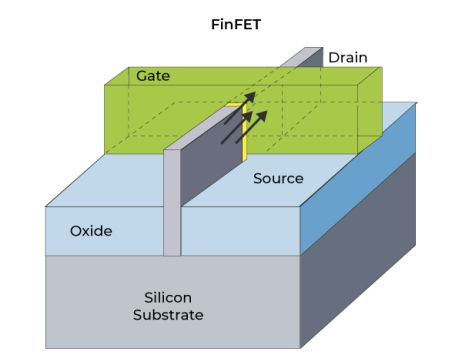
Core Insights - The article discusses the historical context and current relevance of FD-SOI technology in the semiconductor industry, particularly in China, as it faces challenges in advanced process nodes due to geopolitical factors [2][21]. Group 1: Historical Context - In the early 2010s, Soitec, a leader in SOI substrate materials, faced financial difficulties due to the slow growth of the FD-SOI market and required government loans to survive [1]. - The Chinese National Integrated Circuit Industry Investment Fund (the "Big Fund") considered investing in Soitec but ultimately chose to focus on FinFET technology, reflecting a broader industry skepticism towards FD-SOI at that time [1][2]. - The decision by Intel to fully commit to FinFET technology led to a domino effect, causing other major players like TSMC and Samsung to follow suit, effectively sidelining FD-SOI [9][10]. Group 2: Technological Divergence - Two distinct solutions emerged in the late 1990s to address the limitations of traditional CMOS technology: FinFET and FD-SOI [3][5]. - FinFET technology enhances control over electrical currents by utilizing a three-dimensional structure, while FD-SOI employs a thin insulating layer to prevent leakage, offering advantages in power consumption and manufacturing simplicity [5][7]. - Despite its advantages, FD-SOI faced challenges due to stringent substrate material requirements and a lack of industry support, leading to its marginalization [8][9]. Group 3: Recent Developments - In 2016, Shanghai Silicon Industry Investment Co. established a strategic partnership with Soitec, acquiring approximately 14.5% of its shares, which opened doors for Chinese semiconductor firms to access SOI technology [10][12]. - The investment has yielded significant returns and has been pivotal in developing China's capabilities in FD-SOI technology, which is now seen as a viable alternative to FinFET in specific applications [12][21]. - FD-SOI technology is gaining traction in markets such as IoT, automotive electronics, and RF communications, where its lower manufacturing costs and power efficiency are advantageous [13][21]. Group 4: Ecosystem Development - Over the past decade, a complete FD-SOI ecosystem has been developing in China, encompassing substrate materials, wafer foundries, EDA tools, and IP design [14][16]. - Key players include GlobalFoundries, which has been a major proponent of FD-SOI technology, and various Chinese companies adopting FD-SOI for IoT chip designs [16][17]. - The ecosystem is still smaller compared to the well-established FinFET market, which presents challenges in scaling and cost competitiveness [18][19]. Group 5: Future Outlook - The article suggests that FD-SOI may not compete directly with FinFET in high-performance computing but can carve out a niche in emerging markets [20][21]. - The global FD-SOI market is projected to grow significantly, from approximately $700 million in 2022 to over $4 billion by 2027, indicating a compound annual growth rate exceeding 30% [20]. - The ongoing development of FD-SOI technology in China represents a strategic path for maintaining technological capabilities amid external pressures [21][22].
心智观察所:等死与找死?FD-SOI何以成为中国半导体的一条活路
Guan Cha Zhe Wang· 2025-11-30 00:56
Core Viewpoint - The FD-SOI technology, once abandoned by the mainstream semiconductor industry, is now emerging as a viable alternative for China's semiconductor sector amidst geopolitical challenges and supply chain constraints [2][21]. Group 1: Historical Context - In the early 2010s, Soitec, a leader in SOI substrate materials, faced severe financial difficulties due to the slow growth of the FD-SOI market, relying on government loans to survive [1]. - The Chinese National Integrated Circuit Industry Investment Fund (the "Big Fund") considered investing in Soitec but ultimately opted for FinFET technology, reflecting a widespread belief that pursuing FD-SOI was a dead end [1][2]. Group 2: Technological Divergence - The divergence in technology routes began in the late 1990s when two solutions were proposed to overcome the limitations of CMOS technology: FinFET and FD-SOI [3][5]. - FinFET technology enhances control over electrical currents by adopting a three-dimensional structure, while FD-SOI employs an insulating layer to prevent leakage, offering a simpler manufacturing process [5][7]. Group 3: Industry Response - The semiconductor industry overwhelmingly favored FinFET due to its compatibility with existing processes and the perceived challenges of FD-SOI, particularly its stringent substrate requirements [9][10]. - Intel's decision to focus solely on FinFET led to a domino effect, with TSMC and other companies following suit, effectively sidelining FD-SOI [9][10]. Group 4: Strategic Investment - In 2016, Shanghai Silicon Industry Investment Co. strategically invested in Soitec, acquiring approximately 14.5% of its shares, which facilitated access to the Smart-Cut technology essential for FD-SOI [10][12]. - This investment not only saved Soitec but also strengthened the collaboration between Chinese firms and French technology, laying the groundwork for China's capabilities in FD-SOI [12]. Group 5: Current Market Dynamics - FD-SOI technology is gaining traction as a cost-effective alternative to FinFET, particularly in applications requiring lower power consumption, such as IoT and automotive electronics [13][21]. - The global FD-SOI market is projected to grow from approximately $700 million in 2022 to over $4 billion by 2027, with a compound annual growth rate exceeding 30% [20][21]. Group 6: Ecosystem Development - Over the past decade, a complete FD-SOI ecosystem has been developing in China, encompassing substrate materials, wafer foundries, EDA tools, and IP design [16][17]. - Key players include GlobalFoundries, which has been a major proponent of FD-SOI technology, and various Chinese companies adopting FD-SOI for IoT chip designs [16][17]. Group 7: Challenges Ahead - Despite progress, the FD-SOI ecosystem faces challenges, including a smaller market presence compared to FinFET and higher substrate costs, which hinder widespread adoption [18][19]. - The lack of local foundry capacity for advanced FD-SOI processes remains a significant barrier, necessitating reliance on overseas production facilities [19]. Group 8: Future Outlook - The potential for integrating SOI substrates with FinFET structures is being explored, indicating that both technologies may coexist and serve different market needs [20][21]. - FD-SOI's strategic value for China's semiconductor industry lies in its ability to maintain technological development in a constrained environment, providing a pragmatic approach to addressing supply chain vulnerabilities [21][22].
