XPO

Search documents
Inflation slowed in January, how the market is reacting to the latest CPI report
Youtube· 2026-02-13 15:15
Group 1 - The January consumer price index (CPI) report shows a month-over-month inflation increase of 0.2%, which is lower than the expected 0.3% gain, while the core CPI increased by 0.3% [1][3][57] - Year-over-year inflation rates are reported at 2.4% for the headline CPI and 2.5% for the core CPI, indicating a slight acceleration in core inflation [2][50] - The report reflects potential distortions due to data collection issues from the government shutdown in previous months, which may affect the comparability of the data [3][26] Group 2 - The market reaction to the CPI report has been muted, with stocks showing little change, indicating that investors are digesting the data amid a volatile market backdrop, particularly in the tech sector [4][59] - There is heightened sensitivity in the market regarding AI-related disruptions, affecting various sectors, including technology and logistics, leading to significant sell-offs in stocks perceived to be at risk [5][90][91] - The CPI data suggests a mixed economic environment, with some sectors experiencing price increases while others, like energy and used cars, see declines, reflecting a complex inflation landscape [11][51][52] Group 3 - Analysts note that January often sees price resets, which can lead to temporary inflation spikes, but the current data does not appear to reflect such resets significantly [7][10] - The report indicates a drag from lower energy prices, which has curbed the headline inflation figure, while certain sectors like transportation services have shown notable price increases [11][12] - The overall economic outlook remains cautious, with expectations that inflation will gradually decrease, allowing for potential Federal Reserve rate cuts later in the year [16][20][30] Group 4 - The CPI report highlights specific categories with significant price movements, such as personal care and food away from home seeing increases, while gasoline and dairy products experienced declines [51][52] - The discussion around tariffs and their impact on inflation continues, with potential policy changes from the White House that could alleviate some inflationary pressures [23][38] - The market is currently characterized by a cautious approach, with investors closely monitoring economic indicators and their implications for future Federal Reserve actions [60][64]


Trucking and real estate stocks struggle to gain momentum in premarket after becoming latest victims of AI fears
CNBC· 2026-02-13 12:37
Logistics Sector - Logistics stocks experienced significant declines due to AI-related fears, particularly after the introduction of a new tool called SemiCab from Algorhythm Holdings, which is marketed as a leading transportation platform [2][3] - C.H. Robinson and RXO saw their stock prices drop by as much as 20% on Thursday, with C.H. Robinson rebounding slightly by 0.7% in premarket trading, while RXO continued to decline by 1.5% [2] - Expeditors International of Washington fell over 16% on Thursday but was trading flat in premarket, while J.B. Hunt Transportation Services lost an additional 0.6% after a 9% drop the previous day [3] Real Estate Sector - The commercial real estate sector faced a continued sell-off, with CBRE among the hardest hit, extending its losses with a 0.6% decline in premarket trading [4] - Jones Lang LaSalle and Hudson Pacific Properties also saw marginal declines, while SL Green Realty rebounded slightly by 0.4% after a 5% drop on Thursday [4] Software Sector - Software stocks were affected by the broader market sell-off, with Palantir Technologies down 1.5% and Autodesk and Salesforce both down 0.1% in premarket trading [5] - The iShares Expanded Tech-Software Sector ETF (IGV) lost around 3% on Thursday and is down approximately 23% year-to-date, indicating a bear market [6] - Notably, all "Magnificent Seven" tech stocks ended Thursday in negative territory, with Tesla leading the losses at 0.8% [6] Analyst Insights - UBS strategists noted that the recent developments validate AI's monetization potential and emphasize its transformative nature, suggesting that investors should diversify across sectors and geographies rather than focusing solely on the U.S. information technology sector [7] - Dan Ives from Wedbush Securities acknowledged that while some software companies may struggle due to AI advancements, the entire sector should not be discounted, highlighting that companies like Salesforce and ServiceNow will remain integral to the AI revolution [9][10]

A股蛇年收官三大指数跌超1%,半导体、存储芯片大涨,港股AI双雄市值突破2000亿港元
2 1 Shi Ji Jing Ji Bao Dao· 2026-02-13 07:30
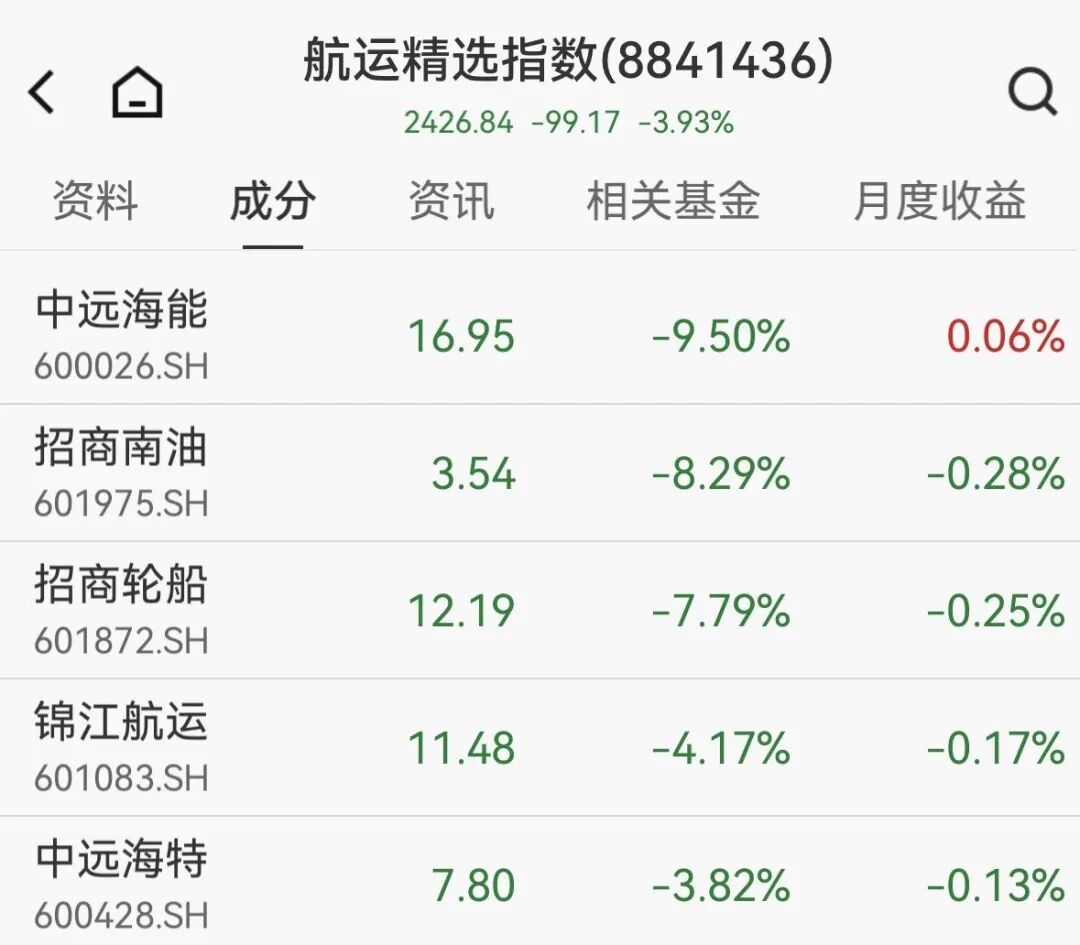
Market Overview - On February 13, A-shares saw a collective decline across major indices, with the Shanghai Composite Index dropping by 1.26%, the Shenzhen Component Index by 1.28%, and the ChiNext Index by 1.57% [1] - The total trading volume in the Shanghai, Shenzhen, and Beijing markets approached 2 trillion yuan, a decrease of 161.8 billion yuan from the previous day, with over 3,800 stocks declining [1] Sector Performance - The film and theater, paper, semiconductor equipment, and intelligent cockpit sectors showed the highest gains, while the photovoltaic equipment, minor metals, steel, port shipping, oil and gas extraction and services, glyphosate, rare earth permanent magnets, and chemical sectors experienced the largest declines [1] Semiconductor and Storage Chip Sector - The semiconductor and storage chip sectors demonstrated resilience, benefiting from the AI wave, with companies like Deep Technology (000021) hitting the daily limit and others like Northern Huachuang (002371) and Jiangbolong (301308) also seeing gains [2] Shipping Sector - Shipping stocks experienced significant declines, with companies such as COSCO Shipping Energy (600026), China Merchants Nanyou (601975), China Merchants Jinling (601872), and Jinjiang Shipping (601083) all opening lower [2][3] - The drop in these stocks was primarily influenced by a sharp decline in logistics stocks in the US market, where the Russell 3000 Trucking Index fell over 9% [4] AI Companies in Hong Kong - In the Hong Kong market, AI companies MiniMax and Zhiyuan both saw their market capitalizations exceed 200 billion HKD [5] - MiniMax launched its new generation text model MiniMax M2.5, which significantly improved its programming capabilities, while Zhiyuan introduced its flagship model GLM-5, which also achieved notable advancements in performance [7]


A股蛇年收官三大指数跌超1%,半导体、存储芯片大涨,港股AI双雄市值突破2000亿港元
21世纪经济报道· 2026-02-13 07:26
Market Overview - On February 13, the A-share market saw a collective decline in the three major indices, with the Shanghai Composite Index falling by 1.26%, the Shenzhen Component Index by 1.28%, and the ChiNext Index by 1.57% [1][2] - The total trading volume in the Shanghai, Shenzhen, and Beijing markets was nearly 2 trillion yuan, a decrease of 161.8 billion yuan compared to the previous day, with over 3,800 stocks declining [1] Sector Performance - In terms of sector performance, the film and television, paper-making, semiconductor equipment, and intelligent cockpit sectors saw the largest gains, while the photovoltaic equipment, small metals, steel, port shipping, oil and gas extraction and services, glyphosate, rare earth permanent magnets, and chemical sectors experienced the largest declines [3] Semiconductor and Storage Chip Sector - The semiconductor and storage chip sectors showed resilience, benefiting from the AI wave, with stocks like Deep Technology hitting the daily limit and companies such as Northern Huachuang and Jiangbolong seeing significant gains [5] - The storage chip and semiconductor equipment sectors performed well despite the overall market downturn [4] Shipping Sector - The shipping stocks collectively plummeted, with companies like COSCO Shipping Energy, China Merchants Jinling, and China Merchants Shipping experiencing significant declines [5][6] - This decline was primarily influenced by a sharp drop in logistics stocks in the US market, where the Russell 3000 Trucking Index fell over 9% [7] AI and Technology Developments - In the Hong Kong market, AI companies MiniMax and Zhizhu both saw their market capitalizations exceed 200 billion HKD, reflecting strong investor interest [8] - MiniMax launched its new generation text model MiniMax M2.5, which showed significant improvements in programming capabilities, while Zhizhu introduced its flagship model GLM-5, which also demonstrated enhanced performance [11]

人工智能货运规模化工具发布,卡车运输及物流股下跌
Xin Lang Cai Jing· 2026-02-12 20:30
Core Viewpoint - The introduction of Algorhythm Holdings' new AI tool, SemiCab, has led to significant declines in the stock prices of several trucking and logistics companies, raising investor concerns about reduced service demand in the freight sector due to the elimination of inefficiencies [1][2] Group 1: Market Reaction - Major trucking and logistics stocks such as C.H. Robinson and RXO fell over 20% during Thursday's trading session [1][2] - J.B. Hunt Transport Services experienced a decline of approximately 9%, while XPO's stock dropped nearly 7.9% [1][2] - Expeditors International of Washington saw a decline of nearly 16.5% [1][2] Group 2: AI Tool Impact - Algorhythm's stock, previously a penny stock, surged approximately 31% following the announcement of the SemiCab tool [1][2] - The market is increasingly scrutinizing traditional companies that may struggle to keep pace with the rapid advancements in AI technology [1][2] Group 3: Analyst Insights - Analyst Daniel Moore from Baird noted an emerging debate around open-source automation agents like Molt Bot, which could enhance the automation of routine backend tasks and level the technological playing field for smaller operators [1][2]
Trucking and logistics stocks drop on release of AI freight scaling tool
CNBC· 2026-02-12 18:14
Core Insights - The trucking and logistics sector is experiencing a decline in stock prices due to concerns that new AI tools could significantly reduce demand for their services [1][2]. Group 1: Market Reaction - Shares of major trucking companies such as C.H. Robinson and RXO fell over 20% on Thursday, while J.B. Hunt Transportation Services dropped approximately 9%, XPO lost nearly 7.9%, and Expeditors International of Washington decreased by about 16.5% [3]. - The market is witnessing a rotation as investors reassess traditional businesses in light of rapid advancements in AI technology [2]. Group 2: AI Developments - Algorhythm Holdings has introduced a new tool, SemiCab, which reportedly allows trucking operators to scale freight volumes by 300% to 400% without increasing headcount [5]. - The SemiCab platform claims to reduce "empty freight miles" by over 70%, addressing a significant inefficiency where trucks drive empty nearly one out of every three miles, resulting in over $1 trillion in lost freight spending annually [5][6]. Group 3: Industry Perspectives - Analyst Daniel Moore from Baird noted an emerging debate around open-source automation agents that could help smaller operators compete by automating routine tasks [4]. - Despite the current market jitters, Moore maintained an outperform rating on C.H. Robinson and Expeditors, emphasizing that automation is not a new concept in the industry [4]. Group 4: Regulatory Impact - The trucking industry is also monitoring a recent ruling by U.S. Transportation Secretary Sean P. Duffy, which prohibits "unqualified foreign drivers" from obtaining commercial driving licenses [7]. - This ruling aims to enhance safety by ensuring that foreign drivers undergo necessary consular and interagency screening before being licensed [8].

XPO: Strong Execution, But Valuation Leaves No Margin Of Safety (Rating Downgrade)
Seeking Alpha· 2026-02-11 09:47
Core Viewpoint - XPO, Inc. has experienced a 40% increase in stock value since the downgrade to 'hold' in February of the previous year, indicating positive progress in its operational performance [1] Group 1: Company Performance - The stock of XPO, Inc. has risen significantly, reflecting improvements in the company's operations [1] Group 2: Investment Philosophy - The investment philosophy emphasizes acquiring high-quality stocks and businesses that are managed by disciplined capital allocators, generate exceptional returns on capital, and can compound invested capital over extended periods [1]


The Big 3: BE, WMT, XPO
Youtube· 2026-02-06 18:00
Group 1: Market Overview - The stock market is experiencing a rotation with strong gains across various sectors, indicating a positive trading environment [1] - The evolution of the stock market includes the rise of leveraged ETFs and margin trading, leading to a more speculative trading approach among new investors [2][3] Group 2: Bloom Energy - Bloom Energy is highlighted as a strong investment opportunity, particularly due to its innovative battery technology and potential partnerships in AI data centers [6][9] - The stock has seen a significant increase, up nearly 58% year-to-date, despite recent pullbacks [11] - Key support levels for Bloom Energy are identified between 130 to 140, with potential upside targets at 169 and 176.49 [13][14] Group 3: Walmart - Walmart is positioned as a defensive play amidst market volatility, with a 30% increase in stock price over the last few months [20] - The company is actively evolving in the AI space to compete with Amazon, making it a relevant investment choice [19] - Technical analysis suggests that Walmart's support levels are around 126 to 127, with potential resistance at higher levels [24][26] Group 4: XPO Logistics - XPO is recognized for its role in the reindustrialization of America, benefiting from increased domestic logistics needs [28] - The stock has shown a sharp upward trend, with a recent breakout and potential for further gains as the economy continues to shift [30][33] - Key technical levels for XPO include a support range around 181, with significant trading activity noted around 150 [34][35]


Goldman Sachs Maintains "Buy" Rating for XPO Inc. (NYSE:XPO)
Financial Modeling Prep· 2026-02-06 06:00
Core Viewpoint - Goldman Sachs maintains a "Buy" rating for XPO, Inc. and raises its price target from $157 to $180, indicating confidence in the company's performance and growth potential [1][6]. Financial Performance - XPO reported a revenue of $2.01 billion for Q4 2025, representing a 4.7% increase from the previous year and exceeding the Zacks Consensus Estimate of $1.94 billion by 3.47% [2][6]. - The company's earnings per share (EPS) for Q4 2025 were $0.88, slightly down from $0.89 in the same quarter last year, but it surpassed the consensus estimate of $0.76 by 16.25% [3][6]. Stock Performance - XPO's stock price increased by 3.39%, currently at $185.62, with fluctuations between a low of $184.39 and a high of $200.13 on the same day [4]. - Over the past year, XPO's stock has shown significant growth, with a high of $200.13 and a low of $85.06 [4]. Market Position - XPO's market capitalization is approximately $21.79 billion, and it has a trading volume of 7,490,078 shares, reflecting its strong market presence and investor interest [5].

This Stock Is Already Up 40% This Year, And an Emerging Tailwind Could Push It Even Higher
The Motley Fool· 2026-02-06 04:30
Core Viewpoint - XPO is experiencing significant growth, with a 39% increase in stock price year-to-date, driven by strong manufacturing reports and positive industry sentiment [2][7]. Financial Performance - XPO reported a 5% increase in revenue to $2.01 billion, surpassing estimates of $1.95 billion, supported by a 5.2% rise in yield despite a 4.5% decline in tonnage per day [3]. - Adjusted earnings per share rose from $0.68 to $0.80, exceeding the consensus estimate of $0.76 [5]. Operational Metrics - The company achieved its best results in key service metrics, including damage ratio and on-time delivery rate, which allowed for price increases [4]. - The adjusted operating ratio in North America improved by 180 basis points to 84.4%, reflecting an operating margin of 15.6% [4]. Market Dynamics - XPO's business is closely linked to manufacturing activity, with approximately two-thirds of shipments related to industrial goods [8]. - The company estimates that volumes are currently down 15%-17% from healthy industrial levels, indicating potential for significant growth if demand normalizes [9]. Future Outlook - There are signs of demand improvement, with volume remaining flat in January despite adverse weather conditions [10]. - XPO has invested heavily in infrastructure, adding 25 service centers, 19,000 trailers, and 6,000 tractors since 2022, positioning the company for future growth [10]. - The company anticipates improved free cash flow as it moves past an earlier investment cycle, allowing for increased shareholder returns [12]. Valuation Considerations - XPO's stock is currently trading at a high price-to-earnings ratio of around 50, suggesting that some recovery expectations are already reflected in the stock price [11].