
人类演化

Search documents
国际期刊:中国古人类学新发现正持续重塑人类演化全球图景
Zhong Guo Xin Wen Wang· 2026-02-26 06:31
Core Viewpoint - China has become a "natural laboratory" for exploring human evolution, reshaping the global landscape of human evolutionary research through significant new discoveries in paleoanthropology [1][2]. Group 1: Key Findings from the Research - A review paper published in the journal "Nature Ecology & Evolution" highlights that key discoveries of ancient humans in China, dating from 2 million to 40,000 years ago, are crucial for understanding evolutionary significance [1]. - The paper emphasizes the integration of biological anthropology (including physical and genetic evidence) and cultural anthropology (archaeological evidence) to explore transitional human groups and their adaptive strategies [1][2]. Group 2: Impact on Human Evolution Research - The discoveries of Denisovans, Gigantopithecus, and other new species have positioned East Asia as a focal point in global human evolution research, prompting new considerations about the evidence of human evolution in China [2]. - The research is influencing the academic community to reassess and reconstruct narratives about human evolution, affecting key issues such as the timeline of modern human origins, evolutionary rates, geographical distribution, and population history [2]. Group 3: Future Research Directions - The rapid development of molecular biology is becoming a core method for defining ancient human lineages, but foundational morphological studies remain essential to clarify the significance of specific mutations and variations in evolution [2]. - Future breakthroughs in research will depend on the deep integration of molecular and anatomical perspectives, addressing the current lack of integration between fossil evidence and behavioral evidence [2][3]. - Ongoing accumulation of fossil materials, archaeological remains, and environmental data is expected to provide new opportunities to resolve key evolutionary questions, such as how different ancient human species adapted to changing habitats over the past 200,000 years [3].
【中国新闻网】中国古人类学新发现正持续重塑人类演化全球图景
Zhong Guo Xin Wen Wang· 2026-02-25 02:08
Core Insights - China has become a "natural laboratory" for exploring human evolution, reshaping the global landscape of human evolutionary research through significant new discoveries in paleoanthropology [1][2] - A collaborative review paper published in the journal Nature Ecology & Evolution highlights key findings from China, covering human ancestors from 2 million to 40,000 years ago, integrating biological and cultural anthropology [1][2] Group 1 - The discovery of Denisovans, along with the naming of new species such as Gigantopithecus and Longgu, has positioned East Asia as a focal point in global human evolutionary research [2] - Recent findings in China have prompted a reevaluation of human evolutionary narratives, impacting key issues such as the timeline of modern human origins, evolutionary rates, geographical distribution, and population history [2] - The diversity exhibited in China's paleoanthropological record is pushing East Asia to the forefront of academic discussions on human evolution [2] Group 2 - Rapid advancements in molecular biology are becoming central to defining ancient human lineages, yet foundational morphological studies remain essential for understanding the significance of specific mutations and variations in evolution [2] - Future breakthroughs in research will depend on the deep integration of molecular and anatomical perspectives, addressing the current lack of integration between fossil evidence and behavioral evidence [2][3] - The ongoing accumulation of fossil materials, archaeological remains, dating, and paleoenvironmental data is expected to provide new opportunities to resolve key evolutionary questions [3] Group 3 - Key unresolved questions include how different ancient human species in East Asia adapted to dynamic habitat changes over the past 2 million years and whether adaptive innovations corresponded with ecological changes [3] - Investigating cultural sharing among ancient human populations during the Middle Pleistocene could reveal survival advantages [3] - In-depth exploration of these questions will provide critical insights into the mysteries of human evolution [3]
国际期刊:中国古人类学新发现持续重塑人类演化全球图景
Zhong Guo Xin Wen Wang· 2026-02-24 21:13
Core Insights - China has become a "natural laboratory" for exploring human evolution through significant new discoveries in paleoanthropology, reshaping the global landscape of human evolutionary research [1] - A review paper published in the journal Nature Ecology & Evolution highlights the critical findings of ancient humans in China, covering a timeline from 2 million to 40,000 years ago, and emphasizes the importance of both biological and cultural anthropology in understanding evolutionary significance [1] Summary by Categories Research Findings - The paper systematically reviews key discoveries of ancient humans in China, integrating evidence from biological anthropology (including physical and genetic evidence) and cultural anthropology (archaeological evidence) [1] - The research focuses on transitional human groups, their interrelations, and differentiated adaptive strategies, indicating that East Asia has become a focal point for global human evolutionary studies [1] Implications for Human Evolution - The advancements in Chinese paleoanthropology are prompting a reevaluation and reconstruction of the narrative surrounding human evolution, affecting key issues such as the timeline of modern human origins, evolutionary rates, geographical distribution, and population history [1] - The biological and cultural diversity exhibited in Chinese paleoanthropological records is positioning East Asia at the forefront of academic discussions on human evolution [1] Future Research Directions - The rapid development of molecular biology is becoming a core method for defining ancient human lineages, with future breakthroughs relying on the integration of molecular and anatomical perspectives [2] - Ongoing accumulation of fossil materials, archaeological remains, chronological data, and ancient environmental data is expected to provide new opportunities to address unresolved key evolutionary questions, such as how ancient humans in East Asia adapted to dynamic habitat changes over the past 200,000 years [2]
颠覆对东亚旧石器时代文化和技术传统认知
Ren Min Ri Bao Hai Wai Ban· 2026-02-02 03:28
Core Insights - The research on the Xigou site in Henan Province reveals a systematic production strategy of small stone flakes and the earliest known tool hafting technology in East Asia, challenging the long-held belief that East Asian Paleolithic culture was conservative and technologically stagnant [2][3][4] Group 1: Research Findings - The study identified 2,601 stone artifacts at the Xigou site, dating from approximately 160,000 to 72,000 years ago, providing a precise chronological framework for human activities during this period [2][3] - The stone tools exhibited specialization and diversity, including scrapers, drills, notched tools, serrated blades, pointed tools, and carving tools, indicating a complex understanding of tool-making [4][5] - The research identified 22 hafted tools through technical-type analysis and micro-wear analysis, marking the earliest evidence of composite tools in East Asia, significantly advancing the timeline for the emergence of hafting technology [4][5] Group 2: Implications for Human Evolution - The findings suggest that during a period of significant climate fluctuations, ancient humans in East Asia developed flexible and diverse stone tool technologies as survival strategies, indicating a close relationship between technological innovation and cognitive abilities [4][5] - The study emphasizes the need to reassess the significance of quartz and quartzite as materials for fine stone tools in East Asia, highlighting the efficient management of local resources by ancient humans [5] - Recent discoveries at other sites in China, such as the Lingjing and Saraus sites, further support the notion that complex cultural behaviors, including tool-making and symbolic practices, were present in East Asia between 300,000 and 50,000 years ago, comparable to those in Africa and Western Eurasia [5]

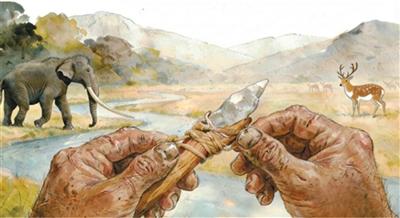
【中国新闻网】中国旧石器时代西沟遗址发现东亚最早工具装柄技术 颠覆传统认知
Zhong Guo Xin Wen Wang· 2026-01-28 02:46
Core Insights - The research on the Xigou site reveals over 2,600 stone artifacts that demonstrate a systematic production strategy for small stone flakes and the earliest known tool hafting technology in East Asia, challenging the long-held belief that East Asian Paleolithic culture was conservative and technologically stagnant [4][5][10] Group 1: Research Findings - The study indicates that the Xigou site, dating from approximately 160,000 to 72,000 years ago, provides critical evidence of technological innovation among ancient humans in East Asia [4][8] - The research team, consisting of over ten institutions from China and abroad, conducted an in-depth analysis of various aspects of the site, including dating, sediment environment, raw materials, and tool types, leading to significant breakthroughs in understanding ancient human technology [6][10] Group 2: Technological Innovations - The analysis revealed that the stone tools from the Xigou site exhibit both opportunistic and organized strategies for flake production, utilizing COF technology and discoidal core techniques to produce small flakes with clear pre-planned designs [8][9] - The tools identified include scrapers, drills, notched tools, serrated blades, pointed tools, and carving tools, with evidence of hafting techniques that suggest at least two methods of handle attachment, marking the earliest known use of composite tools in East Asia [9][10] Group 3: Cultural Implications - The findings from the Xigou site suggest that East Asian ancient humans developed complex cultural behaviors, including the use of prepared core technology, hafting techniques, and the production of bone tools, comparable to contemporary human behaviors in Africa and Western Eurasia [5][10] - The research emphasizes the need to reassess the significance of quartz and quartzite as raw materials for tool-making in East Asia, highlighting the advanced technical management capabilities of ancient humans in utilizing local resources [9][10]
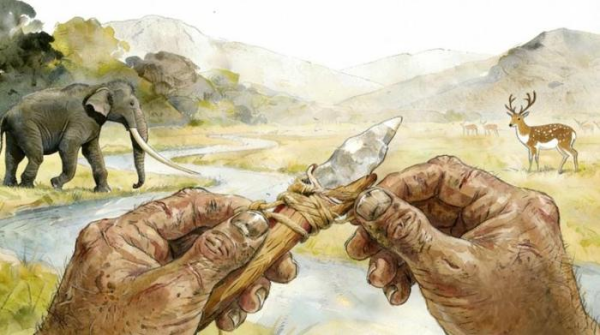
中国旧石器时代西沟遗址发现东亚最早工具装柄技术 颠覆传统认知
Xin Lang Cai Jing· 2026-01-27 16:55
Core Viewpoint - The research conducted by an international team led by Chinese scholars at the Xigou site reveals over 2,600 stone artifacts, showcasing a systematic production strategy for small stone flakes and the earliest known tool hafting technology in East Asia, challenging the long-held belief that East Asian Paleolithic culture was conservative and technologically stagnant [1][3][12]. Group 1: Research Findings - The Xigou site, dating from approximately 160,000 to 72,000 years ago, provides critical evidence of technological innovation among ancient humans in East Asia, contradicting the notion that significant technological changes only occurred around 40,000 years ago [3][6][12]. - The study involved collaboration among over ten institutions, including the Chinese Academy of Sciences and international universities, focusing on various aspects such as dating, sediment environment, stone raw materials, and tool types [4][5]. Group 2: Technological Insights - The analysis of the stone tools from the Xigou site indicates a combination of opportunistic and organized core-flake strategies, with evidence of advanced techniques like the COF (core-on-flake) method and discoidal core technology, suggesting a premeditated approach to tool production [8][9]. - The tools exhibit specialization and diversity, including scrapers, drills, notched tools, and carving tools, with at least two hafting methods identified, marking the earliest known evidence of composite tools in East Asia [9][12]. Group 3: Cultural Implications - The findings suggest that East Asian ancient humans developed complex cultural behaviors, including preform core technology, hafting techniques, and the use of pigments, comparable to contemporary human technological capabilities in Africa and Western Eurasia [10][12]. - The research highlights the adaptability of ancient humans in East Asia to environmental changes during a period of significant climate fluctuations, indicating a close relationship between technological innovation and cognitive development [12].

中国新发现颠覆对东亚旧石器时代技术的传统认知
Xin Hua She· 2026-01-27 16:21
Core Insights - New research published in the journal Nature Communications indicates that early humans in central China may have developed significant technological innovations, such as tool hafting, between 160,000 and 70,000 years ago, challenging the long-held belief that East Asian Paleolithic culture was conservative and technologically stagnant [1] Group 1: Research Findings - The study, led by a team from the Chinese Academy of Sciences and other institutions, analyzed over 2,600 stone artifacts excavated from the Xigou site in Henan Province [1] - The findings reveal systematic production strategies for small stone flakes and the earliest known tool hafting technology in East Asia, providing crucial evidence for technological innovation during the late Middle to early Upper Paleolithic period [1] Group 2: Technological Analysis - The stone tools were primarily made from quartz and quartzite, with most measuring less than 50 millimeters [2] - The research indicates that the local population employed flake-core and discoidal core technologies to produce small flakes, which were then used to create various tools, including scrapers, drills, and carving tools, with evidence suggesting the use of hafted tools [2] Group 3: Environmental Adaptation - The study highlights that during this period, East Asia experienced significant climate fluctuations, prompting early humans to develop flexible and diverse stone tool technologies to adapt to environmental changes [2] - Observations of wear patterns on the tools suggest they were likely used for cutting plant materials, such as wood or reeds [2]
打击“贩毒船”致人死亡 特朗普政府被提起诉讼
Yang Shi Xin Wen· 2026-01-27 16:18
Core Insights - A new study published in the journal Nature Communications reveals that early humans in central China may have developed significant technological innovations, such as the use of tool hafting, between 160,000 and 70,000 years ago, challenging the long-held belief that East Asian Paleolithic culture was conservative and technologically stagnant [1][2] Group 1: Research Findings - The research team, led by Yang Shixia from the Chinese Academy of Sciences, conducted a multidisciplinary study on over 2,600 stone artifacts unearthed from the Xigou site in Henan Province, providing key evidence for technological innovation in East Asia during the late Middle to early Upper Paleolithic period [1] - The artifacts, primarily made of quartz and quartzite, mostly measure less than 50 millimeters, and the analysis indicates that the local population employed flake-core and discoidal-core techniques to produce small flakes, which were then used to create various tools, including scrapers, drills, and carving tools [2] Group 2: Implications of Findings - The study suggests that the early humans adapted to significant climate fluctuations in East Asia by developing flexible and diverse stone tool technologies, with evidence indicating that these tools were likely used for cutting plant materials such as wood or reeds [2] - This research provides the earliest known evidence of composite tools in East Asia, significantly advancing the timeline for the emergence of hafting technology in the region and reinforcing East Asia's critical role in the global narrative of human evolution [2]
改写生命演化史!2025我国古生物学研究在多领域取得突破
Xin Lang Cai Jing· 2025-12-20 07:47
Core Insights - The article highlights significant discoveries in paleontology from China, showcasing advancements in understanding the evolution of life on Earth, particularly the transition from dinosaurs to birds and the origins of early mammals and humans [1][6]. Group 1: Evolution of Birds - A new bird fossil named "Zhenghe Bamin Bird" was discovered in Fujian, which pushes back the timeline for the emergence of modern bird body structures by nearly 20 million years, indicating that key evolutionary processes began during the Jurassic period when dinosaurs were dominant [1][3]. - The "Chicago specimen" of Archaeopteryx, discovered through collaboration between Chinese and American researchers, provides critical evidence for the evolution of the skull and flight adaptations during the transition from dinosaurs to birds [3]. Group 2: Dinosaur Origins - The discovery of Wushi Wudinglong in Yunnan represents the oldest known sauropod dinosaur in East Asia, dating back approximately 200 million years, thus extending the fossil record of Chinese dinosaurs to an earlier period [4]. - Research on two ancient fossils revealed new evidence regarding the evolution of jaw joints from reptiles to mammals, indicating that this evolutionary path was not singular, as demonstrated by the unique jaw structure of Chuan Nan Duozhi Beast [4][6]. Group 3: Human Evolution - Significant findings in human evolution include the successful capture and sequencing of ancient human genomes from Yunnan, clarifying the genetic contributions of the so-called "ghost ancestors" to the Tibetan Plateau population [6]. - Innovative methods in ancient protein and DNA analysis confirmed that a nearly complete human skull found in Harbin belongs to the Denisovans, providing a clearer understanding of this extinct human lineage [6][8]. - Research on the digital reconstruction of the skull of Hubei Yunxian Man 2 revealed that it is an early representative of the Dragon Man lineage, suggesting that the divergence of modern humans, Dragon Man, and Neanderthals occurred around 1 million years ago, significantly altering the timeline of human evolution [6][8].

股市“小作文”为何屡屡得逞?| 猫猫看市
Zheng Quan Shi Bao Wang· 2025-12-13 09:50
Group 1 - The article highlights the tendency of investors to be swayed by rumors rather than relying on factual data presented in company reports, particularly in the banking sector during the low valuation period from 2022 to 2023 [1][2] - It points out that despite the rumors about banks' exposure to the real estate sector, the actual loan exposure was typically less than 10% of total assets, which was clearly stated in their financial reports [1] - The article also mentions that the impact of U.S.-China trade conflicts on port companies was overstated, as U.S. throughput accounted for only about 5% of total industry throughput, indicating that the rumors had a greater influence than the facts [1] Group 2 - The article discusses the historical context of human evolution, suggesting that the reliance on rumors can be traced back to survival instincts developed over millions of years, where communication and trust within small groups were crucial for survival [2][3] - It explains that in early human societies, the cost of seeking evidence was high, leading to a natural inclination to trust spoken words over requiring proof, which has persisted through history [3][4] - The transition to a modern information-rich environment poses challenges to this ingrained behavior, as the capital market now demands reliance on data and evidence rather than rumors, creating a conflict with long-standing human habits [4]