候鸟迁徙

Search documents
北京市多处水域发现成群银鸥停留
Xin Lang Cai Jing· 2026-02-27 23:35
潮白河管理处水利专业高级工程师彭静介绍,银鸥选择在潮白河停歇,主要与潮白河的水质向好有关。 近年来,北京水务部门通过生态补水、水质提升、湿地修复等系统治理,让流域内水清岸绿,潮白河部 分河段维持在地表水Ⅱ类以上,鱼虾越来越多,成为候鸟迁徙的重要"加油站"。"潮白河接受密云水 库、白河堡水库、怀柔水库等多个优质水源的生态补水,特别是去年汛期,密云水库向潮白河泄流,让 潮白河水体状况持续向好,鱼虾资源更加丰富。"彭静说,"潮白河管理处也通过实时监测排水口、每日 清除水面漂浮物、岸坡清洁等措施,推动潮白河生态环境持续向好。" "除了水质变优、食源丰沛,北运河水面开阔也是其中的原因之一,北运河榆林庄闸等位置偏郊野,远 离高楼大厦,人员扰动少,为银鸥提供了良好的栖息环境。"北运河管理处一位工作人员表示。 当下,河畔观鸟热潮渐起。市水务部门呼吁广大市民文明观赏,做到不投喂、不惊扰。 (来源:千龙网) 春回大地,越冬的迁徙候鸟也陆续北上,在京城中转歇脚。近日,有市民发现,通州区宋庄镇摇不动村 附近聚集了大量"海鸥"。昨天(27日),记者联系到北京市水务部门,相关负责人表示,这些飞鸟并非 海鸥,大部分其实是西伯利亚银鸥。目前 ...
北京通州区宋庄镇迎来大量银鸥 动保人士:人为投喂会耽误其迁徙
Xin Lang Cai Jing· 2026-02-26 17:40
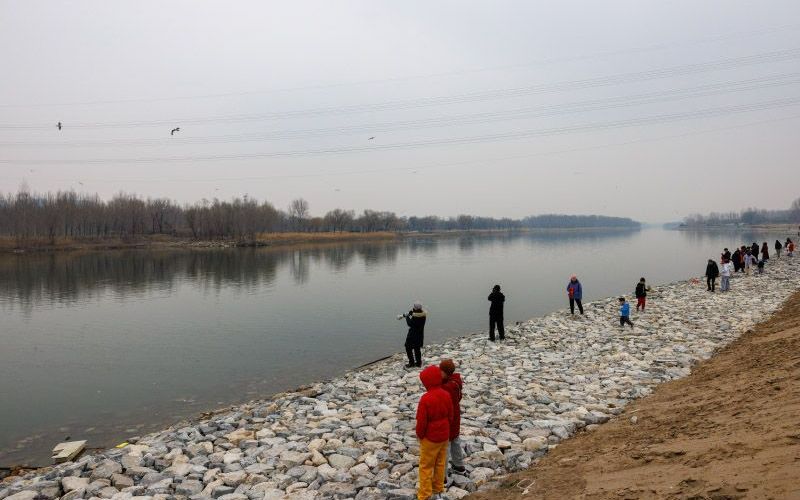
银鸥的到来,让摇不动村这个名字特殊的小村庄一下子热闹起来。张福祥说,前来观鸟的市民越来越多,车辆停 放成了问题。还有市民坐公交下车后,步行约一公里到河边观鸟,大家拿着火腿肠和面包在喂鸟。但银鸥并不亲 人,只是在空中接住人们抛撒的食物。这几天,村里已派出治安人员,戴着红袖标维护现场观鸟秩序。 "根据图片和视频判断,出现在潮白河的确实是银鸥。"黑豹野生动物保护站站长李理介绍,银鸥体长50至70厘 米,食性较杂,以小鱼、小虾及甲壳类动物为主。它们善于飞翔,捕食时常从空中俯冲而下,掠过水面瞬间抓获 猎物,动作敏捷优美。 银鸥是典型的迁徙候鸟,繁殖地在西伯利亚及蒙古国一带,每年秋冬季节南下,在我国长江以南沿海地区越冬, 春季再北上繁殖。北京正处于其迁徙通道上,沙河、官厅水库、密云水库等水域都是它们的重要停歇地。 2月25日,通州区宋庄镇,市民在潮白河畔观赏银鸥。新京报记者 王子诚 摄 2月25日,通州区宋庄镇,一群银鸥在天空翱翔。新京报记者 王子诚 摄 (来源:千龙网) 为何有大批银鸥首次出现在摇不动村附近的潮白河段?李理分析,首先是生态环境持续向好。这些年生态保护力 度加大,湿地恢复很快,物种多样性增加,为银鸥提供了 ...

今年,鸟儿又来过冬了
He Nan Ri Bao· 2026-02-01 23:31
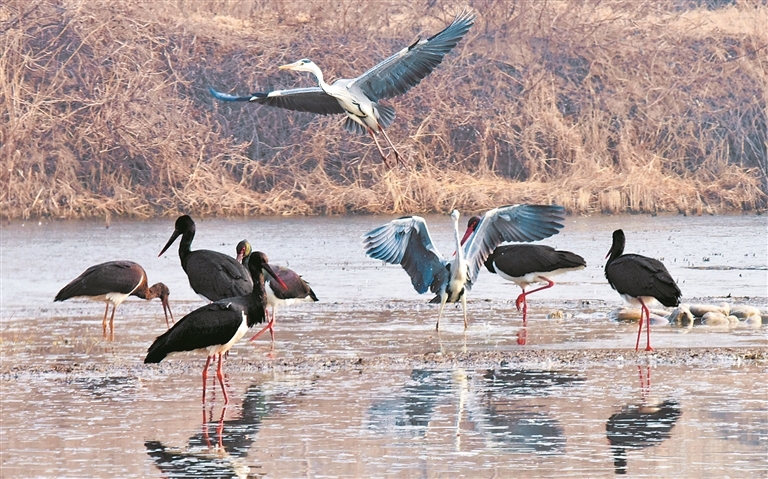
1月29日,在洛阳市孟津黄河湿地国家级自然保护区,会盟镇黄河湿地区域又迎来38只国宝级候鸟——黑鹳。 郑占波 韩波志 摄 2月1日,晨光熹微,三门峡天鹅湾,水雾还未散尽,数百只白天鹅悠然划过水面,河面上泛起层层涟漪。 最新调查数据显示,我省越冬水鸟种群数量稳中有升,共记录到水鸟157种、381815只,较2025年同期分别增 长13%和6.8%。三门峡库区湿地、孟津黄河湿地等重点区域,已成为黑鹳、大鸨、大天鹅等珍稀水鸟重要的 越冬栖息地与迁徙中转站。 鸟儿为何年复一年地飞来? 河南地处中国第二级阶梯向第三级阶梯的过渡带,西接山地、东连平原,且恰好位于东亚—澳大利西亚候鸟 迁徙路线的中心通道上。得天独厚的地理位置,让这里成为候鸟迁徙途中的必经之地。 仅2025年,我省就组织黄河流域地区完成湿地生态修复面积1.18万亩,并且综合采取水系连通、退耕还湿、 植被恢复、鸟类食源地营建等措施,为这些"天边客"的陆地居所提供了充分保障。 夕阳西下,天鹅、灰鹤、黑鹳等各种鸟儿的身影,与漫天霞光融为一体,"落霞与孤鹜齐飞"的意境生动呈 现。 鸟儿年复一年的到来与繁衍,成为"绿水青山就是金山银山"最灵动的河南注脚。(记者 于涛) ...
中国黄(渤)海候鸟栖息地:人与自然的和谐交响
Xin Lang Cai Jing· 2026-01-31 19:28
撰文/摄影:光明日报记者 徐谭 冬日的黄河口湿地,大河息壤,芦海飘荡。海风和潮水在广袤的滩涂上交替"作画",勾勒出一株株潮沟交错 的"生命之树",绘就"鸟浪"翻飞的生命奇观。 山东东营黄河口、河北沧州南大港、辽宁大连蛇岛-老铁山、辽宁丹东鸭绿江口、上海崇明东滩、江苏盐城黄 海湿地……每年春秋迁徙季,天空与海洋的"交响诗"都会在中国黄(渤)海候鸟栖息地鸣响。 当我们沿着漫长的海岸线,徐徐展开这片世界自然遗产地的生态画卷,其在全球生态体系中的重要地位不言 自明:几片栖息地串联起候鸟从北极繁殖地前往南半球越冬地的关键区段,为东亚-澳大利西亚候鸟迁飞通道 上约10%、超过500万只水鸟提供了生命家园,其中包含至少45种全球濒危鸟类。 湿地孕育了人类文明,正是有了湿地的养育和呵护,人类才能从无到有、发展壮大、生生不息。2月2日是第 30个世界湿地日,今年主题为"湿地与传统知识:致敬文化遗产"。黄(渤)海候鸟栖息地,不仅用淤泥和海 浪托起生命,也通过物候变化,指引当地人的生产生活。从煮海为盐到耕海牧渔,一代代人将传统生态知识 编进渔网、唱入歌谣、熔铸血脉。就此而言,黄(渤)海候鸟栖息地也是一座鲜活的文明档案馆。 正如北京 ...

白尾海雕现身嘉陵江畔
Xin Lang Cai Jing· 2026-01-21 21:34
Core Viewpoint - The discovery of the national first-class protected wild animal, the white-tailed eagle, in Nanchong City indicates an improvement in the local ecological environment and highlights the area's role as a habitat for migratory birds [2] Group 1: Species Discovery - The white-tailed eagle, a rare raptor, has been recorded for the first time in the Longmen Street area along the Jialing River in Nanchong City [2] - This species typically inhabits northern and plateau regions and migrates to lower altitudes during winter when food becomes scarce [2] Group 2: Ecological Significance - The presence of the white-tailed eagle suggests a healthy ecosystem and a complete food chain in the area [2] - The local ecological environment has been improving, making the Jialing River section in Nanchong a stopover for an increasing number of migratory birds [2] Group 3: Bird Species Diversity - Nanchong City has recorded a total of 337 species of wild birds, belonging to 18 orders and 67 families [2]

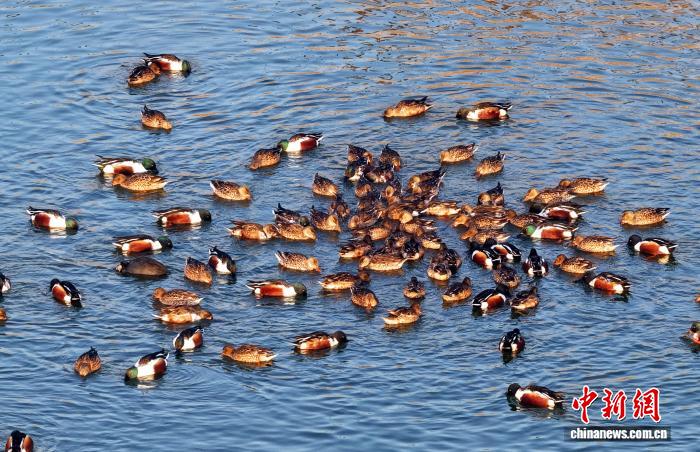
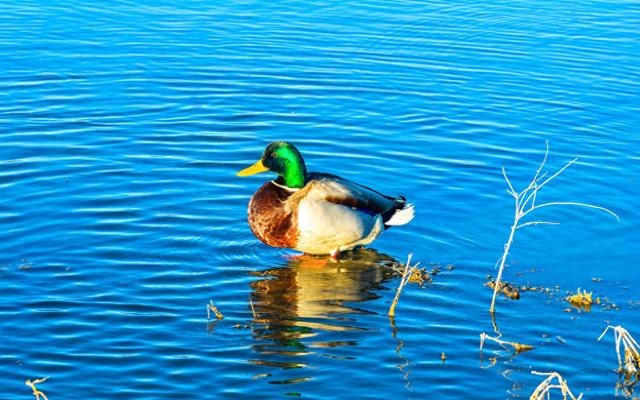
“扎堆转圈圈”只为觅食?逾千只琵嘴鸭衡水湖上演“集体智慧”
Zhong Guo Xin Wen Wang· 2026-01-18 03:25
Core Viewpoint - The article highlights the unique collective foraging behavior of the spoon-billed sandpiper at Hengshui Lake, showcasing the ecological significance of the area for migratory birds and the successful conservation efforts that have improved the habitat [1][3]. Group 1: Ecological Significance - Hengshui Lake is a national nature reserve that maintains a complete wetland ecosystem, including marshes, water bodies, mudflats, meadows, and forests, playing a crucial role as a stopover and energy replenishment station for migratory birds along the East Asia-Australasia flyway [3]. - The area has recorded 337 bird species, with over 60 species wintering annually, peaking at more than 100,000 individuals [3]. Group 2: Conservation Efforts - Recent conservation measures, including ecological water replenishment, shoreline restoration, and the release of aquatic species, have led to continuous improvements in water quality and significant increases in aquatic biodiversity [3]. - The unique ecological environment of open shallow water areas provides optimal foraging conditions for the spoon-billed sandpiper, facilitating their distinctive collective foraging strategy [3].
越冬候鸟增至10万只,云南拉市海进入年度最佳观鸟季
Xin Lang Cai Jing· 2026-01-17 04:23
Core Insights - The Lashi Lake in Yunnan has become a prime wintering site for migratory birds, with the number of birds increasing to 100,000, marking the peak of the annual migration season [2] Group 1: Ecological Importance - Lashi Lake serves as a crucial stopover and wintering ground for migratory birds along the western migration route in China, featuring abundant water and grassland that provide natural food sources for the birds [2] - The area has seen a significant increase in bird species, from 57 species in 1998 to 341 species currently, representing 22% and 33% of the national and provincial bird species, respectively [5] Group 2: Conservation Efforts - Since 2018, local government has implemented strict ecological protection measures, including banning tourism activities in core areas, restoring wetlands, and conducting ecological restoration projects, leading to improved water quality and habitat for birds [7] - The area has transitioned from "human retreating, birds advancing" to a state of "coexistence between humans and birds" due to these conservation efforts [7] Group 3: Tourism Impact - The birdwatching tourism around Lashi Lake is expected to thrive, with projected tourist numbers exceeding 2 million and total tourism revenue reaching 467 million yuan in 2024 [9]
客从北方来
Xin Lang Cai Jing· 2026-01-11 22:26
Core Viewpoint - Sichuan serves as a crucial stopover for migratory birds due to its strategic location at the intersection of two major migratory routes, with ongoing ecological restoration efforts enhancing bird populations and diversity [7][8]. Group 1: Migratory Bird Patterns - Sichuan is located at the convergence of two global migratory routes: East Asia-Australasia and Central Asia-India, attracting numerous migratory birds during the autumn and winter seasons [7]. - A total of 798 species of wild birds have been recorded migrating through Sichuan, with expectations for increased numbers due to improved ecological conditions [8]. Group 2: Ecological Restoration Efforts - The province has shifted its bird conservation strategy from isolated protection to a systematic restoration of the entire ecosystem, including mountains, waters, forests, fields, lakes, and grasslands [8]. - The example of Qionghai illustrates successful wetland restoration, where the area saw a significant increase in bird species from 20 to 310 following ecological improvements [8]. Group 3: Technological Innovations in Bird Conservation - Sichuan has implemented advanced monitoring technologies, including drone surveillance ("Sky Eye") and over 3,000 infrared-triggered cameras ("Earth Ear"), to enhance real-time tracking and analysis of bird habitats [8]. - These technologies facilitate a proactive approach to conservation, allowing for better understanding of bird locations and habitat conditions [8].
万里远行,是“驿站”也是家园
Xin Lang Cai Jing· 2025-12-27 19:43
Core Insights - Xinjiang serves as a crucial intersection for migratory bird routes, with three out of four major migratory pathways in China linked to the region, facilitating the movement of over one million birds from approximately 300 species [1] Group 1: Migratory Routes and Bird Species - The West Asia-East Africa migratory route covers a significant portion of Xinjiang, with birds gathering along major water systems such as the Ili River and the Ertix River, waiting for favorable conditions to migrate south [1] - Various ecosystems in Xinjiang, including forests, lakes, grasslands, and mountains, provide essential shelter and energy for migratory birds during their long wait [1] Group 2: Conservation Efforts - Collaborative efforts between military and local authorities have led to the establishment of 28 nature reserves at the autonomous region level, covering over 199,800 square kilometers, along with four provincial-level reserves totaling approximately 1,003 square kilometers [2] - Measures such as wetland restoration, habitat recovery, and ecological water replenishment have been implemented to expand wetland areas and support bird populations [2] Group 3: Ecological Health Indicators - Migratory patterns and habitat choices of birds serve as indicators of ecological health, reflecting the success of large-scale conservation and restoration efforts in Xinjiang [3] - Over the past decade, more than 30 new bird species have been recorded in Xinjiang, contributing to a total of over 490 bird species in the region, which represents about one-third of the total bird species in China [3]
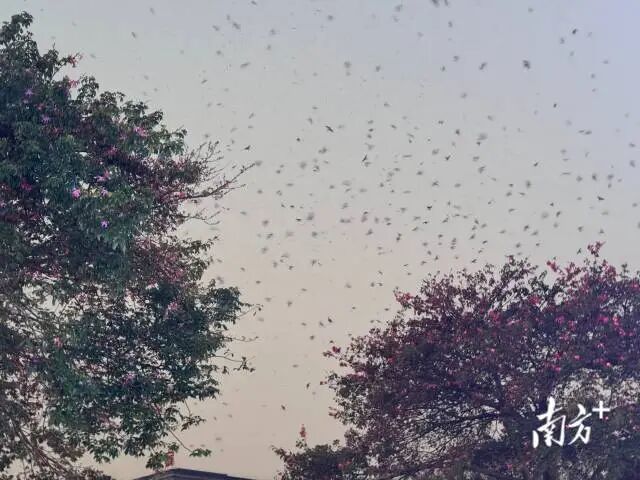
广东佛山一地天降大量“鸟屎雨”,官方回应:系家燕迁徙,属正常现象
Guang Zhou Ri Bao· 2025-12-11 01:17
Core Viewpoint - Residents in Shunde, Foshan have been facing issues due to a large gathering of swallows, causing disturbances in daily life with their droppings, referred to as "bird droppings rain" [1][4][6] Group 1: Bird Gathering Issue - The birds causing the disturbance are identified as house swallows, which are a protected species in China, and their gathering is a normal phenomenon during the migratory season [2] - The local natural resources bureau has confirmed that this occurrence is not unique to Shunde and happens in other towns and cities as well [2] Group 2: Recommendations for Mitigation - The bureau has proposed humane and practical measures to mitigate the impact of bird droppings: 1. Constructing movable, lightweight canopies in areas where swallows roost at night to intercept droppings [5] 2. Adjusting lighting near roosting sites to reduce insect attraction, thereby decreasing the swallows' presence [5] 3. Implementing a cleaning mechanism that includes daily and weekly deep cleaning of affected areas to prevent droppings from drying and creating dust [5] 4. Installing signage to inform residents to avoid certain areas during peak times [5] - This phenomenon also indicates the ongoing improvement of the ecological environment in Shunde, providing favorable conditions for bird habitation [5]